GEO vs SEO in 2026: What Actually Changes for Marketers
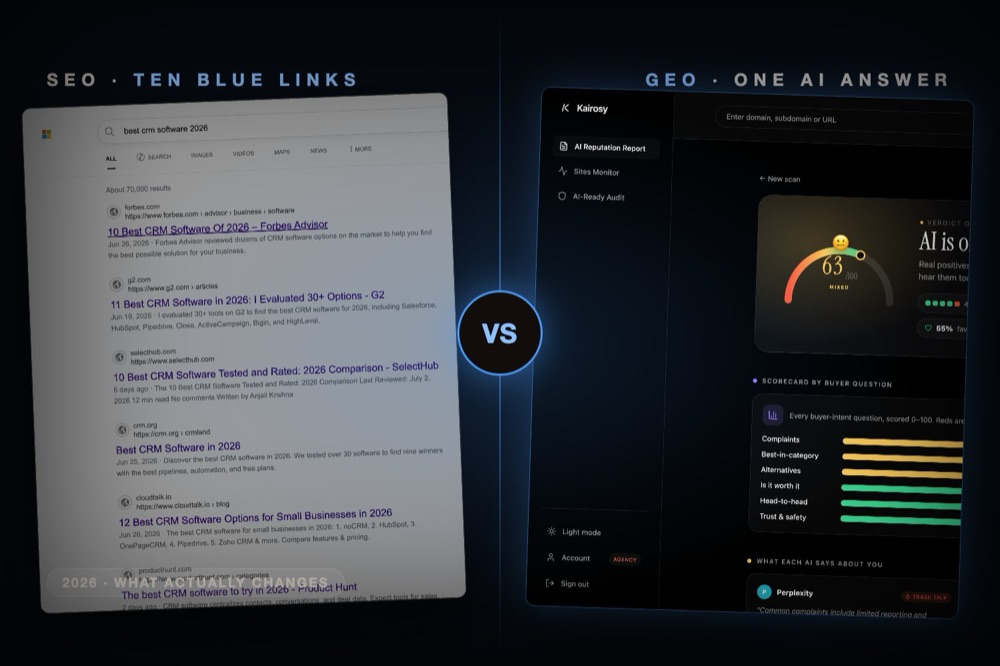
The "click era" is giving way to the "answer era". That does not kill SEO; it adds a new layer on top of it. Here is what actually changes — and what stays the same.
Discovery moved up the funnel
Buyers now build a shortlist inside an AI chat before they ever reach a search results page. Being absent from that AI shortlist is the new "stuck on page two". The first filter is no longer Google's ranking — it is the model's synthesis.
Your content has a second reader
Your best content now serves two audiences: humans, and the models that retrieve and summarize it. Clear structure, explicit factual claims, comparison tables and schema help both. Vague marketing copy that ranked fine for SEO often gets ignored or misquoted by AI.
Citations are the new backlinks
In GEO, the question is not just "who links to you" but "which sources does the AI quote when it answers about your category". Earning mentions on the pages models trust — review sites, respected publications, community threads — is the new link building.
What stays the same
Authority, accuracy and freshness still win. Technical hygiene still matters. The difference is the surface: you are optimizing for inclusion and accuracy inside an answer, not a blue link.
Measure both
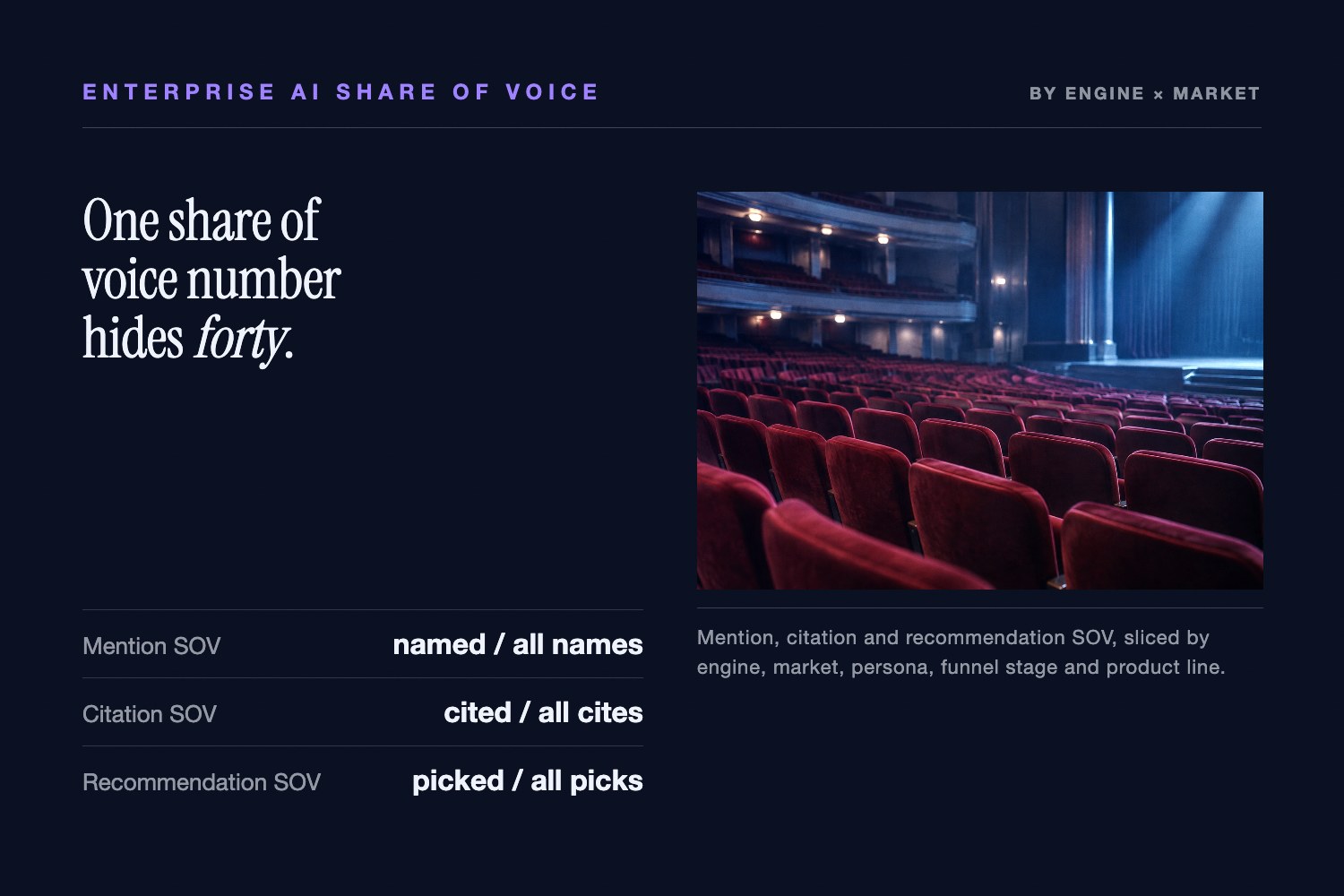
Track classic rankings and AI visibility side by side. The teams that win in 2026 report on "share of voice in AI answers" the same way they report on keyword rankings — and treat a new negative AI mention as urgently as a ranking drop.
See what AI says about your brand
Run a free scan across ChatGPT, Gemini, Claude & Perplexity in about 30 seconds.
Run my free scan