Why Your Brand Is Invisible to AI Buyers (and How to Fix It)
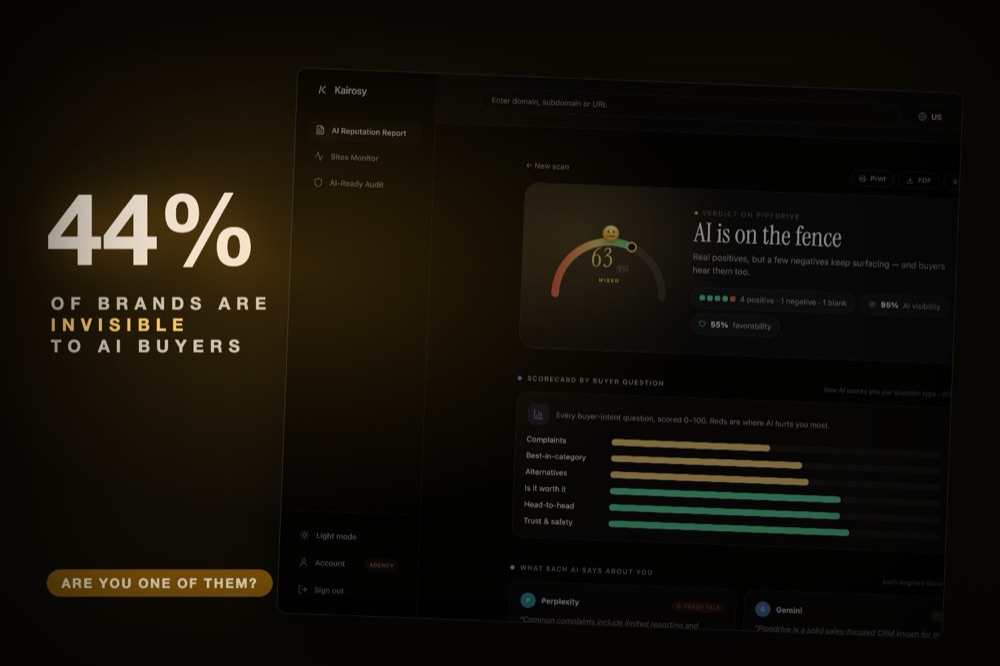
In a benchmark of fifty B2B SaaS companies across 1,400 buyer-intent prompts, a striking share were functionally invisible — never surfaced when a buyer asked the model about their category. If 95% of deals go to a vendor already on the AI's shortlist, invisibility is not a vanity problem; it is lost pipeline.
Reason 1: thin, unstructured content
Models prefer content that makes explicit, structured claims they can lift into an answer. If your site is all vibe and no specifics — no clear "who it is for", no comparison, no numbers — there is nothing for the model to quote.
Reason 2: no third-party signal
AI leans heavily on sources it trusts: review sites, communities, respected publications. If your brand has little presence there, the model has no corroboration and defaults to the competitors that do.
Reason 3: a competitor owns the comparison
Search "[your category] alternatives" and you will often find a competitor's page that frames the whole space — with you as an afterthought, or absent. Models cite those pages directly.
How to close the gap
Publish clear, structured, comparison-rich content; earn mentions on the sources models trust; own your own "alternatives" and "vs" pages; and fix outdated facts on your site. Then measure visibility and share of voice over time to confirm you are climbing onto the shortlist.
Where to start
Run a free scan to see exactly which buyer queries you are invisible for, and which competitors the AI names instead. You cannot close a gap you have not measured.
See what AI says about your brand
Run a free scan across ChatGPT, Gemini, Claude & Perplexity in about 30 seconds.
Run my free scan