AI Brand Perception: How AI Sees Your Brand (2026)
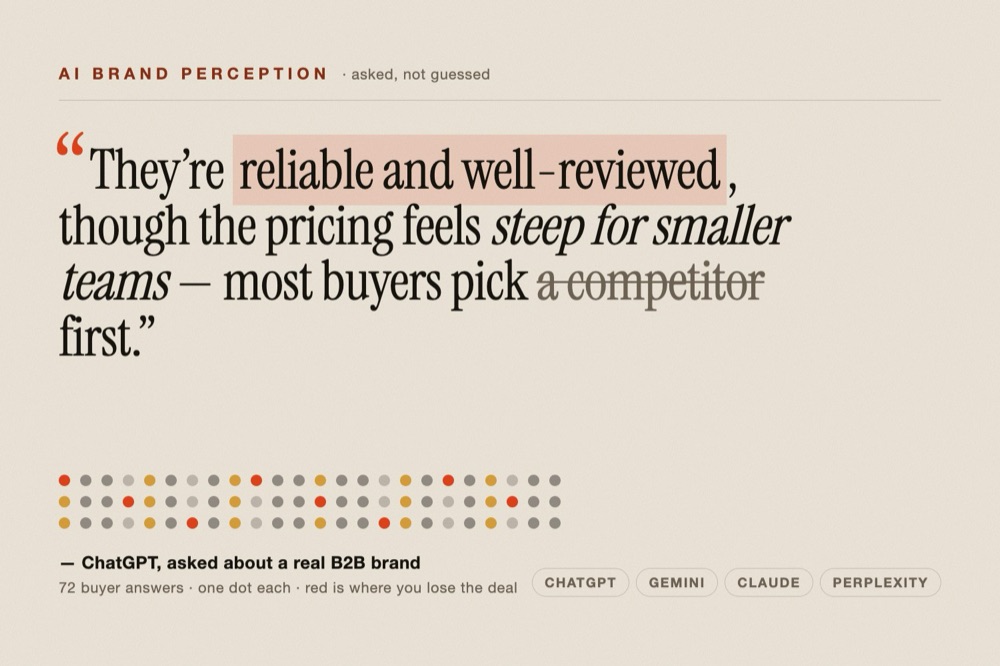
Ask ChatGPT about your brand and it answers in one confident paragraph — a paragraph you didn't write, shown to millions of buyers as fact. That paragraph is your AI brand perception: how AI assistants describe, characterize, and effectively "feel" about you at the moment someone is deciding. It's becoming the first impression, formed before anyone reaches your website. This guide explains what AI brand perception is, what a proper analysis examines, and how to track and improve it.
What is AI brand perception?
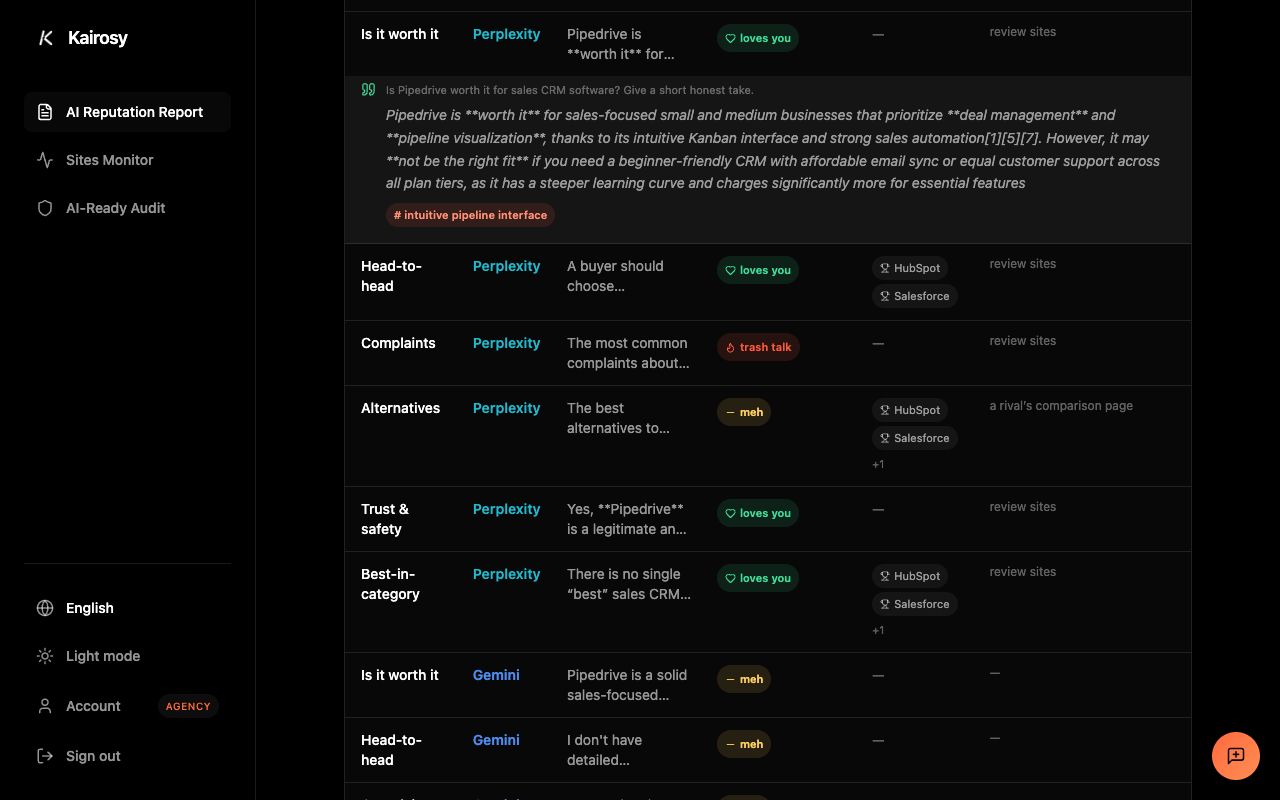
AI brand perception is the impression AI assistants — ChatGPT, Gemini, Claude, and Perplexity — convey about your brand when a user asks. It isn't an opinion the AI holds; it's what the model asserts as fact, synthesized from its training data and the third-party sources it retrieves.
That makes it fundamentally different from traditional brand perception. Traditional perception is what humans think, measured indirectly through surveys, focus groups, and social listening — lagging and sampled. AI brand perception is what a machine states plainly to millions of users, often with no logos, no nuance, and no input from you. It's mediated by the sources AI cites, it's scalable, and it's increasingly the front door to your brand. And it's fixable only upstream — at the sources — not by editing your homepage.
Why does it matter now? Because buyers increasingly trust these answers. Bain & Company found in April 2026 that around half of online buyers already trust generative AI for initial research and comparisons — the exact stage where perception forms.
What AI brand perception analysis examines
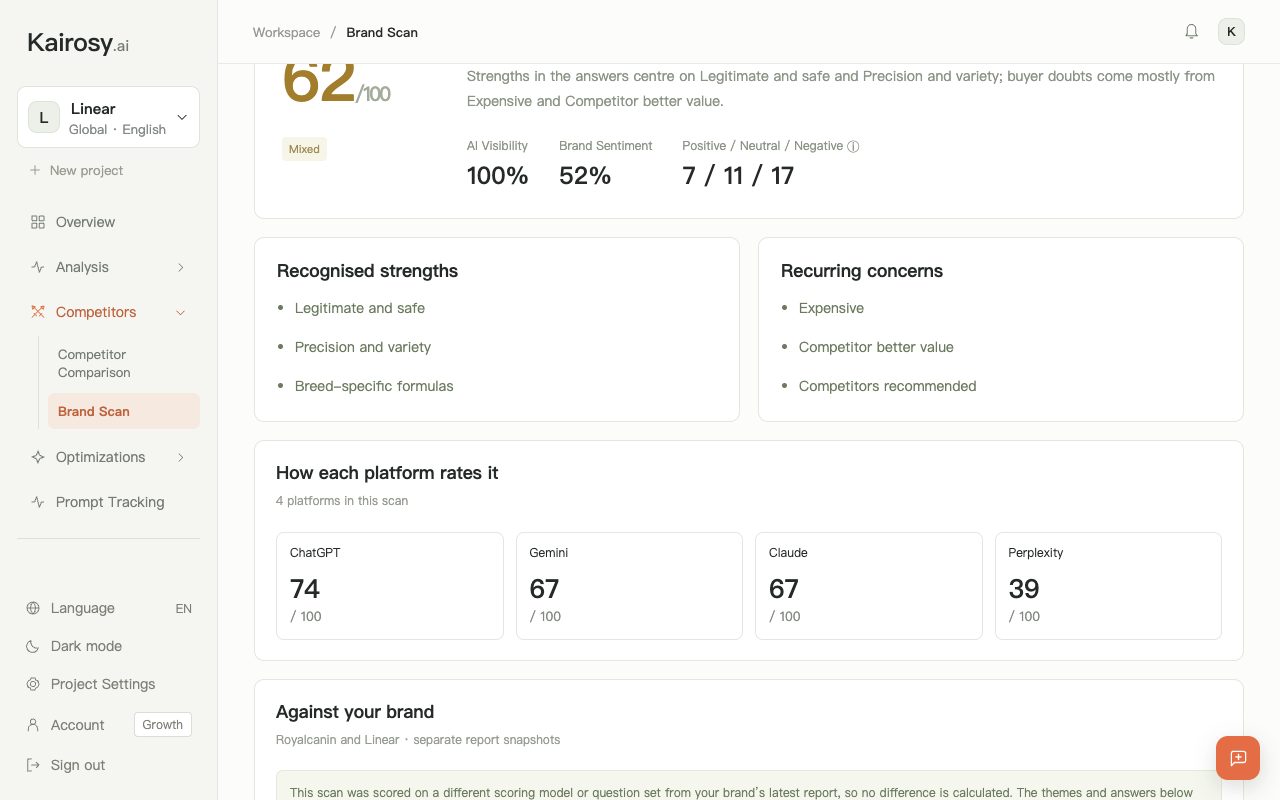
A proper AI brand perception analysis looks at five things, not just whether you're mentioned:
| Dimension | What it reveals |
|---|---|
| Sentiment / tone | Whether the emotional tone AI uses about you is positive, neutral, or negative — per engine, per question. |
| Factual accuracy | Whether the claims AI states — price, features, category, founding — are correct or hallucinated. |
| Attribute associations | Which adjectives and themes the model links to you ("affordable but limited," "enterprise-grade"). |
| Recommendation vs rivals | Whether AI names, ranks, or recommends you — or a competitor — for buyer questions. |
| Sources | Which pages the model pulls from — the upstream leverage points to fix. |
The last two are where perception becomes actionable. If AI describes you as "pricey with slow support," that framing came from somewhere specific — a review site, a Reddit thread, an outdated comparison — and that's where the correction has to happen. This is also why AI brand perception analysis has to run across every engine, not just one: the same brand can read as "the trusted market leader" in Claude and "one of several options" in Perplexity, because each model was trained on a different slice of the web and cites different sources. A single-engine read gives you a falsely tidy picture and hides the engine where you're losing.
How to track and improve your AI brand perception
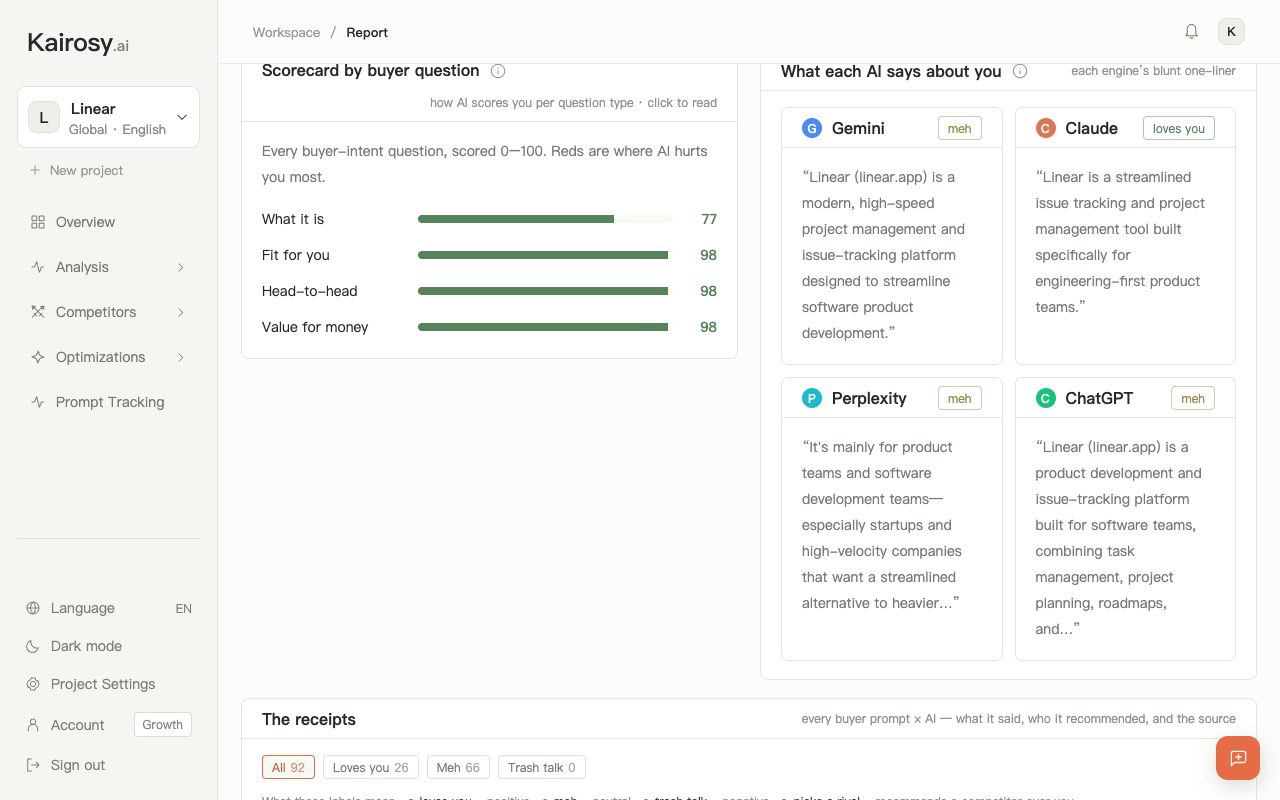
Perception isn't fixed — it moves when you act on the sources shaping it. The method is a loop: scan the same buyer-intent prompts across all four engines; classify each answer's sentiment and track it over time; find the wrong or negative claims and trace them to their source; correct the facts and strengthen the pages AI cites; then re-scan to confirm the narrative moved. Because AI answers vary run to run, you can only track brand perception in AI-generated summaries reliably by using a fixed prompt set and repeating it — a single check is a snapshot, not a trend.
The improvement work is mostly upstream. You can't edit what Perplexity says, but you can update the G2 listing it quotes, correct the Wikipedia entry it trusts, publish the clear factual page it lacks, and earn accurate mentions on the forums it reads. Fix the sources, and the perception follows on the next crawl. Before any of that, confirm AI crawlers can read your own pages — if they can't, the model is building its impression of you entirely from third parties, which is the worst-case scenario: a portrait of your brand painted only by outsiders.
Patience matters here in a way it doesn't for a homepage edit. Changing a source doesn't change the answer instantly; the model has to re-crawl and, for training-based impressions, sometimes wait for a refresh. That lag is exactly why tracking perception as a trend — rather than checking once and declaring victory — is the only way to know whether your fixes actually landed.
Tools to analyze AI brand perception
Four tools that measure how AI describes you, from AI-native scanners to social-listening suites that added AI.
Kairosy
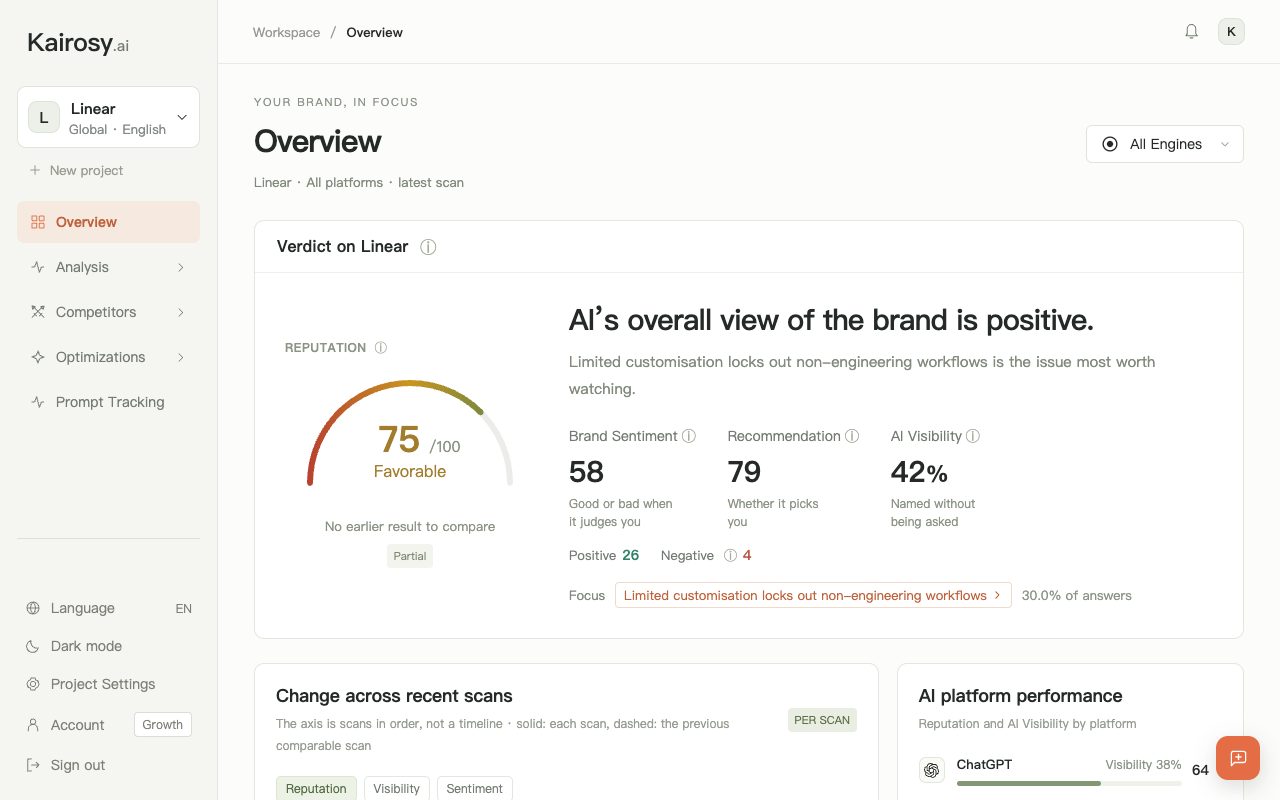
Kairosy asks ChatGPT, Gemini, Claude, and Perplexity real buyer questions and classifies each answer's sentiment as positive, neutral, or negative — producing a favorability score, the exact negative quotes, the sources driving them, and a fix plan. It tracks weekly, so you see perception shift over time. See a live example in this Brooklinen AI performance report; the first scan is free.
Profound
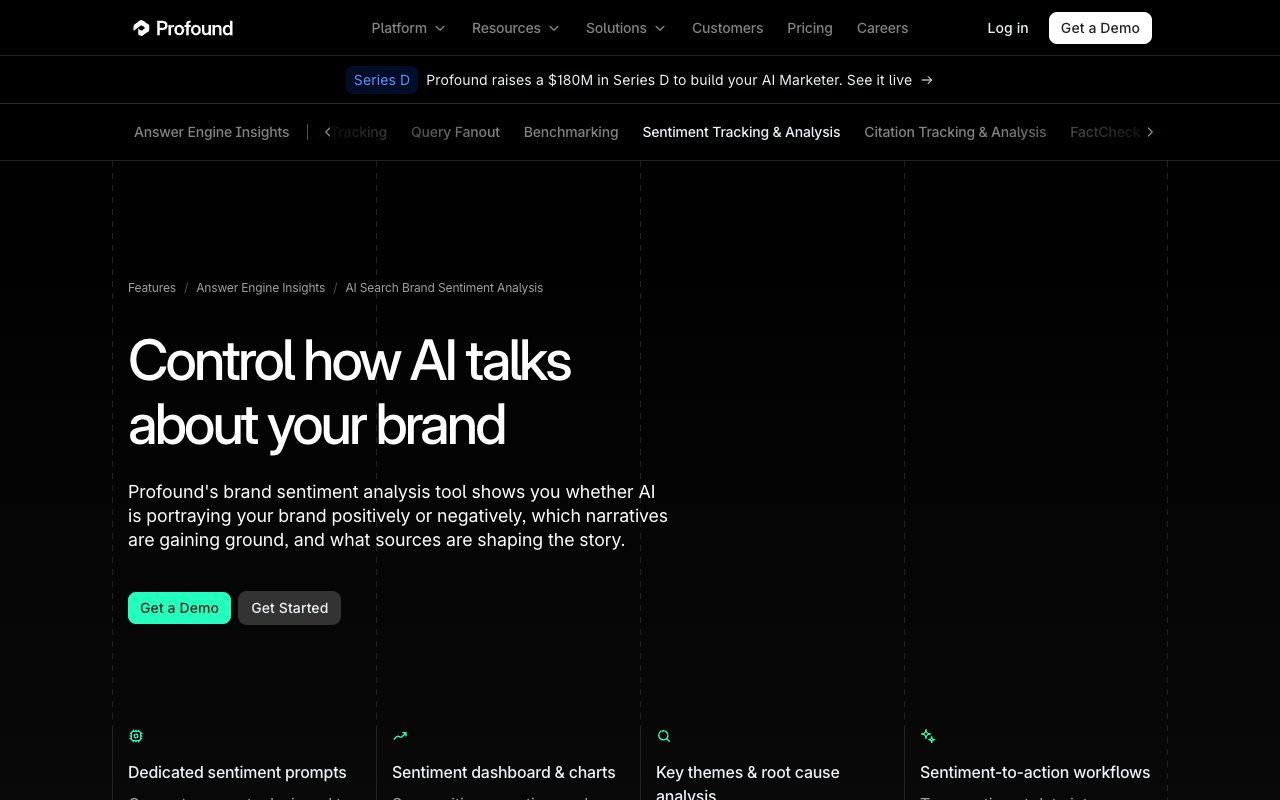
Profound is an enterprise answer-engine platform whose Brand Sentiment feature measures how AI systems characterize your brand across the major engines, alongside visibility and source citations. Its "Prompt Volumes" panel data — real consumer AI queries — sets it apart for large teams.
Otterly.ai
Otterly.ai reports a Net Sentiment Score from −100 to +100, measuring the emotional tone AI engines use when they mention you across ChatGPT, Gemini, Perplexity, and Google's AI surfaces. It's an accessible way to put a single number on perception and watch it move.
Brand24 and Brandwatch
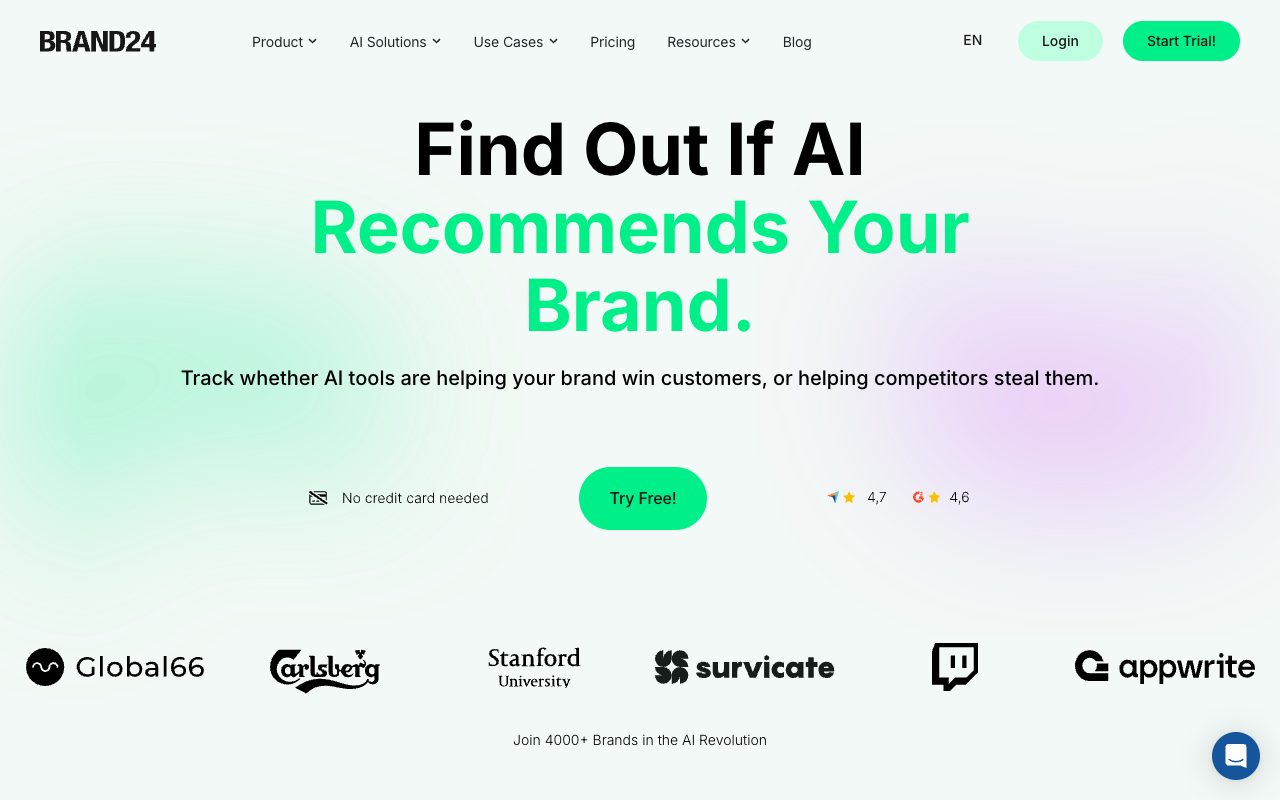
Brand24 is a social-listening tool that added AI monitoring, reporting a Brand Score based on the sentiment of AI responses across ChatGPT, Gemini, Claude, and Perplexity — handy if you want AI perception beside traditional social sentiment. Brandwatch offers similar enterprise-grade AI brand-reputation features for large consumer brands.
AI brand perception FAQs
Can I control what AI says about my brand?
Not directly — you can't edit the answer. But you strongly influence it by correcting the sources AI cites: your own pages, review sites, Wikipedia, and forums. Change the inputs and the perception changes on the next crawl.
How is AI brand perception different from online reputation?
Online reputation is largely human opinion scattered across reviews and social posts. AI brand perception is a single synthesized verdict a model states as fact — often drawn from that same content, but compressed into one confident answer a buyer reads first.
How much do people trust AI's description of a brand?
Trust is real but partial. Bizrate Insights found in May 2026 that only 15% of shoppers fully trust AI-generated summaries, while 38% somewhat trust AI while shopping — enough that a bad AI impression costs you real buyers.
What's the fastest way to check my AI brand perception?
Run a free scan that classifies how each engine describes you. Kairosy's monthly scan returns your favorability score and the specific negative quotes in about 25 seconds, which is more than enough to see at a glance whether AI brand perception is a real problem worth fixing or already working in your favor.
See what AI says about your brand
Run a free scan across ChatGPT, Gemini, Claude & Perplexity in about 30 seconds.
Run my free scan