AI Tools for Competitor Positioning & Messaging (2026)
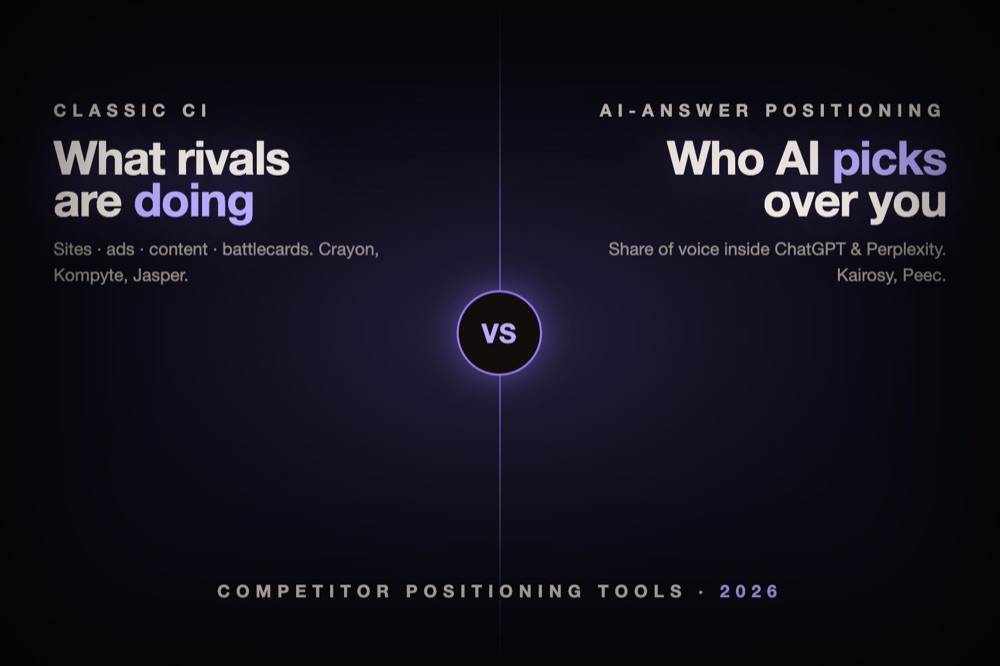
Competitor positioning used to mean watching what rivals published — their pricing pages, ads, launches, reviews — and sharpening your marketing messaging in response. That still matters. But a second front has opened that most teams aren't watching: how AI answer engines position you versus your competitors when a buyer asks "what's the best tool for X?" You can have flawless classic positioning and still lose, quietly, inside a ChatGPT answer that recommends someone else.
This guide covers both — the classic AI competitor-analysis tools that sharpen messaging, and the new category that tracks your competitor positioning inside AI answers — with facts checked against each vendor's own site in July 2026.
- Two kinds of tool
- Classic intelligence & messaging
- Positioning inside AI answers
- Running competitive AI-search data
Two Kinds of Competitor Positioning Tool
They answer different questions, and neither shows the other's picture:
- Classic competitive intelligence & messaging — tools that watch competitors' open-web footprint (site changes, ads, content, win-loss) and help you craft on-brand copy. Great for battlecards and messaging; blind to AI answers.
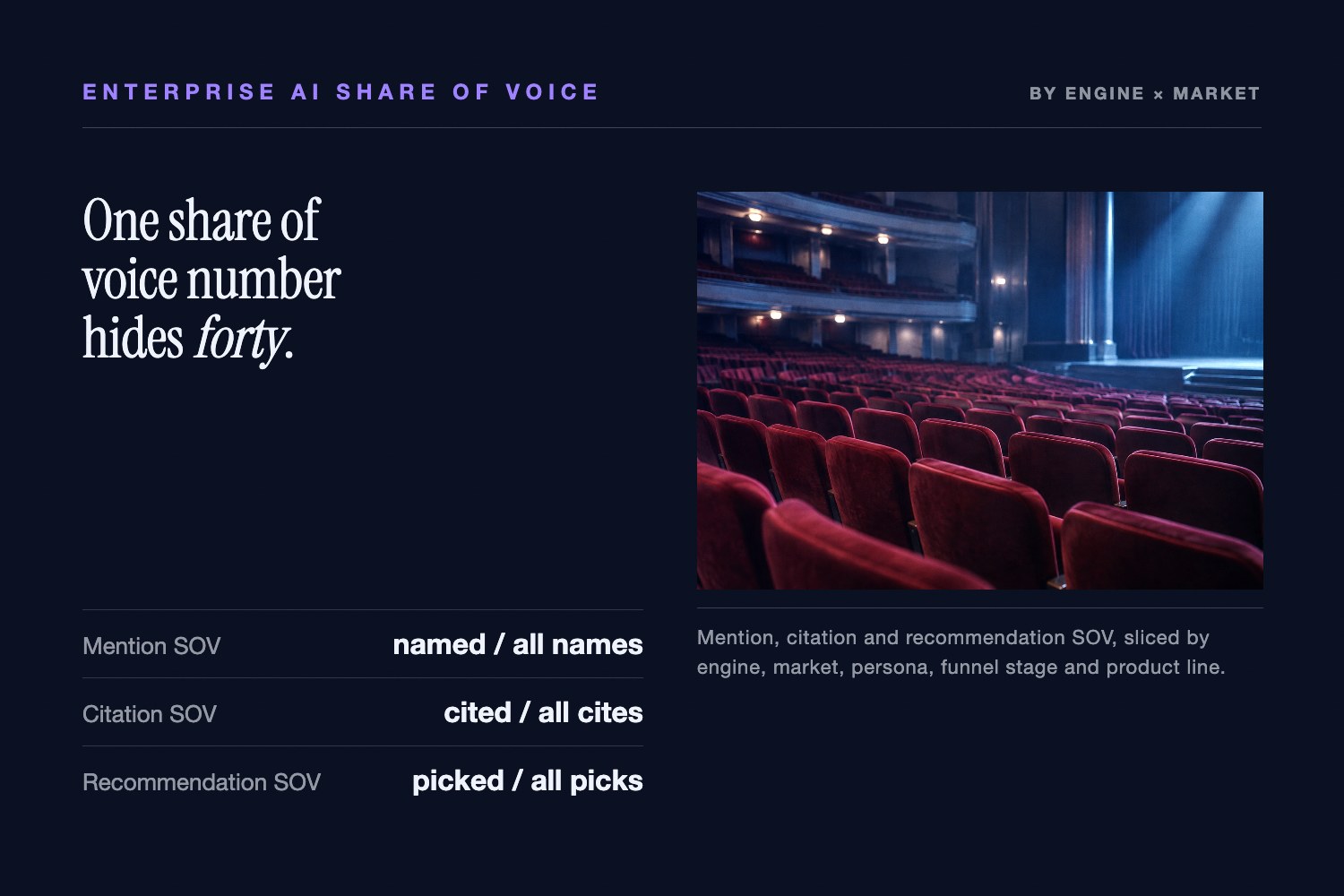
- AI-answer positioning — tools that measure how often ChatGPT, Gemini, Perplexity and Claude pick you over each rival on buyer questions: your share of voice inside the answer itself. Great for the surface where buying decisions increasingly start; silent on classic web moves.
| Classic CI & messaging | AI-answer positioning | |
|---|---|---|
| Watches | Rivals' sites, ads, content, reviews, jobs | Who ChatGPT / Gemini / Perplexity recommend |
| Output | Battlecards, alerts, messaging copy | Share of voice inside answers + cited sources |
| Blind spot | The AI answer layer | Rivals' classic web moves |
| Tools | Crayon, Kompyte, Jasper, Anyword | Kairosy, Peec AI |
Strong competitor positioning in 2026 needs both — the classic view of what rivals are doing, and the AI view of whether the machine buyers trust is recommending them over you.
The Best Classic Competitive Intelligence Tools
The mature camp. Most price by demo, so we flag where numbers aren't public rather than guess.
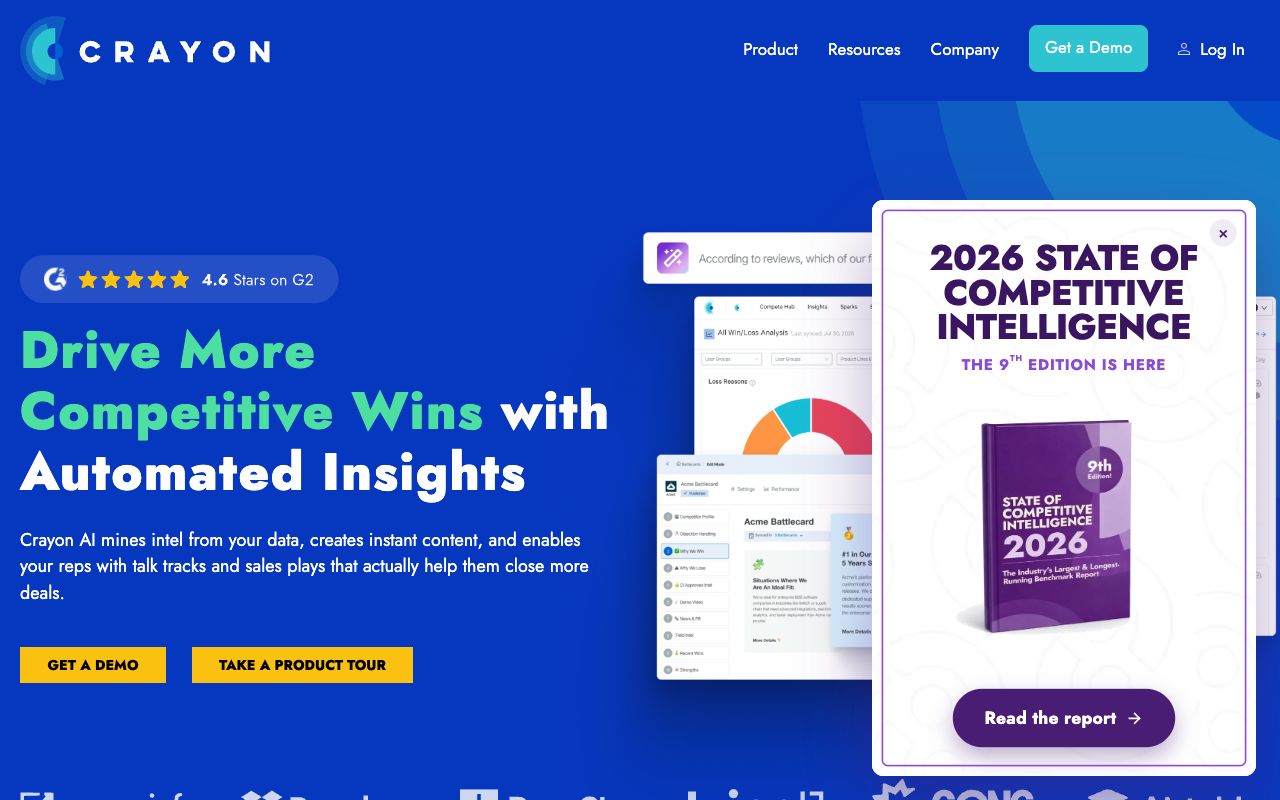
Crayon — competitive intelligence & battlecards
Crayon is a classic competitor analysis tool: it monitors rivals' website, pricing, news and content changes, AI-summarises and scores them, builds battlecards, and pushes intel into Salesforce and Slack, with win-loss and influenced-revenue tracking. Pricing is demo-gated — no public figure — so book a demo to scope it. The workhorse for sales-led teams that live and die by battlecards.
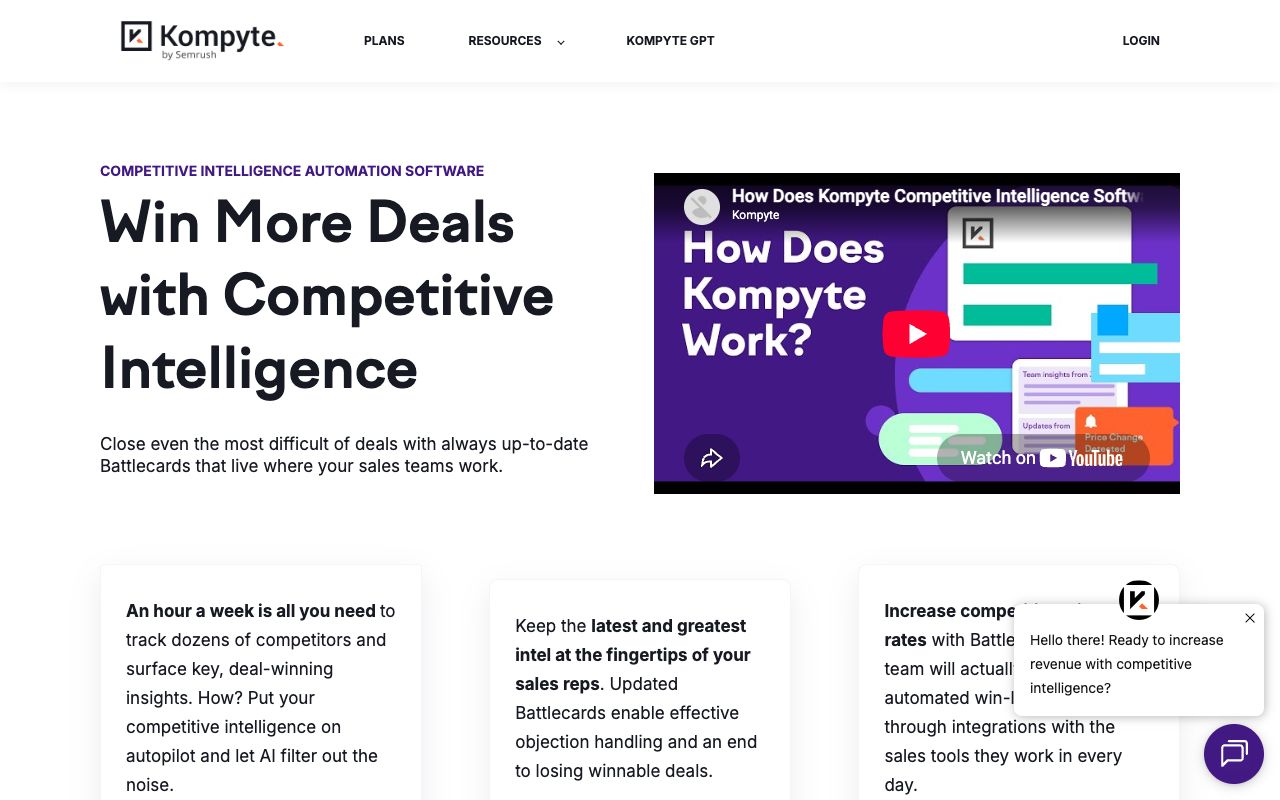
Kompyte — CI tied to your GTM stack
Kompyte (now owned by Semrush) tracks competitors across websites, reviews, social, ads and job posts, with AI summaries, battlecard templates and CRM integrations. Pricing is demo-gated. A solid second option if you want competitive intelligence wired directly into HubSpot or Salesforce alerts.
Jasper & Anyword — the messaging layer
For the marketing-messaging half of the job, two tools stand out. Jasper (Pro $69/month per seat) embeds your brand voice into AI-generated copy so messaging stays on-brand at scale. Anyword (Starter $49/month) predicts which messaging variant will convert before you publish and manages brand voice across channels. Use either to turn competitive insight into sharper positioning copy.
How AI Answers Position You vs Competitors
This is the camp almost nobody is covering, and where buyer decisions are moving. These tools measure your competitor positioning where it now counts — inside the AI answer.
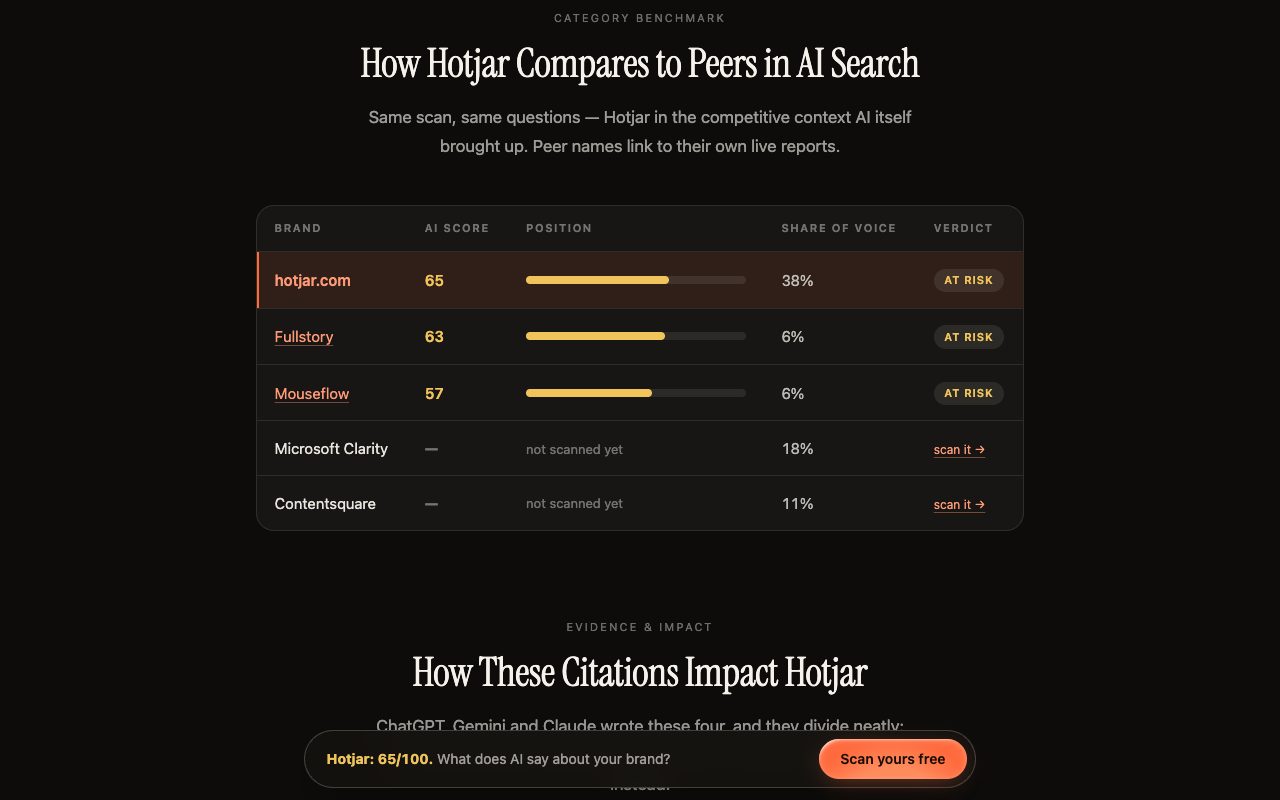
Kairosy — competitor share of voice in AI answers
Kairosy asks ChatGPT, Gemini, Claude and Perplexity the buyer questions your customers ask, then shows exactly how often AI picks you over each competitor — and where you're losing the shortlist. It scores your AI presence, traces every mention to its source, and flags who gets recommended instead. Free scan, no card; paid plans Basic $29, Pro $99, Growth $399/month. The clearest read on AI-answer positioning with transparent, public pricing.
Peec AI — competitor benchmarking across engines
Peec AI tracks brand and competitor visibility, position and sentiment across ChatGPT, Perplexity, Gemini and more, with competitive dashboards agencies use for client reporting. Its plans are tiered but the prices render only at signup — third-party reviews report a Starter tier in the low hundreds per month, so confirm on Peec's own page before buying. A good second AI-answer positioning option with an SEO/agency flavour.
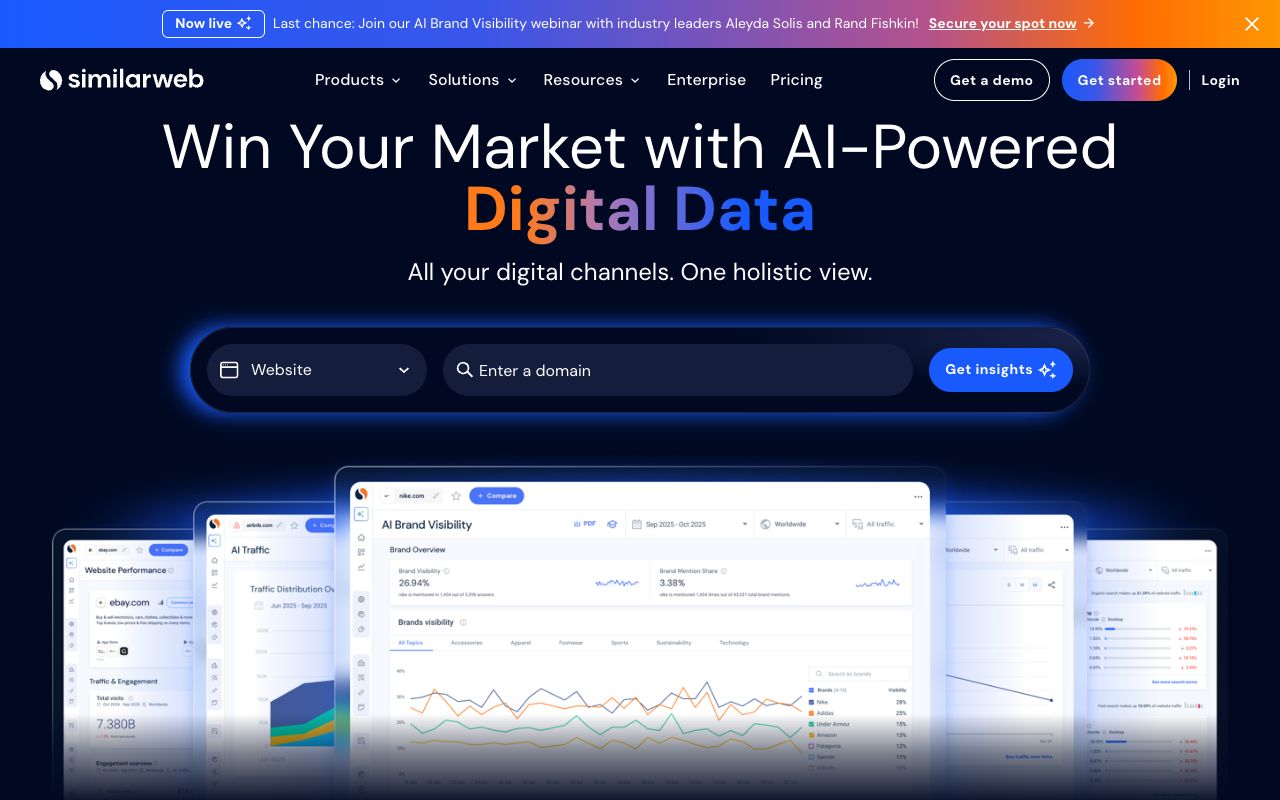
One tool worth naming for scale: Similarweb remains the data layer many classic competitor-analysis workflows sit on (competitor traffic, channels, audience), though its paid pricing is sales-quoted. Use it for market sizing, not AI-answer positioning.
How to Conduct Competitive AI-Search Data
You can start gathering competitive AI-search data manually before buying anything — it's the same loop the AI-answer tools automate:
- List the buyer questions where you and rivals compete: "best [category] tool", "[you] vs [rival]", "top [category] alternatives".
- Ask each engine — ChatGPT, Gemini, Perplexity — and record who's named, in what order, and how favorably.
- Tally share of voice: across your prompt set, what percent of answers name you versus each competitor?
- Note the AI Overview. Tools to analyze competitor presence in AI Overview and AI Mode matter because Google's answer surfaces cite a different mix of sources than the chatbots.
- Trace the sources your rivals are cited from — that's where their positioning advantage lives, and your fix list.
Whichever tools you choose, the closing principle holds: competitive intelligence only pays off if you act on it. Before you optimise your own position, make your pages easy for models to quote with our free Reading Level Checker (dense, jargon-heavy copy rarely makes it into answers), pair it with ongoing AI brand monitoring, and see competitor share of voice on a real brand in our ActiveCampaign AI performance report.
Competitor Positioning Tools FAQs
What are the best AI tools for competitor positioning and marketing messaging?
For classic competitive intelligence and battlecards, Crayon or Kompyte; for on-brand messaging execution, Jasper or Anyword; for competitor positioning inside AI answers, Kairosy or Peec AI. Strong positioning in 2026 uses both camps — the classic view of rivals' moves and the AI view of who the engines recommend.
What's a competitor analysis tool in the AI era?
Traditionally, software that scans competitors' web footprint (site, ads, content) and flags changes. The AI era adds a new kind: a competitor analysis tool that measures how AI answer engines position you versus rivals — your share of voice inside ChatGPT and Perplexity answers — which classic tools can't see.
How do I analyze competitor presence in AI Overview?
Ask Google's AI Overview your category's buyer questions and record which brands it names and which sources it cites, or use tools to analyze competitor presence in AI Overview at scale. Because AI Overviews cite a different source mix than the chatbots, track it separately from ChatGPT and Perplexity.
How do I conduct competitive AI-search data collection?
Define a fixed set of buyer prompts, run them through each engine on a schedule, and log who's mentioned, in what position, how favorably, and from which sources — then compute share of voice. Do it manually for a few prompts, or use an AI-answer positioning tool to scale it.
Can one tool cover both classic and AI-answer positioning?
Rarely well. Classic competitive-intelligence tools and AI-answer positioning tools are built for different data, so most teams pair them: a CI tool for rivals' web moves and a Kairosy-style tool for how AI recommends you versus them.
Classic tools tell you what a competitor is doing; AI-answer tools tell you whether the model buyers now trust is recommending them over you. Miss the second and your competitor positioning has a blind spot exactly where the next deal starts. Your competitors might be winning the AI answer without either of you knowing it. Run a free scan to see how often ChatGPT, Gemini and Perplexity pick you over them today — and where your positioning is quietly leaking.
See what AI says about your brand
Run a free scan across ChatGPT, Gemini, Claude & Perplexity in about 30 seconds.
Run my free scan