AI Share of Voice: What It Is & How to Measure It (2026)
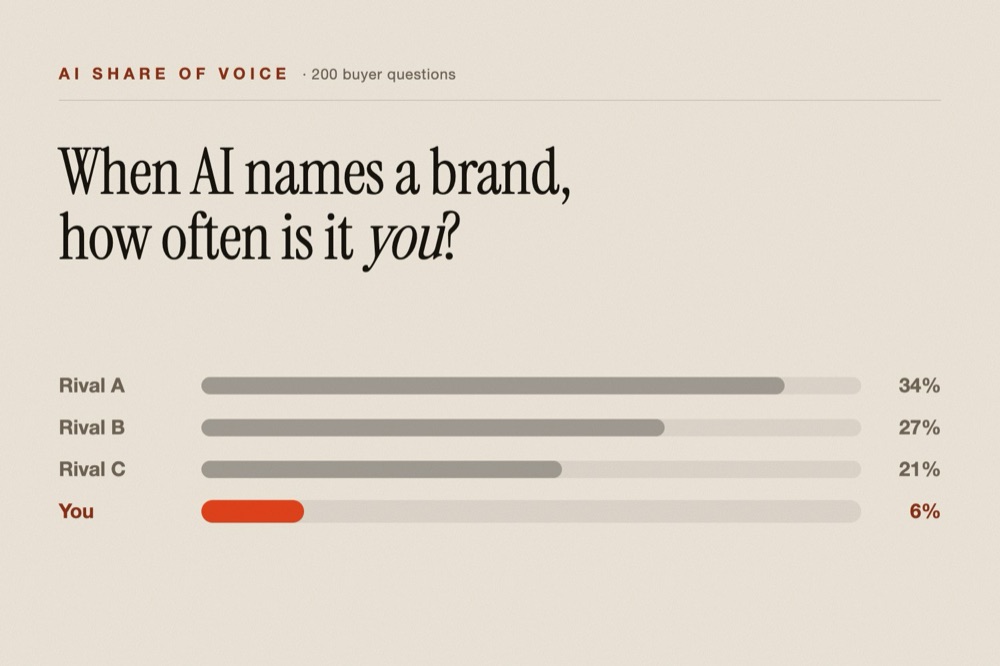
For twenty years, marketers measured share of voice on search results pages and ad impressions. That yardstick is quietly breaking. When a buyer asks Perplexity "what's the best project tool for a small team," they get one synthesized answer naming two or three brands — not ten blue links. Either you're in that shortlist or you're invisible. AI share of voice is the metric that measures how often you make the cut. This guide explains what it is, how it's calculated, why it belongs on your marketing dashboard, and three tools that track it.
What is share of voice in AI search?
AI share of voice is the percentage of AI-assistant answers — across ChatGPT, Gemini, Perplexity, Claude, and Google AI Overviews — about a topic or buying category in which your brand is mentioned or recommended, versus the total mentions competitors receive. Where traditional SEO share of voice measures your slice of clicks or keyword rankings on a results page, AI share of voice measures inclusion inside the synthesized answer itself.
That makes it more binary than the old metric. So what is share of voice in AI search really telling you? It answers a blunt question: when a buyer asks AI about your category, how often does your brand come up, and how do you stack up against rivals? There's no page two in an AI answer — you're in the recommendation set or you're nowhere.
How is AI share of voice calculated?
The basic formula most tools report is simple:
| Metric | Formula |
|---|---|
| Basic AI share of voice | (your brand mentions ÷ total brand mentions across a prompt set) × 100 |
| Position-weighted variant | each mention weighted by 1 ÷ its position (first = 1.00, second = 0.50, third = 0.33), then your weighted mentions ÷ total weighted mentions |
You fix a representative set of category and buyer-intent prompts, run them across the AI engines on a schedule, count the brand mentions, and divide. The position-weighted variant rewards being named first or most prominently, not merely being present — a sharper reflection of how much influence the answer actually gives you, since the first brand a model names carries far more weight with a buyer than the fourth. To measure your brand AI search share of voice reliably, keep the prompt set fixed and re-run it over time so month-to-month numbers stay comparable; changing the prompts is like changing the questions on a survey mid-study. Because AI answers are non-deterministic, most tools also run each prompt several times and average the results, so a single lucky mention doesn't inflate your number.
Why AI share of voice matters as a marketing metric
AI share of voice sits alongside other AI share of voice marketing metrics like position and sentiment, and it earns its place for a simple reason: AI answers increasingly shape decisions before a buyer reaches any website. Gartner predicted that traditional search engine volume would drop 25% by 2026 as users shift to AI assistants — a forecast rather than a settled outcome, but the direction is unmistakable, and Adobe Analytics has tracked AI-referred retail traffic climbing steeply through 2026.
Treated as a marketing metric, share of voice does three jobs a single visibility check can't. It benchmarks you against named competitors rather than an abstract score, so a board can see exactly who is winning the category conversation. It trends over time, turning "are we showing up in AI?" into a line on a dashboard that moves when you ship fixes. And it localizes: your share of voice can be strong in Perplexity yet weak in ChatGPT, or solid for one buyer question and absent for another — a category average hides the gaps that actually cost you deals.
One caveat matters. Raw share of voice counts mentions but not tone — a high AI share of voice paired with a negative or inaccurate framing is a liability, not a win. That's why mature measurement pairs it with AI sentiment analysis for brands: the goal is share of voice weighted by favorability, not mentions alone. Being named often and described badly is its own kind of problem, and it points your fixes at the framing, not just the visibility.
3 tools to measure AI share of voice
Three platforms built around competitive AI visibility, plus a budget pick and where Kairosy fits.
Profound
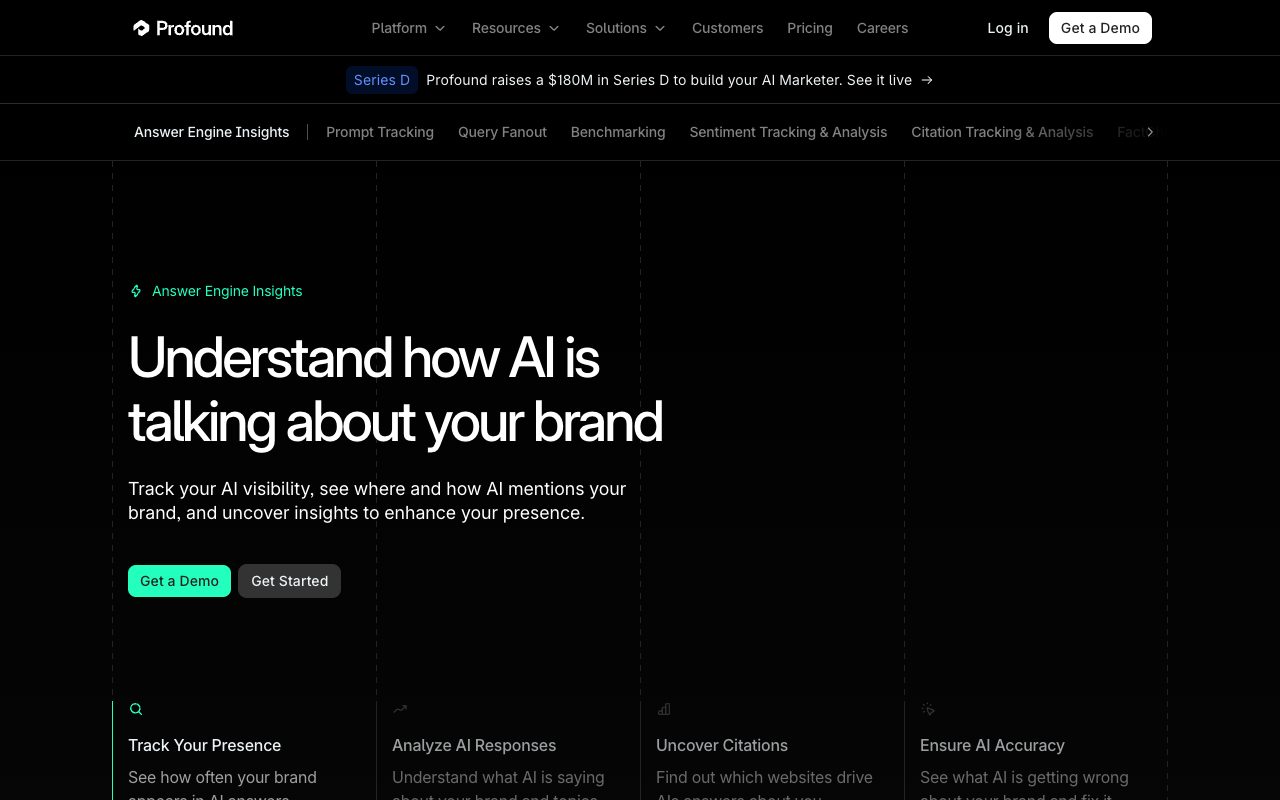
Profound tracks brand visibility, share of voice, sentiment, and source citations across ChatGPT, Gemini, Claude, and Perplexity, re-running each tracked prompt daily. It raised a $35M Series B led by Sequoia in 2025 and serves enterprise customers like Ramp and MongoDB — priced and positioned for larger teams.
Peec AI
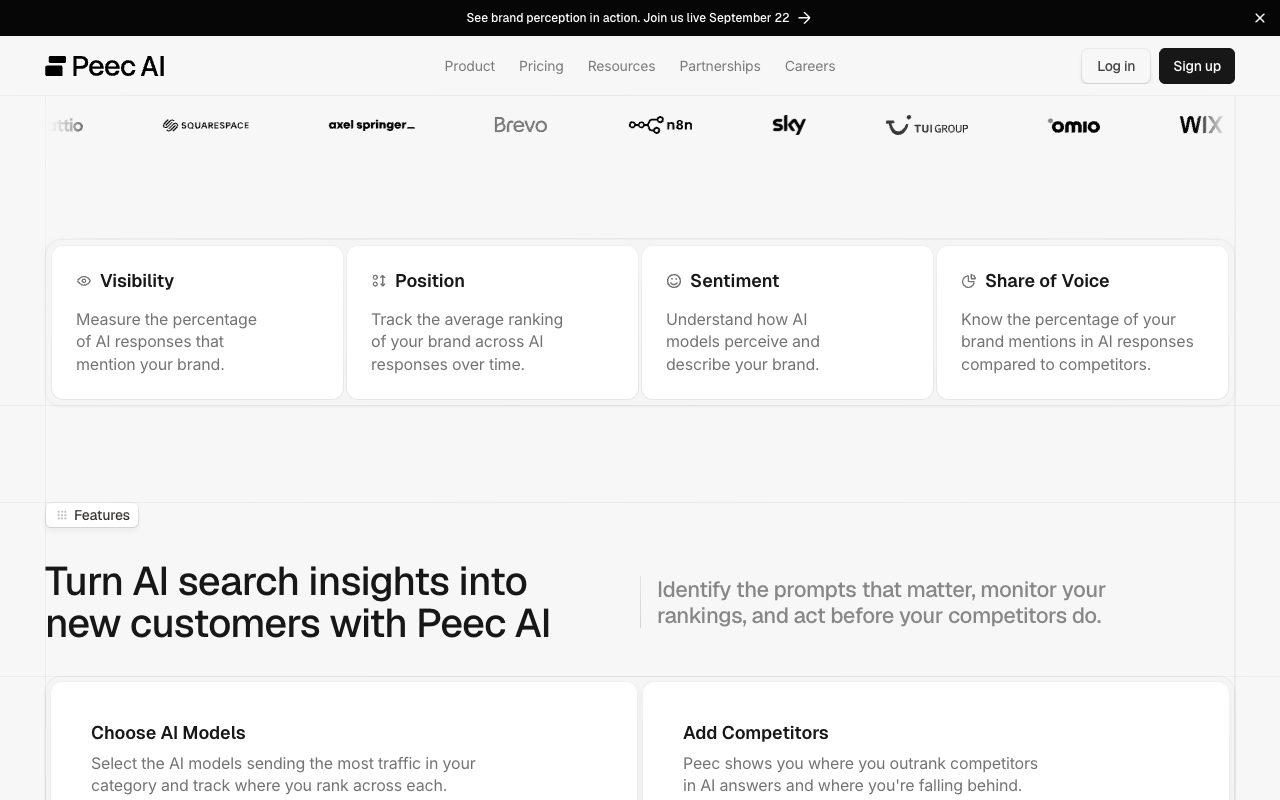
Peec AI is built explicitly around share of voice: its product lists four core metrics — visibility, position, share of voice, and sentiment — benchmarked against competitors across ChatGPT, Perplexity, and Gemini. If head-to-head competitive tracking is your priority, it's the most SOV-native option here.
Semrush AI Visibility Toolkit
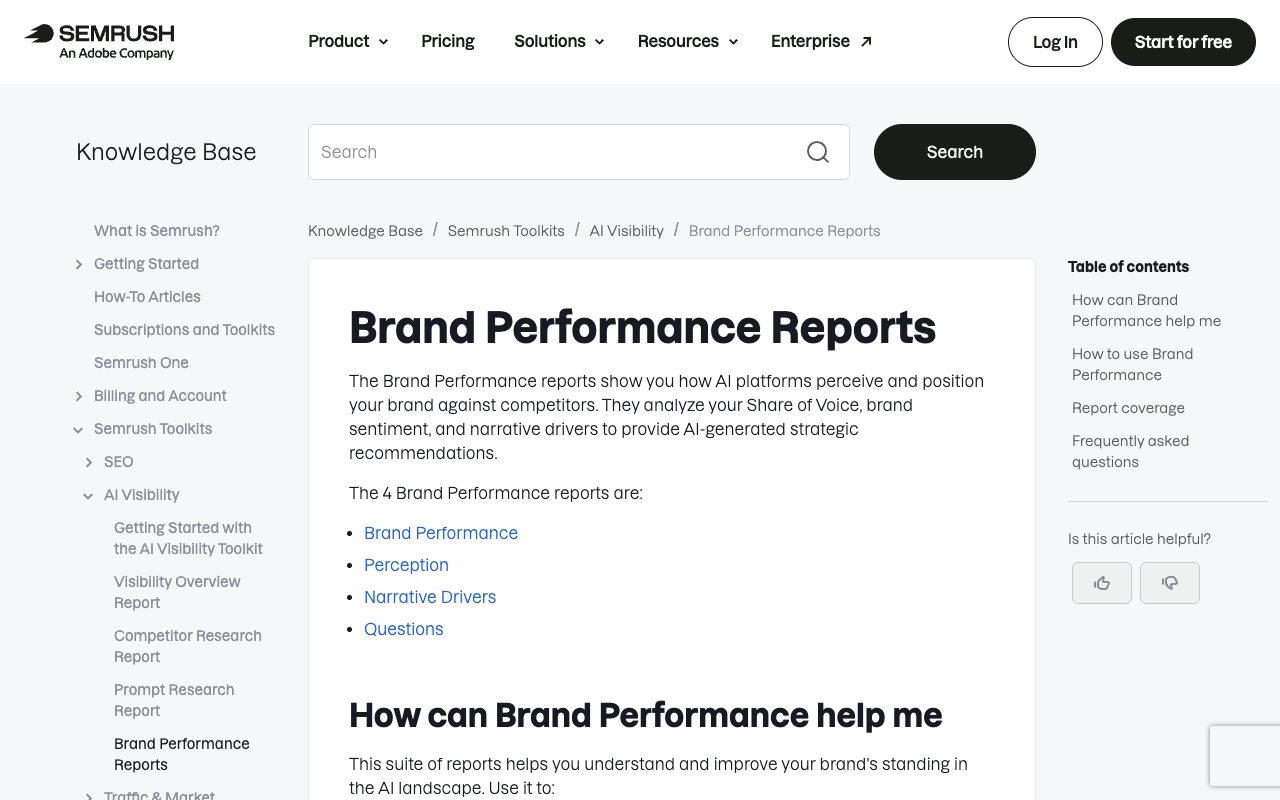
Semrush layers AI share of voice and sentiment onto the SEO suite many teams already run. Its Brand Performance reports track share of voice across AI platforms with daily prompt updates, and it publishes its own guide to measuring the metric — handy if you'd rather not add another login.
Budget pick and where Kairosy fits

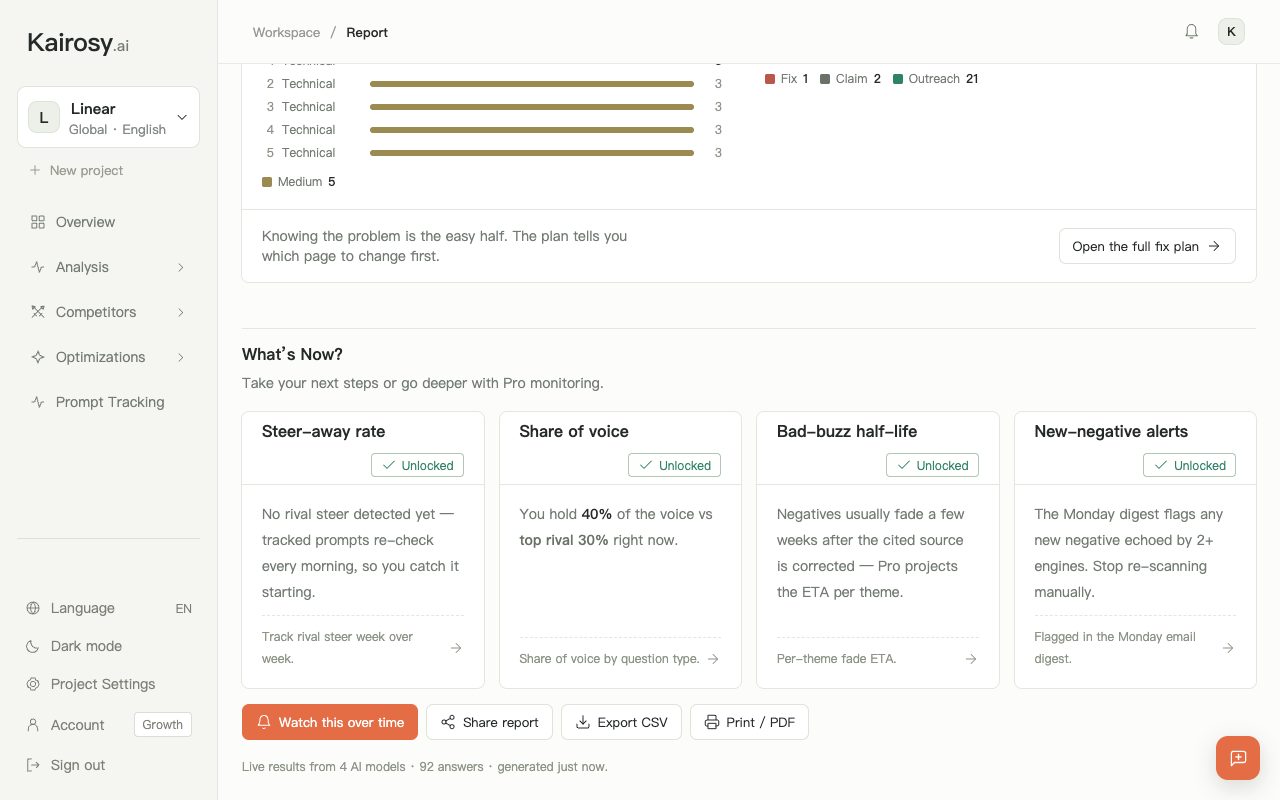
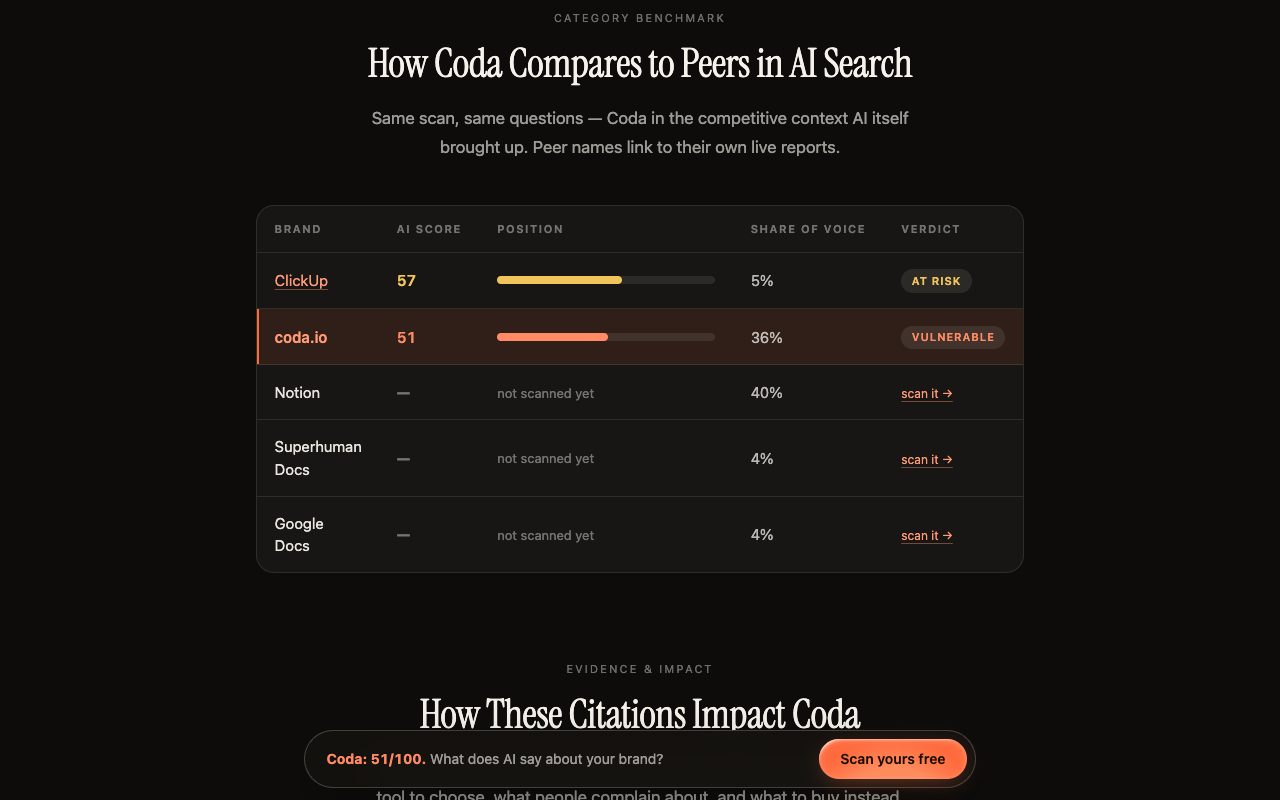
For a cheaper entry, Otterly.ai tracks brand mentions, average position, and share of voice from $29/mo across six engines. And Kairosy bundles the two signals section three said you should never separate: it scans ChatGPT, Gemini, Claude, and Perplexity with real buyer questions and returns your AI visibility and favorability together, naming the rival brands AI keeps recommending — effectively share of voice plus sentiment in one report. See it in this Coda AI performance report, or run your own free scan.
AI share of voice FAQs
What's a good AI share of voice?
There's no universal benchmark, and it varies widely by category — read it against direct competitors and your own trend instead. A rising share against named rivals is the signal that matters far more than any absolute percentage, and any "market leaders hold 25–40%" figure floating around the internet should be treated as unverified until you can trace it to a real source.
How is AI share of voice different from traditional share of voice?
Traditional share of voice measures your slice of ad impressions, clicks, or rankings on a crowded page. AI share of voice measures inclusion in a single synthesized answer that names only a few brands — a more all-or-nothing outcome.
Should I track sentiment alongside share of voice?
Yes. Mentions without tone can mislead — a brand can dominate share of voice while being described as expensive or unreliable. Pairing share of voice with sentiment tells you whether that visibility actually helps you.
Can I check my AI share of voice for free?
Kairosy's scan is free for 7 days and shows your visibility, favorability, and the rivals AI names alongside you. It's a fast way to see roughly where you stand before committing to a paid benchmarking platform. Before that, it's worth checking that AI crawlers can read your site at all.
See what AI says about your brand
Run a free scan across ChatGPT, Gemini, Claude & Perplexity in about 30 seconds.
Run my free scan