FAQ Schema SEO in 2026: Google Dropped It — AI Didn't
On May 7, 2026, Google finished what it started in 2023: FAQ rich results are now gone from Google Search entirely. If your FAQ schema SEO playbook was written for those expandable dropdowns on the results page, it is officially out of date. Yet here is the twist — the same markup Google stopped rewarding has quietly become one of the most useful signals you can hand to ChatGPT, Perplexity, Gemini and Google's own AI Overviews.
This guide covers what FAQ schema is, exactly what Google changed (with dates), why the markup now matters more for answer engines than for classic FAQ SEO, and a best-practice checklist you can apply today.
- What is FAQ schema?
- Google killed FAQ rich results: the timeline
- Why it still matters for AEO & GEO
- Best practices in 2026
- AI-generated FAQs for GEO
- How to validate it free
What Is FAQ Schema?
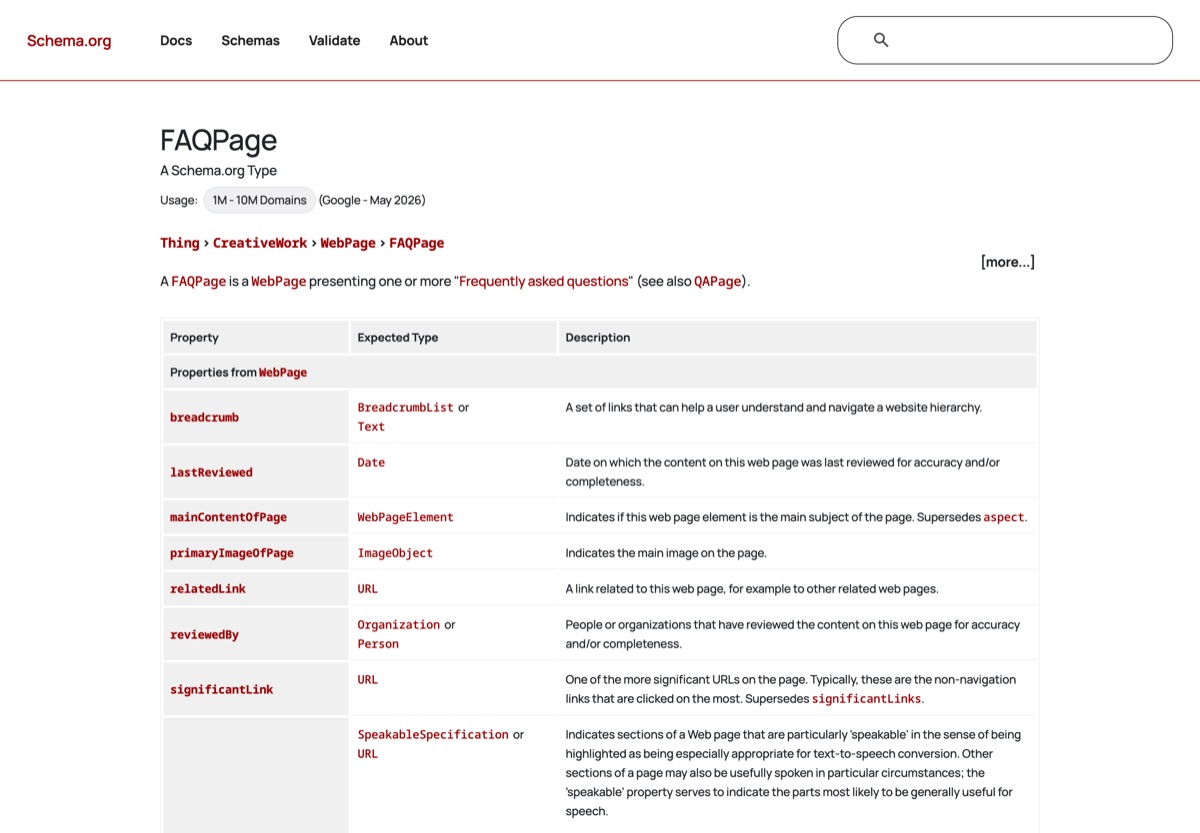
FAQ schema is structured data that labels a question-and-answer block on your page so machines can read it without guessing. The schema.org FAQPage definition is refreshingly short: "A FAQPage is a WebPage presenting one or more 'Frequently asked questions'." In the type hierarchy it sits under Thing → CreativeWork → WebPage → FAQPage, and each entry is a Question with an acceptedAnswer. It is not a niche tag either — schema.org lists FAQPage as in use on 1–10 million domains.
Schema.org itself — the vocabulary founded by Google, Microsoft, Yahoo and Yandex in 2011 — is the shared dictionary all the engines read. In practice you add FAQ markup as a JSON-LD block:
{
  "@context": "https://schema.org",
  "@type": "FAQPage",
  "mainEntity": [{
    "@type": "Question",
    "name": "What is FAQ schema?",
    "acceptedAnswer": {
      "@type": "Answer",
      "text": "FAQ schema (FAQPage)
        is structured data that
        marks up Q&A content so
        search and AI engines can
        parse each pair cleanly."
    }
  }]
}
Google Killed FAQ Rich Results: The Full Timeline
The change did not happen overnight, and the dates matter because they explain why so much FAQ seo advice online is stale:
| Date | What Google changed | Who felt it |
|---|---|---|
| August 2023 | FAQ rich results restricted to "well-known, authoritative government and health websites" | Everyone else's dropdowns disappear |
| May 2025 | Deprecation notice lands in the FAQ structured-data documentation | The writing is on the wall |
| January 6, 2026 | FAQ reporting purged from Search Console and the Rich Results Test | Your validation workflow breaks |
| May 7, 2026 | Per Google's docs, the feature "will no longer appear in Google Search" at all | FAQ rich results are history |
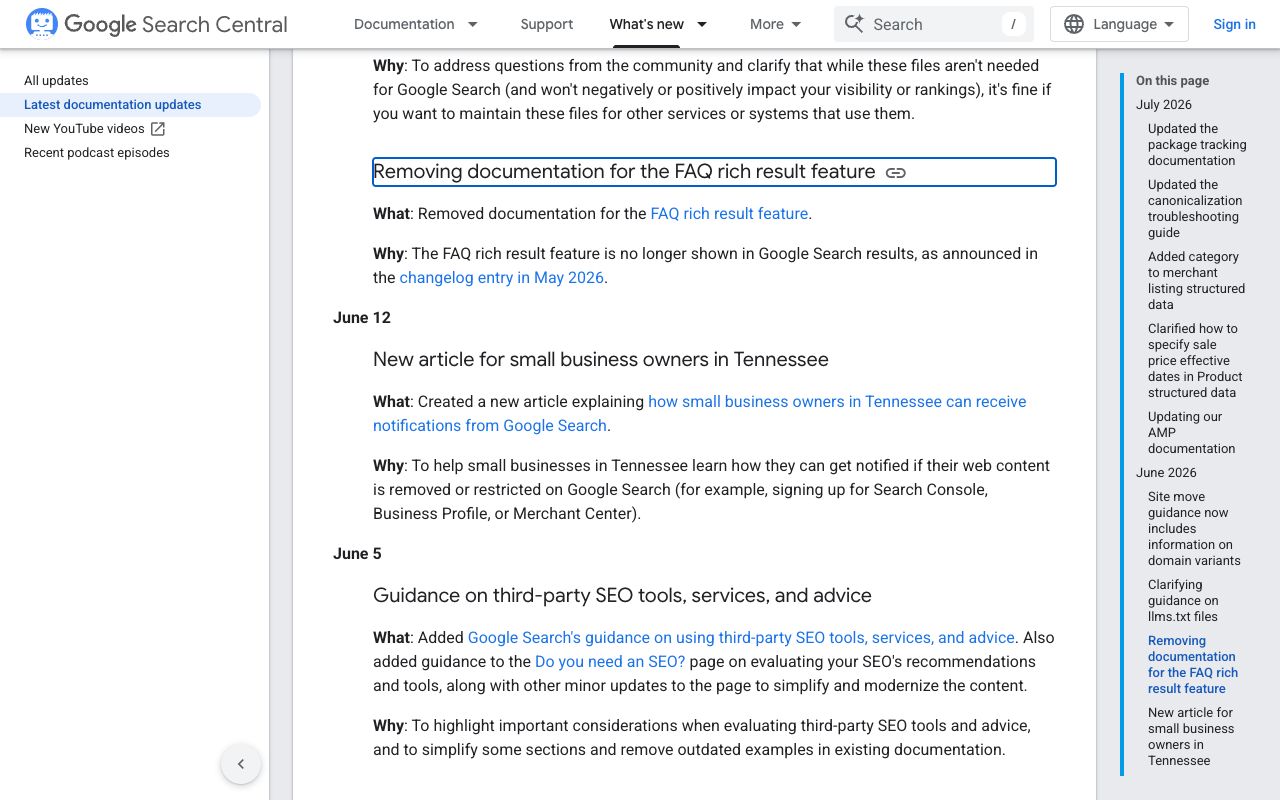
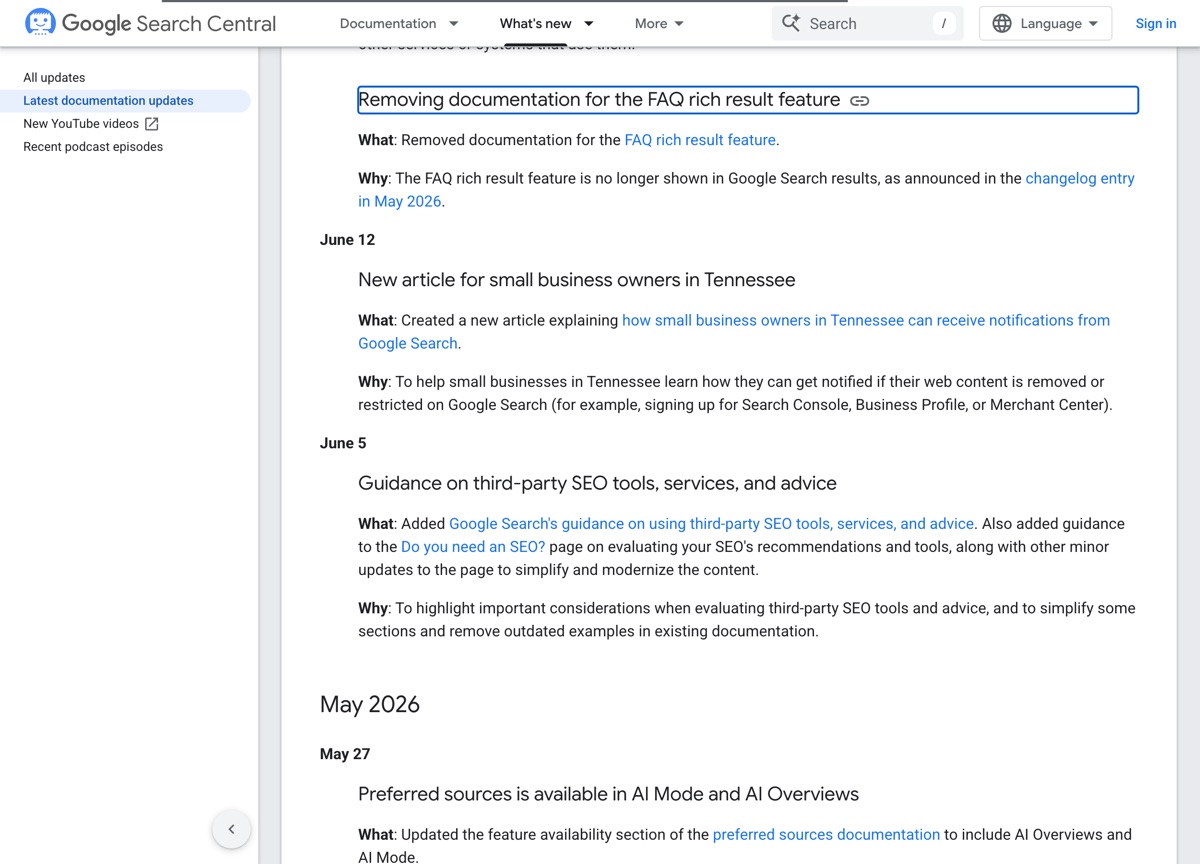
So is FAQ SEO dead? As a rich-result play in Google, yes — no markup will bring those dropdowns back. But that was never the only thing the markup did, and it is exactly the wrong moment to delete it.
Why FAQ Schema Still Matters for AEO and GEO
Answer engine optimization (AEO) and generative engine optimization (GEO) are about getting quoted by machines that answer questions directly. Understanding how FAQs help with AEO starts with how those machines build a response:
- Extraction without guesswork. An LLM-powered engine assembling an answer has to segment your page into usable chunks. A FAQPage block hands it pre-segmented, self-contained question-answer pairs — no interpretation needed.
- Your questions mirror real prompts. People ask ChatGPT and Perplexity full questions ("is X worth it?", "how does X handle Y?"). Content already shaped as questions and 40–60-word answers matches the format these engines quote.
- One source of truth. When your pricing, limits or compatibility answers live in structured data and visible copy that agree with each other, you reduce the odds an AI paraphrases you wrongly — which is most of what AI reputation damage looks like in practice.
That is how FAQs help with AEO: they turn your page from prose an engine must interpret into answers an engine can lift. Classic faq schema seo optimized for a widget on a results page; in 2026 the same markup optimizes for being the sentence an AI repeats.
FAQ Schema Best Practices in 2026
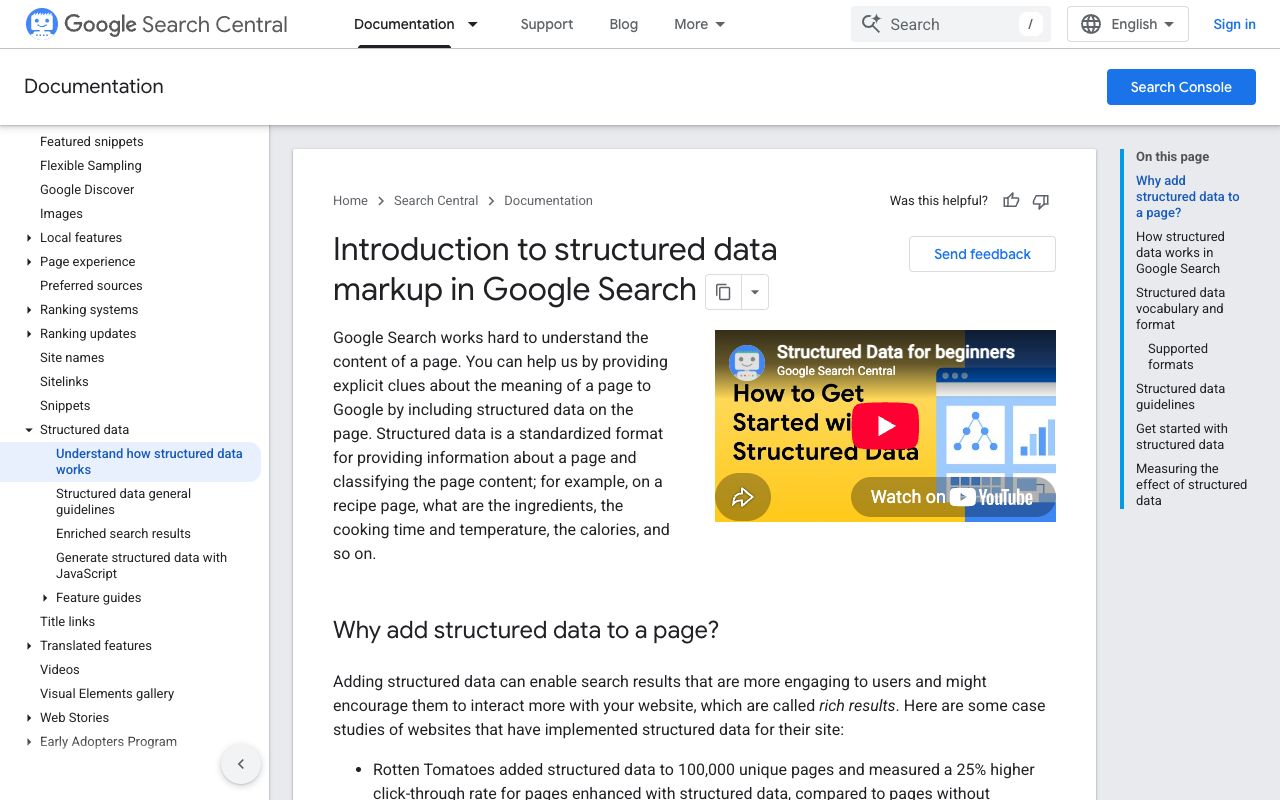
Google's own structured-data introduction still lists markup as a first-class way to help systems understand your pages — the FAQ widget died, the parsing benefit didn't. A practical faq schema seo checklist, updated for the post-rich-results era:
- Answer real questions. Source them from sales calls, support tickets and the questions buyers actually type into AI chats — not from what you wish people asked.
- Keep answers self-contained, 40–60 words. Each answer should make sense with zero surrounding context, because that is how it will be quoted.
- Match markup to visible content. Every question and answer in the JSON-LD must appear on the page, word for word. Hidden or markup-only FAQs are the classic trust-killer.
- Use JSON-LD, one FAQPage per page. Put it on the page it describes; 5–10 questions is the sweet spot for a pillar page.
- Skip the marketing fluff. "Why is your product amazing?" is not a FAQ. Engines quote informational answers; they ignore ad copy.
- Keep facts current. Stale prices and dead features in an FAQ get repeated by AI for months. Re-read your FAQs whenever the product changes.
- Validate after every site change. A theme update that breaks your JSON-LD silently removes you from the structured-data pool (see the free checker below).
- Track whether AI actually quotes you. Rich-result impressions are gone as a metric; the KPI now is whether engines cite your answers — measure it (last section).
AI-Generated FAQs for GEO: Shortcut or Trap?
Using an LLM to draft your FAQ blocks at scale is tempting, and AI-generated FAQs for GEO can work — as drafts. Two rules keep them from backfiring:
- Seed with proprietary input. Generic AI-written answers read like everyone else's and give engines no reason to quote you. Feed the model your real support questions, your real numbers, your actual limitations, then edit like an editor.
- Fact-check every claim. A hallucinated spec inside your own structured data is a self-inflicted wound: you are literally feeding wrong facts to the engines in their favorite format. Human review is non-negotiable.
Treat AI-generated FAQs for GEO as acceleration, not automation — the same rule as all AI content.
How to Validate Your FAQ Schema for Free
With FAQ reporting gone from Google's Rich Results Test (January 2026), the old validation workflow broke. Two free replacements:
- Run your page through our free Schema Markup Checker — it fetches the URL, lists every JSON-LD block it finds (FAQPage included), and flags missing required properties, in about ten seconds.
- Cross-check the raw markup with the schema.org validator if you edit JSON-LD by hand.
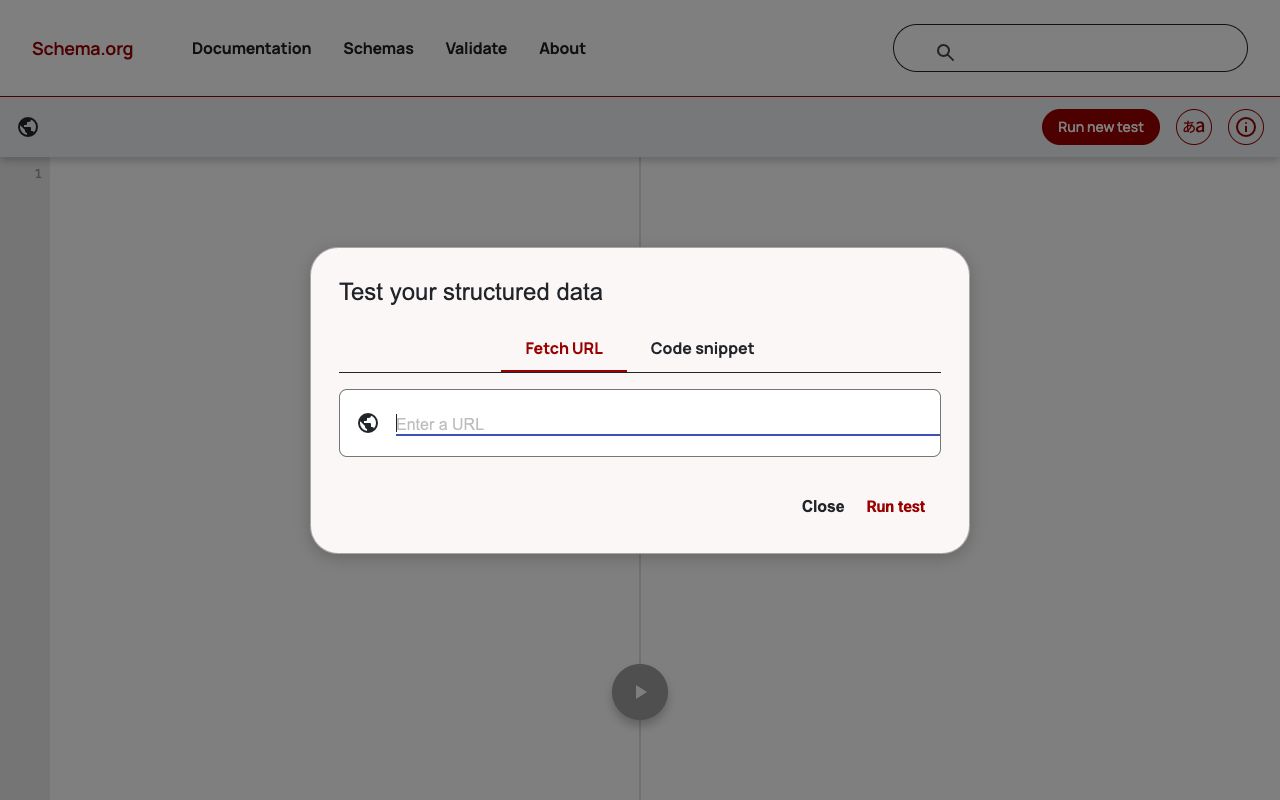
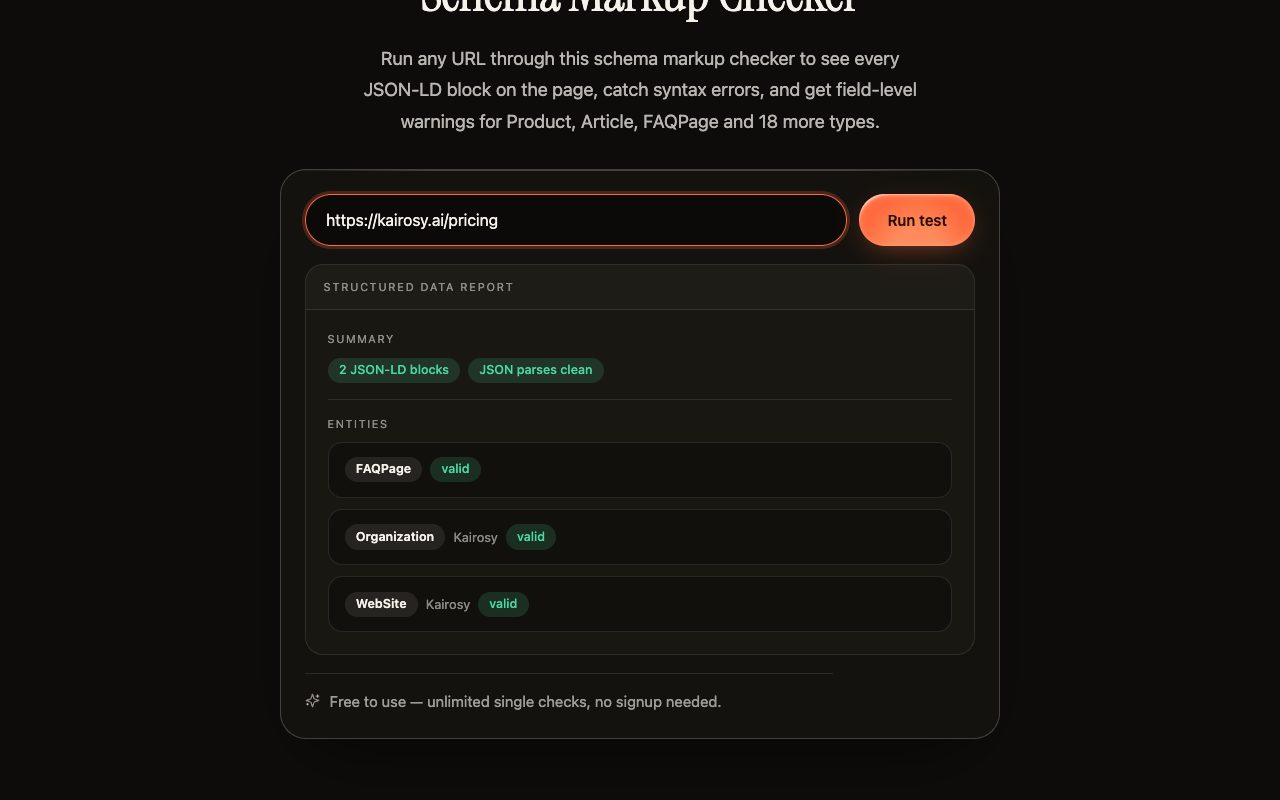
If the checker shows nothing where you expected a FAQPage, the usual suspects are a JavaScript-injected block that crawlers never see, or a syntax error that invalidates the whole script tag.
Track Whether AI Actually Uses Your FAQs
Markup is the input; citations are the outcome. And the outcome gap is bigger than most teams assume: in Kairosy's July 2026 scan of 11 brands with live public reports, between 58% and 100% of AI answers about each brand were neutral hedging, and the "engine couldn't say anything substantive" rate ran as high as 40% — that's CitizenM's number, while even the best performer, Coda, earned positive answers only 21% of the time. Engines hedge when they can't verify. Self-contained, factual, machine-readable answers — exactly what FAQ markup packages — are the raw material that converts "can't say" into a confident sentence about you.
The only way to know if your FAQ work is paying off is to ask the engines what they say about you — the same way a buyer would. A site AI-readiness audit shows whether your pages (schema included) are technically consumable by AI crawlers, and a Kairosy scan asks ChatGPT, Gemini, Claude and Perplexity real buyer questions about your brand, then traces every answer back to its source. You can see what a finished report looks like in our ActiveCampaign AI report.
FAQ Schema SEO: Frequently Asked Questions
What is FAQ schema?
FAQ schema is the schema.org FAQPage markup: structured data that labels question-and-answer pairs on a page so search engines and AI systems can parse each Q&A unambiguously, usually implemented as a JSON-LD script tag.
Is FAQ SEO dead now that Google removed rich results?
The rich-result dropdowns are gone for good — since May 7, 2026 Google shows no FAQ rich results at all. FAQ SEO as a widget play is dead; FAQ content and markup as an input to AI answers is not.
How do FAQs help with AEO?
Answer engines quote content they can extract cleanly. FAQs are pre-chunked, self-contained answers in the exact question-and-answer shape those engines produce, which makes them one of the easiest content formats for an AI to lift and cite.
Should I use AI-generated FAQs for GEO?
As drafts, yes. Seed the model with your real customer questions and verified facts, then human-review every answer — publishing hallucinated claims in structured data feeds wrong facts straight to the engines.
What is the schema.org FAQPage definition?
Schema.org defines it as "a WebPage presenting one or more 'Frequently asked questions'" — a subtype of WebPage where each entry is a Question with an acceptedAnswer.
FAQ schema SEO in 2026 is a different game than it was in 2022 — the scoreboard moved from a results-page widget to the answers AI gives your buyers. Keep the markup, sharpen the answers, and run a free scan to see whether the engines are actually repeating them.
See what AI says about your brand
Run a free scan across ChatGPT, Gemini, Claude & Perplexity in about 30 seconds.
Run my free scan