GEO Audit: The 2026 Checklist to Get Cited by AI
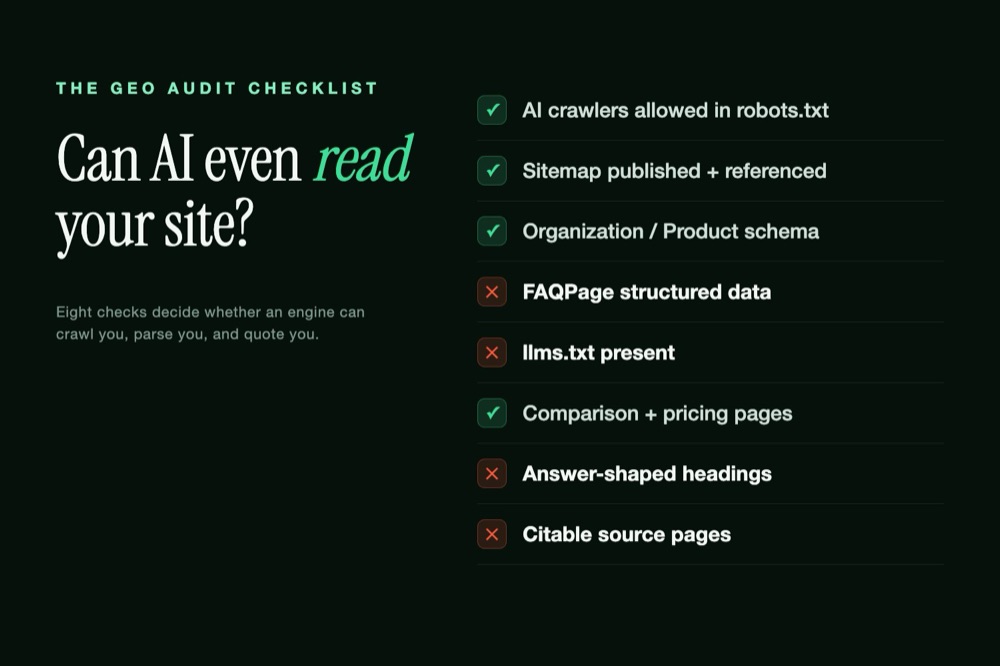
You can rank #1 on Google and still be invisible in ChatGPT. That gap is why a GEO audit exists. Where an SEO audit asks "can Google rank this page," a GEO audit asks "will an AI read this, trust it, and recommend us in its answer?" As buyers increasingly ask AI assistants before they ask Google, that second question decides a growing share of your pipeline. This guide walks through what a GEO audit is, its benefits, a concrete GEO audit checklist, best practices, and how to run one.
What is a GEO audit, and how does it differ from an SEO audit?
A GEO audit is a structured review of whether your website is readable, understandable, and citable by AI answer engines — ChatGPT, Gemini, Claude, Perplexity, and Google AI Overviews — and of how those engines actually describe your brand today. GEO stands for generative engine optimization, the practice of getting mentioned and recommended inside AI-generated answers.
The difference between GEO audit and SEO audit comes down to who you're optimizing for. Put simply: SEO gets you ranked; GEO gets you mentioned.
| Dimension | SEO audit | GEO audit |
|---|---|---|
| Goal | Rank in Google's blue links | Get cited inside AI answers |
| Crawlers | Googlebot, Bingbot | GPTBot, ClaudeBot, PerplexityBot, Google-Extended |
| Technical focus | Crawlability, Core Web Vitals, sitemaps | AI-crawler access, server-rendered HTML, schema, llms.txt |
| Content focus | Keywords, backlinks, intent | Answer-first clarity, factual statements, entity consistency |
| Success unit | A ranking URL | A quotable, correctly-attributed fact |
Crucially, GEO is not a replacement for SEO — it's a superset. Clean, crawlable, structured pages help both. A GEO audit includes the SEO hygiene basics, then adds the AI-specific checks below.
What are the benefits of a GEO website audit?
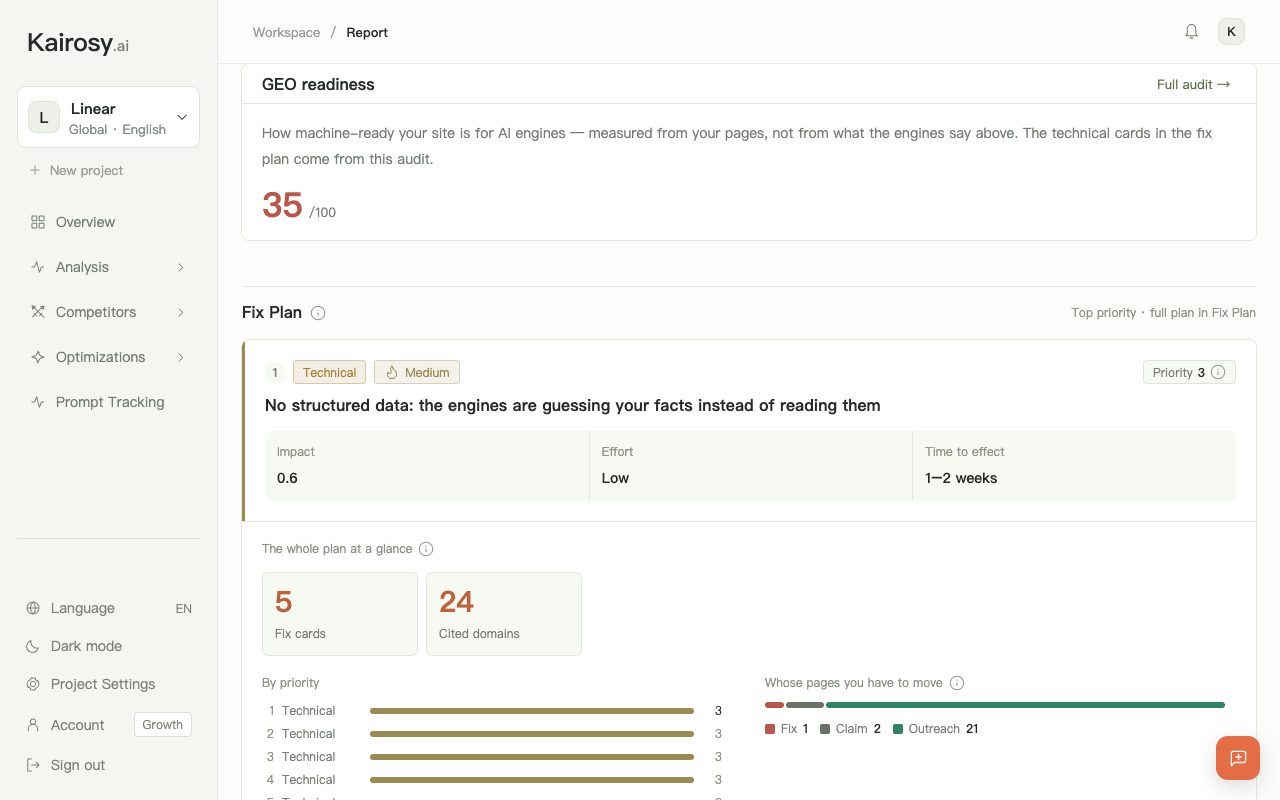
The benefits of GEO website audit work compound because you're fixing problems most competitors haven't even measured yet:
- Find where AI misreads you. Surface the wrong pricing, outdated product names, or "who they are" errors an AI confidently tells buyers.
- Fix AI invisibility. Reveal when you're simply absent from answers for your core buyer questions — often a blocked crawler or unreadable JavaScript, a fixable technical cause rather than a mystery.
- Beat competitors in AI answers. See which rivals get named when you aren't, and why — usually they have the citations, reviews, or clearer facts.
- Protect your reputation. Catch negative or misinformed AI descriptions early, before they harden into the default answer.
- Prioritize with data. Turn "we should do AI stuff" into a ranked fix list tied to real gaps.
The GEO audit checklist
Work this GEO audit checklist in four groups, from technical access to measurement.
Technical: can AI even read you?
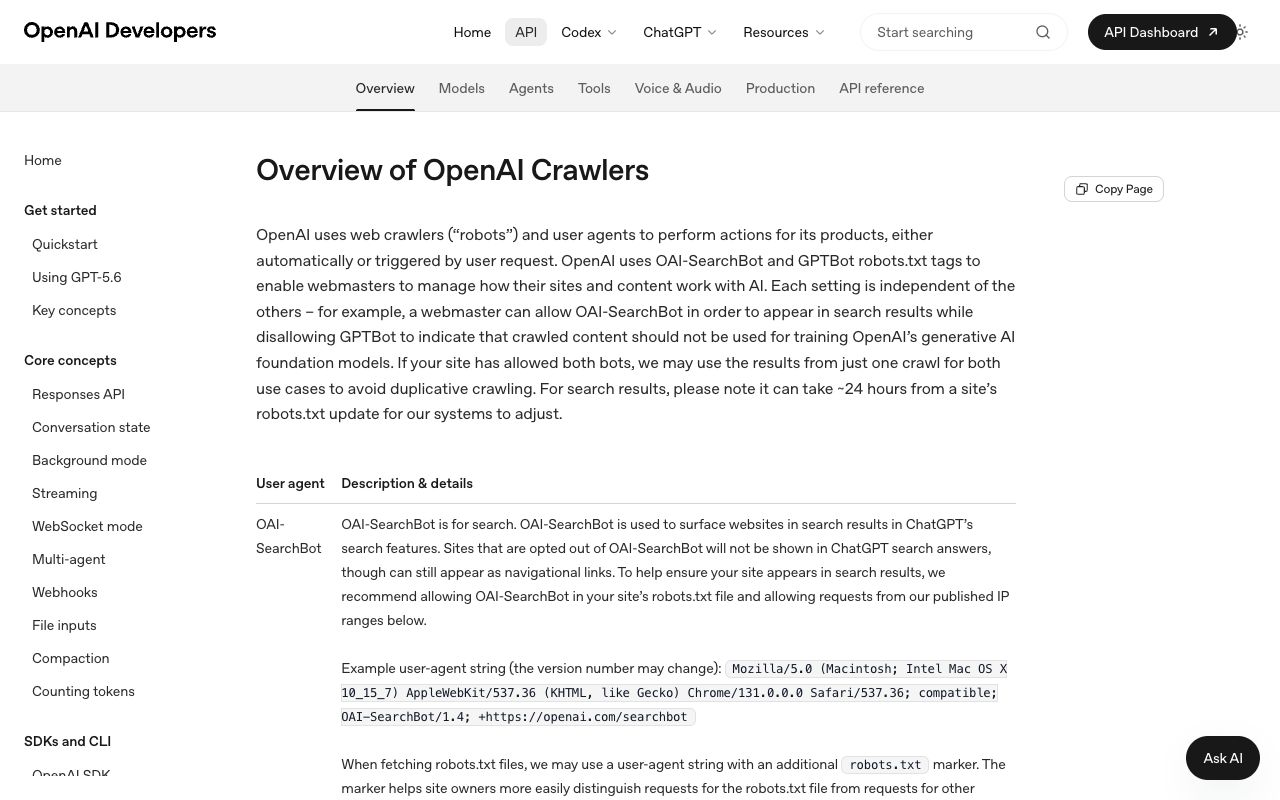
- Allow the AI crawlers. Confirm robots.txt doesn't block GPTBot and OAI-SearchBot (OpenAI), PerplexityBot, ClaudeBot (Anthropic), or Google-Extended (Gemini/AI Overviews). Watch for a stray
Disallow: /or a firewall rule silently blocking them. - Put core content in server-rendered HTML. AI crawlers generally don't run JavaScript — view-source and confirm your headings, prices, and product facts appear in the raw HTML.
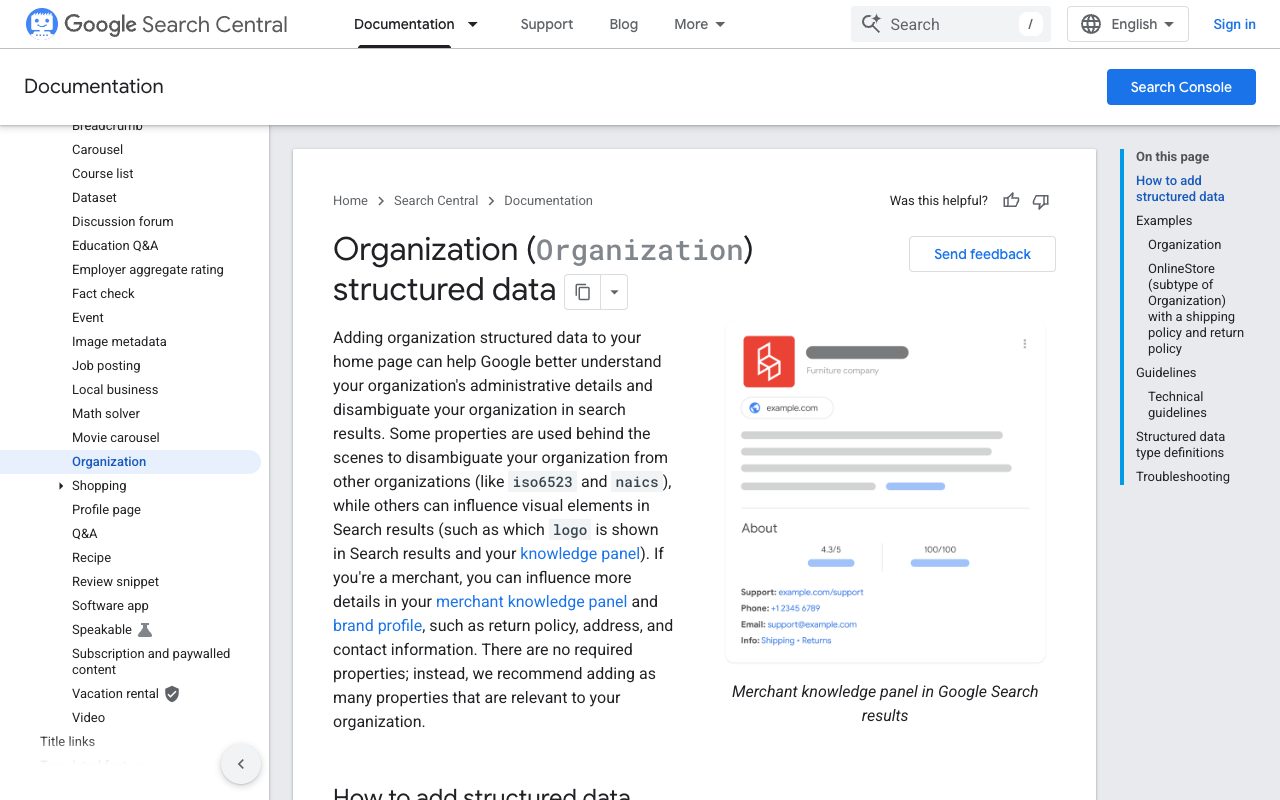
- Ship valid structured data. Organization, Product, FAQPage, and Article JSON-LD, present and error-free.
- Consider an llms.txt file. A root
/llms.txtindex pointing AI to your key pages — cheap to ship, though the llms.txt spec is still an emerging proposal, not a confirmed standard.
Content: can AI understand and lift you?
- Answer-first structure. Open each key section with a direct, self-contained answer using question-style headings and short declarative sentences AI can quote verbatim.
- Explicit factual statements. State your brand, category, what you sell, pricing, and differentiators in plain text — not buried in images or vague marketing copy.
- FAQ blocks. Real buyer questions answered concisely, ideally with FAQPage schema.
- Entity consistency. Brand name, one-line description, category, and key facts identical across your homepage, About page, schema, and third-party profiles. Contradictions make AI hedge or get it wrong.
Off-site: the sources AI actually cites
- Presence on cited sources. Audit whether you exist and are accurate on Wikipedia, G2, Capterra, Trustpilot, and Reddit — AI leans heavily on these third parties, not just your own site.
- Third-party accuracy. Correct misinformation at the source, because AI often quotes the third party rather than you.
Measurement: query the engines directly
- Actually prompt the AIs. Run brand, category, "best [category]," and competitor-comparison prompts across ChatGPT, Gemini, Claude, and Perplexity from fresh sessions, several times each. Record: mentioned? cited? accurate? recommended vs a competitor?
- Track over time. Answers shift with model updates, so re-scan monthly and diff for new negatives or competitors gaining ground.
GEO audit best practices
A few habits separate a useful GEO audit from a checkbox exercise. Open every "what is" page with a one-sentence definition — that's the sentence AI lifts. Cite sources and add data with live outbound links; the original GEO research paper found that source citations, quotations, and statistics measurably raised a page's visibility in generative answers. Format for extraction with descriptive question headings, short paragraphs, and comparison tables the model can reuse. And fix the source of truth, not just your site: if Perplexity mis-states your pricing from an old listing, update the listing. So how can I audit my website for GEO best practices without a big tooling budget? Start with crawler access and factual, answer-first content — the two highest-leverage fixes — before anything fancier.
How to run a GEO audit
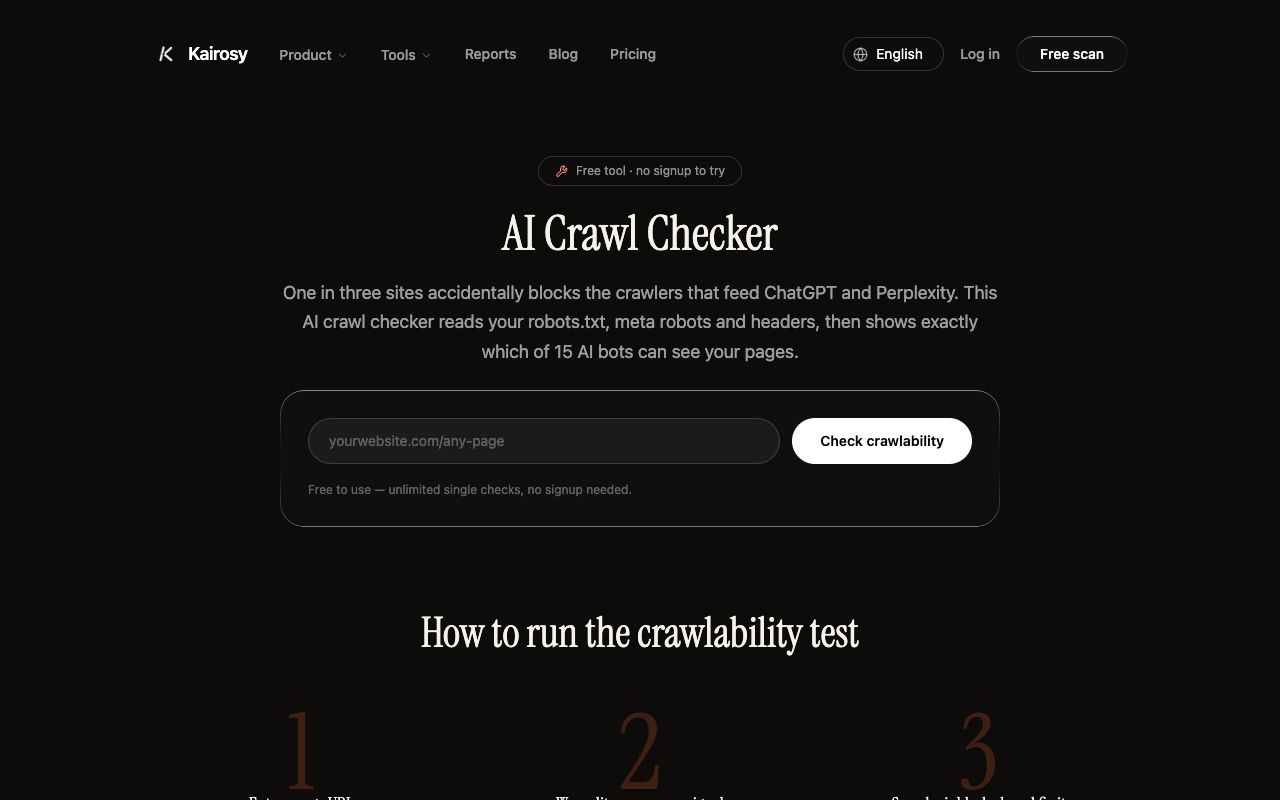
You can run a GEO audit in four steps, and free tools cover most of it:
- Check AI-crawler access. Can bots read you at all? The Kairosy AI-Ready Audit checks whether AI crawlers can reach your pages and returns on-page fixes; the free AI Crawl Checker gives a quick read.
- Fix on-page structure and schema. Validate your markup with the free schema markup checker and generate an index with the llms.txt generator.
- Measure how AI describes you. A Kairosy scan shows how ChatGPT, Gemini, Claude, and Perplexity actually talk about your brand — sentiment, competitors named, and sources cited — as in this citizenM AI performance report.
- Prioritize and re-scan monthly. Fix the highest-impact gaps first, then re-scan to confirm the answer moved.
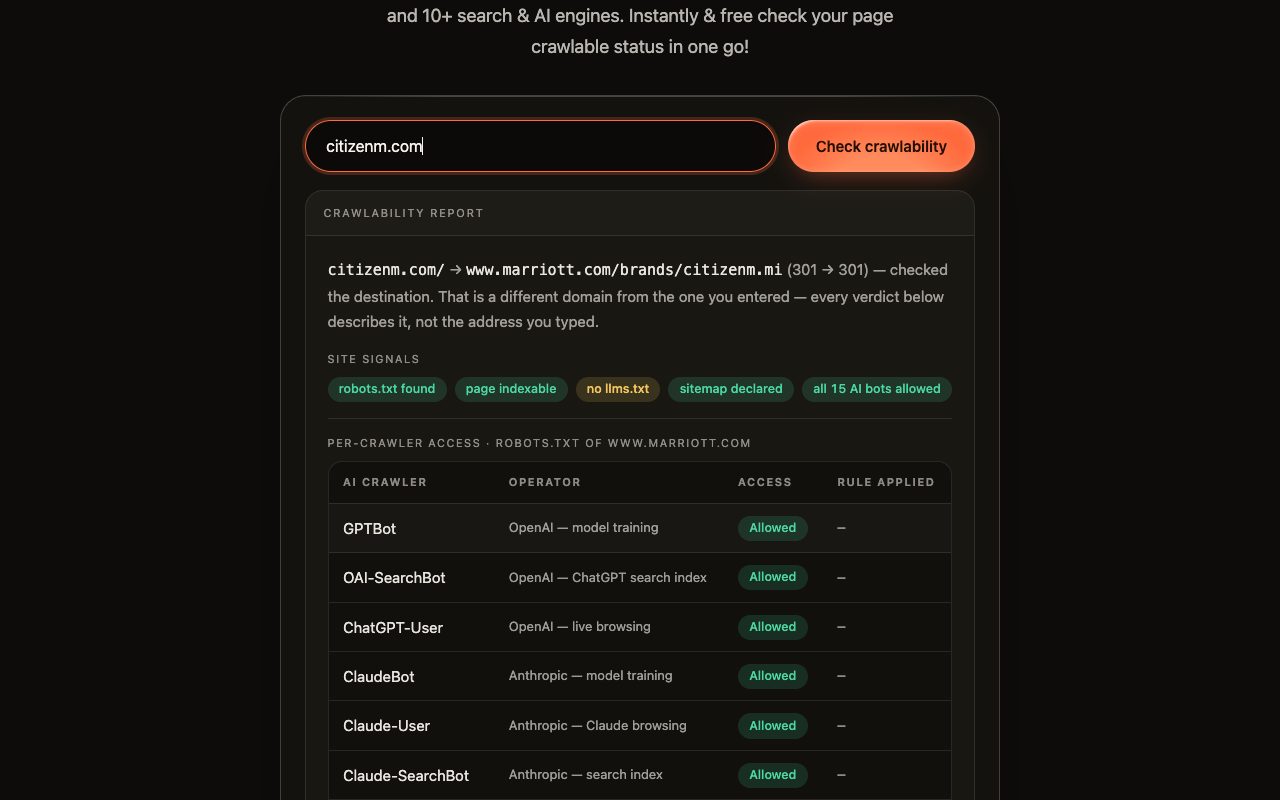
The one-line way to think about it: an SEO audit tells you if Google can find you; a GEO audit tells you if the AIs can read you — and whether they like what they read. Kairosy's first scan is free.
GEO audit FAQs
How often should I run a GEO audit?
Do a full audit quarterly, and re-scan how AI describes you monthly. Technical fundamentals change slowly, but AI answers drift with every model update, so the measurement step needs to be more frequent than the full checklist.
Do I still need an SEO audit if I do a GEO audit?
Yes — GEO builds on SEO, it doesn't replace it. Crawlable, fast, well-structured pages help both Google and AI engines, so the SEO fundamentals stay relevant.
What's the single most important GEO audit item?
Crawler access. If GPTBot, ClaudeBot, or PerplexityBot are blocked in robots.txt, none of your content reaches the models — no amount of great writing helps until the bots can read it.
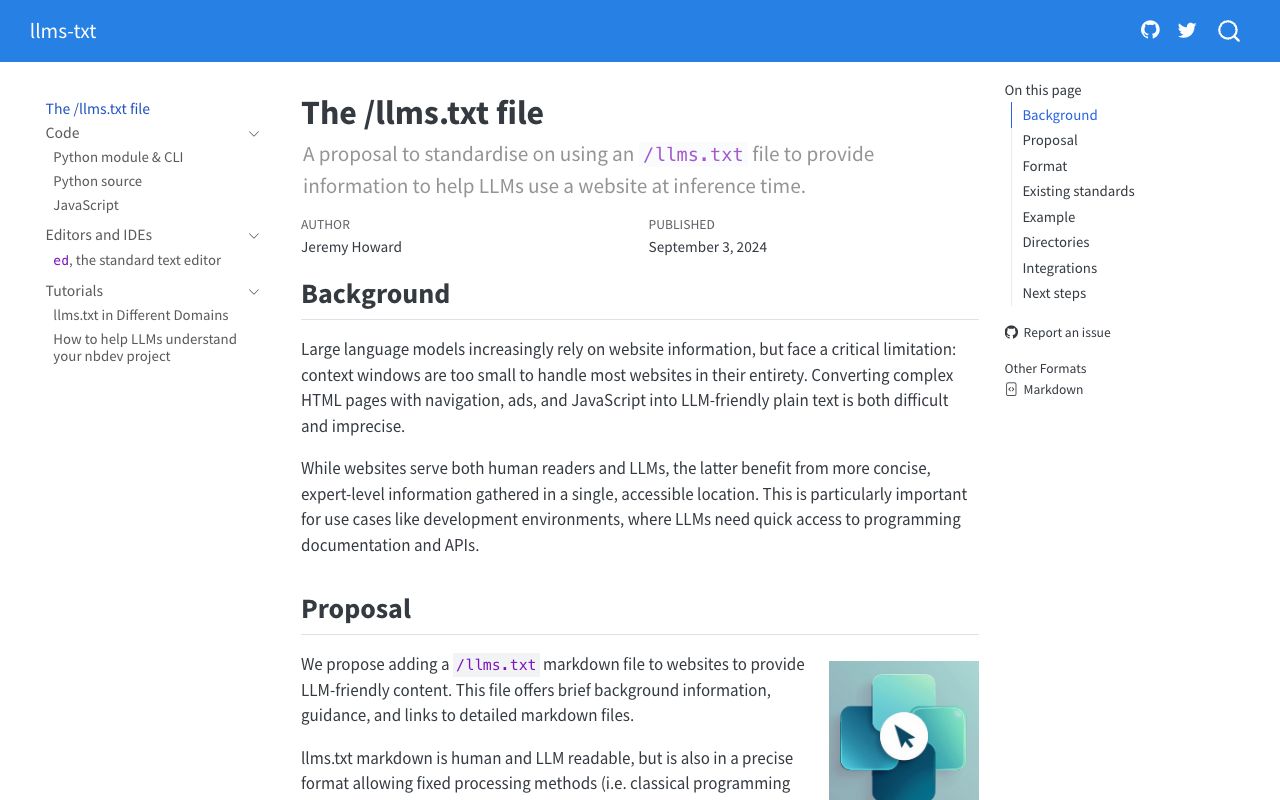
Is llms.txt required for GEO?
No. It's cheap to ship and may help, but it's a proposed standard, not a confirmed ranking factor. The real wins are crawler access plus factual, answer-first, structured content.
See what AI says about your brand
Run a free scan across ChatGPT, Gemini, Claude & Perplexity in about 30 seconds.
Run my free scan