5 Best Search Intelligence Tools in 2026 (Mapped to the Fix Loop)
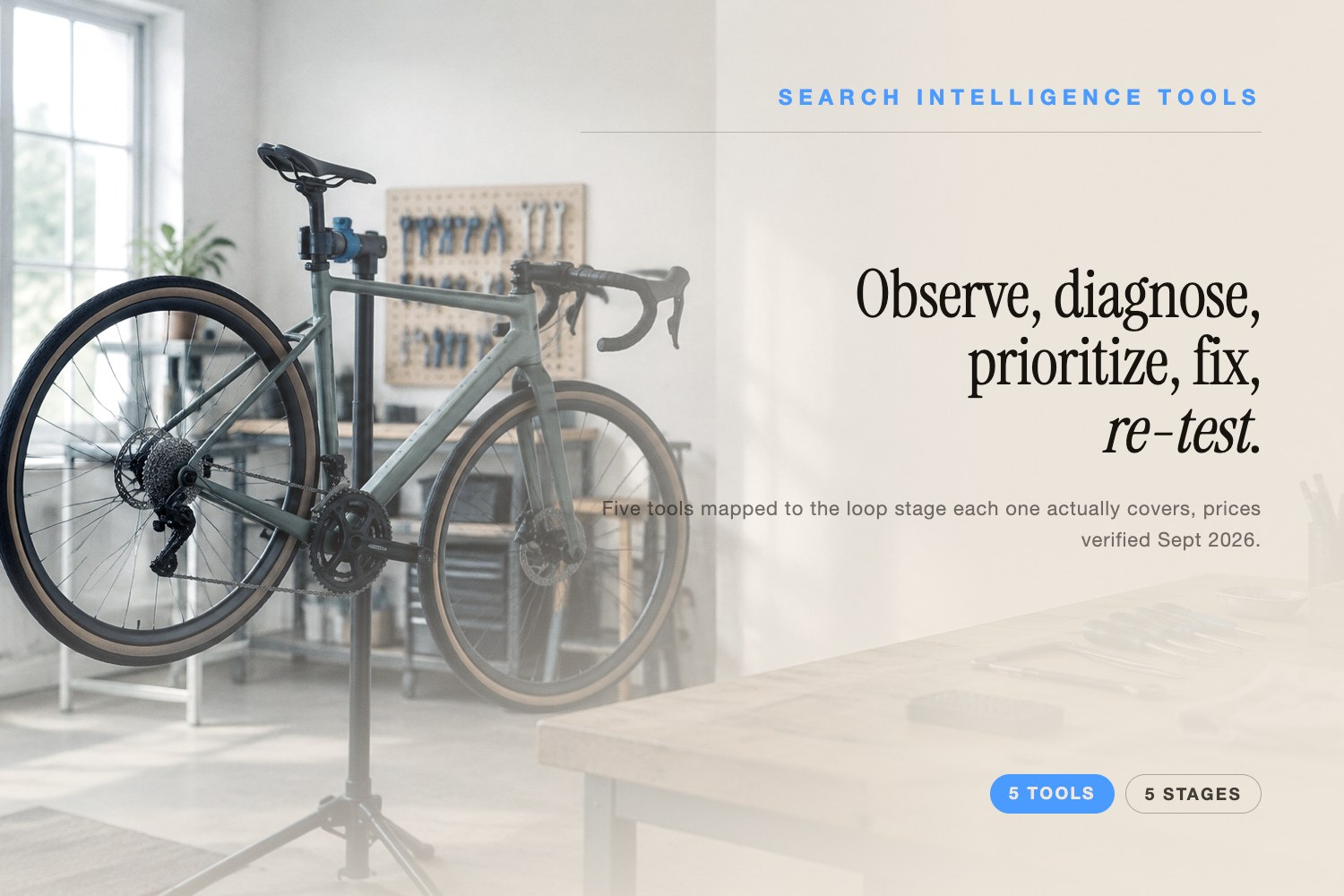
Search intelligence tools tell you what search systems currently show about your brand, why, and what to change. In 2026 that covers two surfaces: Google's results and AI Overviews on one side, answer engines such as ChatGPT, Gemini, Claude and Perplexity on the other. The tools worth paying for close a loop you can repeat every week: Observe → Diagnose → Prioritize → Fix → Re-test.
This post picks five tools, one per stage, with every price checked on the vendor's own site on September 17, 2026. If you want a category map instead, start with our LLM SEO tools roundup. Here the organizing idea is sequence.
What Are Search Intelligence Tools in 2026?
The phrase used to mean competitive SERP data: who ranks for which query, with which ads and backlinks. That still matters, but a growing share of searches ends in a generated answer, and that answer can name a competitor, repeat an old complaint, or leave you out.
The numbers are public. In Pew Research Center's July 2025 analysis of 68,879 Google searches by 900 U.S. adults, users clicked a traditional result on 8% of visits when an AI summary appeared versus 15% when it did not. Semrush's July 2025 traffic study found the average visitor from an AI search source converted at 4.4 times the rate of an organic visitor.
So a usable definition: a search intelligence tool observes what a search or answer system says about a brand, explains the cause, and feeds a change you can verify later. Rank trackers cover the first third, most AI-visibility dashboards the first half, and almost nothing covers the whole loop alone. The practical answer is a short stack.
How Does the Observe → Diagnose → Prioritize → Fix → Re-test Loop Work?
Each stage answers one question and hands an artifact to the next; a tool that cannot produce that artifact does not belong at that stage, however good its charts look.
| Stage | Question it answers | Artifact it must produce | Tool in this guide |
|---|---|---|---|
| Observe | Where do we appear, and where don't we? | Visibility and share-of-voice baseline across prompts and engines | Semrush AI Visibility Toolkit |
| Diagnose | Why does each engine say what it says? | Per-answer sentiment with reasons, plus the URLs each answer cited | Kairosy |
| Prioritize | Which prompts and gaps deserve effort first? | Demand-weighted list of prompts, competitors and sources | Profound |
| Fix | What exactly changes on the site and off it? | Shipped technical and content changes, verified at crawl level | Screaming Frog SEO Spider |
| Re-test | Did the change move the answer? | Daily or weekly re-runs with a before/after delta per engine | Peec AI |
Observe is wide and shallow; Diagnose is narrow and deep; Fix is where teams stall, because the change usually lives in a template or a review page; Re-test is what separates intelligence from reporting.
What Should You Monitor: AI Visibility, AI Brand Sentiment, AI Reputation, or Competitor Analysis?
All four, but they are different measurements with different fixes, and a tool that blends them into one number hides which one moved.
AI visibility
Visibility is the share of relevant prompts, per engine, where your brand is named at all. It is the metric most exposed to the gap between rankings and answers: Semrush's study found roughly 90% of the pages ChatGPT cited ranked at position 21 or lower for the related query.
AI brand sentiment
Sentiment is what the answer says once you are named, and it has to be read per engine because the engines disagree. Kairosy's scan of Semrush (August 5, 2026) scored the brand 59/100 overall, but ChatGPT came in at 74 while Perplexity sat at 45, and Claude's answer cited "widespread complaints about unexpected charges after free trials, deliberately complex cancellation". That spread, with the stated reason, is the diagnosis.
AI reputation
Reputation is the layer underneath: the third-party pages the engines cite when they form an opinion. Review sites, Reddit threads and comparison posts carry more weight in a generated answer than your own pricing page. The playbook is on our AI reputation management page.
Competitor analysis
Here it is not a backlink gap. It is the count of prompts where you are mentioned but a rival is the preferred pick, share of voice per topic, and the sources that keep putting them ahead.
Which Search Intelligence Tools Fit Each Stage of the Loop?
1. Observe: Semrush AI Visibility Toolkit
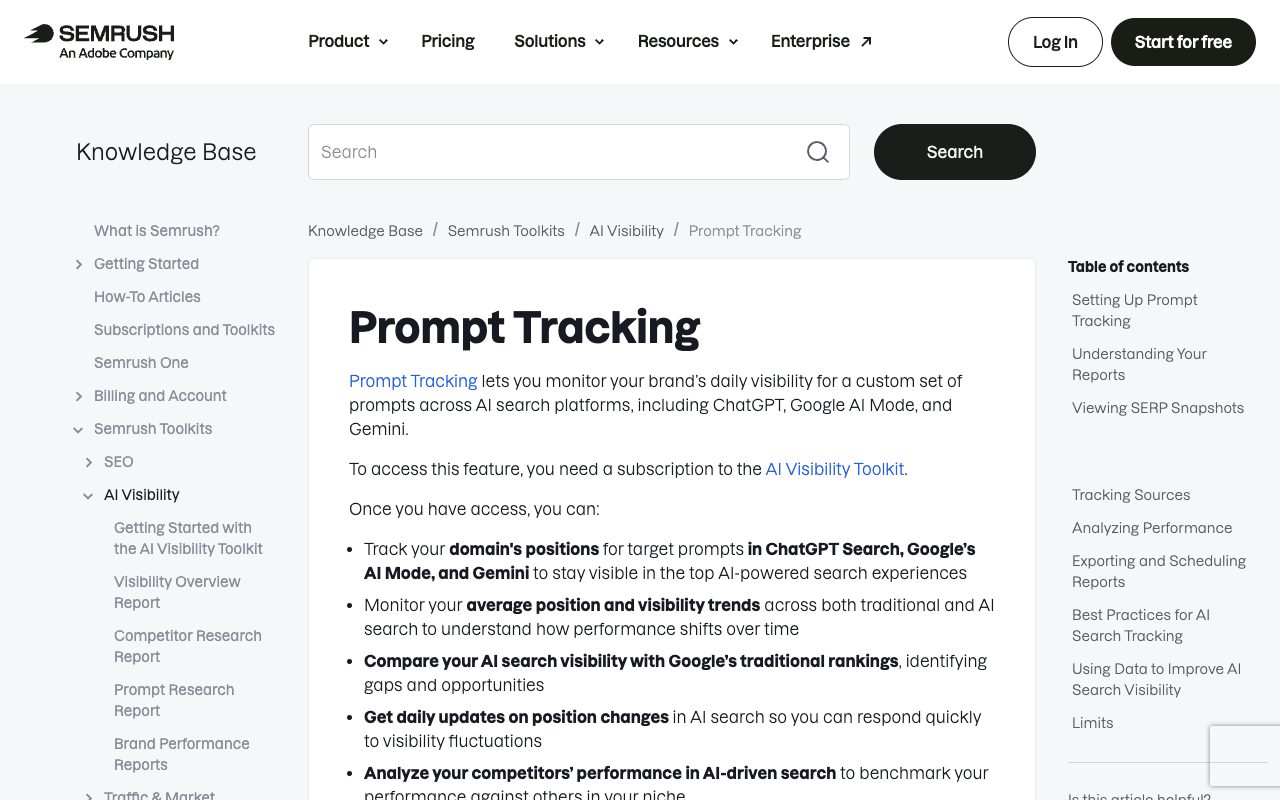
Semrush sells its AI Visibility toolkit at $99 per month per domain billed annually (checked September 17, 2026), with a seven-day trial. The entry tier tracks 25 custom prompts daily across ChatGPT, Google AI, Gemini and Perplexity, covers one domain, and includes competitor prompt research. It earns the Observe slot because it is the cheapest way to see a whole category at once: which prompts exist, which brands appear on them, and where your share of voice sits before you touch anything.
- Best for: a first baseline across engines, especially if you already pay for Semrush.
- Watch out: the 25-prompt cap is shared across engines, so four engines means about six prompts each.
- Watch out: pricing is per domain, which adds up for multi-brand teams.
2. Diagnose, Fix and Re-test: Kairosy
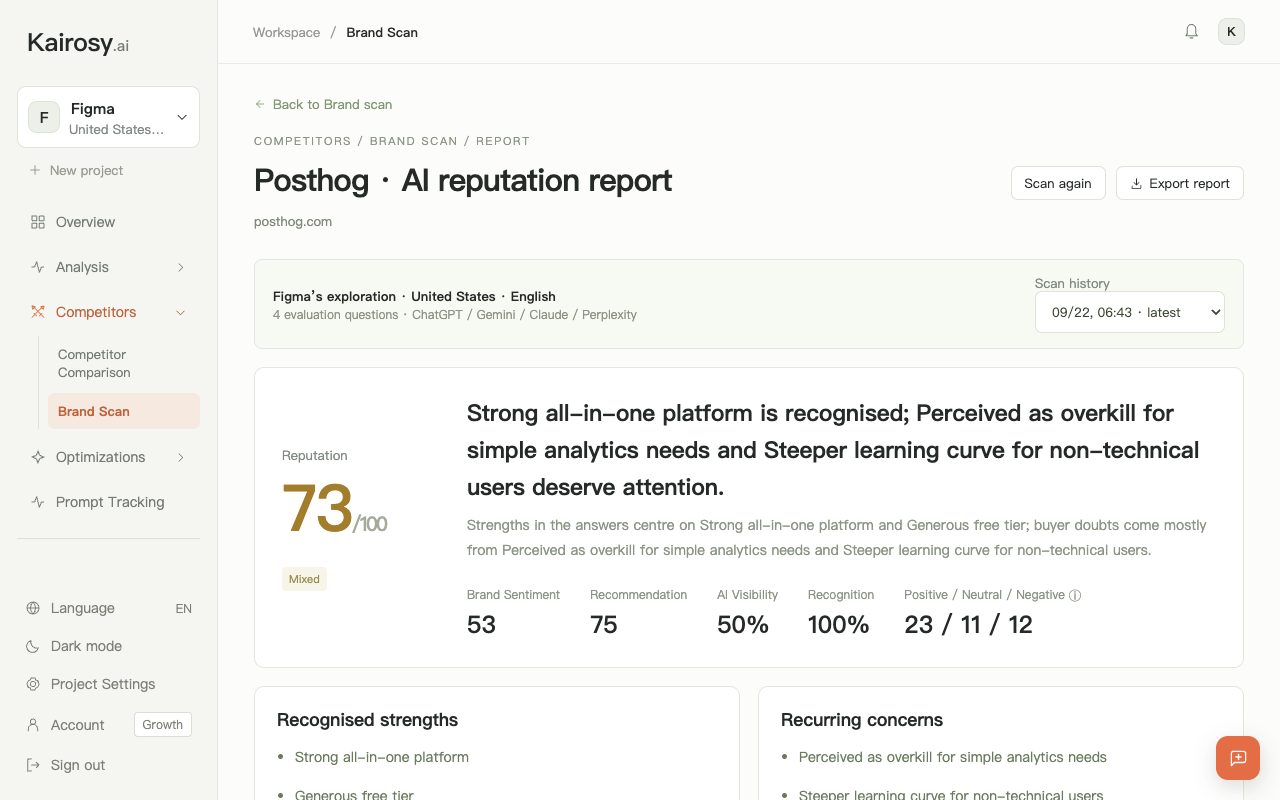
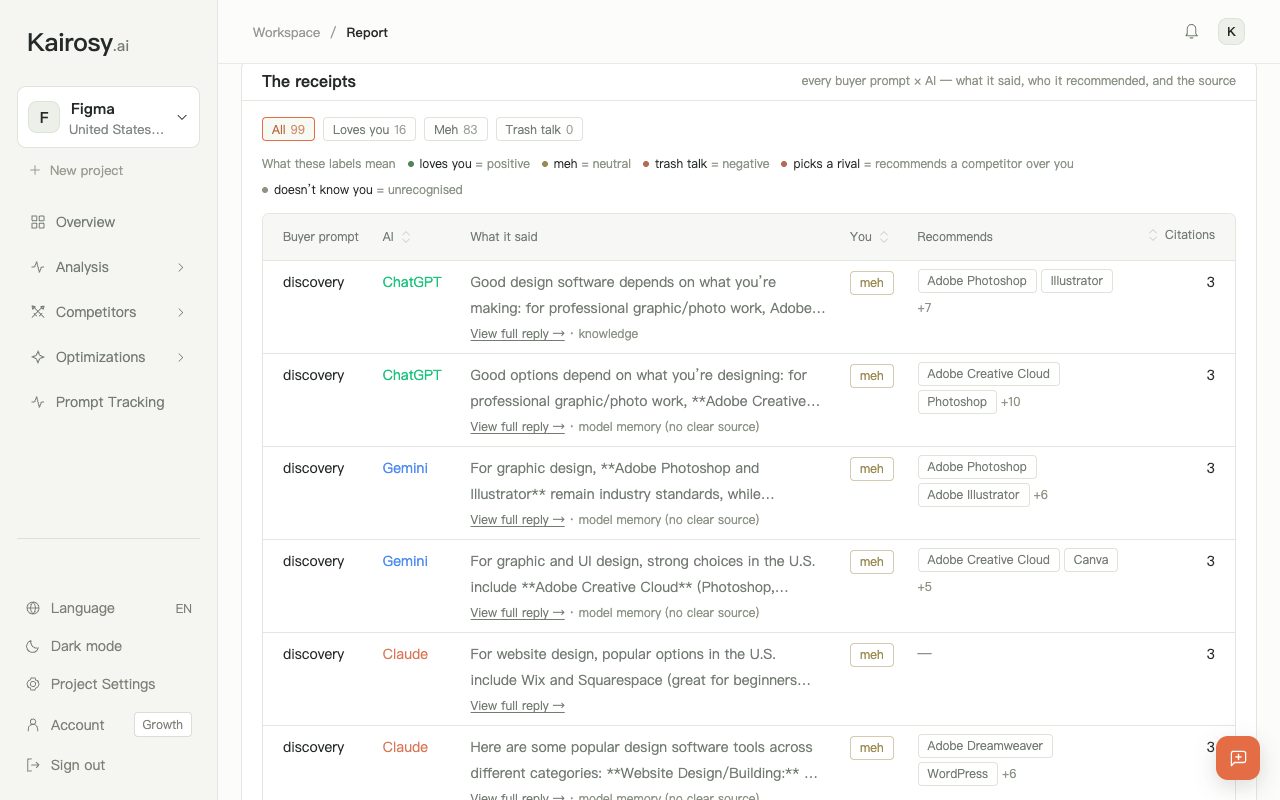
Kairosy is an AI visibility and reputation scanner, not a rank tracker or keyword database, so it does not replace the Observe tool above. It reads every answer the four engines give about one brand, classifies each as positive, neutral or negative with the reasons, and attaches the real URLs each answer cited. The 0 to 100 score is the average of the per-engine scores for the engines that answered, so a weak engine stays visible.
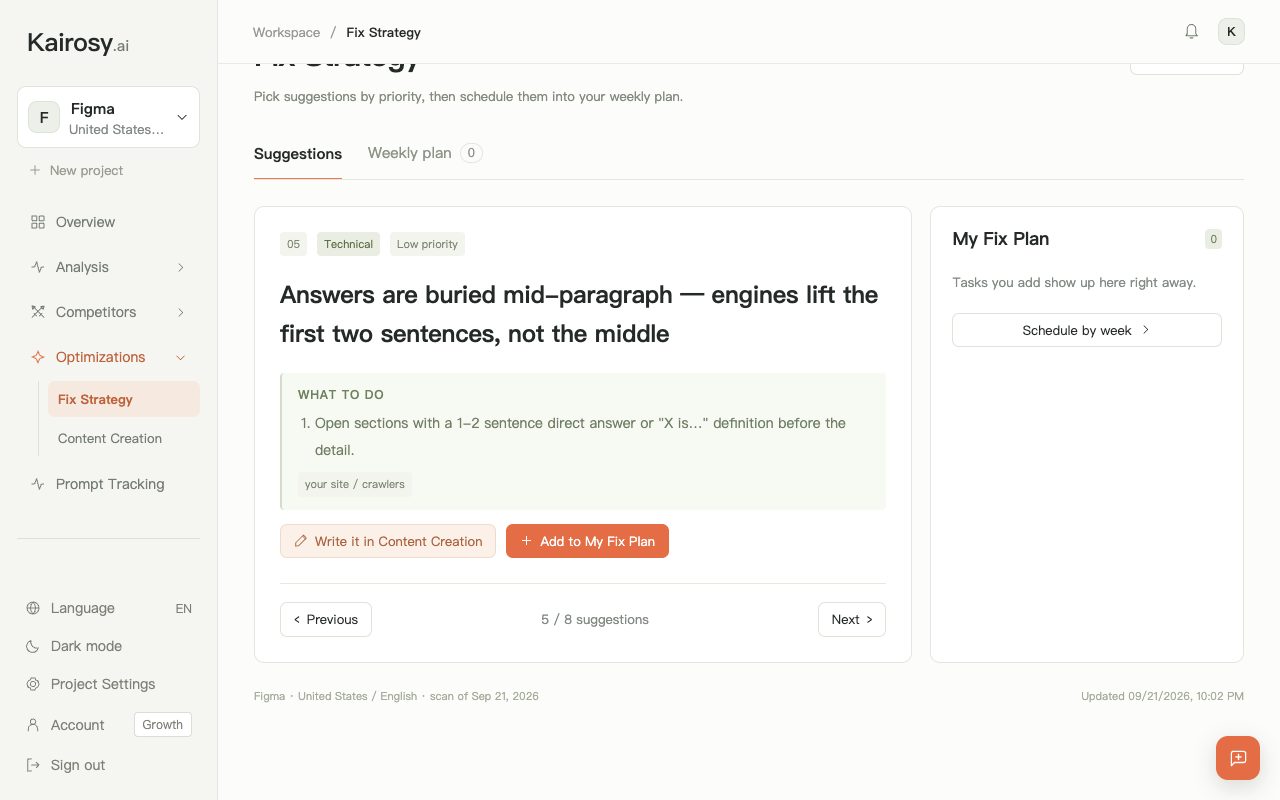
Two things carry it past Diagnose. Each report ends in a prioritized Fix Plan, and the AI-Ready Page Audit runs 33 checks across access, readability, structured data, citability and trust. Re-test is built in: each tracking slot is one brand in one market, re-scanned every Monday with alerts for new negative keywords, a competitor becoming the preferred pick, score drops, or an engine flipping sentiment.
Pricing as of September 17, 2026: Basic $29, Pro $99 and Growth $399 per month, with 3, 6 and 20 tracking slots, 15, 28 and 70 daily prompts, and 8, 40 and 150 AI content drafts; Enterprise is talk-to-sales. Signup starts a seven-day trial with full reports and no credit card.
- Best for: understanding why a specific engine is negative, then proving a fix moved it.
- Watch out: no prompt-volume database, so it will not tell you which prompts the market asks most.
- Watch out: no classic SERP, backlink or keyword data.
3. Prioritize: Profound
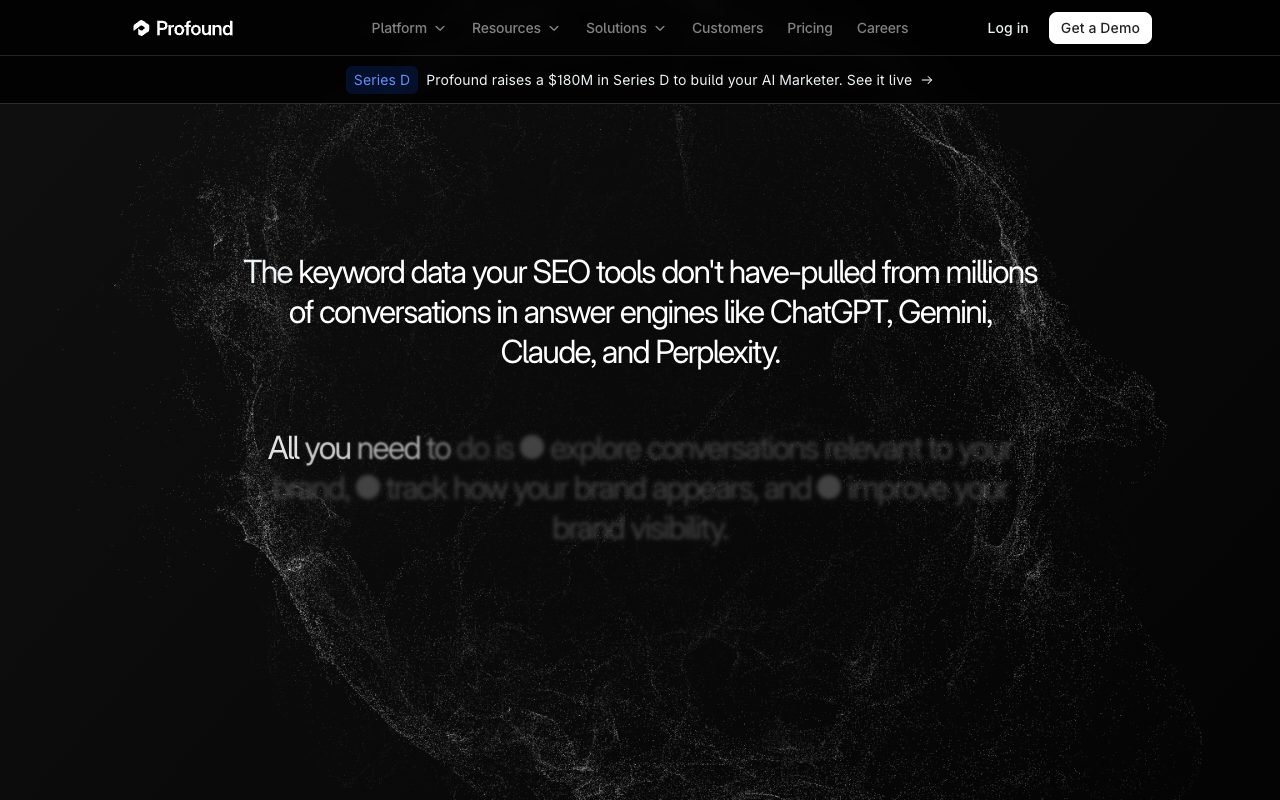
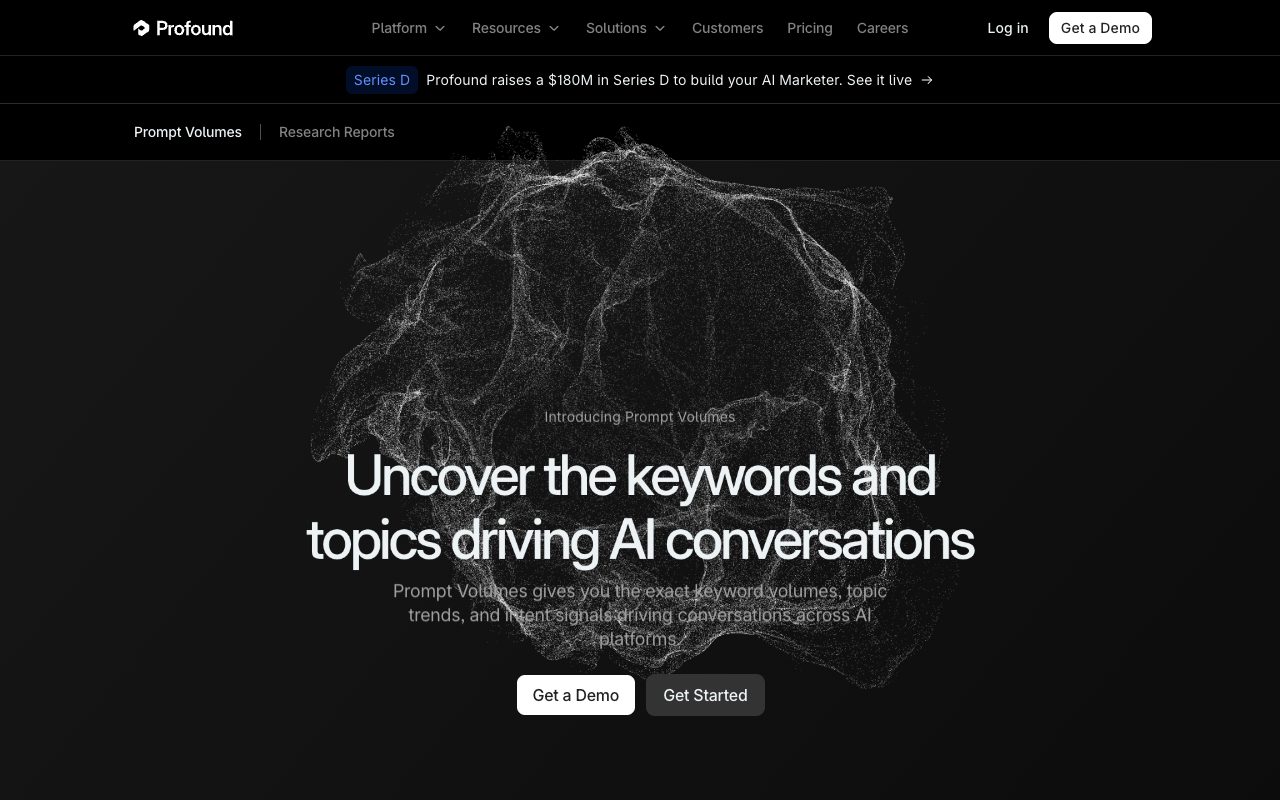
Profound describes itself as "The AI Platform to Power Your Marketing" and covers ChatGPT, Perplexity, Claude, Gemini, Grok, Microsoft Copilot, DeepSeek and Google AI Overviews. Two modules make it the Prioritize pick: Prompt Volumes attaches a demand estimate to each prompt, so a gap on a high-volume question outranks a gap on a vanity one, and Agent Analytics shows which AI crawlers actually fetch your pages.
The pricing page (checked September 24, 2026) offers brands a free trial of 50 prompts run daily for 7 days on ChatGPT, Gemini and Google AI Overviews; paid access is a custom Enterprise contract. Kairosy's scan of Profound (August 5, 2026) scored it 52/100, with Perplexity lowest at 32 and citing that "multiple third-party reviews call it pricey and better suited to enterprise use than startups or agencies".
- Best for: enterprise teams that need demand-weighted prompt lists and bot-level crawl logs.
- Watch out: no published self-serve price, so plan for a sales cycle.
- Watch out: the trial is a one-time run, not a monitoring window.
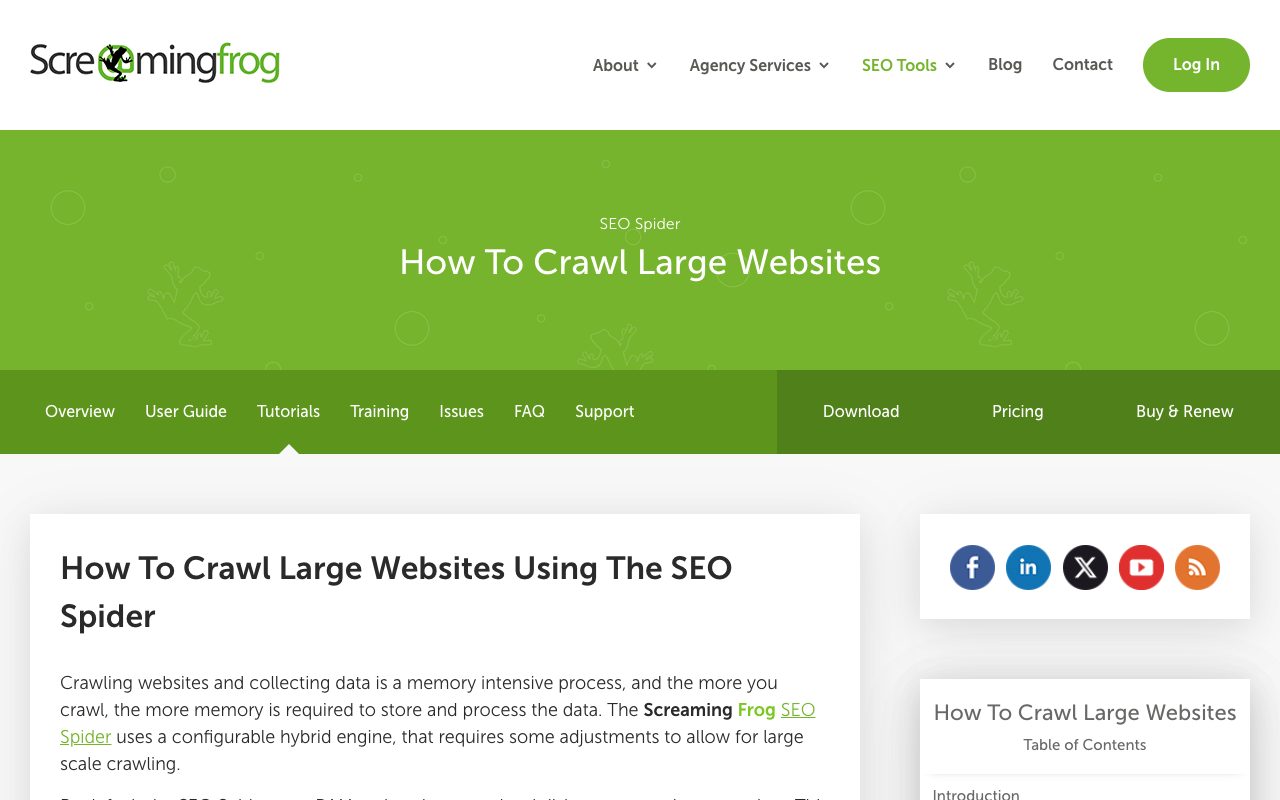
4. Fix: Screaming Frog SEO Spider
Most fixes that move an AI answer are crawl-level: a page that only renders with JavaScript, a schema block that contradicts the visible price, or a robots rule that blocks the search crawler. Screaming Frog SEO Spider finds those at scale. The free version crawls 500 URLs; the paid licence lists at $279 per user per year (checked September 17, 2026) and unlocks unlimited crawls with JavaScript rendering, custom extraction and scheduling.
Crawl with rendering on and flag commercial pages whose first paragraph does not answer the page's own question. Then check crawler access: OpenAI's crawler docs state that sites "that are opted out of OAI-SearchBot will not be shown in ChatGPT search answers", while Perplexity's docs note its user-triggered fetcher "generally ignores robots.txt rules". For single URLs, the free AI crawl checker, schema markup checker and llms.txt generator cover the same ground.
- Best for: verifying technical fixes across thousands of URLs before you re-test.
- Watch out: it runs on your machine, so large crawls need memory and time.
- Watch out: it does not read AI answers; pair it with a Diagnose tool.
5. Re-test: Peec AI
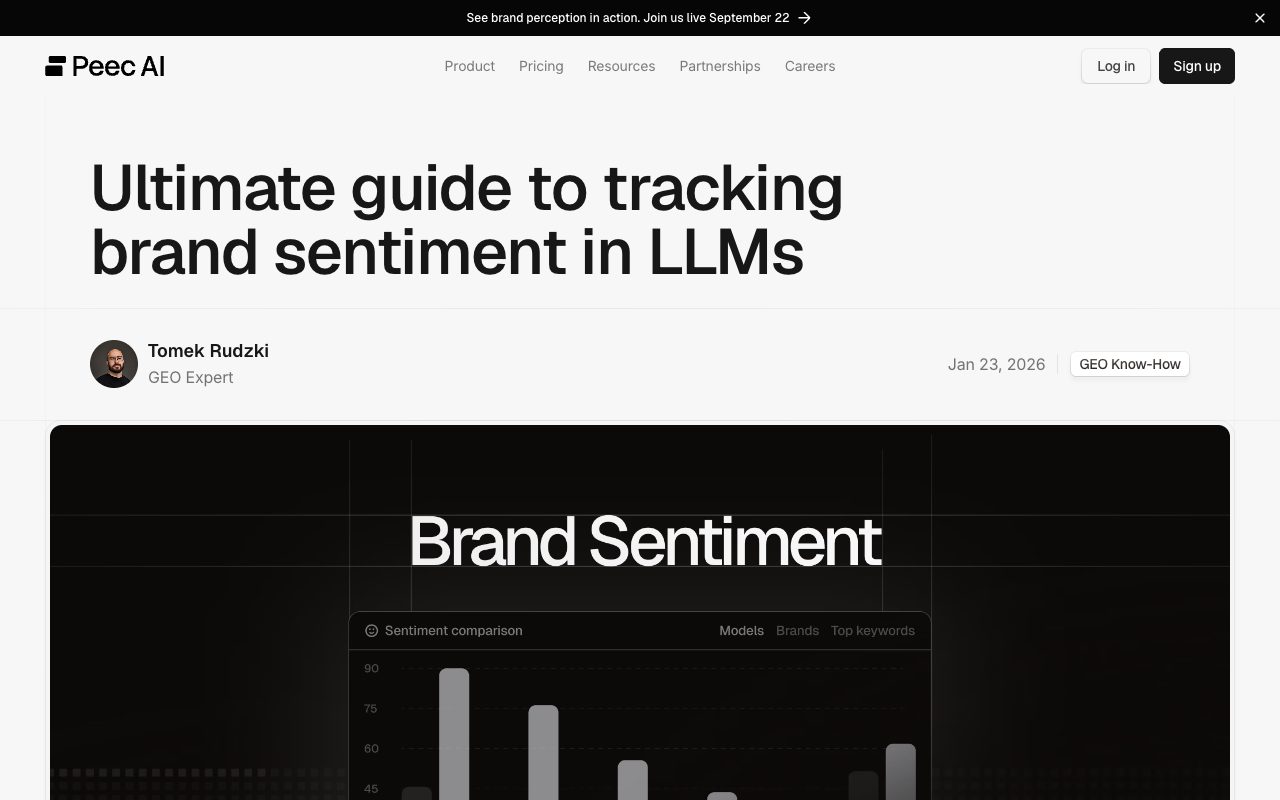
Peec AI calls itself "AI search analytics for marketing teams" and tracks Visibility, Position and Sentiment per prompt, per model, daily, with a sources view showing which domains each answer drew on. That cadence makes it the Re-test pick: a fix shipped on Tuesday shows up as a per-engine delta by Wednesday.
Pricing runs on credits; the vendor's documentation defines the unit as "1 prompt x 1 model x 1 day = 1 credit". Peec's comparison page, updated September 16, 2026, lists Starter at $85 per month for 50 prompts across 3 engines with unlimited seats; the pricing page shows Pro, Advanced and a custom Enterprise tier above it. Kairosy's scan of Peec AI (August 5, 2026) put Gemini at 29 against 60 elsewhere, with the complaint centered on "strict plan limitations", so do the credit math first.
- Best for: daily before/after tracking on a fixed prompt set once fixes ship.
- Watch out: credits scale with prompts times models times days, so adding an engine multiplies cost.
- Watch out: sentiment is scored per prompt without a written reason attached to each answer.
How Much Do Search Intelligence Tools Cost in 2026?
All figures were read from vendor sites on September 17, 2026; where none is published, the table says so.
| Tool | Loop stage | Entry price | Entry tier includes | Free option |
|---|---|---|---|---|
| Semrush AI Visibility Toolkit | Observe | $99/mo per domain, billed annually | 25 prompts daily, 4 engines, 1 domain | 7-day trial |
| Kairosy | Diagnose → Fix → Re-test | $29/mo (Basic) | 3 tracking slots, 15 daily prompts, 8 drafts, Fix Plan, weekly re-scan | 7-day trial, no card |
| Profound | Prioritize | Custom (Enterprise) | Daily tracking across up to 9 engines, Prompt Volumes, Agent Analytics, API | 50 prompts daily for 7 days on ChatGPT, Gemini, AI Overviews |
| Screaming Frog SEO Spider | Fix | $279 per user per year | Unlimited crawl, JavaScript rendering, custom extraction | Free up to 500 URLs |
| Peec AI | Re-test | $85/mo (Starter) | 50 prompts × 3 engines daily, unlimited seats | Free trial offered |
Kairosy Basic plus the free Screaming Frog tier covers Diagnose, Fix and Re-test for $29 a month. Adding Semrush for Observe makes a complete loop at $128, and adding Peec for daily re-tests lands at $213. Profound is a separate budget conversation.
How Do You Run the Loop Without Buying All Five?
Start with the two overlapping seven-day trials, Semrush for the baseline and Kairosy for the diagnosis. Pick 20 prompts a buyer would actually type, run them, and record three things per engine: named or not, recommended or not, and which domains were cited.
Prioritize by hand the first time. Sort the negative and competitor-preferred answers by how many engines agree, then by whether the cited source is something you can change this month or only influence. Fix the changeable ones first, verify with a crawl, and re-test on the next Monday scan.
One rule that saves money: change one variable per prompt cluster between re-tests, or you will never know which change moved the engine.
Search Intelligence Tools FAQs
What tool allows you to search external competitive intelligence research?
For classic search data, Semrush and Similarweb remain the usual answers. For AI answers, Semrush's AI Visibility toolkit includes competitor prompt research and Profound's Prompt Volumes adds demand estimates. For a free look at how the four main engines treat a rival, Kairosy's public Semrush report shows a real scan with quoted answers, alongside 200-plus other brands.
What is Profound AI search intelligence tool?
Profound is an enterprise platform that tracks how AI answer engines mention and cite a brand, estimates prompt demand, and logs which AI crawlers fetch a site. It sells through custom Enterprise contracts with a limited free trial.
Are search intelligence tools the same as rank trackers?
No. A rank tracker records positions on a results page. Search intelligence tools also read the generated answer, score its sentiment, identify the sources behind it, and measure whether a change moved it.
Do you need llms.txt or special schema to appear in AI Overviews?
Not for Google. Its AI features documentation states: "There are no additional requirements to appear in AI Overviews or AI Mode, nor other special optimizations necessary," and adds that no special schema.org structured data is required. llms.txt is a separate proposal by Jeremy Howard for a root-level markdown file that agents "are expected to view or search"; it does not change Google's rules.
How often should you re-test after a fix?
Daily for a small set of tracked prompts, weekly for a full sentiment scan across engines and markets. One re-test the day after a change proves nothing; wait for two consecutive weekly scans that agree.
See what AI says about your brand
Run a free scan across ChatGPT, Gemini, Claude & Perplexity in about 30 seconds.
Run my free scan