Serpstat vs Semrush (2026): Pricing, API, PPC and AI Search Compared
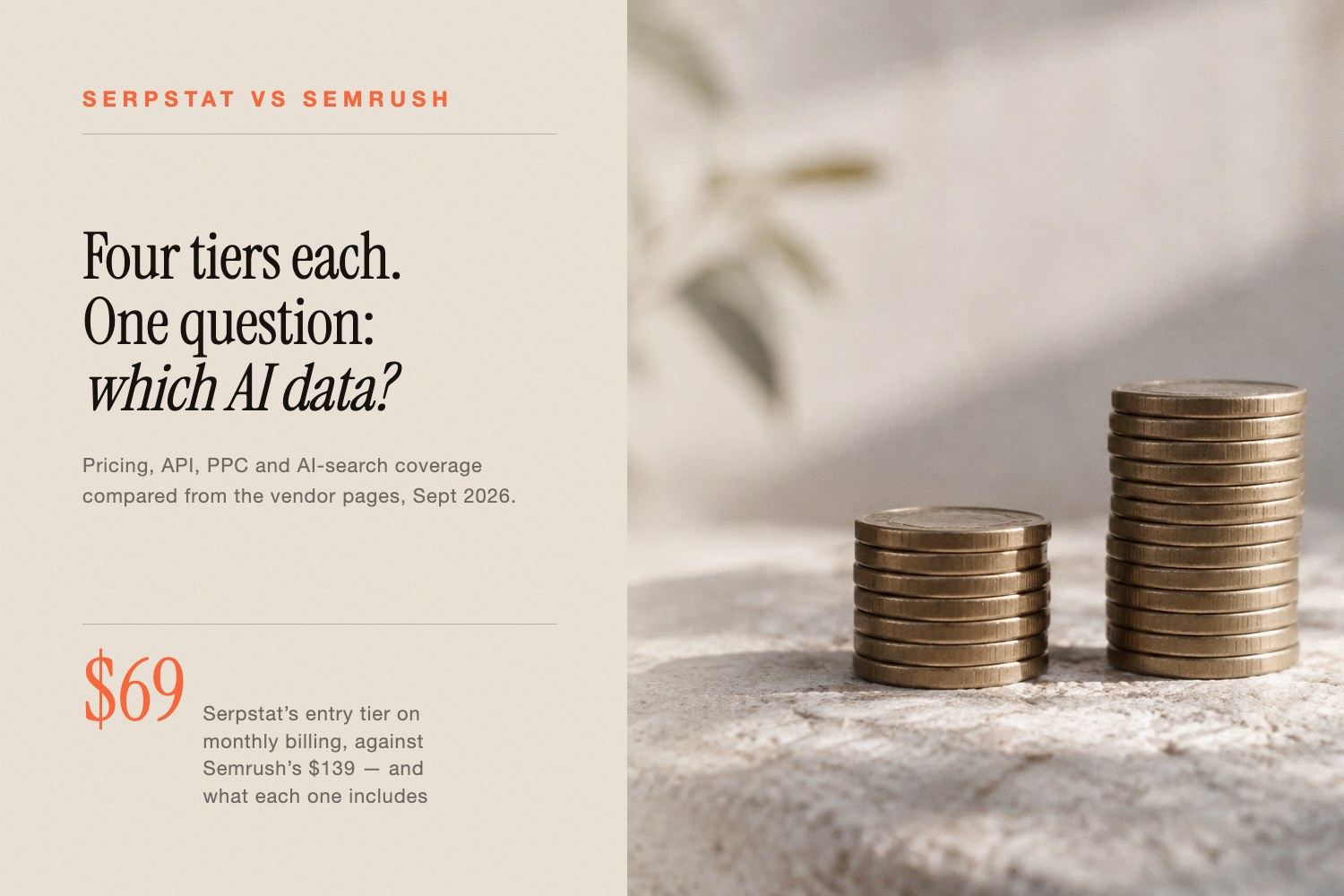
Serpstat vs Semrush comes down to one trade: Serpstat's Team plan costs $129/month ($100 billed annually) and already includes API access, MCP and an AI Overview report, while Semrush starts at $139/month and charges $199/month before you get prompt tracking in AI search. Semrush wins on database depth and paid-search intelligence; Serpstat wins on price per seat and on how early the API appears in the ladder.
Every number below was read on the two vendors' own pricing pages on September 17, 2026, and the AI-search section quotes live Kairosy scans of both brands. If you want a cheaper replacement rather than a head-to-head, the Semrush alternatives guide covers nine options.
Serpstat vs Semrush: What Does Each Tool Do in 2026?
Semrush is the larger suite. Its keyword research page claims "28B+ keywords" across "142 regional keyword databases" and "808M domain profiles", and its backlink checker claims "more than 43 trillion backlinks" from "390 million referring domains", refreshed "at least hourly" (semrush.com, September 2026). In 2026 the product line was folded into "SEO + AI Search" tiers, so AI visibility, sentiment and prompt tracking now sit inside the main plans.
Serpstat was born inside the Netpeak agency in 2013 and has been independent since 2015. Its keyword tool advertises "7.53B keywords" and "1.50B domains" with suggestions "from 230 countries in Google" (serpstat.com). The modules are the classic five, keyword research, site analysis, rank tracker, site audit and backlink analysis, plus keyword clustering, a PPC Research tool and a separately branded LLM Brand Monitor for AI answers.
Serpstat vs Semrush Pricing: What Do the Plans Cost in September 2026?
Both vendors run a 7-day free trial that auto-renews. Semrush's page says "Try Semrush free for seven days. Cancel anytime." Serpstat's FAQ is more specific: the trial covers "Individual or Team plan", a $1 verification charge is refunded "in 5–30 minutes", and the plan price "will be automatically withdrawn after 7 days" unless you cancel.
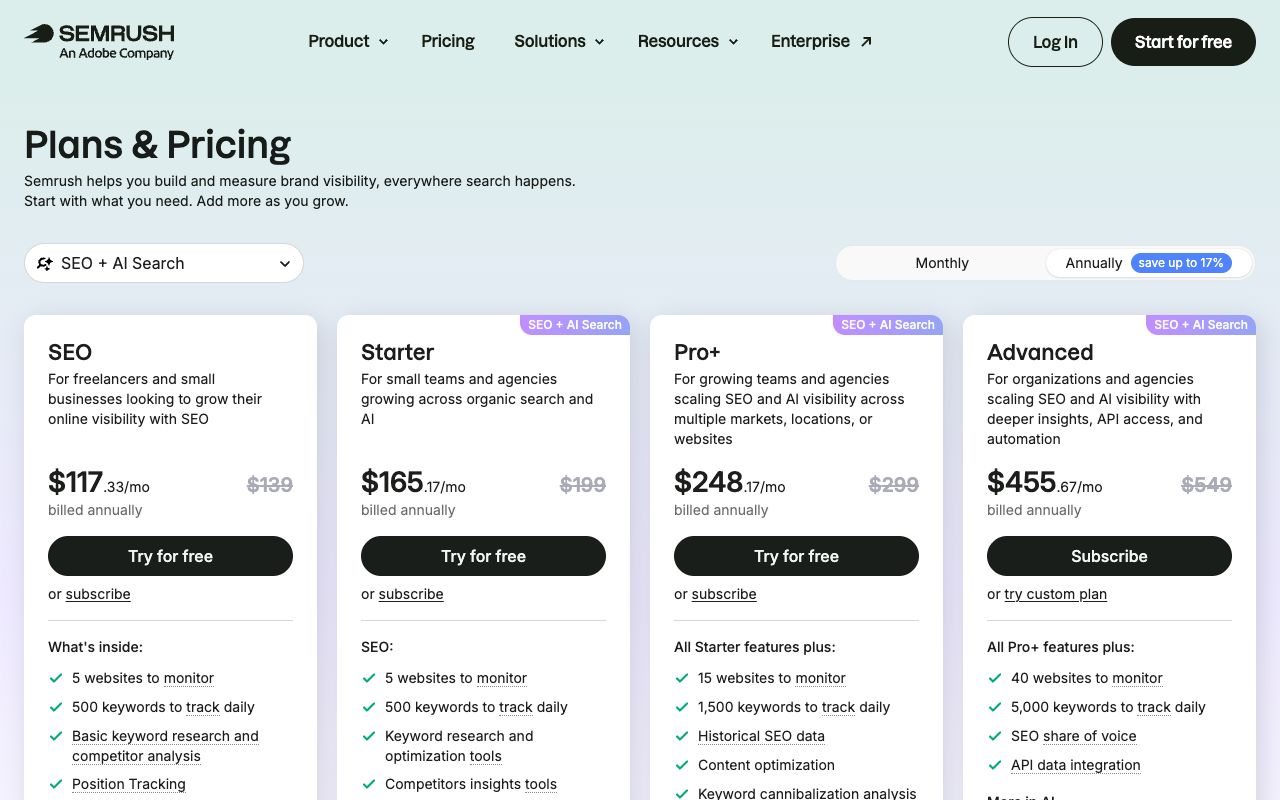
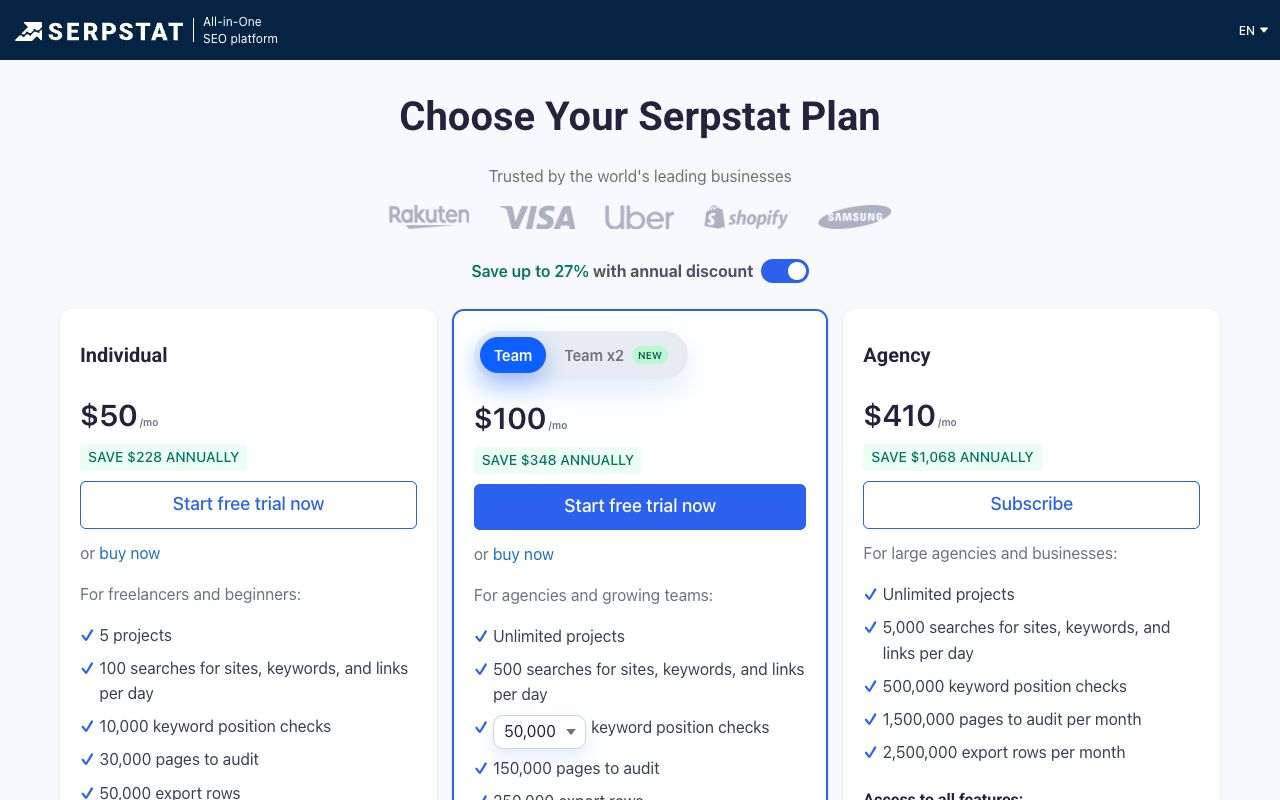
| Tier (monthly billing) | Semrush | Serpstat |
|---|---|---|
| Entry | SEO — $139/mo ($117.33 annual): 5 websites, 500 keywords tracked daily, AI sentiment and AI visibility reports | Individual — $69/mo ($50 annual): 5 projects, 100 searches/day, 10,000 position checks, 30,000 pages to audit |
| Mid | Starter — $199/mo ($165.17 annual): 5 websites, 500 keywords, 50 AI prompts daily, 1 domain for AI brand performance, MCP access | Team — $129/mo ($100 annual): unlimited projects, 500 searches/day, 50,000 position checks, 150,000 pages, 3 users, API, MCP, AI tools |
| Upper | Pro+ — $299/mo ($248.17 annual): 15 websites, 1,500 keywords, 100 AI prompts, historical data, keyword cannibalization | Team x2 — $209/mo ($169 annual): 1,000 searches/day, 100,000 position checks, 300,000 pages, 6 users, 400,000 API credits |
| Top self-serve | Advanced — $549/mo ($455.67 annual): 40 websites, 5,000 keywords, 200 AI prompts, share of voice, "API data integration" | Agency — $499/mo ($410 annual): 5,000 searches/day, 500,000 position checks, 1.5M pages/mo, 30 users, 2,000,000 API credits, white label |
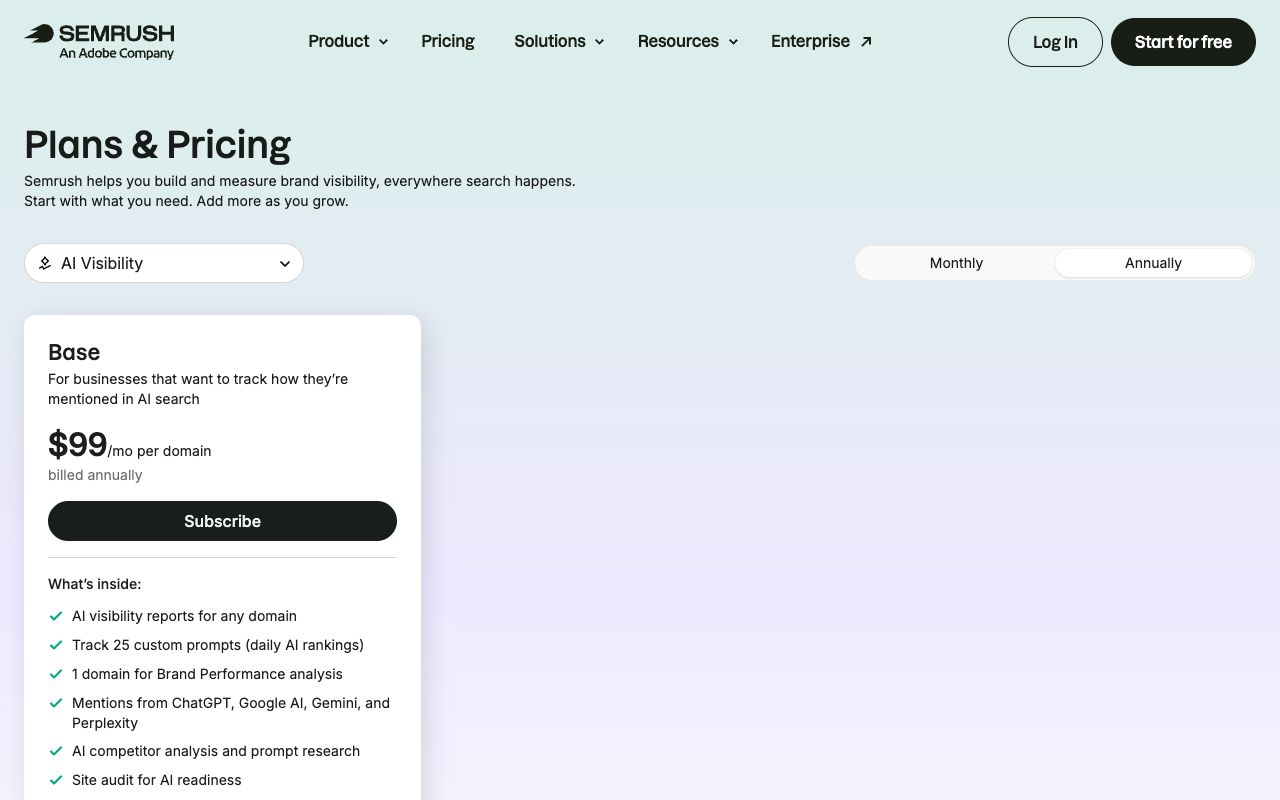
| Add-ons | Extra users from $45/mo, Base Report $10/mo, Pro Report $20/mo, AI Visibility Toolkit $99/mo per domain | Search volume crawling and SERP scraping "upon request" below Agency; enterprise discounts on request |
Sources: semrush.com/prices and serpstat.com/page/pricing-plans, both read September 17, 2026; Serpstat's annual billing saves up to 27%, and its old /pricing/ URL now returns a 404. Both vendors quote custom enterprise pricing on request.
The gap is widest per seat. Three people pay $129/month on Serpstat Team ($100 billed annually); the same three on Semrush Starter cost $199 plus two user add-ons "starting at $45/mo" each, so at least $289/month, and that plan still caps you at five monitored websites.
Serpstat vs Semrush Compared: Keyword Research, Backlinks, Site Audit and Rank Tracking
On the four core modules the pattern repeats: Semrush publishes bigger index numbers, Serpstat publishes clearer per-plan limits.
- Keyword research. Semrush cites 28B+ keywords in 142 databases. Serpstat cites 7.53B keywords across 230 countries, with 100 searches per day and 2,000 results per report on Individual.
- Backlinks. Semrush's headline is 43 trillion backlinks refreshed hourly. Serpstat's backlink page lists 18 metrics, a link-intersection tool and a recrawl tool "up to 500 pages daily", but no headline index size, and backlink reports are capped at 2,000 rows on Individual and 10,000 rows on every other plan.
- Site audit. Serpstat spells out its crawl budget: 30,000 pages on Individual up to 1,500,000 per month on Agency, with JavaScript rendering off on Individual and on from Team. Semrush lists Site Audit on every tier and "Multi-million-page crawling" on Enterprise, without a page number on the plan cards.
- Rank tracking. Semrush sells keywords tracked daily: 500, 500, 1,500, 5,000 by tier. Serpstat sells monthly position checks: 10,000, 50,000, 100,000, 500,000, with daily updates, desktop plus mobile and paid rankings on all tiers. 500 keywords a day is 15,000 checks a month, so Serpstat Individual sits below Semrush SEO while Serpstat Team sits above it.
Independent accuracy testing of Serpstat is thin, so treat both index sizes as vendor claims; the plan limits above are the checkable part.
How Do Serpstat and Semrush Differ on PPC Research, API Access and AI Features?
PPC research
Semrush's Advertising Research lets you "view which keywords they bid on, analyze live ads, monitor historical ad trends by accessing data as far back as 2012, and understand overall ad strategies" (semrush.com). Serpstat's features page describes a "PPC Research tool" built "based on the ad analysis results, keywords and landing pages of the most relevant competitors", and its rank tracker includes paid rankings on every plan. If paid search is half your job, Semrush's ad history is the safer bet; if you only need a competitor's ad keywords and landing pages, Serpstat covers that.
API access
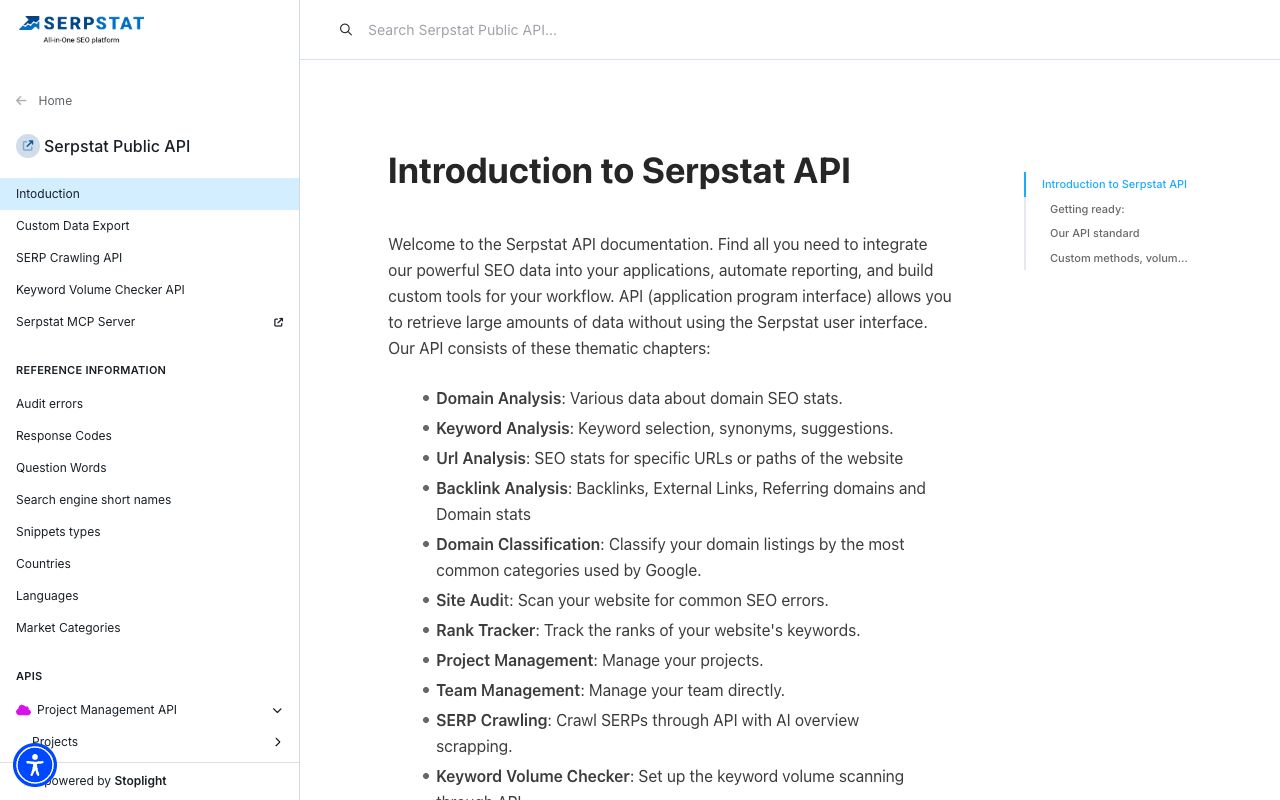
This is Serpstat's clearest win. API access starts on Team at $129/month with 200,000 credits per month at 1 request per second, and reaches 2,000,000 credits at 10 requests per second on Agency, across search analytics, backlinks, rank tracking and site audit endpoints (Serpstat API docs). Semrush lists "API data integration" only on the $549 Advanced plan, and its knowledge base still describes the Standard API as an add-on to the top SEO tier, with units sold in packages of "2,000,000, 5,000,000, 10,000,000, or 20,000,000 units" that expire monthly (developer.semrush.com). Per-unit prices are not published there.
AI features
Both now sell AI-search visibility at different depths. Semrush Starter includes 50 prompts tracked daily and one domain of "AI brand performance", and the standalone AI Visibility Toolkit at $99/month per domain collects "Mentions from ChatGPT, Google AI, Gemini, and Perplexity" for 25 custom prompts (semrush.com/pricing/ai). Serpstat bundles "AI Tools", "ChatGPT and Claude Integration (MCP)" and an "AI Overview Brand Opportunities Report" into Team, and sells its LLM Brand Monitor separately, promising "ChatGPT, Claude, Gemini and over 140 other AI models" with "Your first 10 checks are free". Its paid tiers are not on the Serpstat pricing page, so no price is quoted here.
Which Should You Choose? Serpstat vs Semrush by Use Case
- Solo consultant: Semrush SEO at $139/month if you sell on data depth, Serpstat Individual at $69/month if you sell on price and can live with 100 searches a day and 5 projects.
- Agency with 3–6 seats and many small sites: Serpstat Team or Team x2. Unlimited projects, included users and an API for $129–$209/month is something Semrush does not offer below $549 plus add-ons.
- PPC-heavy team: Semrush, for the ad history back to 2012 and the Pro+ historical data that seasonal bidding needs.
- Developer building internal dashboards: Serpstat Team, because the API is included with published credit limits, then Semrush Advanced or Enterprise if you outgrow 2,000,000 credits.
- Eastern European or multilingual markets: Serpstat, whose Trustpilot praise clusters around regional work.
One caveat from public reviews: on Trustpilot Semrush holds a 1.7/5 TrustScore from 1,395 reviews (September 2026), with 44% one-star ratings centered on cancellation and refund friction, while Serpstat's 3.0/5 rests on only 19 reviews, too few to call a verdict. Auto-renewing trials are the common thread, so set a reminder on day six.
Semrush vs Serpstat for AI Search and GEO: Who Tracks LLM Visibility Better?
Google rolled AI Mode out to all US users on May 20, 2025 and said AI Overviews were driving "over 10% increase in usage of Google for the types of queries that show AI Overviews" (Google, May 2025). Serpstat's own study of 1 billion keywords found AI Overviews on 27.5% of tracked SERPs by November 2025, and on 53.97% in Health (Serpstat, December 2025).
Google AI Overviews and AI Mode
Serpstat's edge is data licensing. Its AI Overview dataset covers "180+ regions" and "250M+ AI Overview records", each with the generated text, cited URLs, inline anchors and the cited pages' organic positions, sold by region (the US set is listed at $12,500) and updated daily (data.serpstat). Serpstat also reports that "92–96% of domains cited in AI Overviews do NOT appear in the organic top 20 for the same query". Semrush covers AI Overviews inside position tracking and its AI visibility reports, but advertises no raw-records dataset on its pricing pages.
LLM visibility, citations and brand monitoring
Semrush's AI toolkit names four sources, ChatGPT, Google AI, Gemini and Perplexity, refreshing brand performance weekly and prompt tracking daily. Serpstat's LLM Brand Monitor names ChatGPT, Claude and Gemini on its homepage and "over 140 other AI models" on the pricing page. Neither publishes how many prompts a scan asks or how sentiment is scored, so they cannot be benchmarked from outside.
Google's guidance cuts through some of the marketing: "There are no additional requirements to appear in AI Overviews or AI Mode, nor other special optimizations necessary" (Google Search Central). Crawlability and indexation still gate everything, which you can check for free with Kairosy's AI crawl checker before paying either vendor for a visibility report.
What Do AI Engines Say About Serpstat and Semrush Themselves?
The fairest test of an AI-visibility feature is to point it at the vendor. Kairosy's scan of Semrush on 2026-08-05 returned a 59/100 AI reputation score, verdict "At risk", with ChatGPT at 74, Claude at 59, Gemini at 58 and Perplexity at 45. "Is it worth it" scored 98, but complaints scored 24 and alternatives 26: ChatGPT opened with "The most common complaints about Semrush are billing and subscription…" and Claude cited "widespread complaints about unexpected charges after free trials, deliberately complex cancellation…" (full Semrush report).
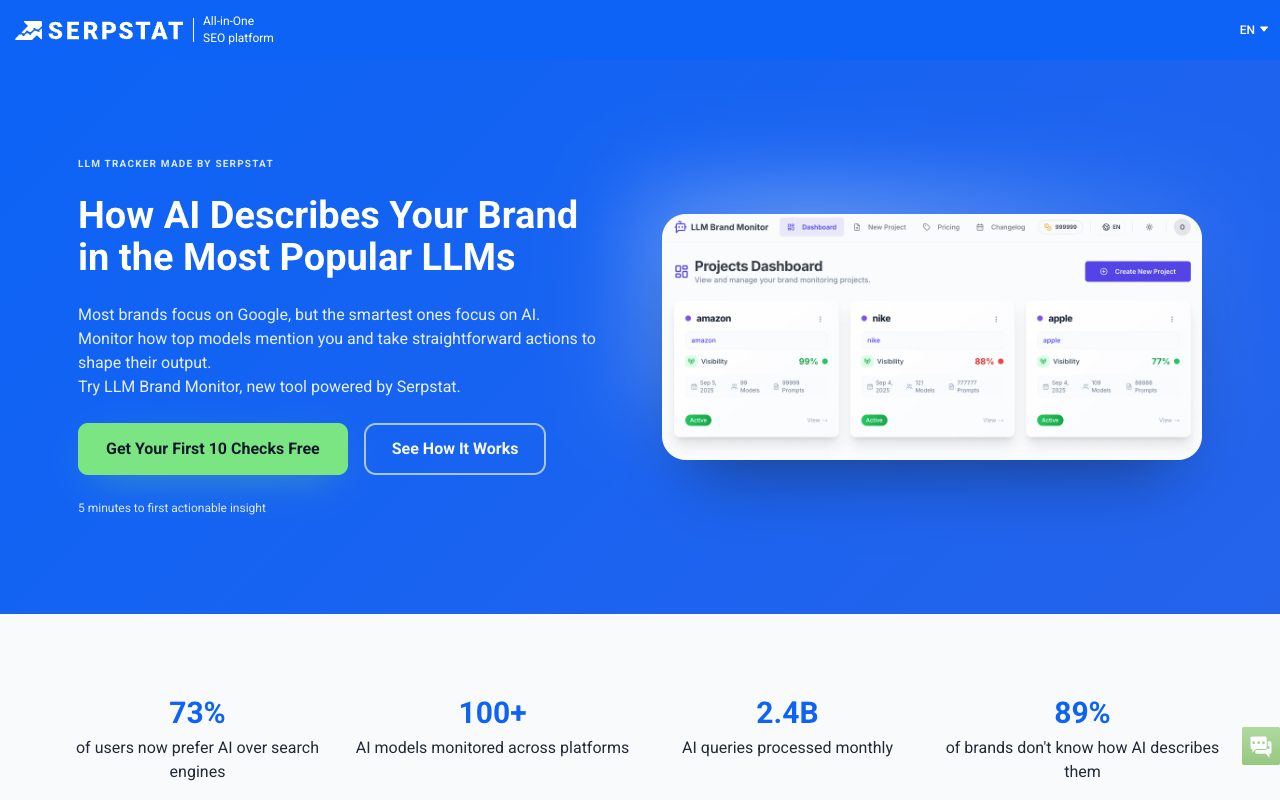
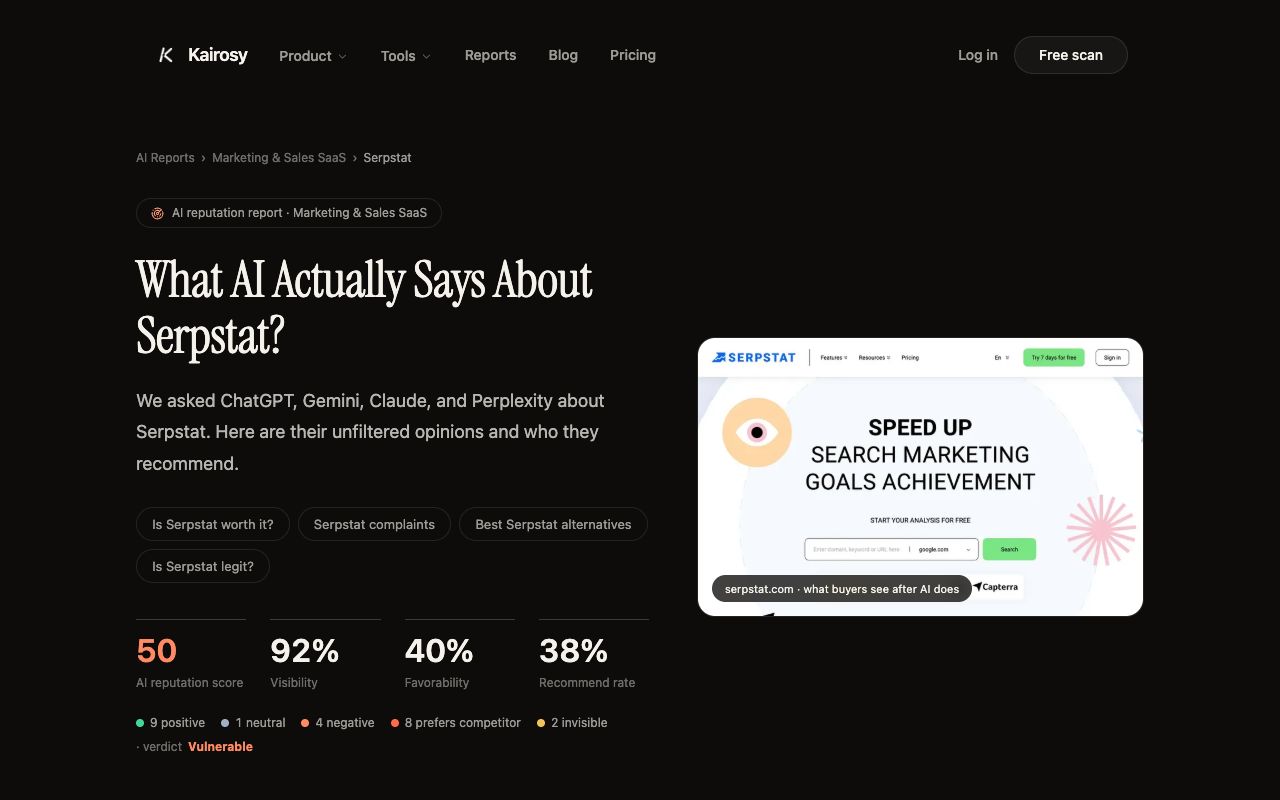
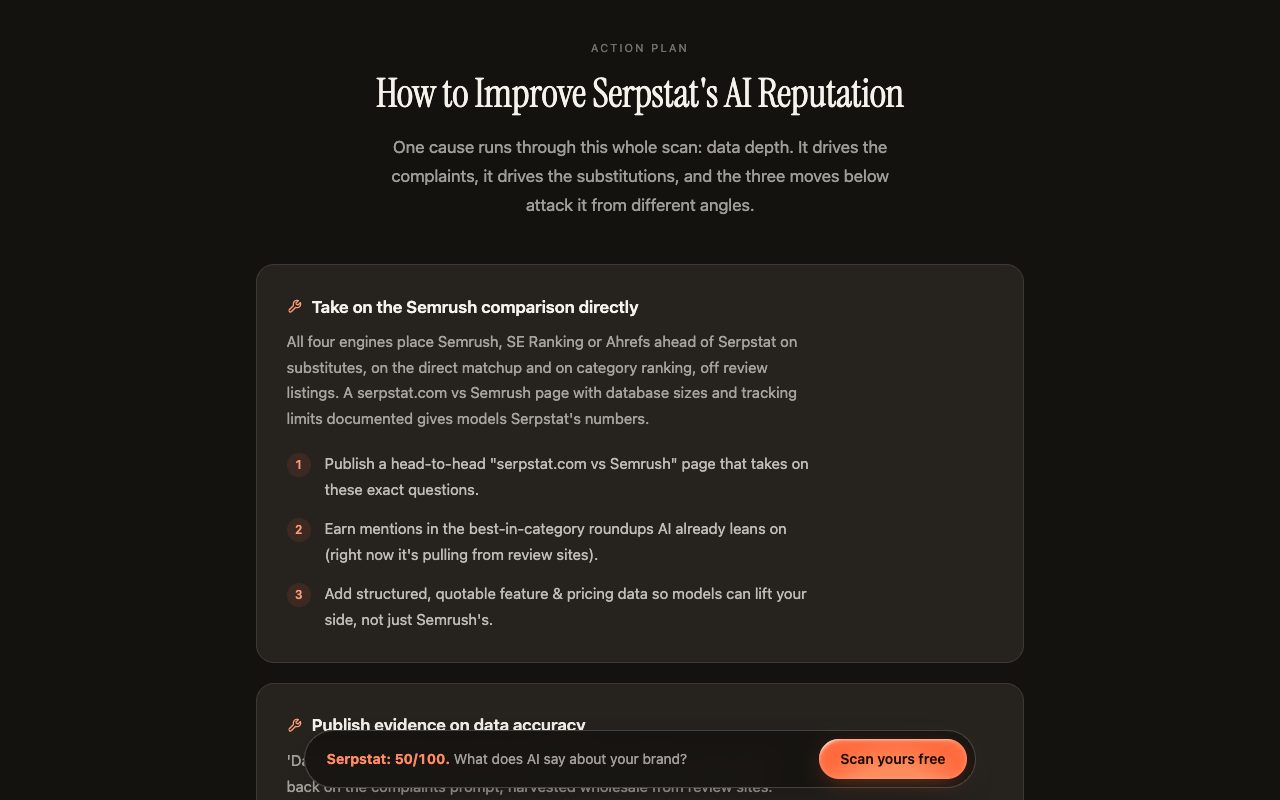
Kairosy's scan of Serpstat the same day came back at 50/100, verdict "Vulnerable": Gemini 73, ChatGPT 44, Claude 44, Perplexity 38. Eight of 24 answers ended on a competitor's name and the alternatives question scored 14. Claude told the buyer that "users typically leave Serpstat for one of three reasons: smaller keyword and backlink databases than competitors, rank-tracking caps that force you to…", and Perplexity concluded "For most buyers, Semrush is the safer choice if you want the broadest, most mature all-in-one SEO…" (full Serpstat report). Both brands held 27% share of voice in that scan, so Serpstat is mentioned as often as Semrush; it just loses the recommendation.
That is the gap a rank tracker cannot show: a position report never tells you an engine is calling your cancellation flow deliberate or your database shallow. Kairosy works on that layer only: it asks ChatGPT, Gemini, Claude and Perplexity the questions a buyer would ask about a brand, classifies each reply as positive, neutral or negative with reasons, keeps the real citation URLs, and turns the misses into a prioritized Fix Plan. Tracking slots re-scan every Monday with alerts for new negative keywords, a competitor becoming the preferred pick, score drops or an engine flipping sentiment.
Plans are $29, $99 and $399 per month for 3, 6 and 20 brand-market slots, 15, 28 and 70 prompts checked daily, and 8, 40 and 150 AI content drafts, with a 7-day trial and no credit card. It is not a keyword tool or a backlink index, so it sits beside either suite; the AI brand monitoring page explains the split, and the LLM visibility tools roundup compares it with Semrush's AI toolkit and others.
Serpstat vs Semrush FAQs
Is Serpstat cheaper than Semrush?
Yes at every tier, as of September 2026: Serpstat runs $69, $129, $209 and $499 per month on monthly billing against Semrush's $139, $199, $299 and $549, and Serpstat Team includes 3 users while Semrush charges from $45/month per extra user.
Does Serpstat have an API, and how does it compare with Semrush's?
Serpstat includes API access from the $129/month Team plan, with 200,000 credits a month and endpoints for search analytics, backlinks, rank tracking and site audit. Semrush lists API data integration on its $549 Advanced plan and sells units in packages of 2 million and up, with per-unit pricing unpublished on its developer page.
Which is better for PPC research, Serpstat or Semrush?
Semrush, for most teams, because its Advertising Research adds ad history back to 2012 on top of the larger index. Serpstat's PPC Research tool shows competitor ad keywords and landing pages, and paid rankings are in its rank tracker on every plan.
Can Serpstat or Semrush track what ChatGPT says about my brand?
Partly. Semrush's AI toolkit tracks mentions from ChatGPT, Google AI, Gemini and Perplexity for 25 to 200 prompts depending on plan. Serpstat's LLM Brand Monitor covers ChatGPT, Claude and Gemini with 10 free checks. Neither shows full answers with citation URLs and a per-answer sentiment reason.
See what AI says about your brand
Run a free scan across ChatGPT, Gemini, Claude & Perplexity in about 30 seconds.
Run my free scan