How to Track Brand Mentions in AI Search (2026 Guide)
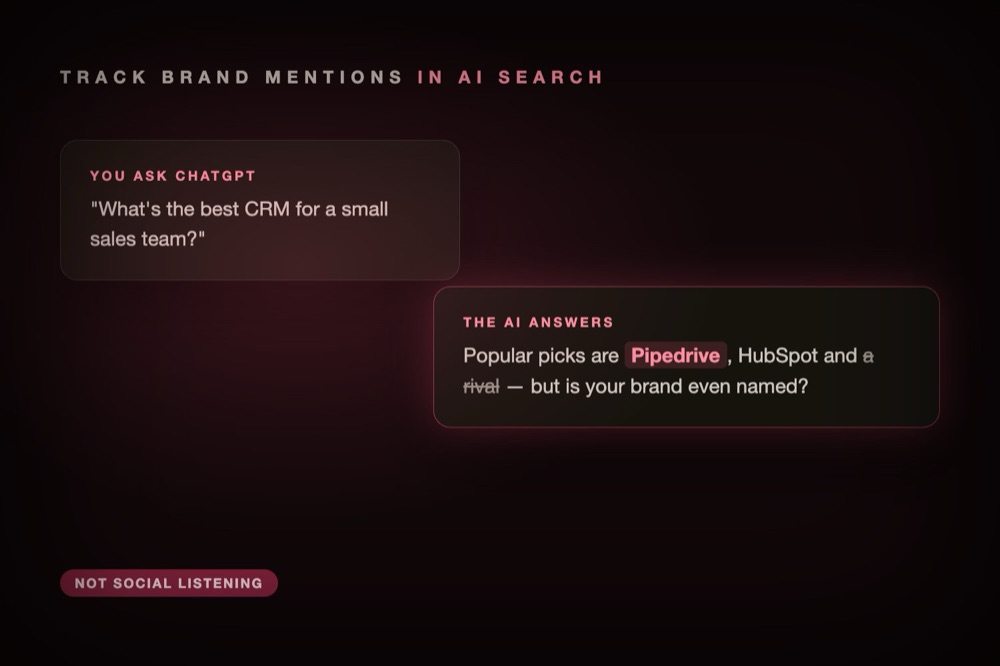
Buyers talk about your brand in two places now: on the open web, and inside AI answers. Most teams only watch the first. This guide shows how to track brand mentions in both — what's different about each, the tools that work, and what to do when an AI says something wrong about you.
- What are brand mentions?
- Traditional vs. AI mentions
- How to track traditional mentions
- How to track AI mentions
- How Kairosy does it
What Are Brand Mentions?
A brand mention is any time your brand gets named somewhere a buyer can see it. There are two types, and they behave very differently:
- Traditional mentions — published content on other sites: a review, a news article, a Reddit thread, a TikTok video. Someone wrote it, it has a URL, and it stays there.
- AI mentions — what ChatGPT, Perplexity, Gemini or Copilot say about you when a buyer asks. The answer is generated on the spot, has no URL, and disappears when the chat closes.
To track brand mentions completely in 2026, you need one method for each type — because the second type can't be found by any crawler.
Traditional Brand Mentions vs. AI Mentions: What's the Difference?
| Traditional mentions | AI mentions | |
|---|---|---|
| Where they live | Web pages, social posts, reviews | Generated AI answers |
| How you find them | Crawling and alerts | Asking the engines yourself |
| Can you go back to it? | Yes — it has a URL | No — regenerated per question |
| Business impact | Shapes opinion over time | Directly answers "what should I buy?" — one bad answer loses the deal on the spot |
| How to fix a bad one | Respond, outrank or request removal | Fix the sources the AI reads |
The business-impact row is why AI mentions deserve their own tracking: an AI answer is often the last thing a buyer reads before deciding, and search monitoring that stops at the web layer never sees it.
How to Track Traditional Brand Mentions
Google and Bing
Start free: Google Alerts on your brand name and common misspellings emails you new published mentions. Add a weekly manual search on Google and Bing with your brand in quotes to catch what Alerts misses.
Social platforms: TikTok, Instagram and X
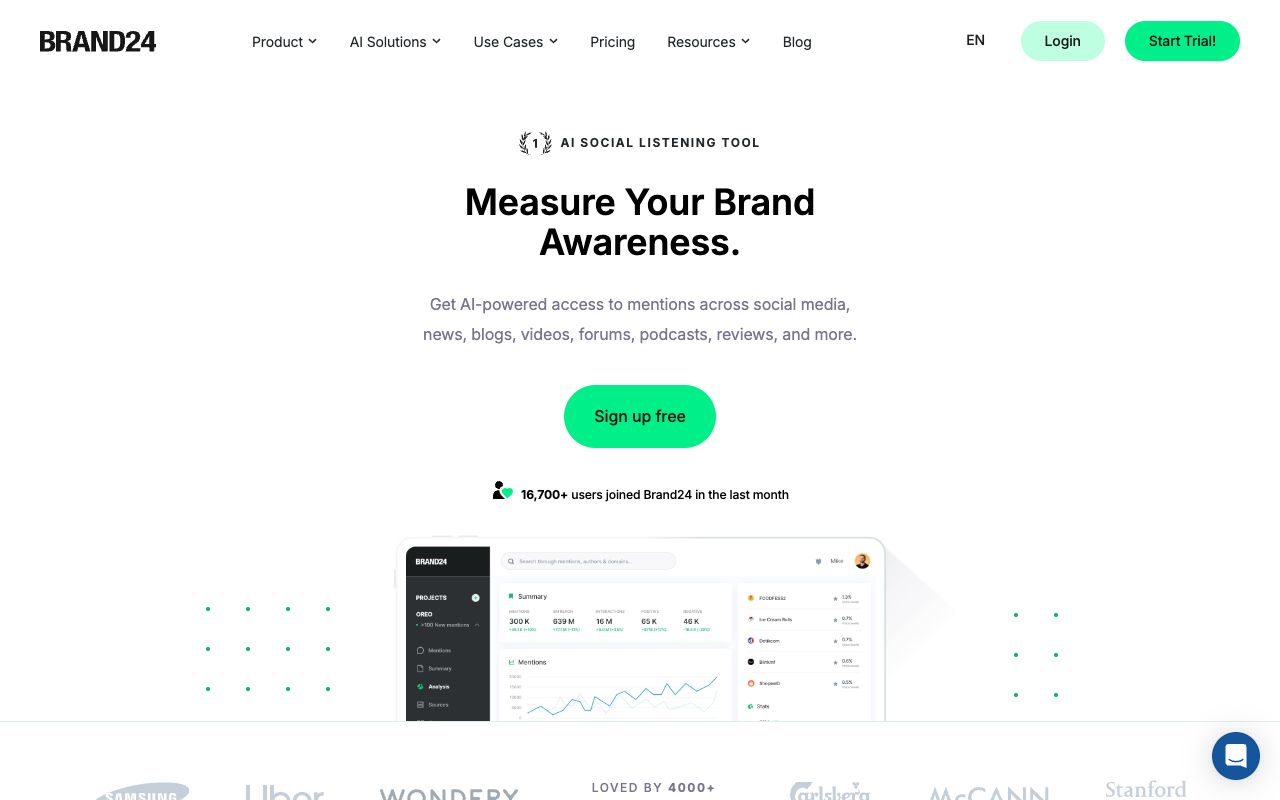
Social mentions rarely tag you. Search your brand name inside each platform (TikTok and Instagram search picks up spoken and captioned mentions too), and use a listening tool to automate it: Brand24 covers social, news, videos and podcasts with sentiment, and Mention (now part of Agorapulse) does real-time social and web monitoring.
Review sites and forums
Reviews on G2, Trustpilot or Amazon and threads on Reddit matter twice: buyers read them directly, and — as we'll see below — AI engines quote them. Claim your profiles, set up notifications, and answer what you can.
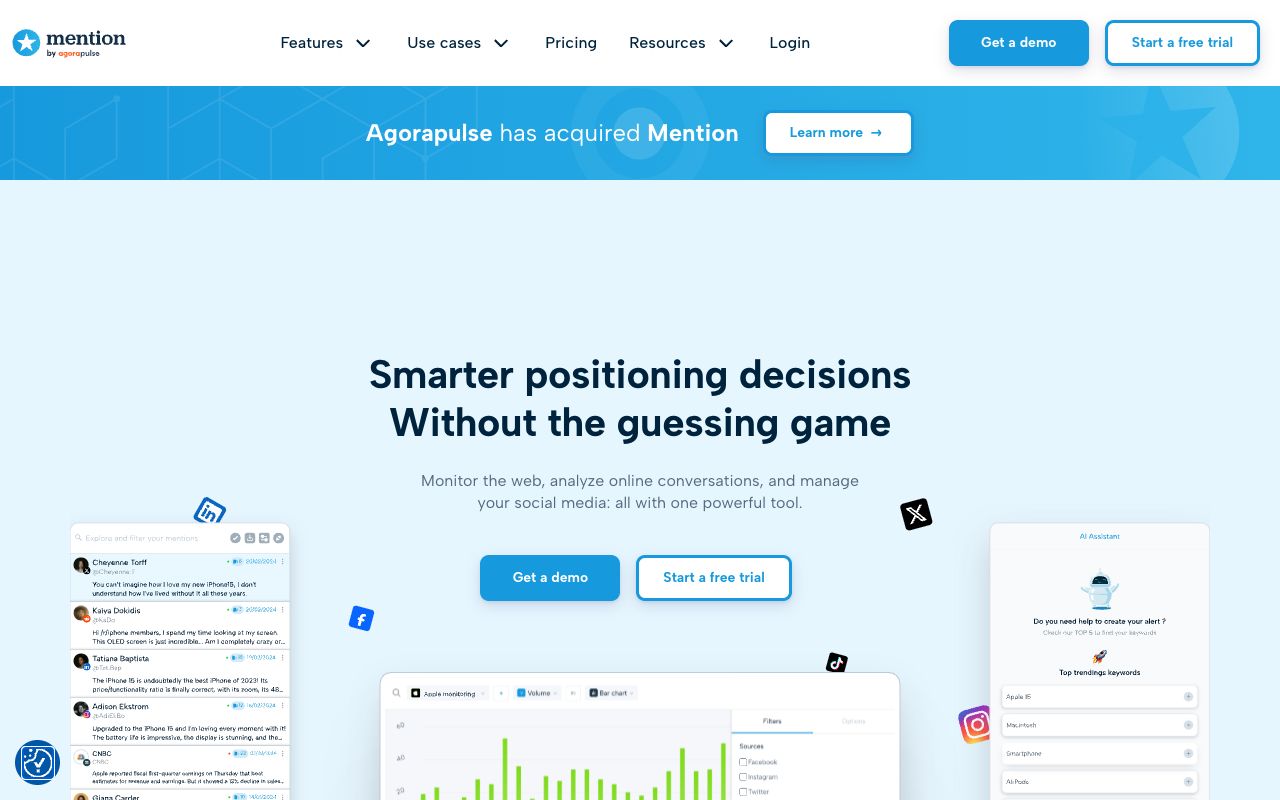
One caution when shopping here: pure social-listening tools do not read AI answers. Brand24 has added an AI visibility view; Mention has not. If AI answers matter to you, check that box before paying.
How to Track Brand Mentions in AI Answers
Is it possible to track brand mentions in AI search? Yes — but you can't crawl for them. The only way to see an AI mention is to ask the engine a buyer's question and record what comes back. That's how every tool in this category works, and how to track brand mentions on LLM platforms by hand:
The manual method (free)
- Write down your five most common buyer questions: "best [category] tool", "[you] vs [rival]", "is [you] worth it".
- Ask them in ChatGPT, Perplexity and Gemini once a month, logged out.
- For each answer, note: were you named, was the tone positive or hedged, which competitors appeared, and which sources were cited.
AI search monitoring tools
Manual checking stops scaling around ten prompts. What are the best AI search monitoring tools? These four track mention counts and frequency across engines, verified against their own sites in July 2026:
| Tool | Engines | Entry price | What it counts |
|---|---|---|---|
| Otterly.ai | ChatGPT, AI Overviews, Perplexity, Copilot | $29/mo (15 prompts) | Mentions + citations per prompt, daily |
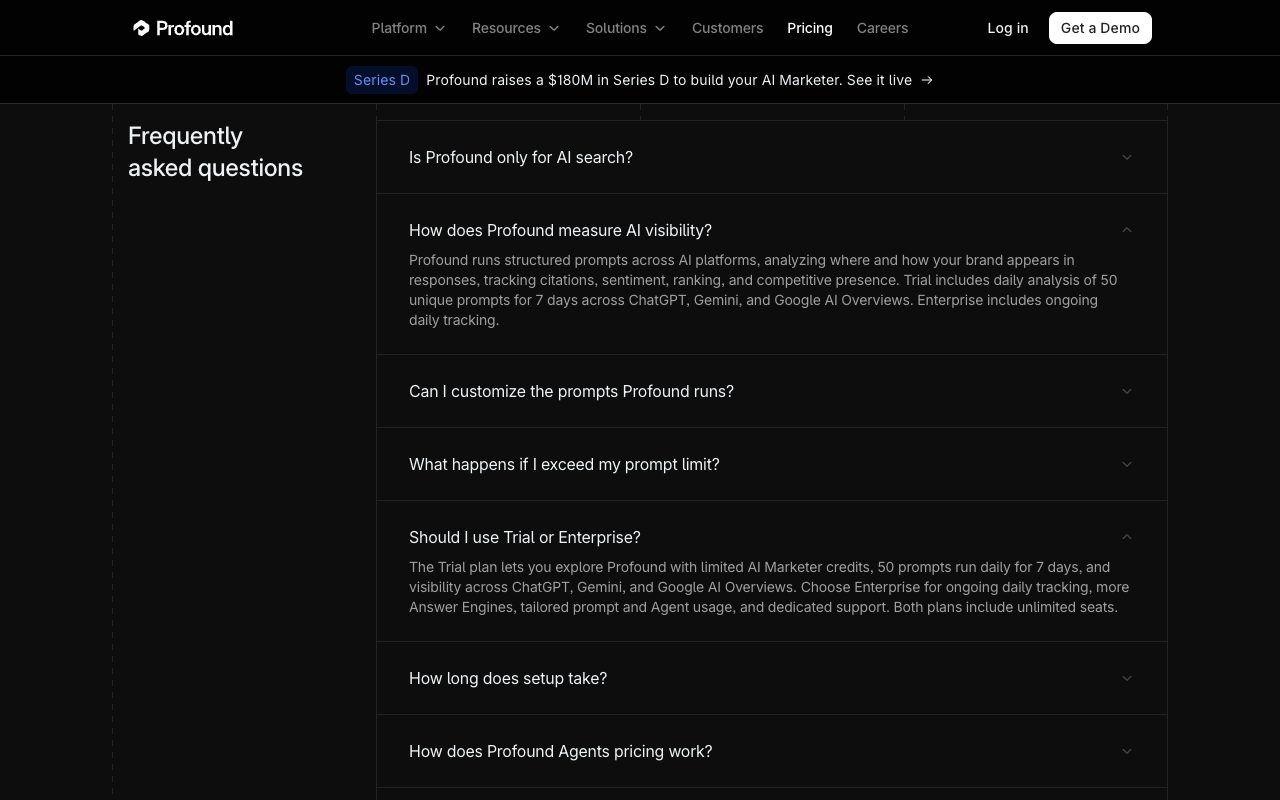
| Profound | 9 engines incl. ChatGPT, Gemini, Copilot | Free trial; Enterprise custom | Mention frequency + sentiment across engines |
| Semrush AI Toolkit | ChatGPT, Google AI, Gemini, Perplexity | $99/mo per domain | Visibility and mentions vs competitors |
| Scrunch AI | ChatGPT, Claude, Gemini, Perplexity + more | $250/mo | Citation mapping at agency scale |
Why use AI search monitoring tools instead of spot checks? Frequency. A monthly manual check gives you one data point; the best AI search monitoring tools for ChatGPT and its peers re-ask your questions daily or weekly, so you see when a mention appears, disappears, or turns negative — while it's still fixable.
How to find and fix negative AI mentions
Negative and missing mentions are the ones that cost revenue, and they're more common than most teams expect — when Kairosy scanned 11 brands with public reports, even the best (Coda) earned positive AI answers only 21% of the time, and one hotel brand (CitizenM) was invisible for 40% of its buyer questions. The fix path is always the same:
- Find the mention (tracking, above).
- Find its source — AI answers are assembled from pages, reviews and threads the engine retrieved. The negative sentence has a source behind it.
- Fix or displace the source: correct stale facts, answer the bad review, publish the comparison page that's missing. The answer changes when its inputs change.
Also confirm AI crawlers can reach your site at all — a page they can't fetch can never become a source. Our free AI Crawl Checker tests that in seconds.
How Kairosy Tracks AI Mentions — and Whether AI Recommends You
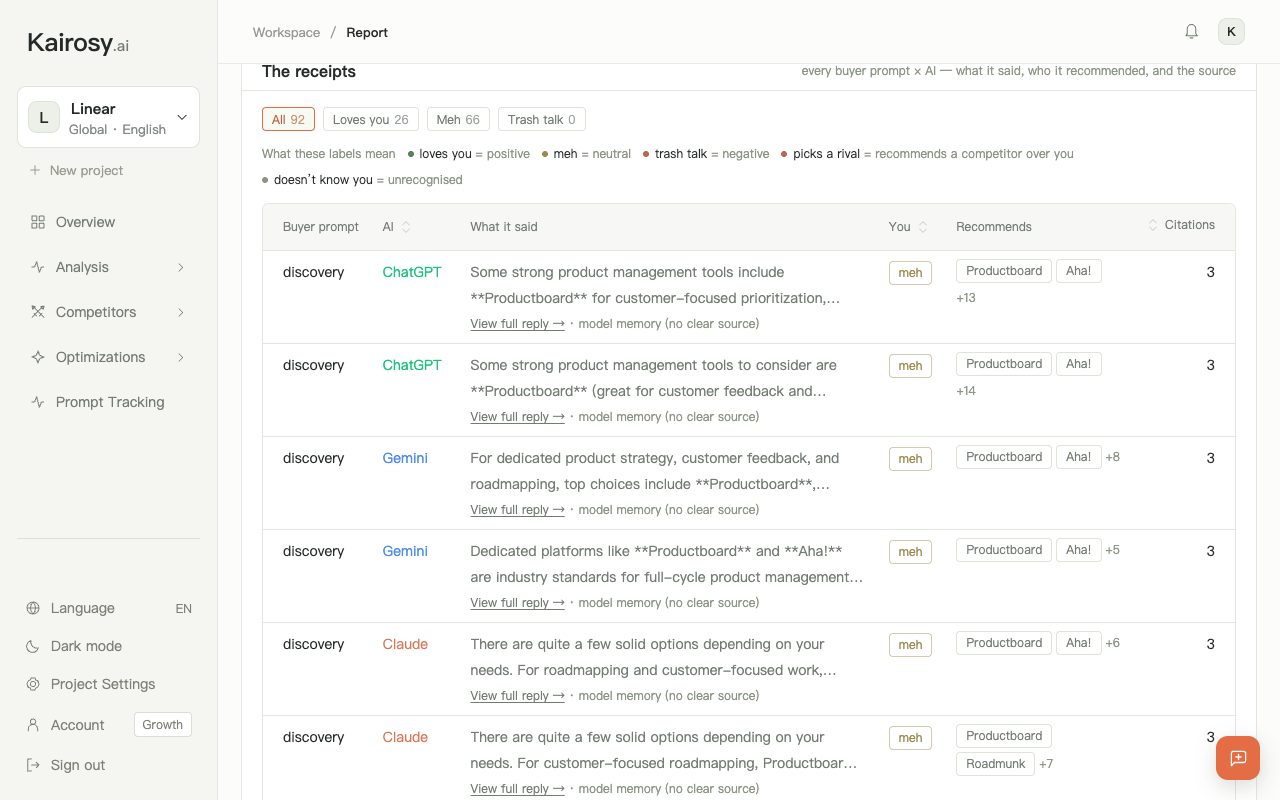
Kairosy is built for the AI half of this guide, with one difference in emphasis: it doesn't just count mentions, it tells you whether the AI actually recommends you. A scan asks ChatGPT, Gemini, Claude and Perplexity real buyer questions, then reports your visibility (how often you appear), favorability (recommended, neutral, or steered to a rival), and the exact source behind every negative — so tracking ends in a fix list, not a chart. The scan is free with no card; paid plans (from $29/month) add weekly re-scans and ChatGPT brand monitoring so changes get caught within days.
Tracking Brand Mentions: FAQs
Is it possible to track brand mentions in AI search?
Yes. You can't crawl AI answers, but you can ask each engine your buyers' questions on a schedule and record whether you're mentioned, how favorably, and which sources are cited — manually for a few prompts, or with an AI search monitoring tool at scale.
How do I track brand mentions in AI answers for free?
Two free options: run a Kairosy scan (covers ChatGPT, Gemini, Claude and Perplexity, no card), or do the manual loop — ask each engine your top five buyer questions monthly and log the results in a sheet.
What are monitoring ChatGPT brand mentions tools I can start with?
Kairosy (free scan, sentiment plus source tracing), Otterly.ai ($29/mo, prompt-level daily checks), Profound (custom Enterprise pricing, nine engines) and the Semrush AI Toolkit ($99/mo, next to your SEO data). Pick by how many prompts and engines you need.
Do I still need social listening if I track AI mentions?
Yes — they cover different layers. Social listening catches what humans publish; AI tracking catches what models generate. The practical setup is both: free Google Alerts for the web, plus an AI monitor for the answers.
What are the best search visibility optimization tools after I find a problem?
The ones that show sources. A mention count tells you something's wrong; the cited source tells you what to fix. Source-tracing tools (Kairosy, Scrunch AI) turn search monitoring into an action list — fix the source, and the answer follows.
Your buyers are asking AI about your category today. Run a free scan to track brand mentions at the answer layer — and see whether the AI recommends you, or someone else.
See what AI says about your brand
Run a free scan across ChatGPT, Gemini, Claude & Perplexity in about 30 seconds.
Run my free scan