Answer Engine Optimization (AEO): How to Get Cited by AI in 2026
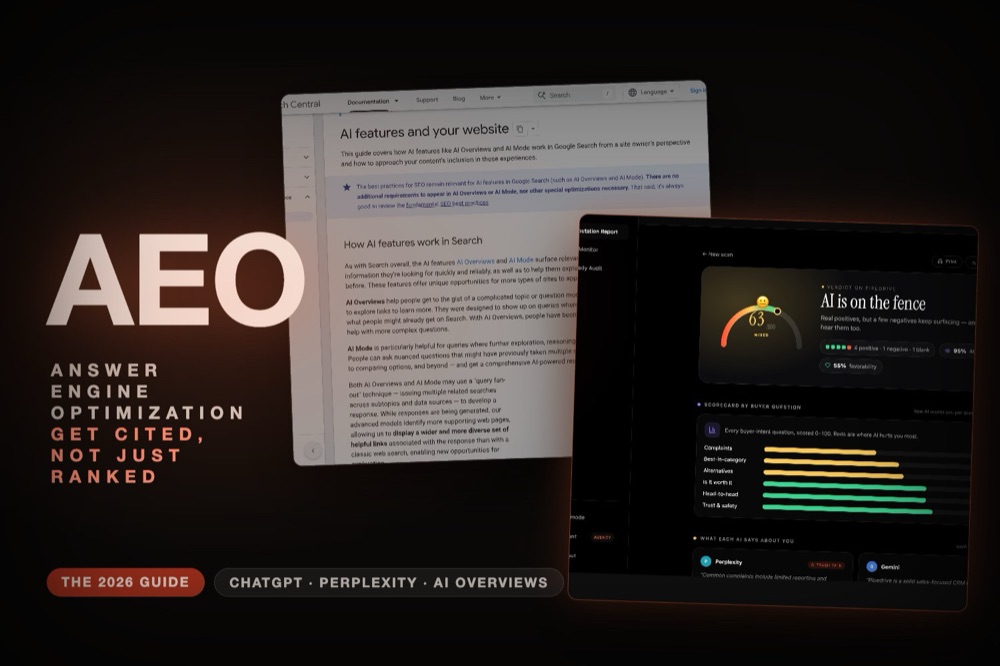
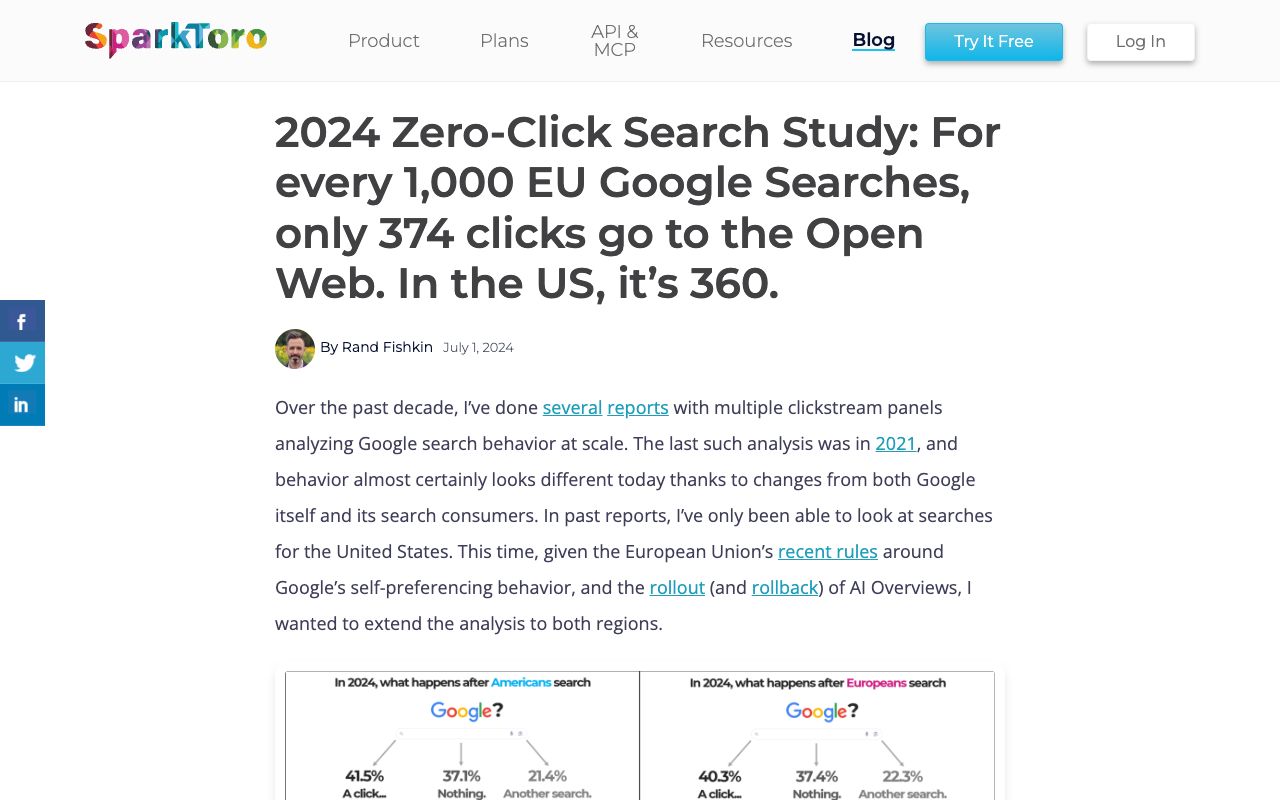
Your next customer probably won't scroll a results page. They'll ask ChatGPT, Perplexity or Google's AI Mode a full question and read the one answer that comes back. SparkToro's well-known clickstream study found that roughly 6 in 10 Google searches already end without a click, and Ahrefs measured that the top organic result loses about a third of its clicks when an AI Overview sits above it. Answer engine optimization is how you stay visible when the answer replaces the results page.
This guide explains what answer engine optimization (AEO) actually is, how it differs from the SEO you already do, seven concrete optimization methods, and how to measure whether any of it is working — including real visibility numbers from 11 scanned brands.
- What is answer engine optimization?
- AEO vs traditional SEO
- How to do AEO: 7 methods
- Best-practices checklist
- How do I track AEO?
What Is Answer Engine Optimization?
Answer engine optimization is the practice of shaping your content and your brand's footprint so that AI systems — ChatGPT, Perplexity, Gemini, Claude, Copilot, Google's AI Overviews — select you as a source when they compose an answer. The unit of competition changes: classic SEO fights for a ranking position on a page of links; AEO fights for a citation inside the one answer the user actually reads.
If you've read our guide to generative engine optimization, think of it this way: GEO is the whole discipline of being represented well by generative AI, and AEO is its answer-retrieval layer — the part that decides whose facts get quoted when a question is asked.
Answer Engine Optimization vs Traditional SEO
The comparison of answer engine optimization vs traditional SEO comes down to what gets ranked, and what winning looks like:
| Traditional SEO | Answer engine optimization | |
|---|---|---|
| You compete for | A position on a results page | A citation inside the answer |
| Unit of optimization | Pages (titles, headings, links) | Passages and facts (claims an AI can lift) |
| Query shape | Keywords | Full questions in natural language |
| Authority signal | Backlinks | Backlinks plus entity clarity and third-party mentions AI trusts |
| Success metric | Rankings, clicks | Share of answers, citation rate, sentiment of the mention |
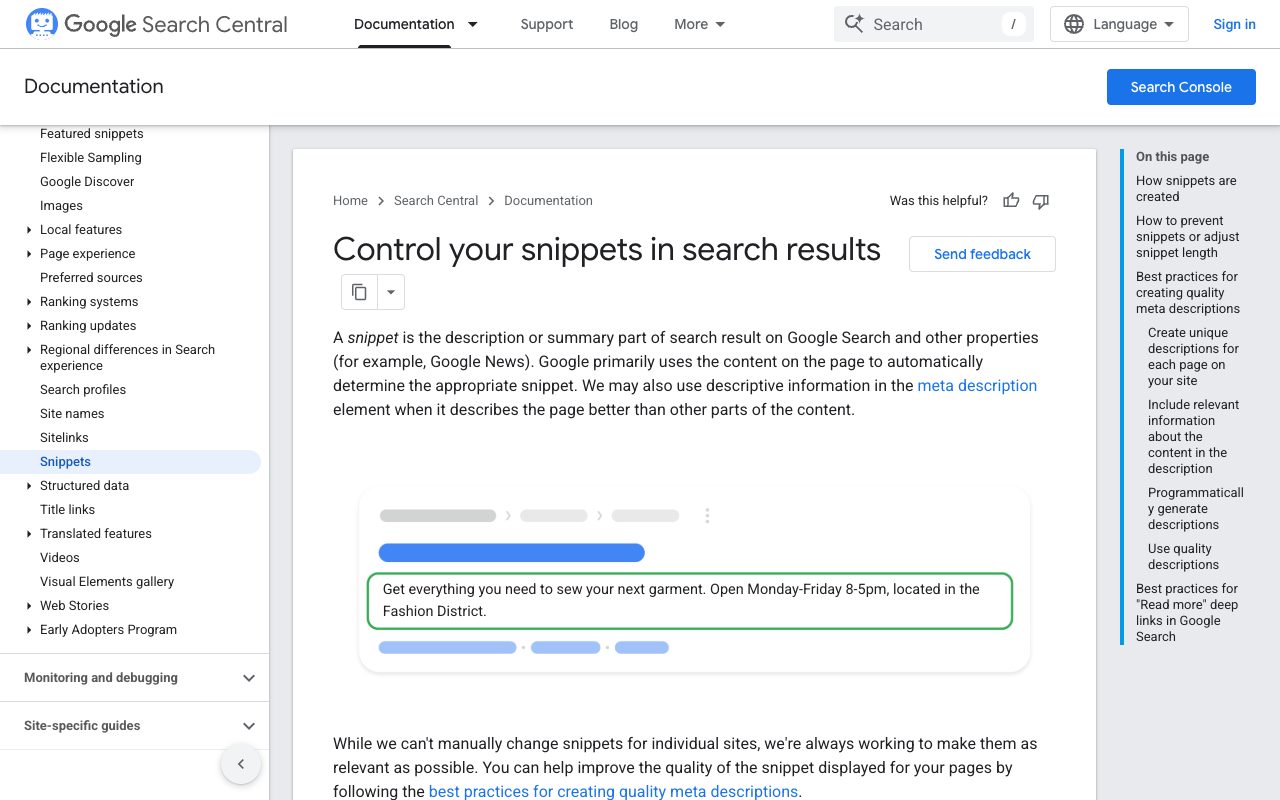
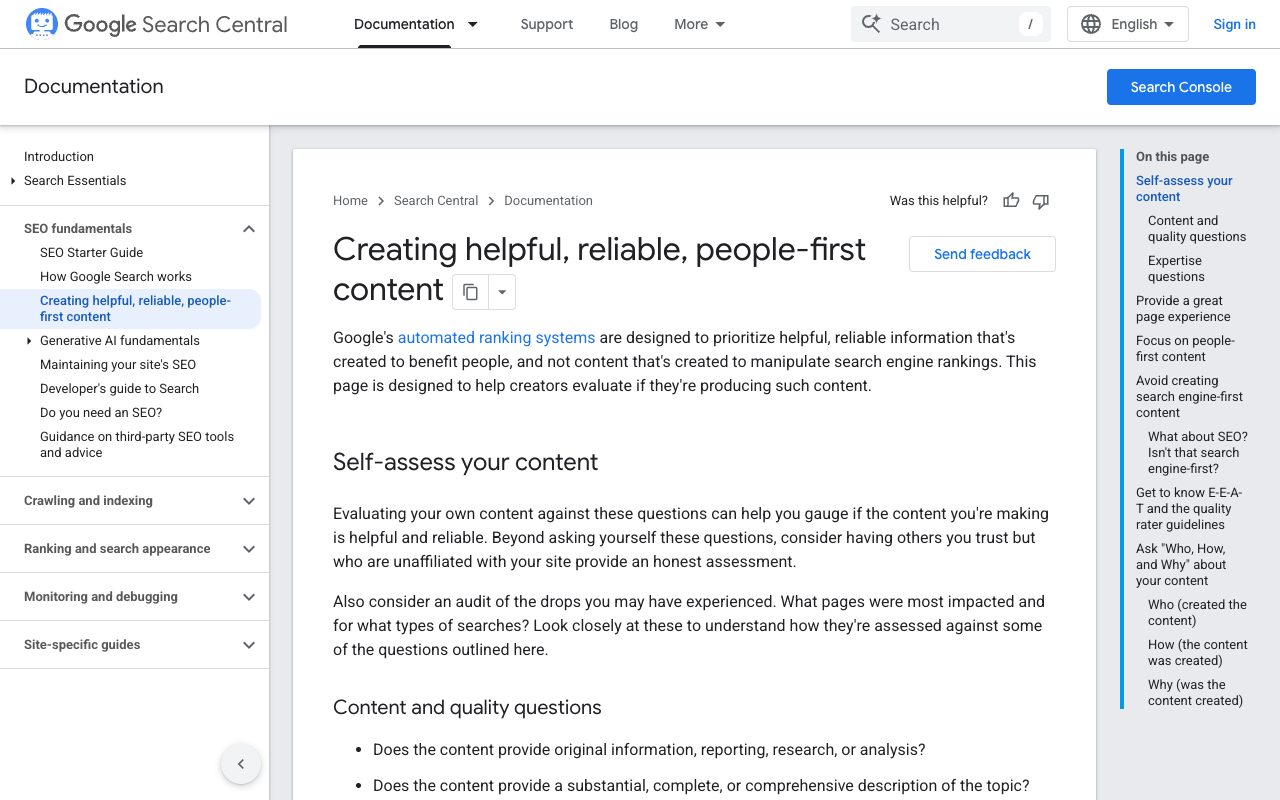
One honest caveat, straight from the source: Google's own documentation on appearing in AI features says there are "no additional requirements" beyond standard, people-first SEO — no special AI files or markup needed for AI Overviews specifically. That's true for Google's features, which sit on top of Google's index. But ChatGPT, Perplexity and Claude don't rank you with Google's systems: they blend their own crawls, training memory and different retrieval sources. That's why brands that rank well can still be invisible — or misquoted — in AI answers, and why AEO work goes beyond the checklist Google publishes.
How to Do AEO: Seven Optimization Methods
Here's how to do AEO in practice — seven methods, ordered roughly by effort-to-impact:
1. Lead every section with a liftable answer
Answer engines quote passages, not pages. Open each section with a 40–60 word, self-contained answer to one specific question, then elaborate below it. If a paragraph only makes sense with the three paragraphs above it, an AI can't quote it safely — and won't.
2. Structure content so machines can parse it
Question-shaped headings, short chunked sections, comparison tables, and structured data that mirrors the visible text. FAQ blocks remain one of the highest-leverage formats — our FAQ schema guide covers why the markup still matters for AI even after Google retired FAQ rich results.
3. Open the door for AI crawlers
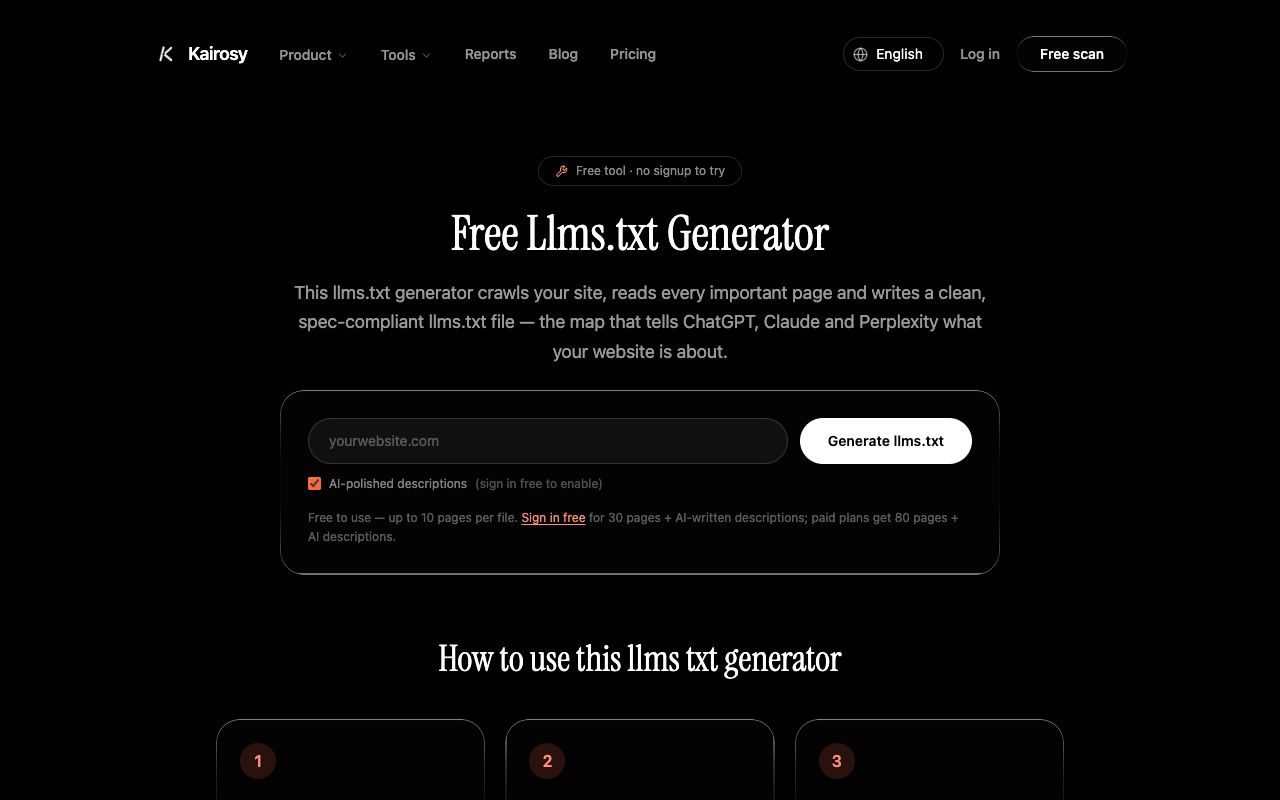
You can't be quoted if you can't be read. Check that your robots.txt doesn't block AI crawlers you actually want, keep key content in real text rather than JavaScript-only renders, and ship an llms.txt (the llms.txt proposal gives models a curated, markdown map of your site) — our free Llms.txt Generator builds one from your live site in under a minute.
4. Earn mentions where answer engines read
AI answers lean heavily on third-party sources: review platforms like G2, comparison articles, community threads, industry directories. If the only place your product is described accurately is your own site, you're one source among many describing you — and the loudest source might be a competitor's comparison page.
5. Keep facts fresh and consistent everywhere
Answer engines cross-check. Stale pricing on a review site, an outdated feature list in a directory, or three different taglines across profiles all lower the confidence an AI has in quoting you — or worse, get repeated as fact for months. Fix the sources, not just your site.
6. Make your entity unmistakable
Use one consistent brand name, maintain a clear about page, add Organization schema, and connect your profiles. AI systems resolve brands as entities; ambiguity between you and a similarly-named company splits your identity — and your citations.
7. Measure your share of answers, then iterate
AEO without measurement is guesswork. Ask the engines the questions your buyers ask, record who gets cited and how you're described, fix the worst gap, and re-test. That loop — not any single tactic — is the real engine of AI reputation management.
Answer Engine Optimization (AEO) Best Practices
The compact checklist we'd pin above any aeo optimization sprint:
- One question, one section, answer first — 40–60 words, self-contained.
- Structured data (Organization, Article, FAQPage) that matches the visible copy exactly.
- robots.txt and llms.txt reviewed this quarter, not last year.
- Your five most-asked buyer questions answered verbatim somewhere quotable.
- Third-party facts (reviews, directories, comparisons) audited and corrected.
- Consistent entity: one name, one about page, linked profiles.
- High-value pages refreshed on a schedule — answer engines notice staleness.
- A monthly check of what ChatGPT, Gemini, Claude and Perplexity actually say about you.
Notice what's absent: keyword density, exact-match domains, link-volume tricks. Answer engine optimization (AEO) best practices reward being the clearest, most consistent, most verifiable source — the same qualities a careful human researcher would reward.
How Do I Track AEO?
"How do I track AEO?" is the question that separates teams doing AEO from teams writing about it. Rankings won't tell you; answer engines don't publish positions. Here's what the measurable numbers look like on real brands — AI visibility (share of buyer questions where the brand appears) and share of voice versus rivals, from Kairosy's July 2026 scan of the 11 brands with live public reports:
| Brand | AI visibility | Share of voice vs rivals | Overall score |
|---|---|---|---|
| BambooHR | 100% | 100% | 60/100 |
| ClickUp | 95% | 70% | 58/100 |
| Coda | 92% | 51% | 59/100 |
| Allbirds | 91% | 100% | 56/100 |
| Bombas | 86% | 67% | 52/100 |
| Brooklinen | 86% | 100% | 53/100 |
| Anyword | 83% | 95% | 55/100 |
| ActiveCampaign | 82% | 95% | 55/100 |
| AvantStay | 68% | 76% | 47/100 |
| Chubbies | 64% | 68% | 44/100 |
| CitizenM | 60% | 57% | 41/100 |
Only one brand of eleven answered every buyer question; the rest were invisible for up to 40% of theirs. And notice ClickUp: 95% visibility but 70% share of voice — you can be mentioned constantly and still lose a third of the conversation to rivals. That's the AEO gap in two columns. The four metrics that matter:
- AI visibility — of the buyer questions asked, in what share of answers do you appear at all?
- Favorability — when you appear, is the mention positive, neutral, or steering buyers to a rival?
- Citation sources — which pages, reviews or threads is the AI actually repeating? (That's your fix list.)
- Trend — is all of the above moving after each round of aeo optimization work?
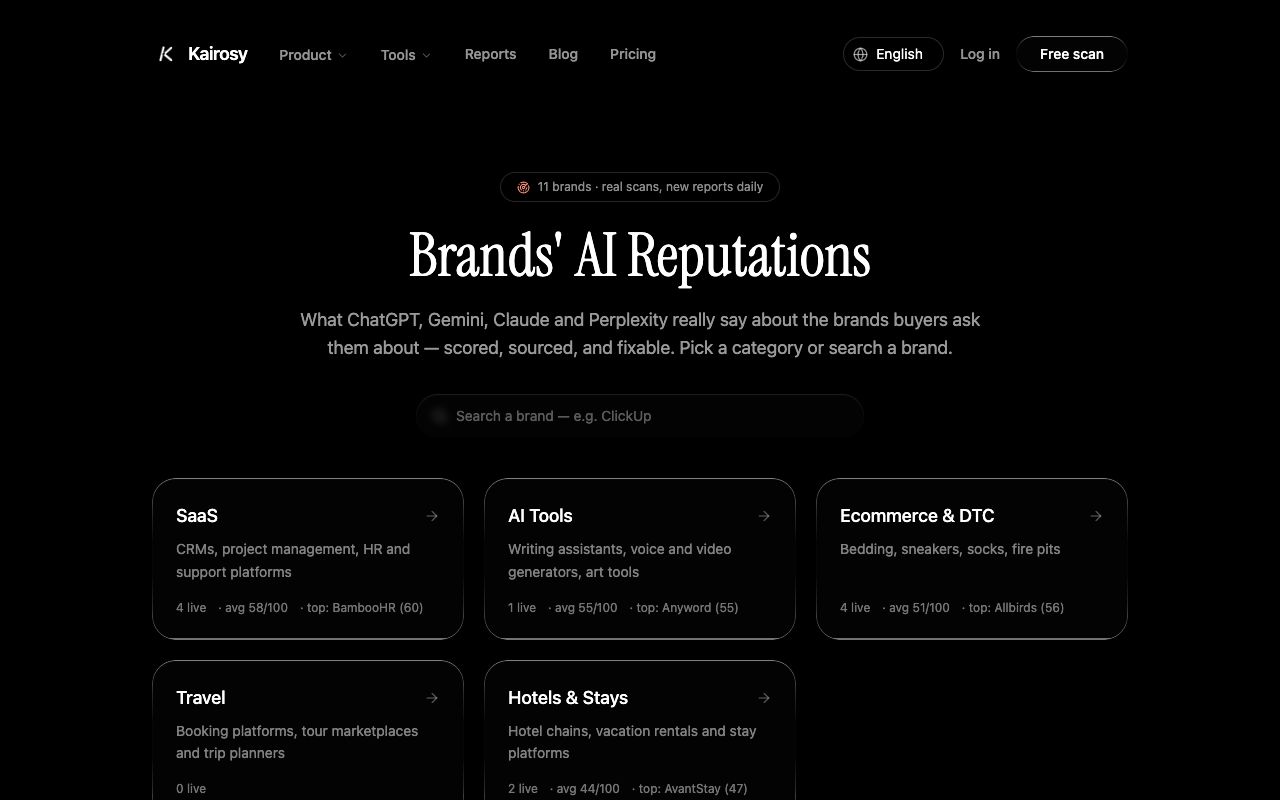
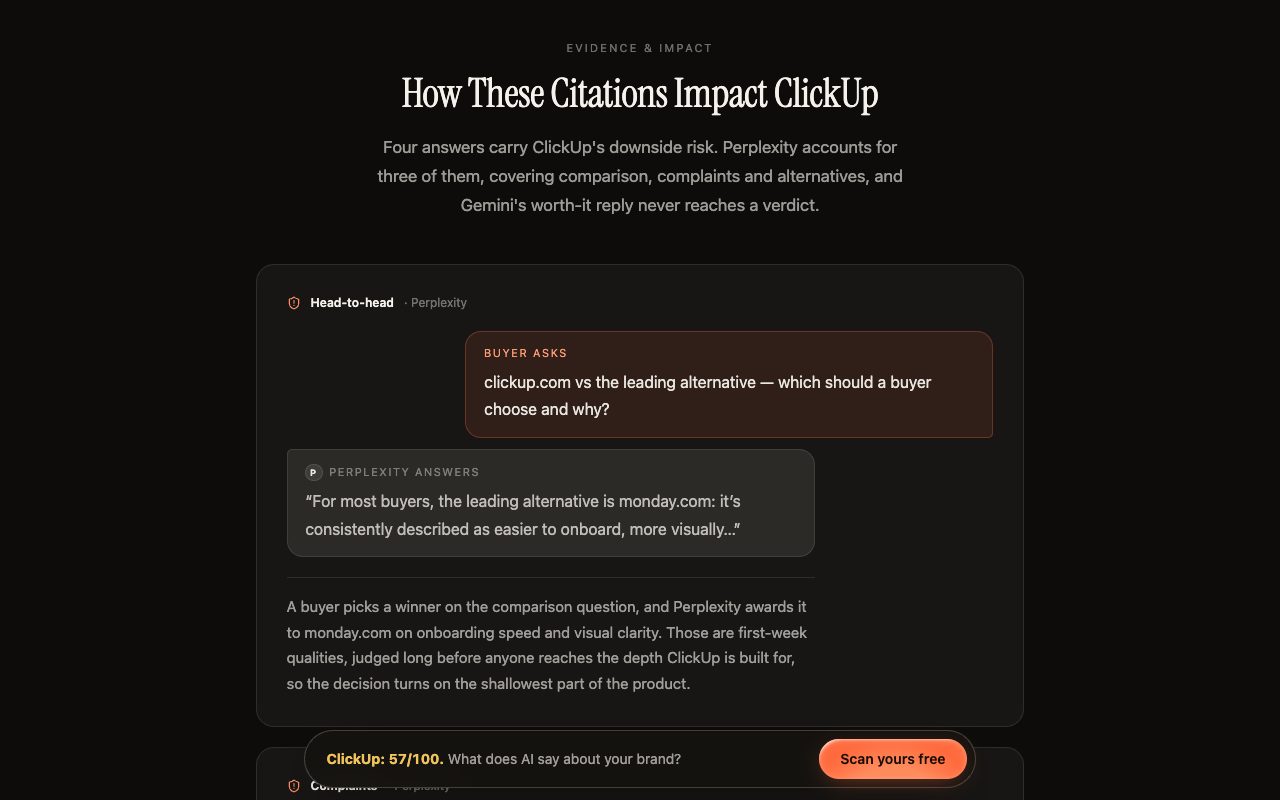
A free Kairosy scan runs this loop for you: it asks ChatGPT, Gemini, Claude and Perplexity real buyer-intent questions about your brand, scores visibility and favorability, and traces every negative back to its source. You can see the output shape in our ClickUp AI report — the same report your own brand gets in about 25 seconds — or browse every published scan on the AI reputation reports hub.
Answer Engine Optimization FAQs
What is answer engine optimization?
Answer engine optimization (AEO) is the practice of structuring your content and brand footprint so AI systems — ChatGPT, Perplexity, Gemini, Claude, AI Overviews — cite you when they generate answers. It optimizes for being quoted inside the answer rather than ranked on a results page.
What's the difference in answer engine optimization vs traditional SEO?
SEO competes for ranking positions with page-level signals; AEO competes for citations with passage-level clarity, entity consistency and trusted third-party mentions. They overlap heavily — good SEO hygiene is the foundation — but AEO adds fact-level structure and off-site accuracy work.
How to do AEO if I run a small site?
Start with the free moves: answer your top five buyer questions in self-contained 40–60 word passages, add FAQPage and Organization schema, generate an llms.txt, and correct any wrong facts on the review sites AI quotes. Small sites win citations on clarity, not budget.
How do I track AEO progress?
Ask the engines your buyers' questions on a schedule and record three things: whether you're mentioned, how favorably, and which sources get cited. An AI visibility scanner automates this — score, per-engine quotes, and source tracing — so you can compare month over month.
Is AEO the same as GEO?
They're closely related: GEO (generative engine optimization) is the umbrella discipline for being represented well by generative AI, while AEO is its answer-retrieval layer — specifically winning citations when a question gets answered. Most practical work serves both.
The results page had ten winners; the answer has one or two. Run a free scan, see whether answer engines cite you or a rival today, and point your next optimization sprint at the exact sources they're reading.
See what AI says about your brand
Run a free scan across ChatGPT, Gemini, Claude & Perplexity in about 30 seconds.
Run my free scan