GEO Best Practices Financial Services Teams Can Defend in 2026
GEO best practices financial services teams can sign off on come down to one rule: every number an AI engine might repeat about you must be published, sourced, dated and defensible under the standard your compliance desk applies to an ad. Generic GEO advice (statistics, expert quotes, citations) still works in finance, but the failure mode differs. A software brand summarized wrong loses a lead. A lender summarized wrong may see an APR, a license status or an eligibility rule misstated to someone about to sign.
Below: what changes when the topic is money, a joint marketing-and-compliance checklist, how answer engines misstate financial products (with real scan data), and a measurement routine that stays inside the rules. For rankings and agencies, read the sibling guide to financial services SEO.
What Is Different About GEO for Financial Services?
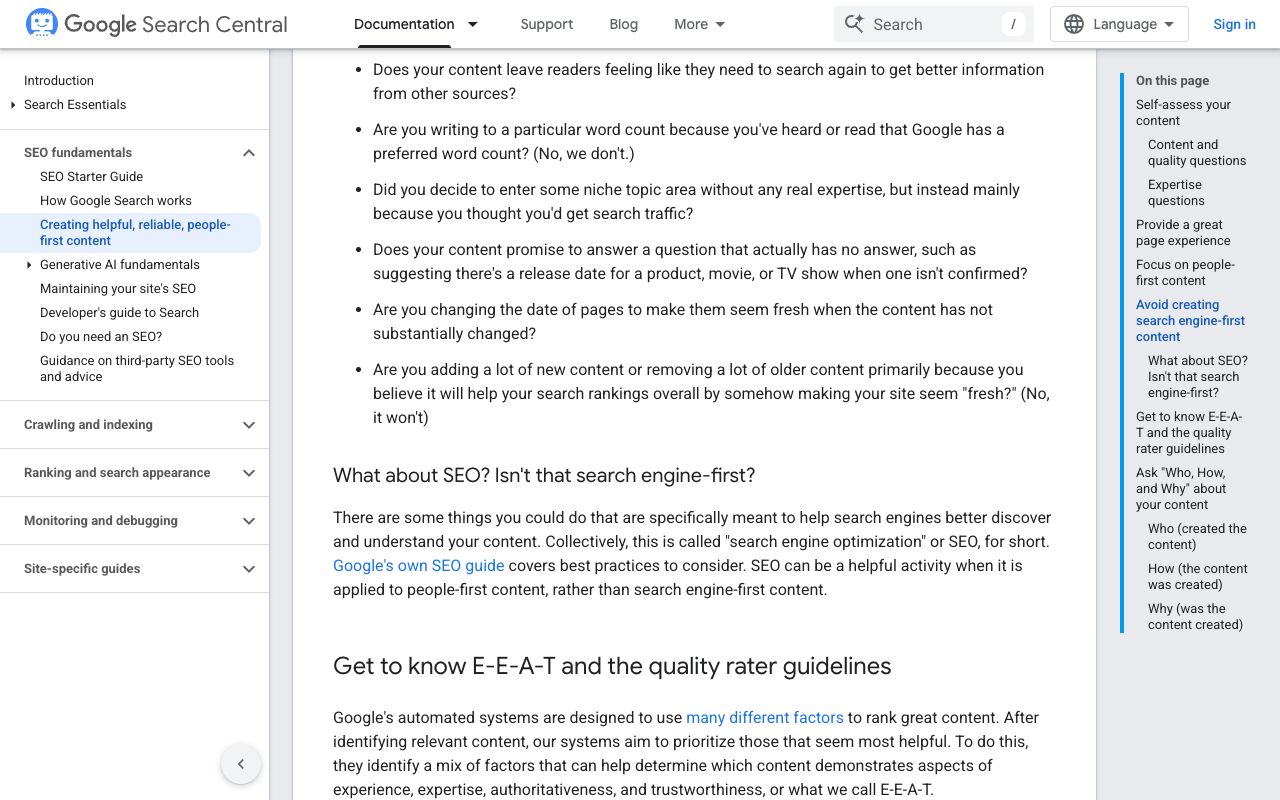
Three things. First, Google formally classifies finance as a "Your Money or Your Life" topic. Its helpful content documentation says its systems "give even more weight to content that aligns with strong E-E-A-T for topics that could significantly impact the health, financial stability, or safety of people," and adds that "of these aspects, trust is most important." ChatGPT, Gemini and Perplexity retrieve from the same web, so the trust bar is set before an engine reads your page.
Second, your regulators already have a position on AI output. FINRA's Regulatory Notice 24-09 (June 27, 2024) states that its rules "apply when member firms use AI, including Gen AI or similar technologies, in the course of their business, just as they apply when member firms use any other technology or tool." The FCA's FG24/1 (March 26, 2024) calls its financial promotion rules "technology neutral." Neither governs what a public chatbot says about you; both govern what you publish to influence it.
Third, the audience is already asking. A J.D. Power survey from July 2025, reported by the ABA Banking Journal, found 51% of respondents turn to AI for financial advice or information and 27% more are considering it. NerdWallet's June 2026 Harris Poll survey of 2,003 U.S. adults found 26% have used an AI chatbot for personal finance questions and 49% "don't feel confident evaluating whether personal finance advice from an AI chatbot is accurate."
Which GEO Best Practices Financial Services Teams Should Put on the Checklist?
Work through these six in order. Each maps to a reason an engine cites a page, ignores it, or cites a competitor's description instead; together they are the GEO best practices financial services marketers and compliance officers can jointly own.
Does every page clear YMYL trust and compliance review before AI reads it?
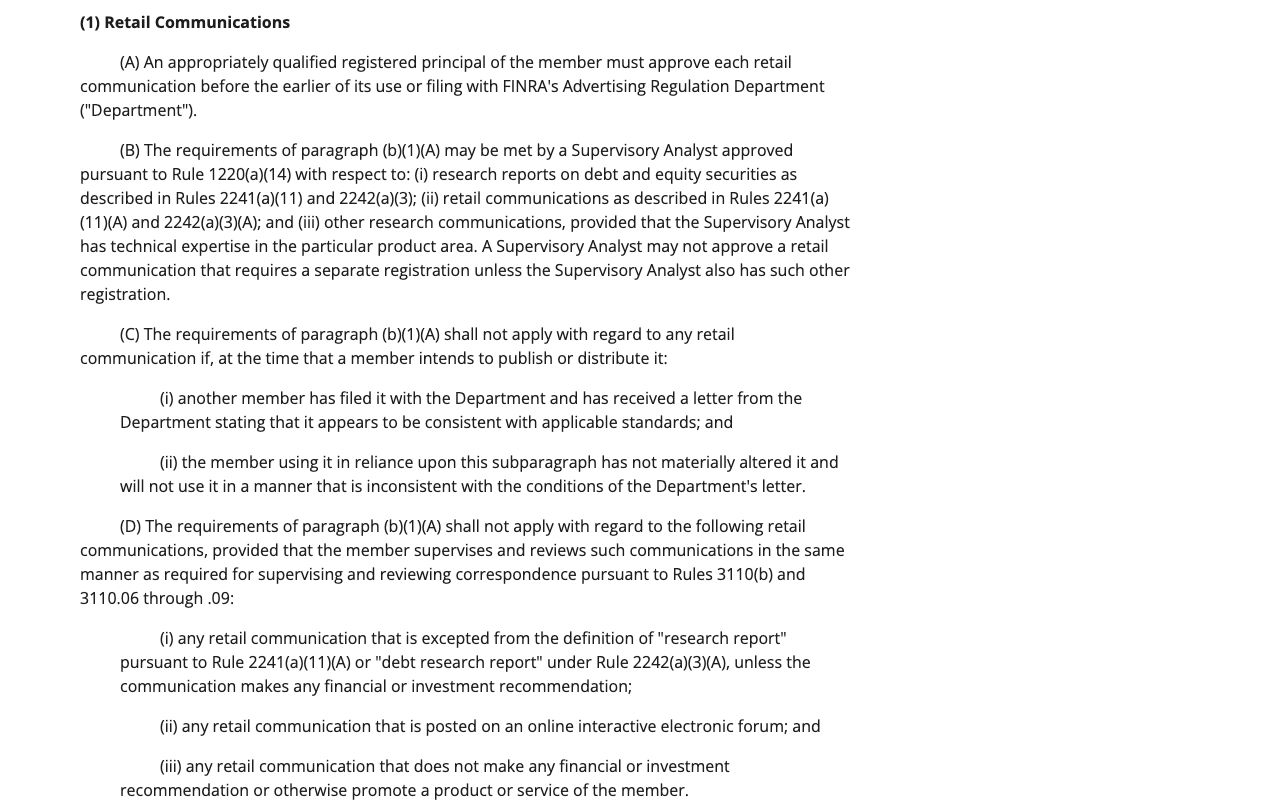
Treat any page an engine could retrieve as a retail communication. FINRA Rule 2210(d)(1) requires communications to be "fair and balanced" and bars "any false, exaggerated, unwarranted, promissory or misleading statement or claim"; a retail communication is anything reaching more than 25 retail investors in 30 days, which describes every indexed page. The FCA's COBS 4.2.1R is shorter: "A firm must ensure that a communication or a financial promotion is fair, clear and not misleading." Under the SEC's amended Marketing Rule 206(4)-1 (compliance date November 4, 2022), advisers may not make untrue statements of material fact or unsubstantiated claims.
The GEO consequence: the qualifiers your reviewer insists on (risk warnings, "subject to credit approval", a rate range instead of a headline low rate) must sit in the same paragraph as the claim, not a footer. Engines extract passages, and "0% APR" without its range is the passage that gets repeated.
| Regulator / guidance | Standard (quoted) | Date | Effect on GEO content |
|---|---|---|---|
| FINRA Rule 2210(d)(1) | "fair and balanced"; no "false, exaggerated, unwarranted, promissory or misleading statement or claim" | Current rulebook | Every retrievable page needs principal approval |
| FINRA Notice 24-09 | Rules "apply when member firms use AI, including Gen AI" | June 27, 2024 | AI-drafted pages go through the same supervision |
| SEC Rule 206(4)-1 | Prohibits untrue statements of material fact and unsubstantiated claims | Compliance Nov 4, 2022 | Adviser claims must be substantiated before they can be cited |
| FCA COBS 4.2.1R and FG24/1 | "fair, clear and not misleading"; rules are "technology neutral" | Handbook; March 26, 2024 | The AI summary layer does not change the standard |
Are named, credentialed people attached to rate, fee and eligibility claims?
Google's E-E-A-T framing and the engines' retrieval preferences both reward attributable expertise. In finance that means a named author with a verifiable role (a licensed loan officer, a CFP, a compliance officer), a dated review line, and a link to the person's profile. An anonymous "Team" byline gives an engine nothing to weigh against a publisher that names its editor.
Is product schema in place, and can AI crawlers reach the page?
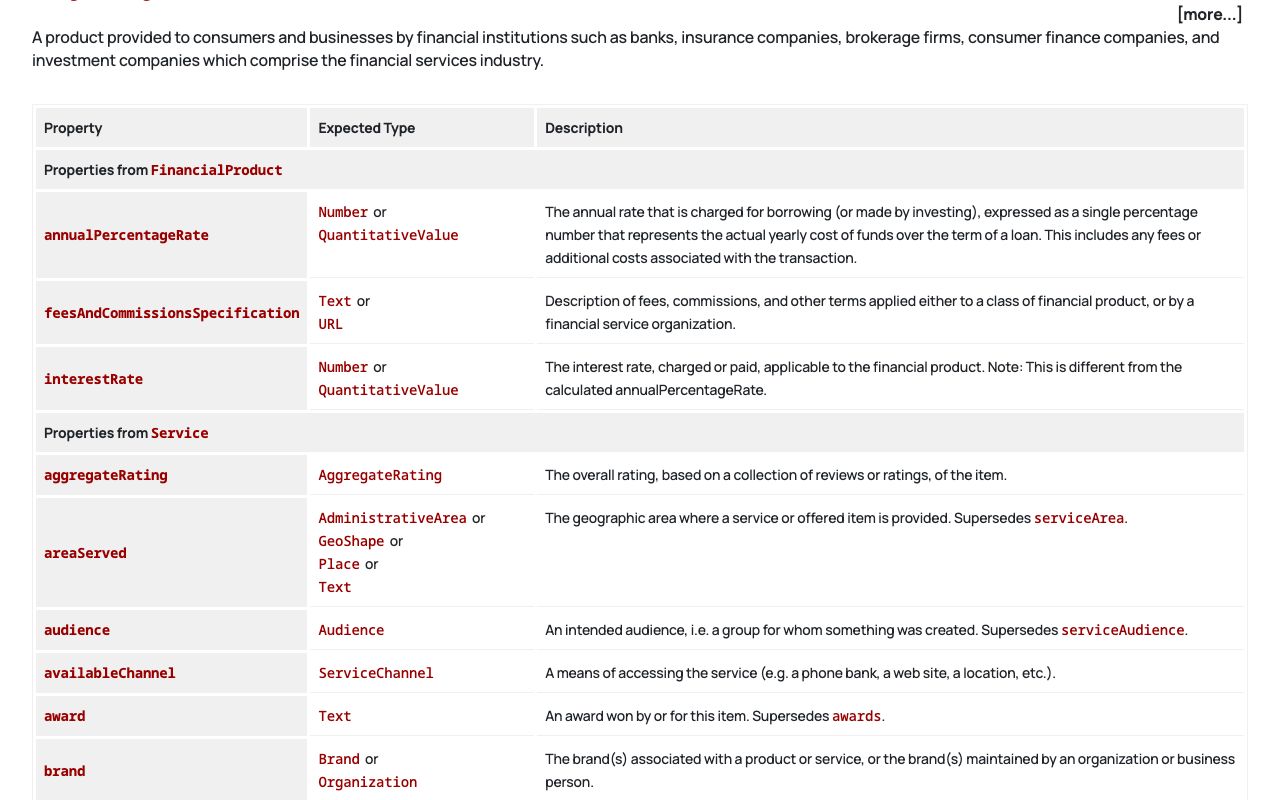
Schema.org defines FinancialProduct as "a product provided to consumers and businesses by financial institutions such as banks, insurance companies, brokerage firms, consumer finance companies, and investment companies," with subtypes such as LoanOrCredit and PaymentCard. Its properties annualPercentageRate, interestRate and feesAndCommissionsSpecification exist so a machine can read your rate without parsing marketing copy. Mark up each product page, confirm it parses with a schema markup checker, and confirm GPTBot, ClaudeBot, PerplexityBot and Google-Extended are not blocked with an AI crawl checker. A rate table rendered only by client-side JavaScript is invisible to most retrieval fetchers.
Does the page carry original data and authoritative citations?
The GEO paper on arXiv (November 2023) reported visibility gains of up to 40% in generative engine responses from content changes, and noted that "efficacy of these strategies varies across domains, underscoring the need for domain-specific optimization methods." In finance: cite the primary source for every external number (the CFPB, the Federal Reserve, HMRC, the regulator's register) and publish first-party data where you legally can, such as median approval time.
Are third-party mentions saying the same thing your site says?
Answer engines synthesize. In Kairosy's scan of Afterpay on 2026-08-05, the source domains behind the answers included productreview.com.au and BBB profiles rather than afterpay.com, and every engine in that scan converged on the same rival, Klarna. Review sites, comparison publishers, Reddit and the regulator's complaint database are the corpus, so the fee, rate and license facts there must match your current terms: update listings and answer complaints in public.
How fresh are the numbers?
Rates change monthly; the pages engines cite often do not. Put a visible "rates effective" date on every product page, keep a change log for fee schedules, and update dateModified in your schema when a number moves. A stale but well-cited page becomes the version that gets repeated.
What Are the Risks When AI Misstates Rates, Licenses or Eligibility?
The risk is documented. Which? published a 40-question test of six AI tools on November 18, 2025. On a money question containing a deliberate error (an ISA allowance stated as £25k instead of the real £20k), "ChatGPT and Copilot missed it entirely. Instead, they gave advice on investing the £25k in ways that potentially risked someone oversubscribing to Isas in breach of HMRC rules." Gemini, Meta AI and Perplexity corrected it. Overall scores: Perplexity 71%, Gemini 69%, Copilot 68%, ChatGPT 64%, Meta AI 55%.
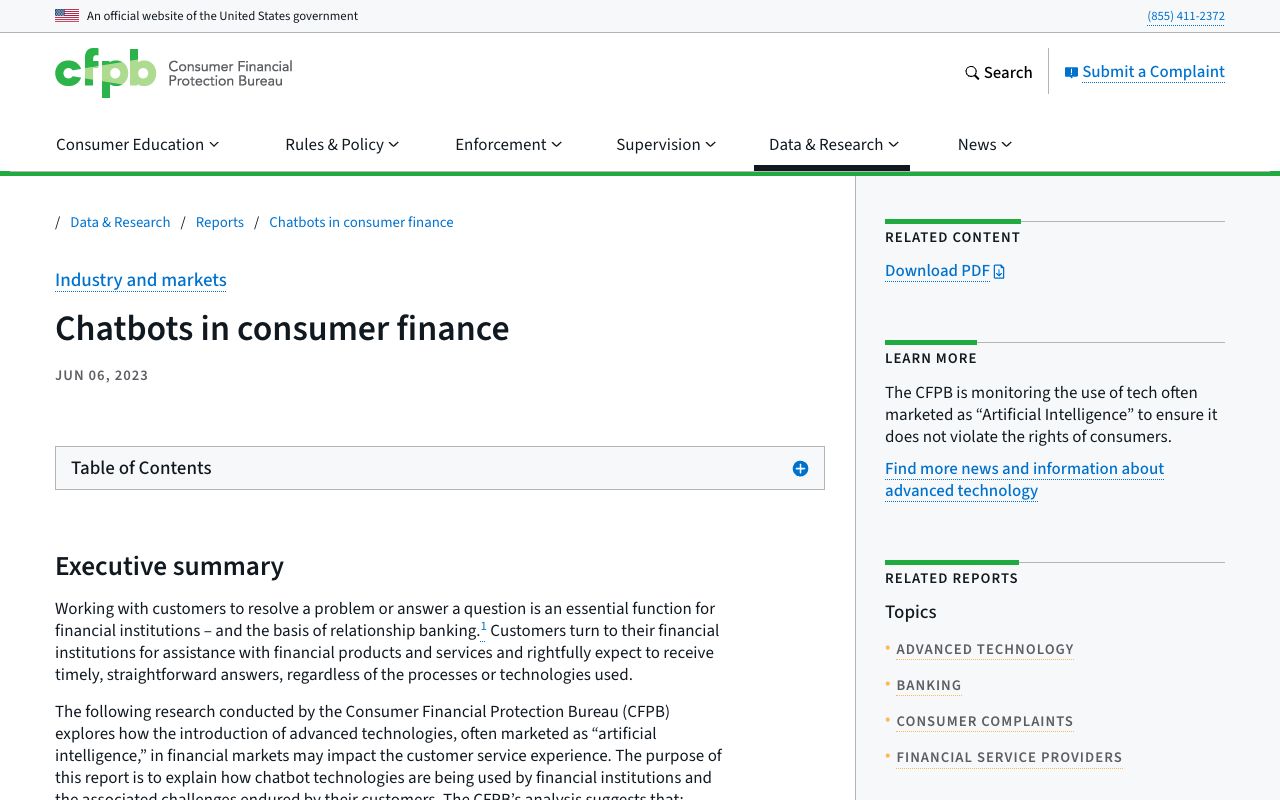
The CFPB's June 2023 report on chatbots in consumer finance put it plainly: "chatbots sometimes get the answer wrong. When a person's financial life is at risk, the consequences of being wrong can be grave." That report addressed banks' own bots; the failure classes are identical when the bot is public and the subject is your product.
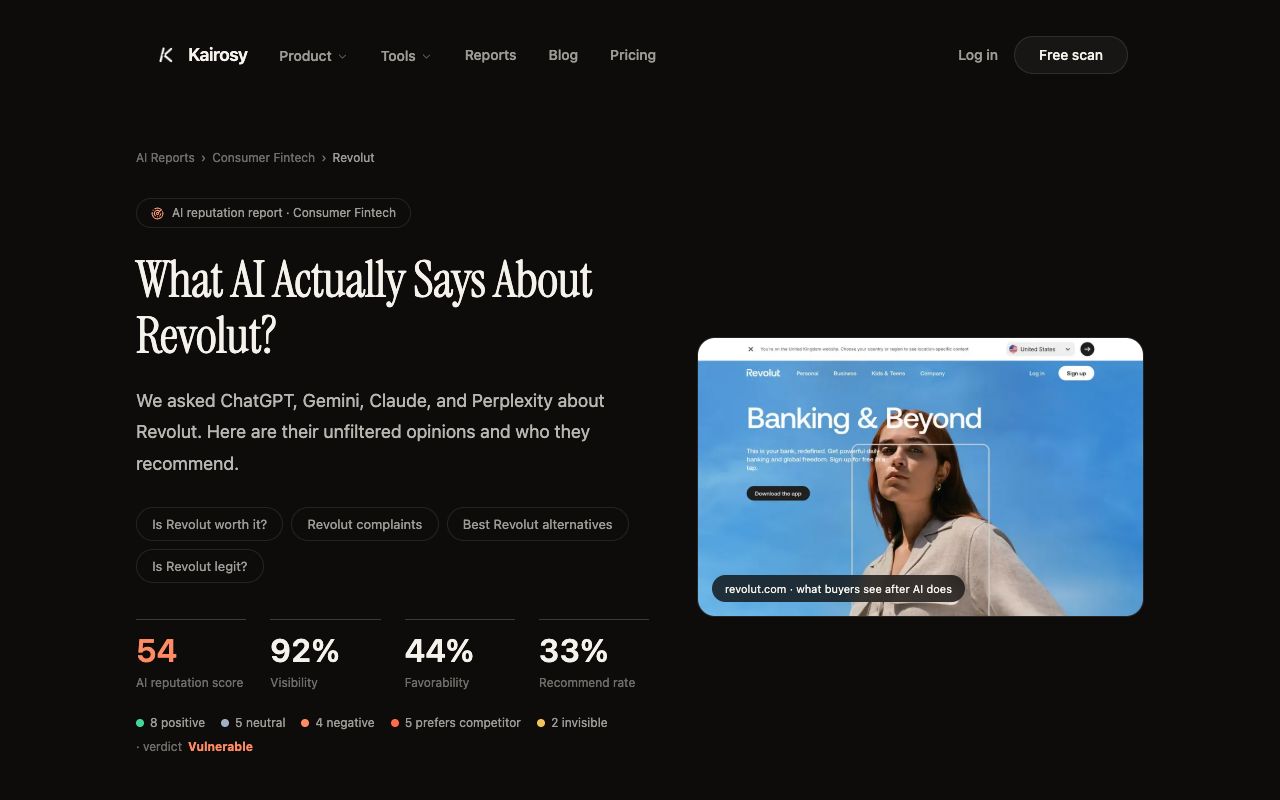
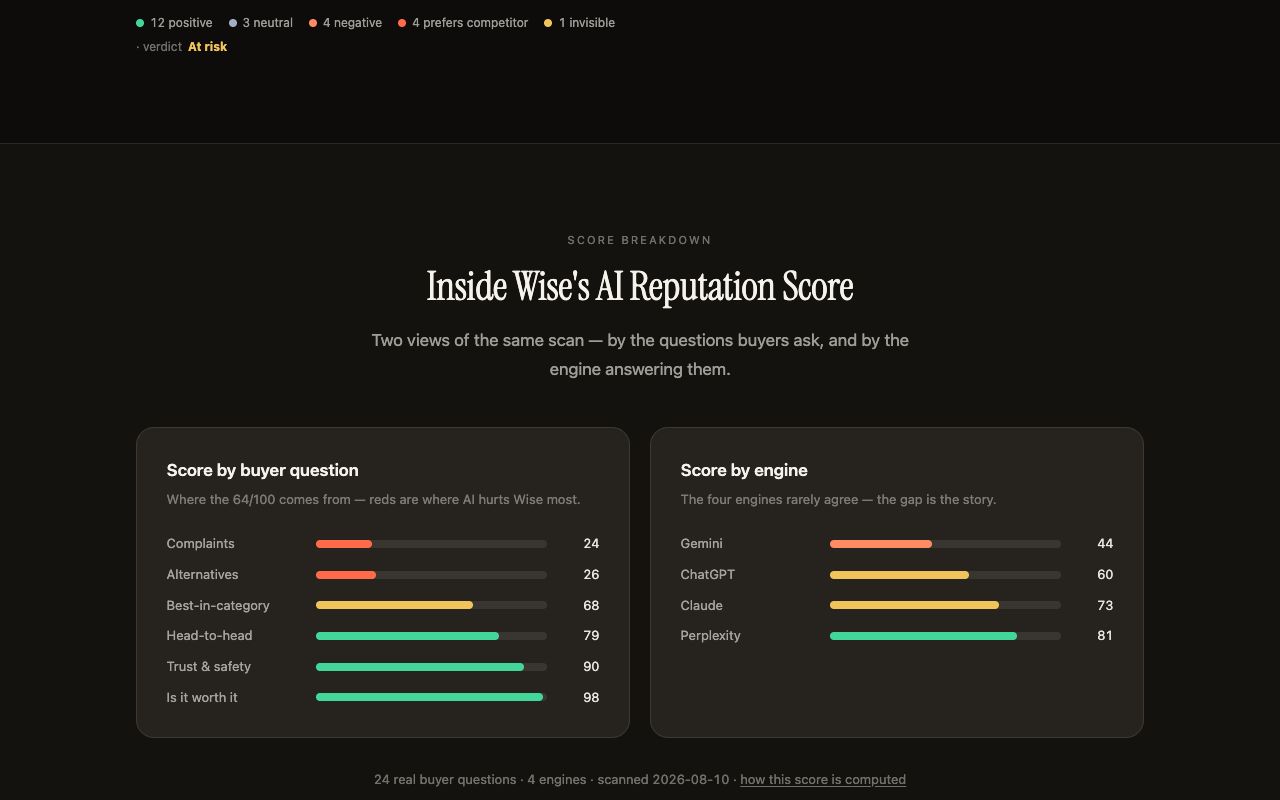
Kairosy's public scans of four fintech brands show what the engines say; scores average the per-engine scores, and quotes are verbatim.
| Brand (Kairosy report) | Scan date | Score / verdict | Per-engine spread | What an engine said |
|---|---|---|---|---|
| Revolut | 2026-08-10 | 54/100, Vulnerable | Claude 45 to Gemini 60 | Claude: "Revolut has a 1% weekend forex markup; Wise charges small explicit fees" |
| Wise | 2026-08-10 | 64/100, At risk | Gemini 44 to Perplexity 81 | Claude: "Wise's strict anti-money-laundering compliance systems frequently freeze accounts with little warning, sometimes for days or weeks." |
| Affirm | 2026-08-05 | 56/100, At risk | Perplexity 45 to ChatGPT 74 | Gemini: "high interest rates—which can reach up to 36% APR depending on your…" |
| Afterpay | 2026-08-05 | 58/100, At risk | ChatGPT 52 to Gemini 66 | Perplexity: "the strongest default choice is usually Klarna because it tends to offer more flexibility in payment plans…" |
Four risk classes fall out of those answers:
- Rates and fees. A figure like "1% weekend forex markup" or "up to 36% APR" is either current or it is not. Whether it matches the live fee schedule is the first check a reviewer runs, and the engine rarely links the schedule.
- Licenses and protections. Engines conflate "regulated by" with "deposits insured by." Safeguarded e-money balances are not FDIC or FSCS covered, and COBS 4.2.5G warns against calling a product "protected" unless that is "a fair, clear and not misleading description of it."
- Product terms. The Wise answers turned a compliance control (KYC holds) into the product's defining trait. The terms exist; the framing is the problem.
- Eligibility. "Available to anyone" versus "subject to credit approval and residency" decides whether an applicant is misled before applying.
How Do You Measure AI Answers About a Financial Brand Safely?
Measurement fails two ways in finance: measuring the wrong thing (a score with no record of what was said) and measuring in a way that breaches policy (pasting customer data into a public chatbot).
- Build the prompt set from real questions. Pull 20 to 30 from your contact center, complaint log and the engines' follow-up suggestions: "is X safe," "does X run a hard credit check." No customer identifiers.
- Run every prompt on every engine you care about. Wise scored 44 on Gemini and 81 on Perplexity in the same scan.
- Capture the citation URLs with the answer. If a stale comparison article sources a wrong fee, that page, not your homepage, needs the correction request.
- Classify each answer twice. Sentiment (positive, neutral, negative, prefers a competitor) and accuracy (current, outdated, wrong). Negative but accurate is a product problem; inaccurate is a content problem.
- Route "wrong" answers through compliance, not marketing. A misstated rate or license claim deserves the same log and sign-off trail as a complaint about an ad.
- Keep AI-drafted fixes inside the approval process. FINRA 24-09 is explicit that supervision and communication rules apply to Gen AI output. A principal still approves the corrected page.
A repeatable scan is what makes a measurement defensible in an audit; the Which? results show the same tool can be right on one question and wrong on the next. Kairosy's AI reputation management page describes how the scan, the sentiment classification and the citation capture fit together.
How Should You Monitor and Track GEO Results Over Time?
Answers drift, so a one-off audit expires. Monitoring for a regulated brand needs four properties.
- A fixed cadence per brand and market. Re-run the same prompt set weekly for each market you are licensed in; the UK answer about safeguarding is not the US answer about FDIC pass-through.
- Alerts on specific events, not score wobbles. A new negative keyword ("frozen," "hidden fee," "scam"), a competitor becoming the recommended pick, a score drop, or a single engine flipping sentiment.
- Per-engine and per-source breakdown. If three of the top five cited domains are review aggregators, your third-party listings are the roadmap.
- A change log tied to fixes. Every corrected page, updated listing and outreach email gets a date, so the next scan reads as before-and-after.
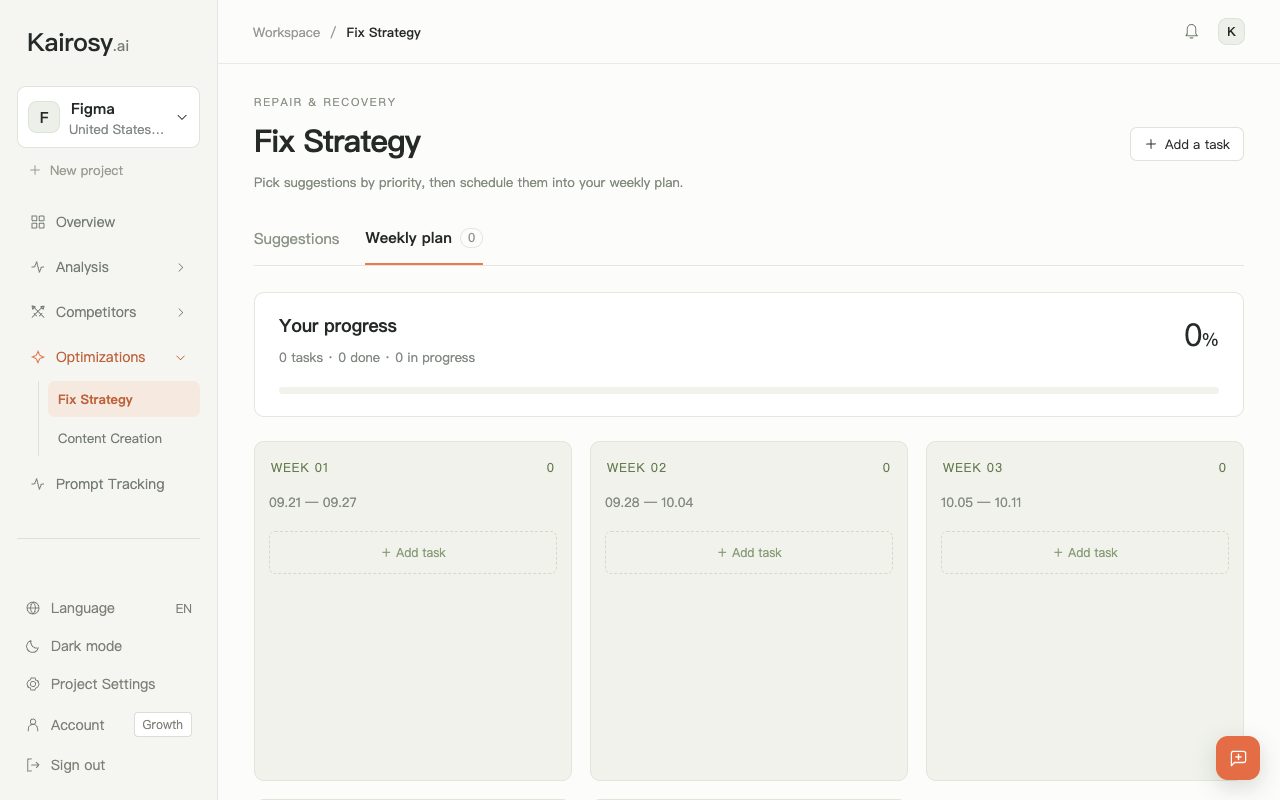
Kairosy covers this across the four engines: weekly re-scans per brand and market with an email digest, daily tracked-prompt checks, alerts for the four events above, a per-report Fix Plan, and a 33-check AI-Ready Page Audit (access, readability, structured data, citability, trust). As of September 2026, plans are $29, $99 and $399 per month with 3, 6 and 20 tracking slots, and signup starts a 7-day trial with no card. It scores what answer engines say and where they got it; it is not a rank tracker or keyword tool, and it does not replace compliance review. Start with the AI-ready audit to see which checks your product pages fail first.
GEO Best Practices Financial Services FAQs
Is GEO for financial services different from financial services SEO?
Different in output, shared in inputs. SEO targets a ranked list of links; GEO targets being the source an engine paraphrases. Both depend on the same trust signals, schema and compliance-clean copy. The ranking and agency side is covered in the financial services SEO guide.
Can a bank be held responsible for what ChatGPT says about its rates?
Public chatbot output is not the bank's own communication, and none of the regulators cited here say otherwise. The bank is responsible for its own published content, including anything it generates with AI. Documenting that you monitor and correct misstatements is the defensible position.
How often should a financial brand re-check what AI says about it?
Weekly for brand-level questions, daily for a small set of high-stakes prompts (safety, fees, license status), and immediately after any rate change or product launch, since engines keep citing the old page until the new one is retrieved.
Should the compliance team just ask ChatGPT what it says about us?
As a spot check, fine. As a control, no: a single session has no baseline, no citation log and no record an auditor can read. Use a repeatable scan, keep the outputs, and have compliance review the flagged answers.
See what AI says about your brand
Run a free scan across ChatGPT, Gemini, Claude & Perplexity in about 30 seconds.
Run my free scan