Financial Services SEO in 2026: Compliance, Agencies, Tools

Financial services SEO is a compliance discipline that happens to use keywords. A page about savings rates has to survive a registered principal's review, a regulator's "fair, clear and not misleading" standard, and Google's toughest quality bar — before anyone argues about title tags.
That is why generic playbooks stall here. This guide covers the constraints that make seo for financial services slower than other verticals, what a real engagement delivers, five agencies with verifiable finance work, and the tools worth paying for. It also covers the newest surface: what ChatGPT, Gemini, Claude and Perplexity tell a customer who asks "is this bank legit?"
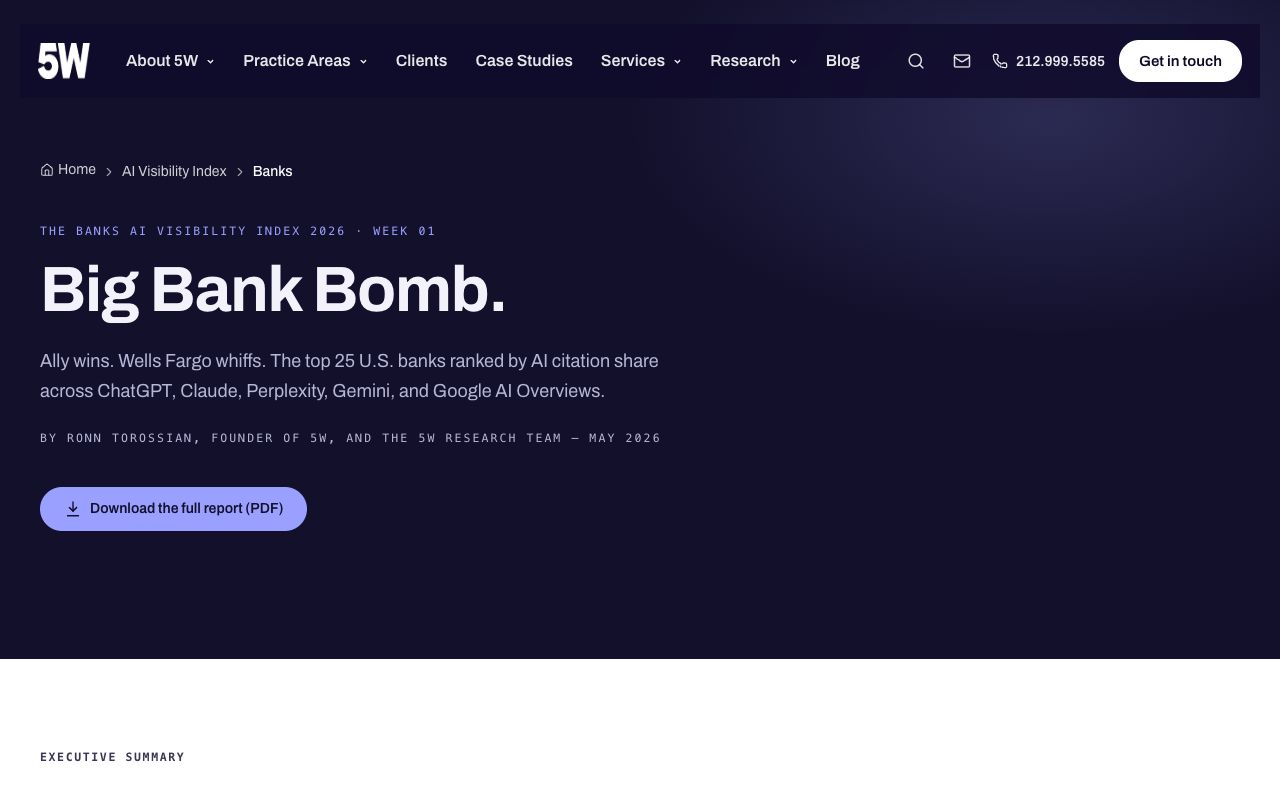
That last question is not hypothetical. 5W Public Relations published a Banks AI Visibility Index in May 2026 testing 66 consumer-intent prompts across ChatGPT, Claude, Perplexity, Gemini and Google AI Overviews. Its finding: Ally Bank led citation share at 9.2%, ahead of JPMorgan Chase at 7.8%, and Wells Fargo placed 22nd despite $1.9 trillion in assets. Deposit size did not predict who the machines recommend.
What Are the SEO Challenges Within Financial Services?
Ask any in-house team what are the seo challenges within financial services and you get the same five answers, none of which appear in a standard SEO audit.
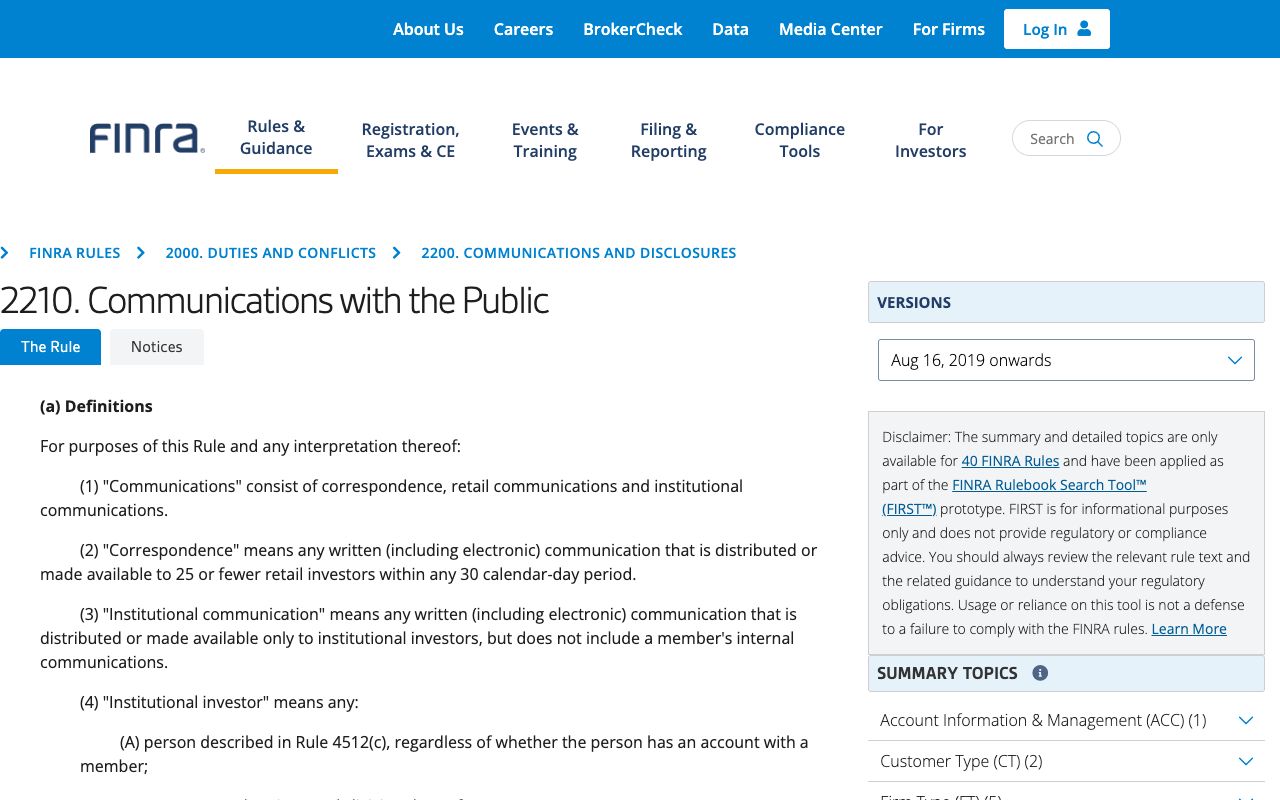
- Every published word is a regulated communication. FINRA Rule 2210 currently requires an appropriately qualified registered principal to approve retail communications before first use or filing. A blog post is not exempt because it is "just content."
- Filing deadlines apply to some of it. Certain retail communications — registered structured products, communications promoting a specific registered investment company — must reach FINRA's Advertising Regulation Department within 10 business days of first use.
- Claims you cannot make. Performance projections, unbalanced risk disclosure and cherry-picked returns are the department's recurring findings. Half the copywriting instincts that work in SaaS are prohibited.
- Publishing velocity collapses. A two-week legal queue turns a 40-post quarter into a 12-post quarter. Most agency proposals quietly assume the 40.
- Authorship is load-bearing. An unsigned article on retirement drawdown competes against NerdWallet, Investopedia and a bank with a CFA charterholder byline. It loses.
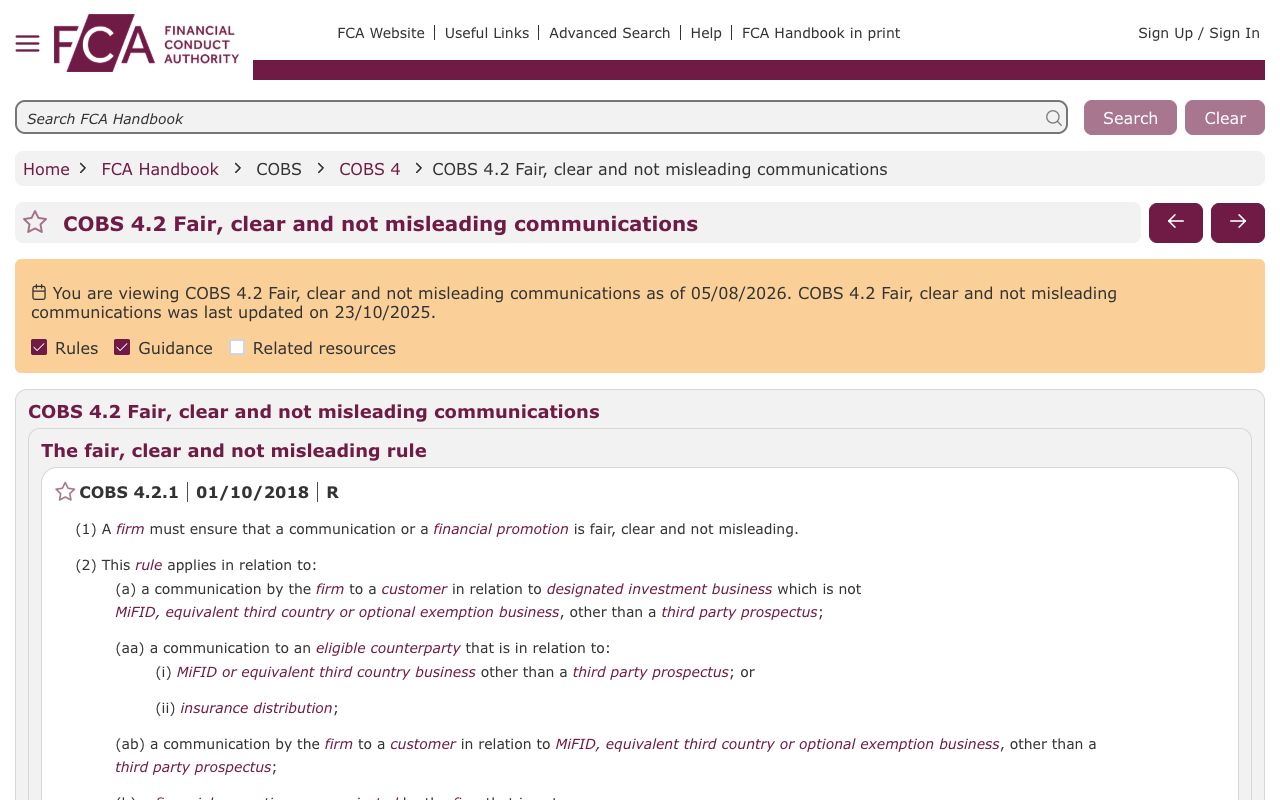
Add a sixth for anyone operating across borders: rules diverge. The UK's FCA financial promotions regime treats a tweet, a landing page and a paid post as the same regulated object, and layers on separate guidance for social media (FG24/1), cryptoassets (FG23/3) and green claims (FG24/3). One global content calendar, three approval paths.
Why Does Google Treat Financial Services SEO as YMYL?
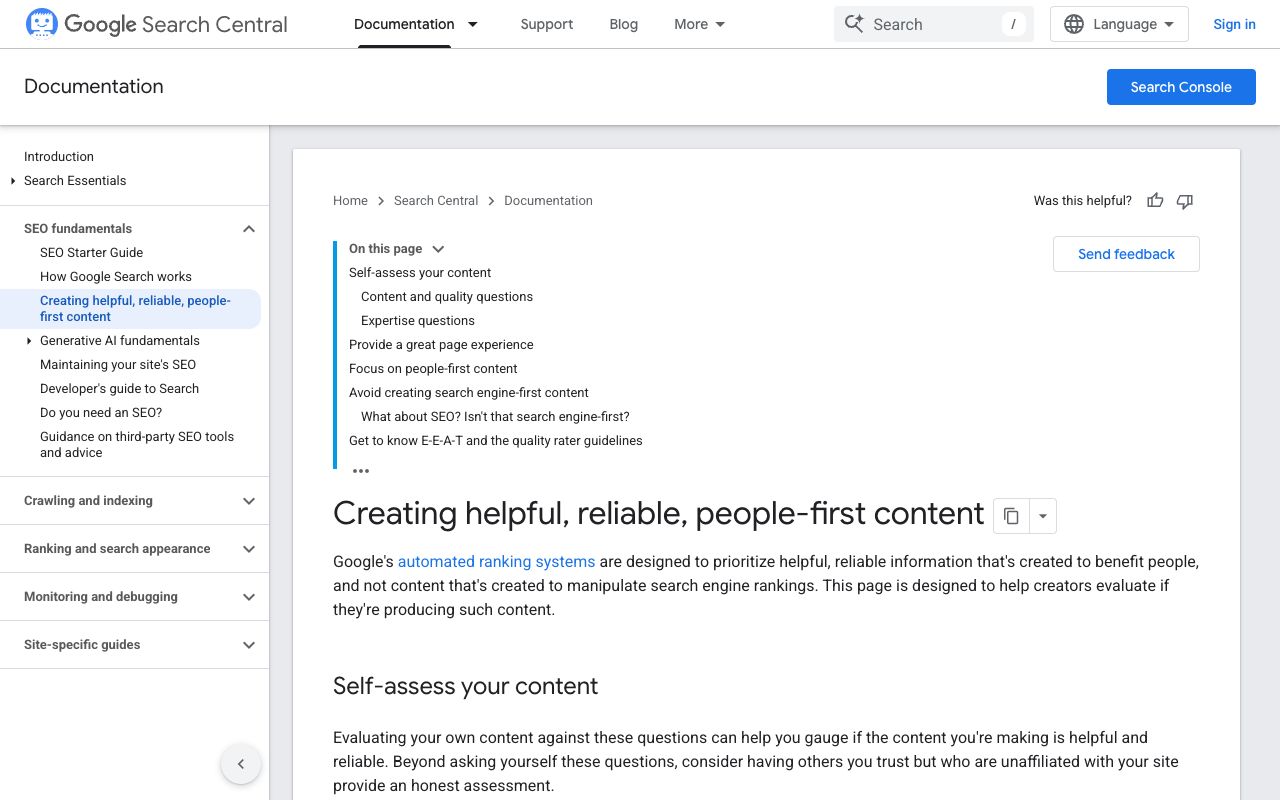
Google files money topics under "Your Money or Your Life," and its own documentation says it gives "even more weight to content that aligns with strong E-E-A-T" for those subjects. That is the mechanism behind most unexplained ranking losses in this vertical.
The practical translation of Google's helpful content guidance is its Who / How / Why test. Who wrote this, and can a reader verify their credentials? How was it produced, including any AI involvement? Why does it exist — to help a reader, or to catch traffic?
For financial services SEO that means named authors with real licenses, a visible review date and reviewer, sources for every rate and figure, and a disclosure block that is not buried. Trustworthiness, in Google's framing, is the member of E-E-A-T that the other three exist to support.
What Do Financial Services SEO Services Actually Include?
A credible scope has five workstreams. If a proposal is missing the compliance one, it was written for a different industry.
Regulatory-aware keyword and topic mapping
Terms get sorted by what you are permitted to say about them. "Best high-yield savings account" is a comparison page with rate disclosures and an update log. "Guaranteed returns" is a term you decline to target at all.
Entity and author infrastructure
Author pages carrying credentials, FINRA CRD or SEC registration numbers where applicable, plus Organization, FinancialService and Person structured data so machines can resolve who is speaking. Validate the markup before it ships with a free schema markup checker.
Technical work at bank scale
Multi-brand domains, legacy rate-table templates, PDF disclosure libraries, faceted product filters and country subfolders. This is a crawl-budget and duplication problem long before it is a content problem.
Plain-language editing
Readability is a compliance instrument, not a style preference — a promotion cannot be "clear" at a postgraduate reading level. Run drafts through a reading level checker and set a house ceiling, typically grade 9 to 10 for retail-facing pages.
Measurement tied to funded accounts
Applications started, applications completed, funded accounts, assets under management. Sessions are a diagnostic, not a deliverable.
How Does SEO for Banks Differ From Fintech SEO?
The two get bundled together and shouldn't be. Seo for banks is mostly a local, technical and trust problem: hundreds of branch pages, deposit product pages competing with aggregator affiliates, decades of accumulated URLs, and a brand whose worst news story outranks its own explainer. Wins come from consolidation, schema and disclosure hygiene.
Fintech SEO is closer to B2B SaaS with a legal department attached. The brand is unknown, so the work is category creation, integration and comparison pages, and documentation that developers actually cite. Speed is possible; the ceiling is trust.
Cross-border adds a third mode. A neobank live in eight countries needs eight versions of "is it safe," each answering to a different regulator, each with its own deposit-guarantee language. Auditing that as one market gives you an average that describes nobody.
How Do You Ship SEO Content Through Compliance Review?
The teams that publish consistently treat review as a pipeline stage with a service-level agreement, not a favor requested by email.
- Pre-clear the claim library. Agree once, in writing, on the phrasings compliance will accept for rates, risk, guarantees and comparisons. Writers draft from the approved list instead of inventing language that gets struck.
- Separate the risk tiers. Educational glossary content, product pages and anything touching performance need different review depth. Do not send all three through the same queue.
- Attach sources inline. Every figure ships with its citation and retrieval date, so the reviewer verifies rather than researches.
- Version and archive. Books-and-records obligations mean the reviewed version and its approval trail have to be retrievable later.
- Watch the rule changes. FINRA's Regulatory Notice 26-14, published July 9, 2026, proposes replacing mandatory principal pre-use approval with risk-based supervision, explicitly citing the "speed and volume of AI-generated communications." Comments closed September 11, 2026.
US advisers have a parallel regime. The SEC's marketing rule under Advisers Act Rule 206(4)-1, with a compliance date of November 4, 2022, permits testimonials and third-party ratings under conditions — including a written agreement with compensated promoters above a $1,000 de minimis threshold over twelve months. The SEC's investment adviser marketing guide is the primary reference.
Which Is the Best Fintech SEO Agency? 5 Firms Compared
There is no single best fintech seo agency — there is the one whose published client list matches your regulatory posture. Every figure below is the agency's own public claim on its own site, checked in August 2026, and labeled as such.
| Agency | Positioning | Finance clients named on site | Result the agency claims | Pricing |
|---|---|---|---|---|
| Vested | Financial services only: PR, content, AI optimization | Morgan Stanley, Goldman Sachs, American Express, Scotiabank (logo wall) | No numeric case metrics published | Not published |
| Siege Media | Content, digital PR and GEO | Chime, TransUnion, Intuit Mint, Kraken, The Zebra, Lemonade | The Zebra: "$7,774,000 Increase in Traffic Value" | Not published |
| Skale | Revenue-first SEO for SaaS and fintech | Meridian, MoonPay, deBridge, Wealthsimple | Meridian: doubled demo requests, search visibility up 6x | Not published |
| Ten Speed | B2B organic growth with a fintech + finance vertical | WealthBlock, Ignition, Accrue, Visible, Clyde | Agency-wide: "+800% organic traffic", "+$1m organic ARR" | Not published |
| CSTMR | Fintech-only marketing across banking, lending, insurance | AccessOne, Athena Advisory, Pursuit Lending | Testimonials only, no numeric metrics | Not published |
Vested
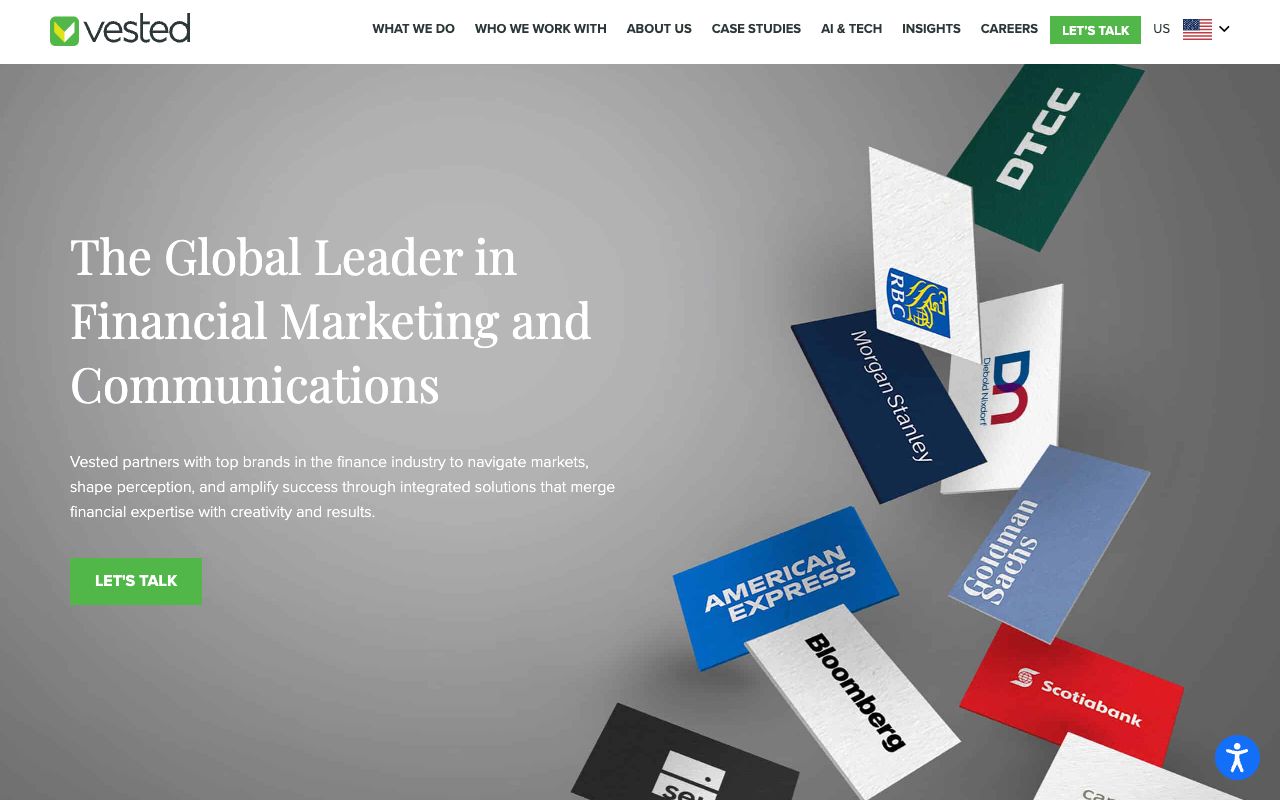
Vested serves banking, fintech, insurance, mortgage, private equity and wealth management exclusively, and states that its teams are "FINRA and CFA trained and certified." Its homepage runs a 60-plus logo wall of financial brands and its case study index lists names like Grayscale, VanEck and Pagaya. What it does not publish is per-client numbers, so evaluate it on regulatory fluency rather than a traffic chart.
Siege Media
Siege Media is the content and digital PR option with the deepest finance and insurance roster — Chime, TransUnion, Intuit Mint, Kraken, The Zebra, Lemonade and Hippo all appear on its site. It now sells GEO alongside SEO and publishes LLM-era metrics, including a claimed "98% LLM Visibility" for Zendesk. Link acquisition at that scale is the draw; you supply the compliance layer.
Skale
Skale is London-based and frames its work around pipeline rather than rankings. Its Meridian case study describes a private-equity CRM competing with DealCloud and Salesforce, and claims doubled demo requests with more than 6x traditional search visibility growth. Crypto-adjacent clients (MoonPay, deBridge) mean it has worked inside promotion regimes like FG23/3.
Ten Speed
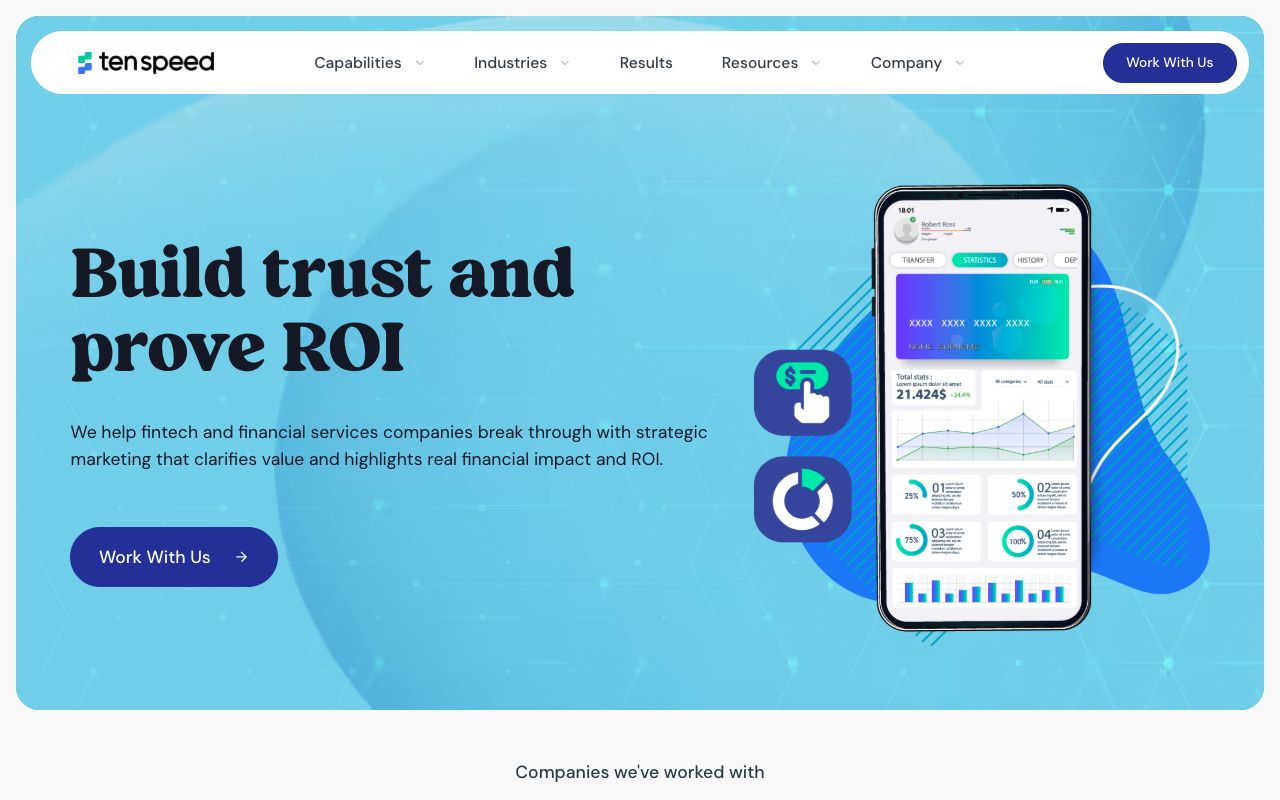
Ten Speed runs a dedicated fintech and finance vertical covering payments, lending and wealth management, and names WealthBlock, Ignition and Accrue. Its own copy concedes that "compliance isn't optional in financial services." The headline numbers on its homepage are agency-wide, not fintech-specific, so ask for the sector cut before signing.
CSTMR
CSTMR works only in banking, payments, lending, investing, insurance and credit, and lists AccessOne, Athena Advisory and a ten-year Pursuit Lending relationship. It publishes testimonials rather than metrics — the trade-off is a team that already speaks the vocabulary against a thinner evidence base.
Which SEO Tools Fit Financial Services Teams?
Prices verified on each vendor's site in August 2026. Pick one tool per job rather than one suite for everything.
| Tool | Job in a finance stack | Free tier | Entry paid price |
|---|---|---|---|
| Kairosy | What AI engines say and recommend, by market | 7-day free trial | $29/mo (Basic) |
| Semrush | Keywords, site audit, daily AI prompt tracking | Limited free account | $117.33/mo (SEO, annual billing) |
| Ahrefs | Backlinks and Brand Radar AI prompt data | Ahrefs Free | $29/mo (Starter) |
| Screaming Frog SEO Spider | Crawling large multi-brand bank estates | 500-URL crawl limit | €245/year |
| Google Search Console | Verified query and impression data | Free | — |
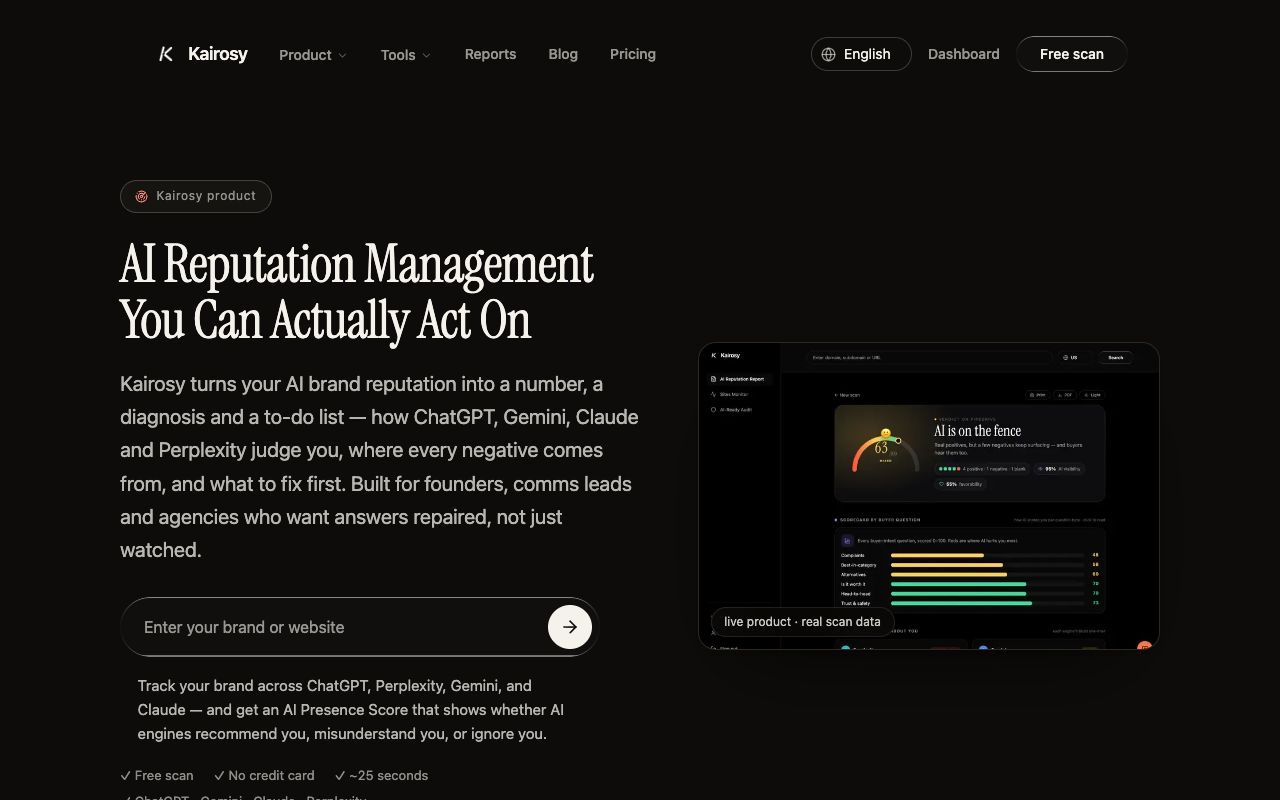
Kairosy scans what the four major assistants answer about your brand, scores the sentiment, and returns the citation sources behind each answer plus a fix plan. Paid plans add daily prompt tracking and market-specific scans across 25 countries, which matters when your German and Singapore entities carry different licences. Pricing runs $29, $99 and $399 per month.
Semrush bundles AI visibility into its SEO plans rather than selling it separately: 50 tracked prompts daily on Starter, 100 on Pro+, 200 on Advanced, against Google, ChatGPT, Perplexity and Gemini. Plans list at $117.33 to $455.67 per month on annual billing.
Ahrefs remains the backlink reference, which matters because finance link acquisition is slow and expensive. Its pricing page lists Lite at $129 through Advanced at $449 per month, with Brand Radar AI from $199 per month.
Screaming Frog SEO Spider crawls a bank's branch pages and PDF disclosure library in one desktop pass. The licence is €245 per year, and the free build stops at 500 URLs — smaller than any real bank estate.
How Do You Track What AI Says About Your Bank?
Consumers are already asking. A Wells Fargo survey reported by the ABA Banking Journal in April 2026 found 19% of US adults using AI for financial guidance, rising to 38% of Gen Z, with two-thirds acting on what the model suggested. A TD Bank survey in the same report put AI use for financial management decisions at 55%.
An assistant that hallucinates your fee schedule, repeats a settled enforcement action as current, or omits you from "best business bank account" is a reputational and arguably a supervisory issue. Nobody files a correction, because nobody sees the answer.
The workflow is unglamorous. Write the twenty prompts a real customer would type — "is [brand] FDIC insured", "best business bank account for a startup", "[brand] vs [competitor] fees". Run them across every assistant, not just the one you use. Repeat monthly, because answers drift. Log which URLs each engine cited, then fix those sources rather than your homepage.
Doing that by hand across four engines and eight countries is a full-time job, which is what AI reputation management tooling automates. Kairosy's AI brand monitoring runs the rescan weekly per brand and market and emails you only when something moves — a new negative theme, a competitor climbing, a score drop.
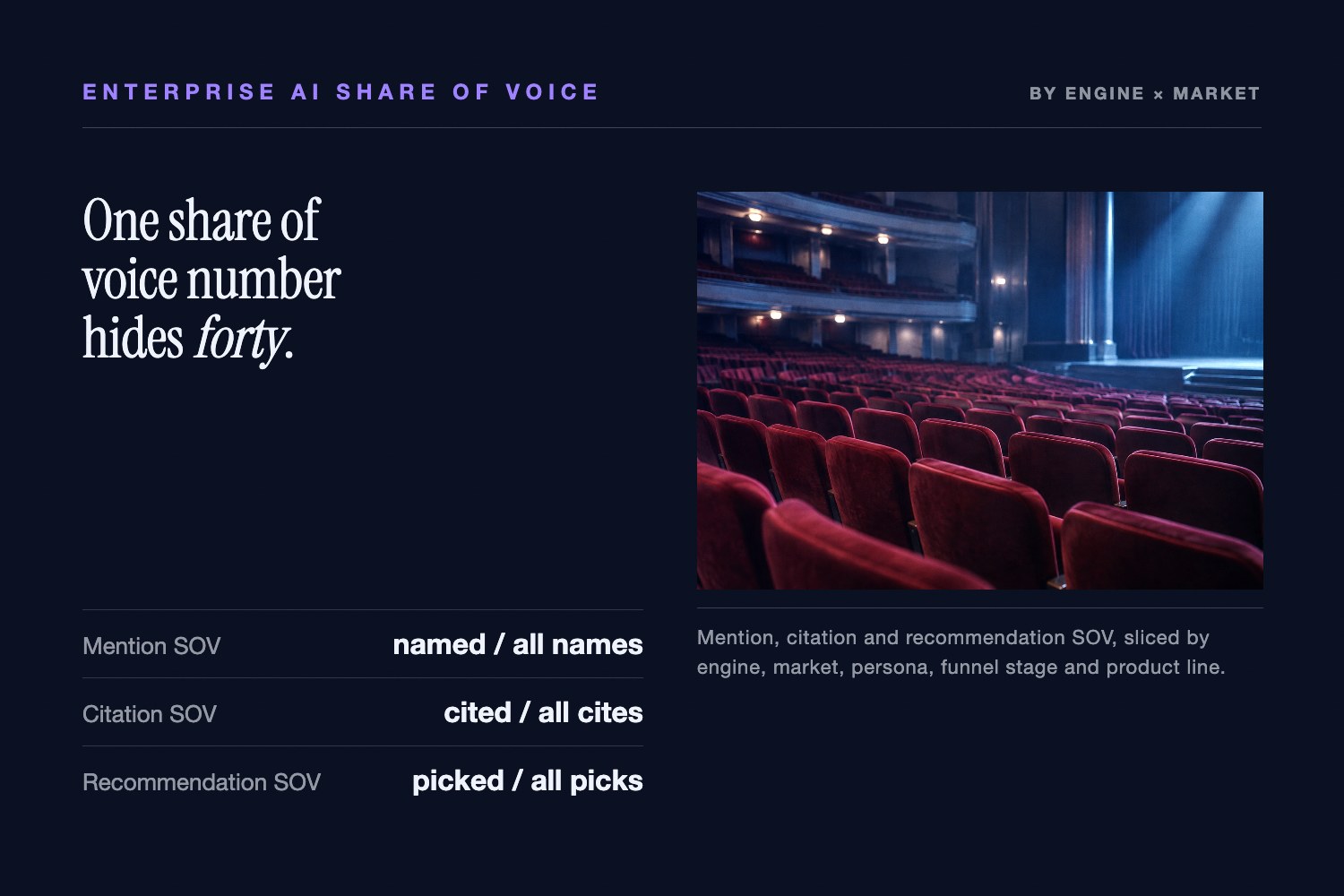
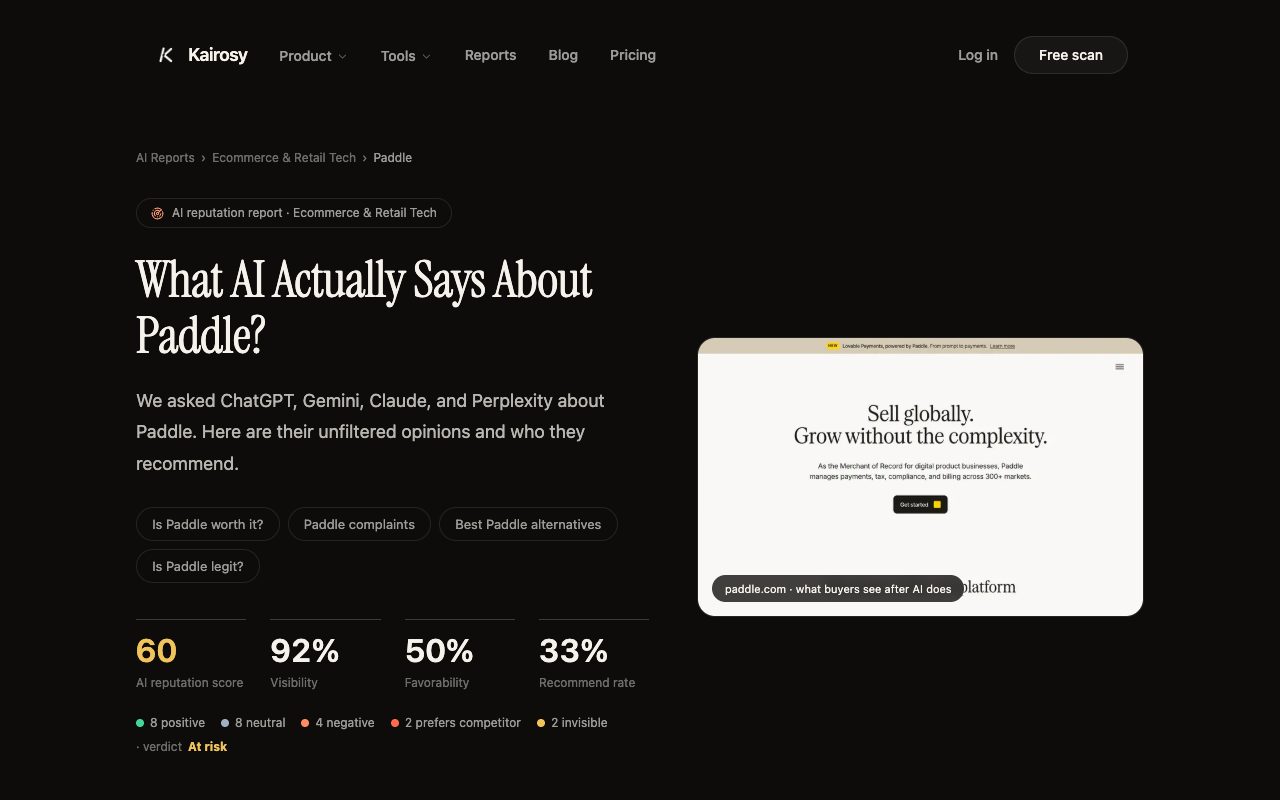
For a sense of the output before you point it at a regulated brand, our public scan of Pipedrive's AI performance shows the shape of the report: engine-by-engine sentiment, the exact answers, and the sources each model leaned on. Pipedrive is SaaS, not a bank — the value here is seeing what a scan surfaces, not the benchmark. If you want the underlying method, our guides on AI reputation management and running a GEO audit go deeper, and AI share of voice covers the competitive metric.
Financial Services SEO FAQs: Timelines, Pricing and Compliance
How long does seo for financial services take to work?
Technical fixes can move impressions within one to three months. Content-led gains in YMYL categories typically take six to twelve, because the compliance queue and the authorship signals both take time to compound. Any agency promising rankings in 90 days for "best mortgage rates" is describing a different industry.
What are the seo challenges within financial services that agencies most often underestimate?
Review throughput. Proposals are priced on publishing volume the legal team will never approve. Ask the agency how many pieces per month their last finance client actually shipped, not how many were drafted.
How do I choose the best fintech seo agency for a regulated product?
Require three things: a named finance client on their public site, a description of how they work with compliance reviewers, and metrics tied to applications or funded accounts rather than sessions. Two out of three is a pass on the third.
Is seo for banks different from local SEO?
It includes local SEO — branch listings, hours, service-area pages — but the harder half is enterprise technical work on legacy templates, plus deposit product pages competing against affiliate comparison sites that outrank the bank for its own products.
Does AI search replace financial services SEO?
No, it forks it. The same authorship, structured data and citable sourcing that satisfy YMYL also determine whether a model quotes you. The difference is measurement: rankings tell you nothing about what an assistant said, so you need a separate read on AI answers.
Do compliance rules apply to AI-generated marketing copy?
Yes. Regulators treat the output as a firm communication regardless of who or what drafted it, and Google asks publishers to be transparent about AI involvement. FINRA's July 2026 proposal explicitly names AI-generated communications as a supervision challenge rather than an exemption.
See what AI says about your brand
Run a free scan across ChatGPT, Gemini, Claude & Perplexity in about 30 seconds.
Run my free scan