How to Audit Your Brand Reputation in AI: A 6-Dimension Method (2026)
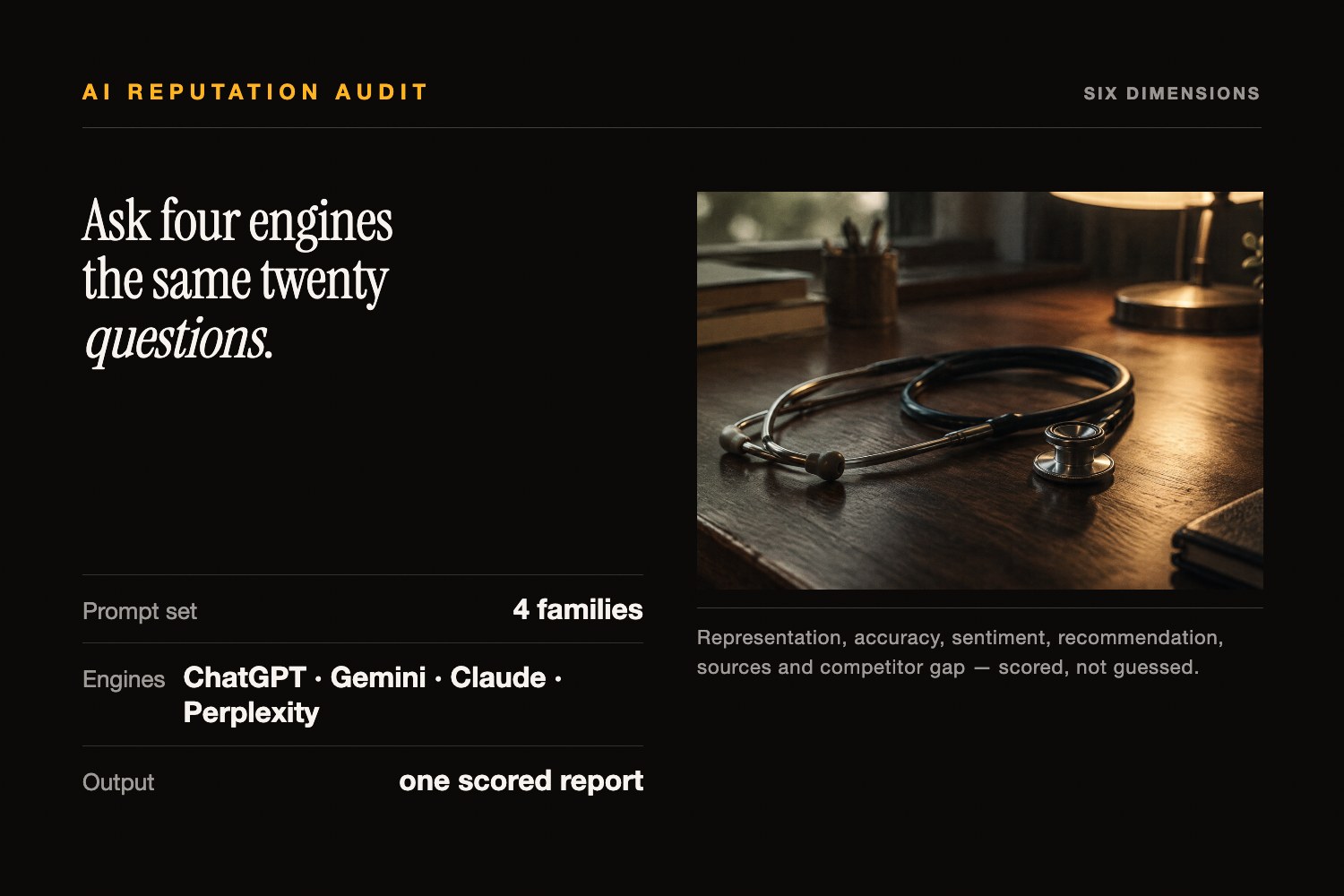
To audit your brand reputation in AI, you ask ChatGPT, Gemini, Claude and Perplexity the same 20 to 30 questions a buyer would ask, save every answer with its citations, and grade each one on six dimensions: representation, accuracy, sentiment, recommendation, sources and competitor gap. The output is a scored report with fixes tied to the pages the engines were quoting. This is how to audit your brand reputation in AI step by step, with one real brand (Wise) walked through all six dimensions using its public scan.
Why Is Brand Reputation in AI Different From Search and Social Reputation?
In search you own a list position and the buyer chooses what to open. On social, someone says something and you can reply under it. In an AI answer there is no list and no reply button: the engine reads a handful of pages, compresses them into one paragraph, and the buyer takes that paragraph as the verdict.
- The answer is the destination. Pew Research Center's July 2025 study of 900 U.S. adults found users clicked a traditional result in 8% of searches that showed an AI summary, against 15% without one, and clicked a link inside the summary in just 1% of visits.
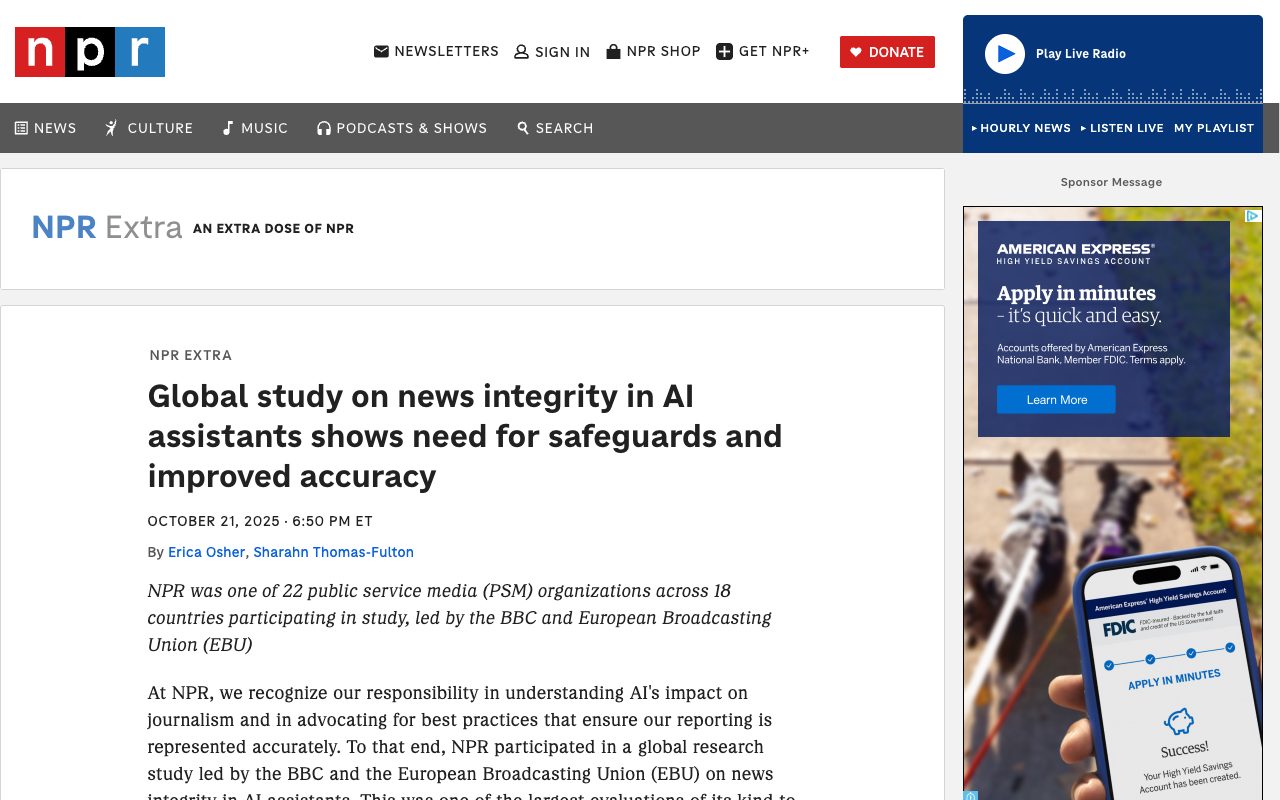
- Engines get things wrong at scale. The EBU and BBC's October 2025 review of more than 3,000 answers from ChatGPT, Copilot, Gemini and Perplexity found 45% had at least one significant issue and 31% had serious sourcing problems. Accuracy is something you test, not something you assume.
- Every engine assembles its own version of you. Google says AI Mode "uses our query fan-out technique, breaking down your question into subtopics and issuing a multitude of queries simultaneously on your behalf" (Google, May 2025). In Kairosy's scan of Wise, the same 24 questions produced a Gemini score of 44 and a Perplexity score of 81.
What Is Brand Representation in AI, and How Do You Score It?
Brand representation in AI is the way an assistant describes your company when your category comes up: whether it names you at all, whether it means the right entity, which category it files you under, and which attributes it attaches. It is the identity layer underneath sentiment: an engine cannot be positive or negative about you until it has represented you.
Representation fails in three ways, each with a different fix:
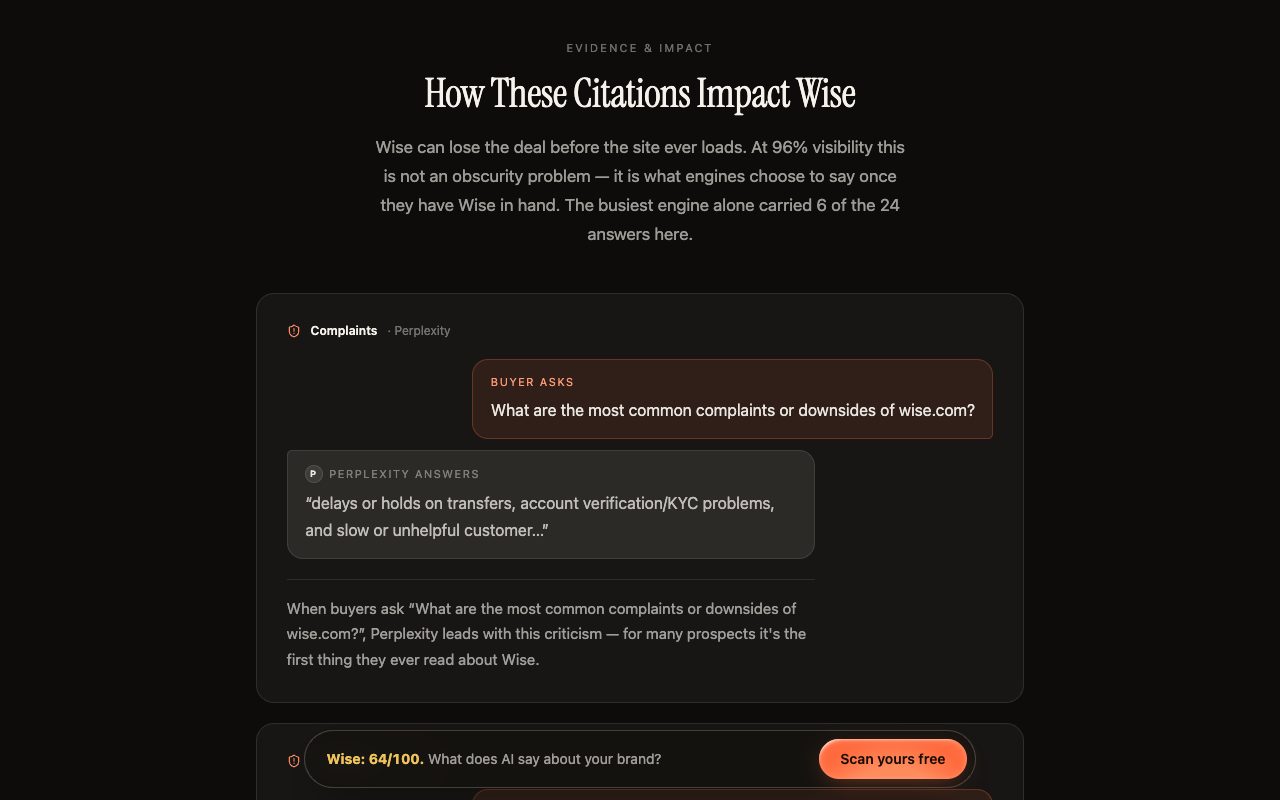
- Absent. The buyer asks for the best option in your category and you are not in the answer. Kairosy's Wise report records this as "invisible": 1 of 24 answers.
- Confused. The engine describes a similarly named company, or a stale identity. Wise rebranded from TransferWise on 22 February 2021 (Wikipedia); an answer built around the old name is a defect even if the tone is warm.
- Thin. One generic line and no use case, so the recommendation goes to a rival with a sharper description.
Score each answer with three yes/no fields (named, correct entity, correct category), then compute mention rate across the prompt set. Kairosy reports this as visibility; Wise sits at 96%.
How Do You Build the Prompt Set for an AI Reputation Audit?
The prompt set is the instrument: write it once, freeze it, and reuse it for every re-test, or you cannot compare the answers. Twenty to thirty prompts across four families is enough.
- Buyer-intent prompts: "Is Wise worth it for sending money to Europe?" and "Is wise.com legit?"
- Category prompts that do not contain your name: "Best way to send money abroad for a small business." These test whether you appear unprompted.
- Comparison prompts: "Wise vs Revolut for business payments" and "Best alternatives to Wise."
- Reputation prompts: "What are the most common complaints about Wise?" and "Is my money safe with Wise?"
Anchor ambiguous names with the domain ("Wise (wise.com)") or the engines will find another company called Wise.
Kairosy's public reports use 24 questions in six groups: Complaints, Alternatives, Best-in-category, Head-to-head, Trust & safety, and Is it worth it. Each group is scored separately, and the spread is the diagnosis: for Wise, "Is it worth it" answers return 98 while "Complaints" collapses to 24.
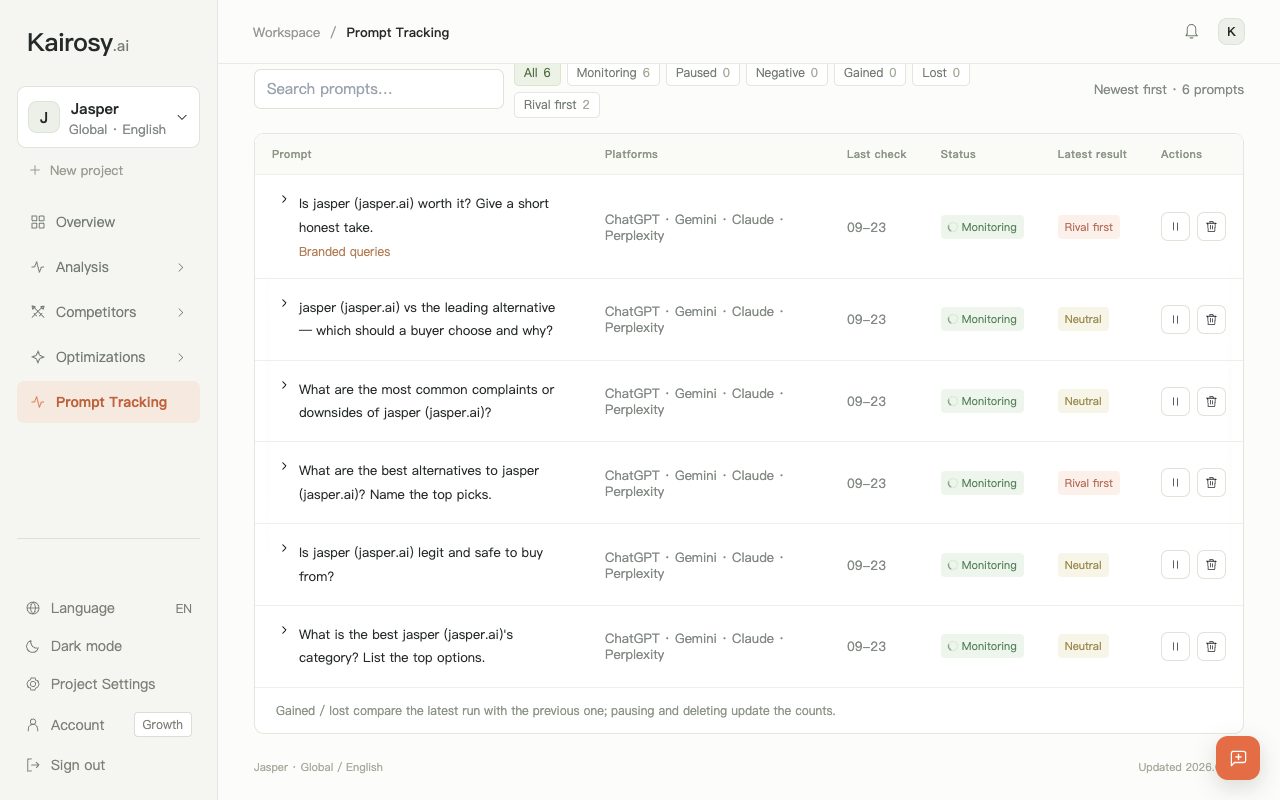
How Do You Run the Same Prompts Across ChatGPT, Gemini, Claude and Perplexity?
Cover the four engines buyers use most in 2026 and hold the conditions constant.
- Fresh session, no memory. Use a clean account with memory and custom instructions switched off.
- Web search on wherever it exists. Grounded answers cite pages, and the citations are what you fix later.
- Save the whole answer. Engine, prompt, date, run number, full text, every cited URL. Grade from the log, never from memory.
- Run it twice, a week apart. One pass is an anecdote. OpenAI's help center warns that "search results and citations can be incomplete, outdated, or incorrect," which is why the second run matters.
The vendors document the grounding themselves: Perplexity, OpenAI and Anthropic each describe search modes that return source links, and Anthropic's API docs state that "citations are always enabled for web search."
The arithmetic: 24 prompts x 4 engines x 2 runs = 192 answers, at roughly three minutes each to grade. A scanner such as Kairosy runs the set in one pass, classifies every answer with the reason, and keeps the citation URLs.
What Should an AI Brand Reputation Audit Test? The Six Dimensions
Grade every logged answer on all six and write the reason next to each grade.
1. Representation
Named, correct entity, correct category. A miss here voids the other five for that answer.
2. Accuracy
Check each factual claim against your own help center, pricing page or terms, and give it one of four verdicts: true, true but missing context, false, unverifiable.
3. Sentiment
Positive, neutral or negative, plus the phrase that decided it. The first sentence matters most; our post on what AI brand sentiment is covers why engines disagree.
4. Recommendation
Different from sentiment: an engine can describe you warmly and still send the buyer elsewhere. Record recommends you, hedges, or recommends a named rival.
5. Sources
For each cited URL: domain, type (your site, review platform, forum, news) and age. If most negatives trace to one platform, you have one fix, not twelve.
6. Competitor gap
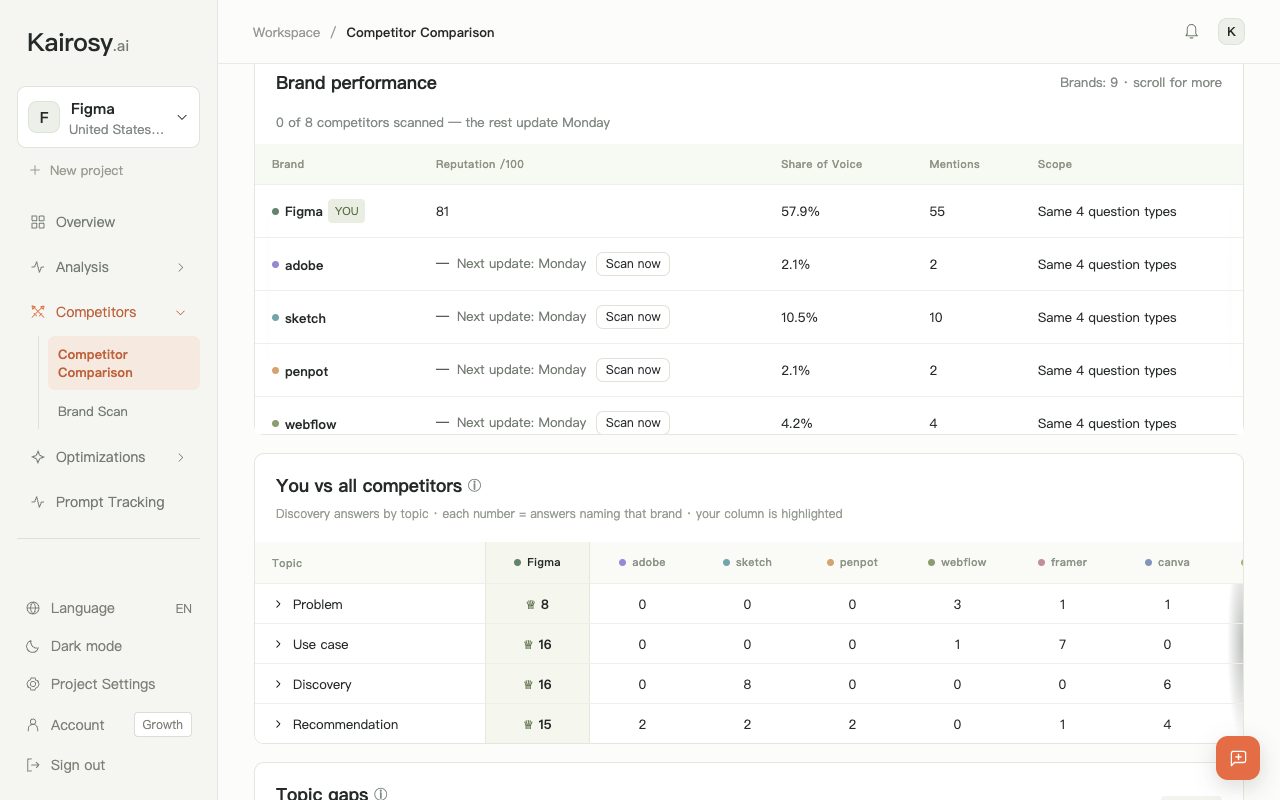
Which rivals appear in the same answers, how often, and how they score on the identical prompts: share of voice at the answer level.
How Do You Score the Audit? A Six-Dimension Rubric Table
The rubric below takes its pass and fail examples from Kairosy's Wise scan of 2026-08-10 and from Wise's own documentation.
| Dimension | What to record per answer | Pass example | Fail example |
|---|---|---|---|
| Representation | Named? Correct entity? Correct category? | Wise named on a "send money abroad" shortlist | Not named on a best-in-category question (Wise: 1 of 24 answers "invisible") |
| Accuracy | Each claim with a verdict: true / needs context / false / unverifiable | "checks usually take 2–10 working days" matches Wise's help center | "sometimes for days or weeks" with no source; a "€100,000 annually" threshold found on no Wise page |
| Sentiment | Positive / neutral / negative plus the deciding phrase | "Is it worth it" answers score 98/100 | "Complaints" answers score 24/100; 4 of 24 answers open with a criticism |
| Recommendation | Recommends you / hedges / recommends a named rival | Recommend rate 50% of answers | ChatGPT: "The top alternatives often mentioned are Revolut, OFX, Payoneer, and WorldRemit" |
| Sources | Cited domain, type, age; grouped by theme | Your own help article cited for a factual claim | Complaint answers "traced back to review sites" (Trustpilot: 9% one-star reviews) |
| Competitor gap | Rivals named, share of voice, rival score on the same prompts | Wise 26% share of voice vs Revolut 13% | Rivals recommended on Alternatives and Head-to-head questions "across 3 engines" |
A dimension passes when at least 80% of answers pass it. Read the six separately before averaging: a strong representation score routinely hides a weak recommendation score, which is the Wise pattern.
How to Audit Your Brand Reputation in AI: A Worked Example With Wise
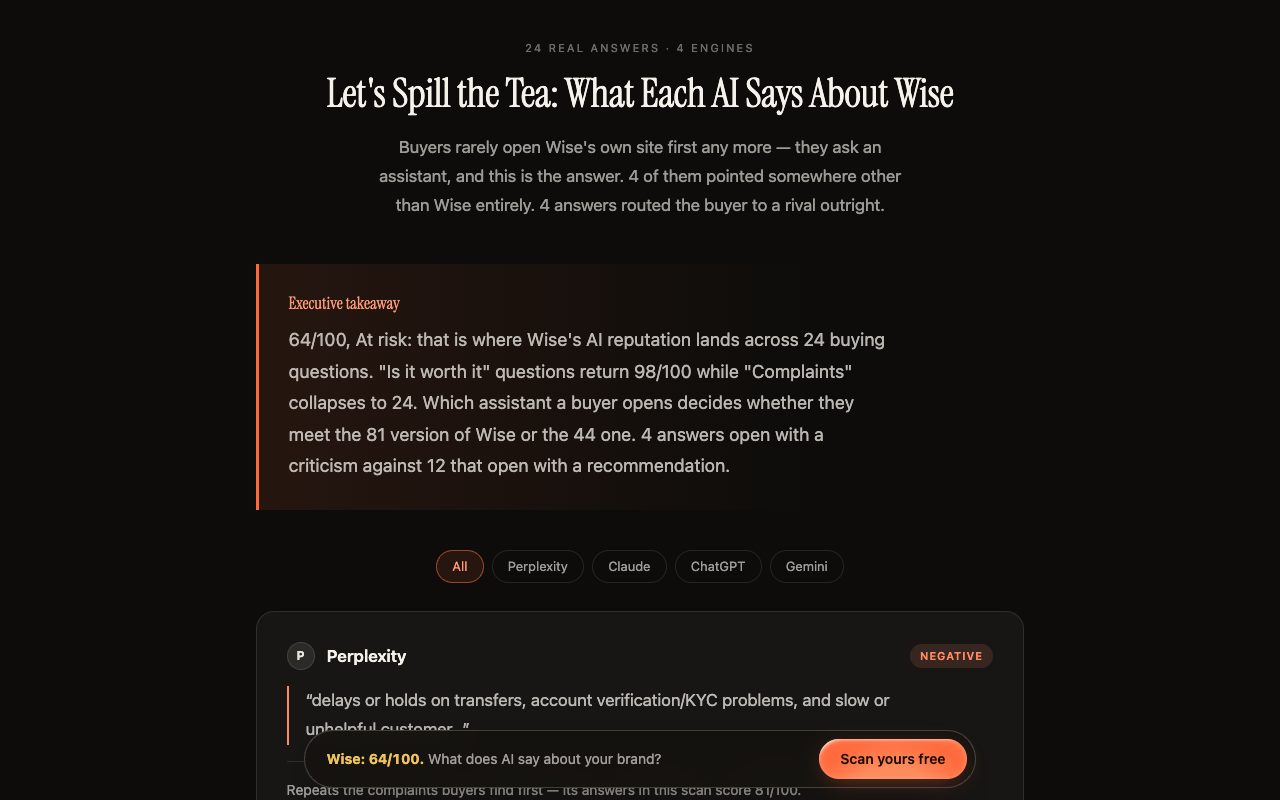
Kairosy publishes real scans of 205 brands at /reports; the Wise report (24 questions, four engines, scanned 2026-08-10) is quoted verbatim below. Wise scores 64/100, verdict "At risk," and the report's summary is the audit in one line: "Which assistant a buyer opens decides whether they meet the 81 version of Wise or the 44 one."
Representation: 96% visibility, one blank
Wise is mentioned in 96% of relevant answers. The one miss is a best-in-category question, where the report notes "AI doesn't recognize you on 1 of 24 answers." Verdict: pass, with one category prompt flagged.
Accuracy: true, but missing the numbers
Claude answers the complaints prompt with: "Wise's strict anti-money-laundering compliance systems frequently freeze accounts with little warning, sometimes for days or weeks." ChatGPT cites "account freezes or verification holds, which some users say can lock funds for days." Wise's help center says additional checks "usually take 2–10 working days, but occasionally they can take longer" and mid-transfer verification is handled "within 5-14 working days for personal and business customers alike."
So the claim is directionally true and unquantified: verdict "true, needs context." The fix is getting the 2–10 day figure and the reason ("Wise is a regulated financial institution") in front of the engines. Gemini's line that a business "transferring over €100,000 annually" should pick an alternative gets "unverifiable": we could not match that threshold to any Wise page in September 2026.
Sentiment: 12 positive, 3 neutral, 4 negative
Favorability is 56%, and the by-question view is what matters: Trust & safety 90, Head-to-head 79, Best-in-category 68, then Alternatives 26 and Complaints 24. The negatives sit in two prompt families, so this is two fixes, not a brand-wide problem.
Recommendation: half the answers
The recommend rate is 50%, and 4 answers are labeled "prefers competitor." Claude hedges ("Your best choice depends on your needs") while ChatGPT names the field: "Revolut, OFX, Payoneer, and WorldRemit, with BOSS Revolution also showing up as a pick." Warm description, lost deal.
Sources: one review platform doing the talking
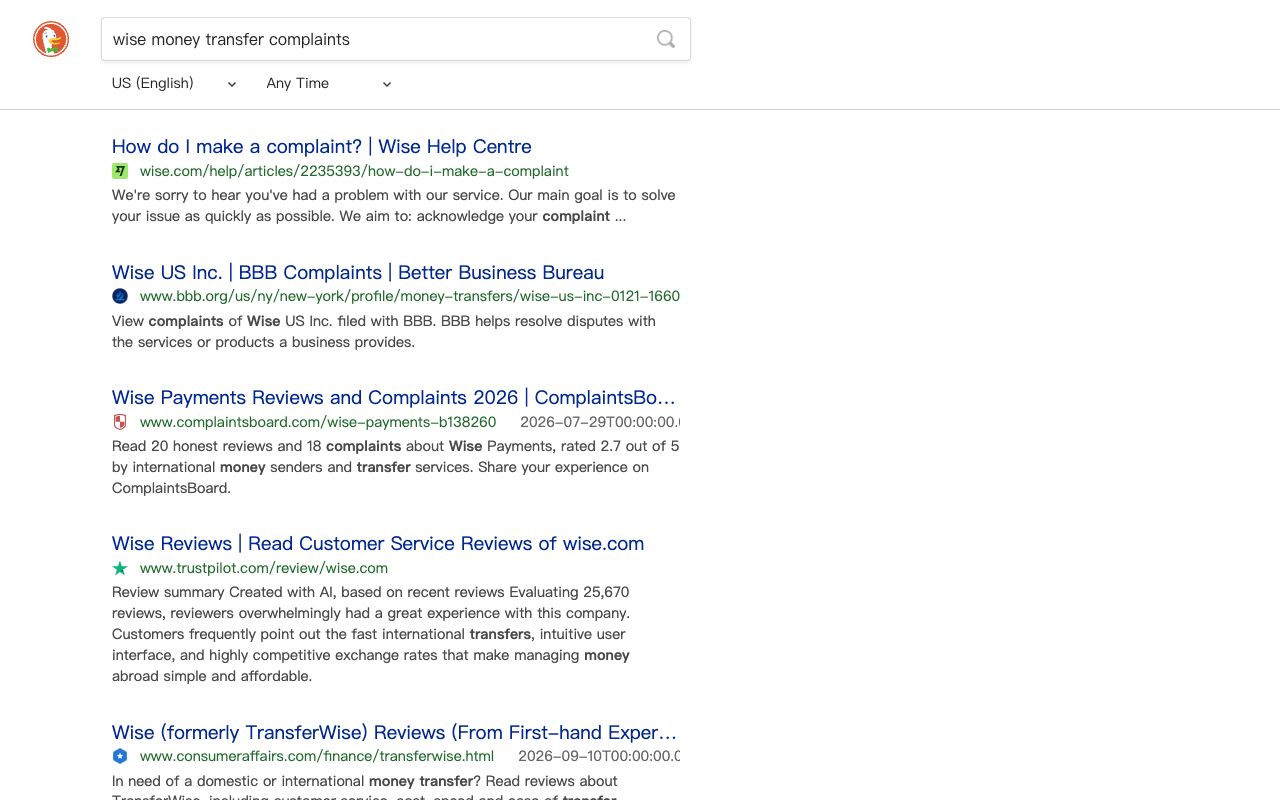
The report traces the complaint themes ("kyc and delays", "account freezes holds") "back to review sites" and names Trustpilot as "the kind of source engines echo when buyers ask about Wise." Wise's Trustpilot profile, checked in September 2026, shows a 4.3 TrustScore from 300,260 reviews, 80% five-star and 9% one-star; the one-star reviews cluster on account freezes and verification holds. The engines quote the 9% slice: a sourcing finding, not a product finding.
Competitor gap: leading on score, losing on alternatives
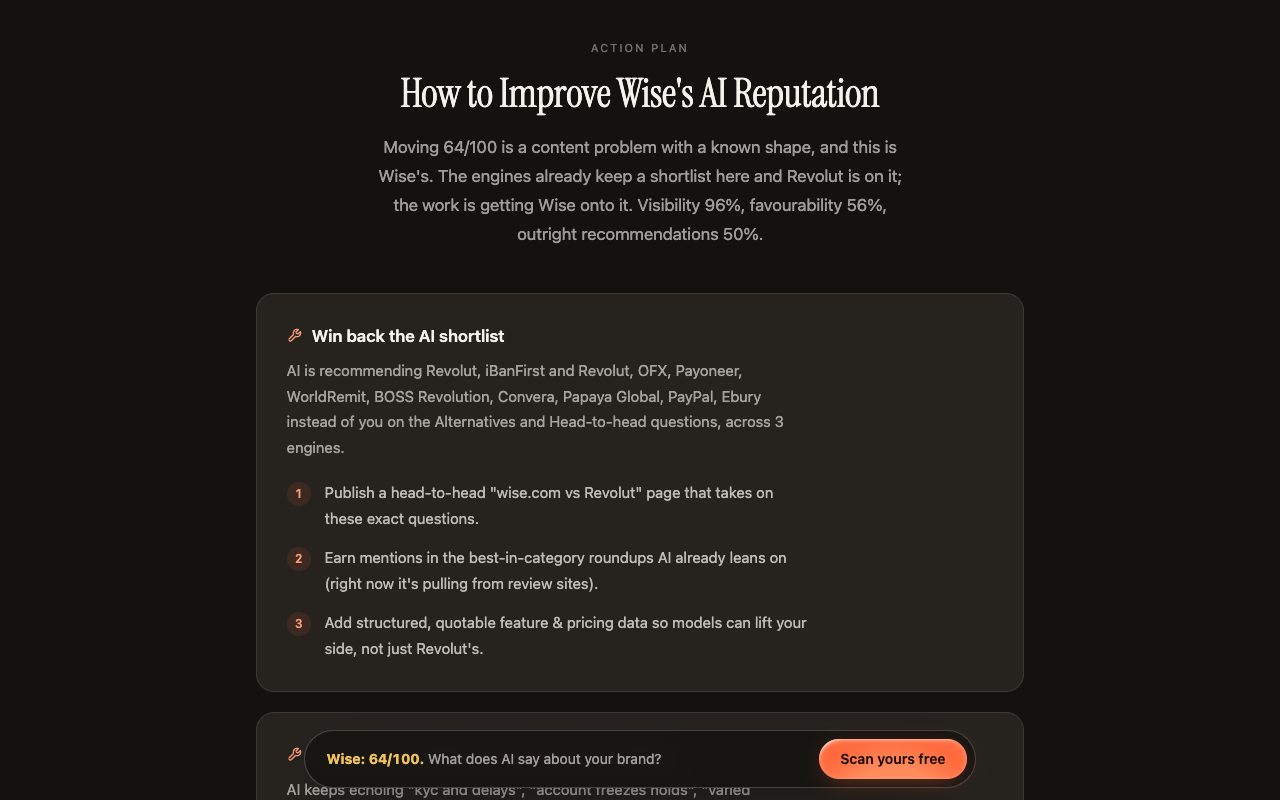
Wise holds 26% share of voice against Revolut's 13% and outscores it 64 to 54 (Revolut's own report reads "Vulnerable"). Yet on Alternatives and Head-to-head questions the engines recommend rivals "across 3 engines." The gap is not awareness; it is the absence of a Wise page that answers "Wise vs Revolut" in the engines' own words.
What Should the Final AI Reputation Audit Report Contain?
One page for the executive, one tab per dimension for the team. The executive page carries the headline score, the per-engine spread, six pass/fail verdicts, and three fixes, each naming the source it targets and the prompt that will prove it worked.
Kairosy's Fix Plan for Wise is a usable template. Its three headings are "Win back the AI shortlist" (a head-to-head "wise.com vs Revolut" page, roundup mentions, structured pricing data), "Counter the negative story AI keeps repeating" (respond at the root source, publish evidence against "kyc and delays"), and "Become visible where AI actually looks" (structured what-it-is content for the one invisible answer).
Then set the re-test; an audit is a snapshot. AI brand monitoring re-runs the frozen prompt set every Monday per brand and market and alerts on the four events that change the verdicts: a new negative keyword, a competitor becoming the preferred pick, a score drop, and an engine flipping sentiment. See how to monitor AI search visibility for the protocol.
One boundary: this audit is about what engines say. Whether they can read your pages is a separate, site-side check; run the AI-readiness website audit alongside it, starting with the free AI crawl checker and the AI-Ready Page Audit.
How to Audit Your Brand Reputation in AI FAQs
How often should you audit your brand reputation in AI?
A full six-dimension audit each quarter, with a weekly re-run of the same prompt set in between; engines pick up new sources within days.
How many prompts do you need?
Twenty to thirty across the four families; Kairosy's public reports use 24. Fewer than fifteen and one odd answer swings your averages.
What is brand representation in AI compared with AI brand sentiment?
Representation is whether and how you are described (named, right entity, right category); sentiment is the tone once you are described. Grade representation first, because a confused or absent answer makes its sentiment meaningless.
Can you audit AI brand reputation for free?
Yes. The four engines' consumer apps cost nothing beyond your time, Kairosy's signup includes a seven-day trial with full reports and no credit card, and the 205 public brand reports are free benchmarks.
Can you change what AI says after the audit?
Yes, because engines echo sources and sources can be corrected, answered or replaced. For Wise, the complaint answers trace to review-site language and the alternatives answers to a missing comparison page; both are publishable fixes.
See what AI says about your brand
Run a free scan across ChatGPT, Gemini, Claude & Perplexity in about 30 seconds.
Run my free scan