How to Rank in ChatGPT in 2026: What Actually Works
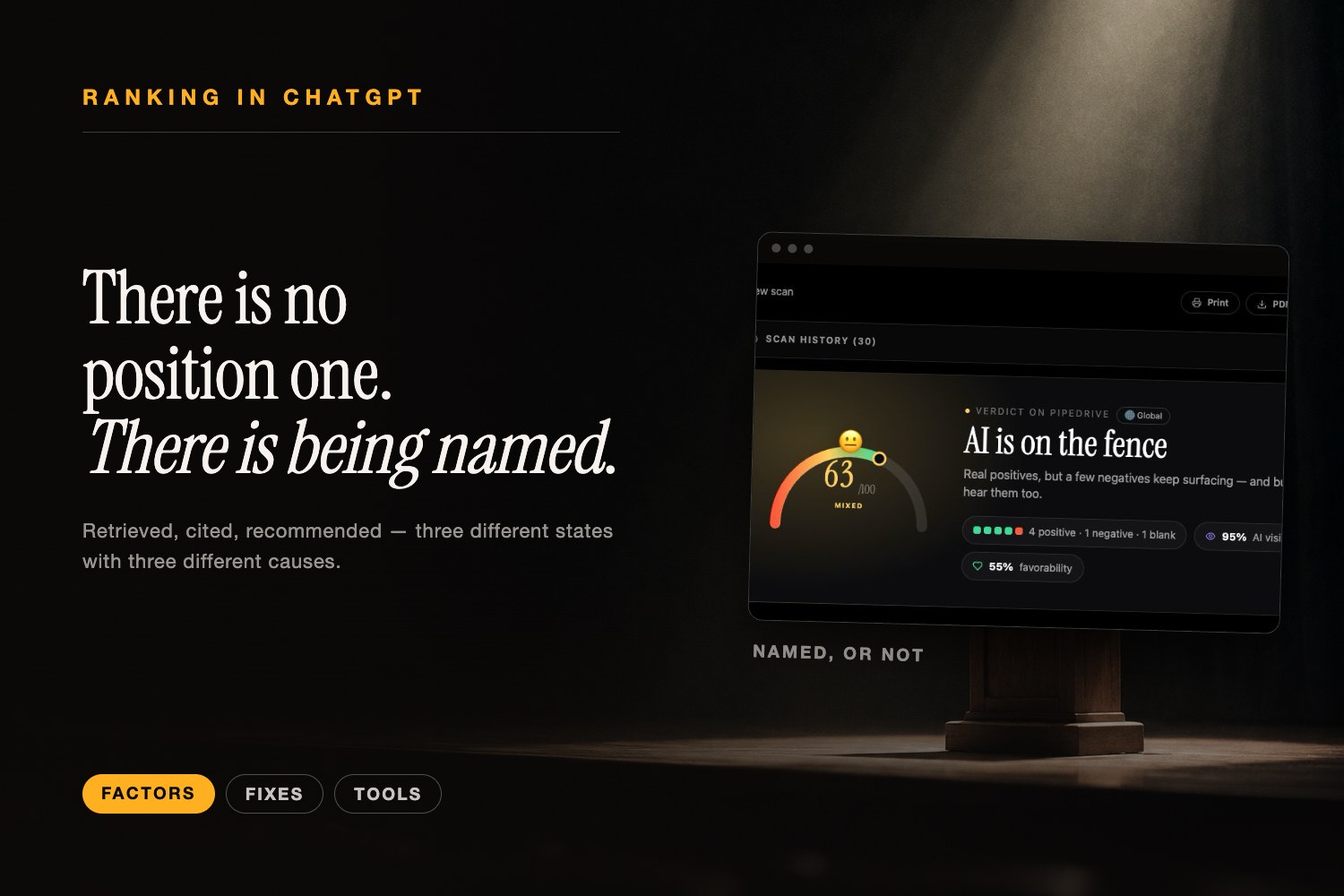
ChatGPT has no results page, so there is no position one to win. When someone asks how to rank in ChatGPT, they are really asking about three separate outcomes with three separate causes: whether the model can retrieve your page at all, whether your URL appears as a source under the answer, and whether your brand name lands inside the sentence the buyer actually reads.
Those three outcomes respond to different work. Fixing crawler access will never make a model recommend you, and publishing a comparison page will not help if the retrieval layer never sees it. This guide splits the problem into those layers, shows what documented evidence says drives each one, and finishes with the tools that can measure progress when there is no number to report.
Is There Actually a Ranking in ChatGPT?
No — not in the sense a rank tracker means. A chat reply is generated text, not an ordered list pulled from an index. Two people typing the same question in the same hour can get different brand sets, because sampling, session memory, and whichever pages the retrieval step happened to pull all change the output.
That is why "rank" needs to be replaced with three concrete states before you can work on it:
- Retrieved — OpenAI's search crawler has your page and it made the candidate set for that question. Invisible to you unless you test it.
- Cited — your URL shows up in the source list attached to the answer. Good for referral traffic, but it does not mean you were endorsed.
- Named — the prose says your brand is the answer. This is the state that moves pipeline, and it is the one most teams never measure.
A brand can be cited without being named (your blog gets used as background while a competitor gets the recommendation), and named without being cited (the model recalls you from training with no live source). Treat them as separate scoreboards. Because output varies run to run, the honest unit of measurement is frequency across repeated samples — how often you appear in twenty asks, not where you sat in one.
How Does ChatGPT Choose Which Sources and Brands to Surface?
Two inputs decide it. The first is what the model absorbed during training, which is why a brand with a decade of press can be named in an answer that cites nothing. The second is what the product fetches while composing the reply, which is where your site can win in weeks rather than years.
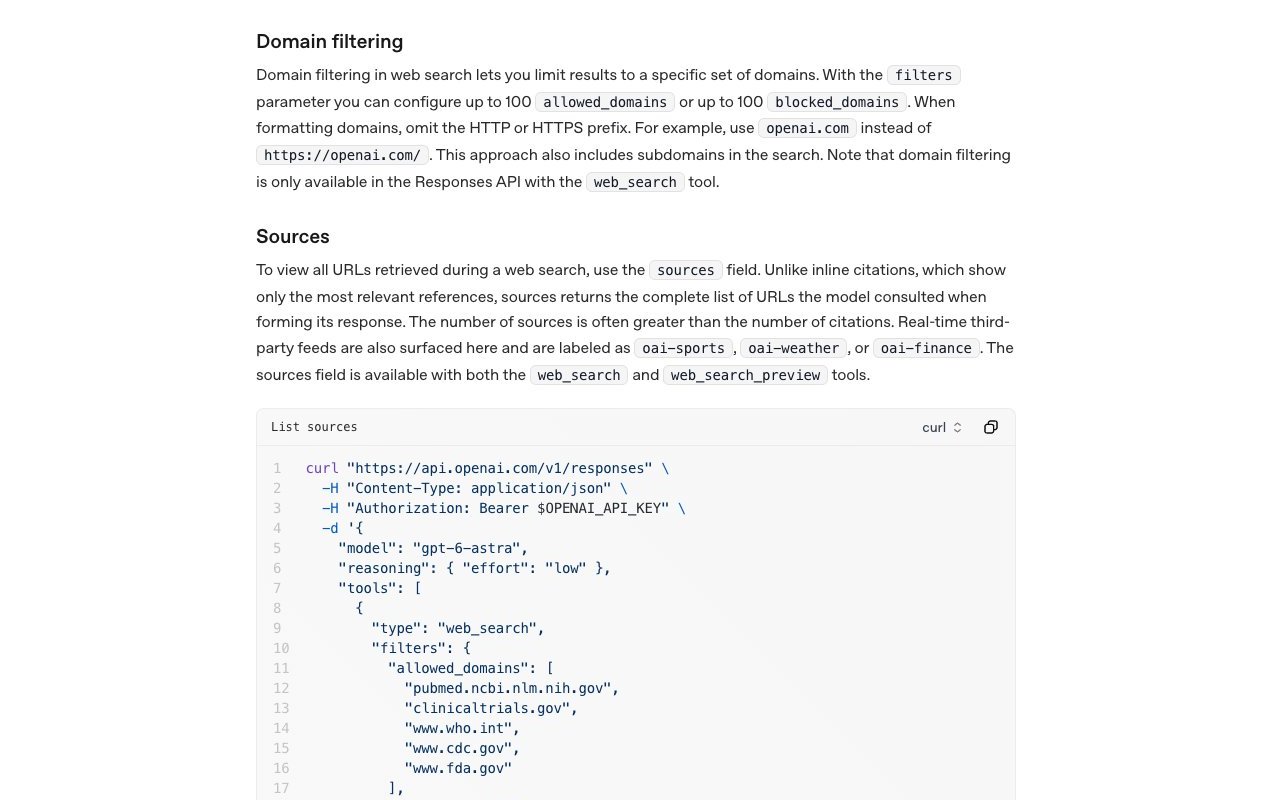
OpenAI documents four distinct agents, and confusing them is the most expensive mistake on this list. Per OpenAI's crawler documentation, GPTBot collects content "that may be used in training our generative AI foundation models"; OAI-SearchBot is "used to surface websites in search results in ChatGPT's search features"; ChatGPT-User handles "certain user actions in ChatGPT and Custom GPTs"; and OAI-AdsBot validates "the safety of web pages submitted as ads on ChatGPT."
The consequence is blunt and stated in the same docs: "Sites that are opted out of OAI-SearchBot will not be shown in ChatGPT search answers." Plenty of sites blocked every OpenAI agent in 2024 to opt out of training and quietly opted out of being answerable at the same time. OpenAI also notes it can take roughly 24 hours for a robots.txt change to propagate, so do not judge a fix the same afternoon.
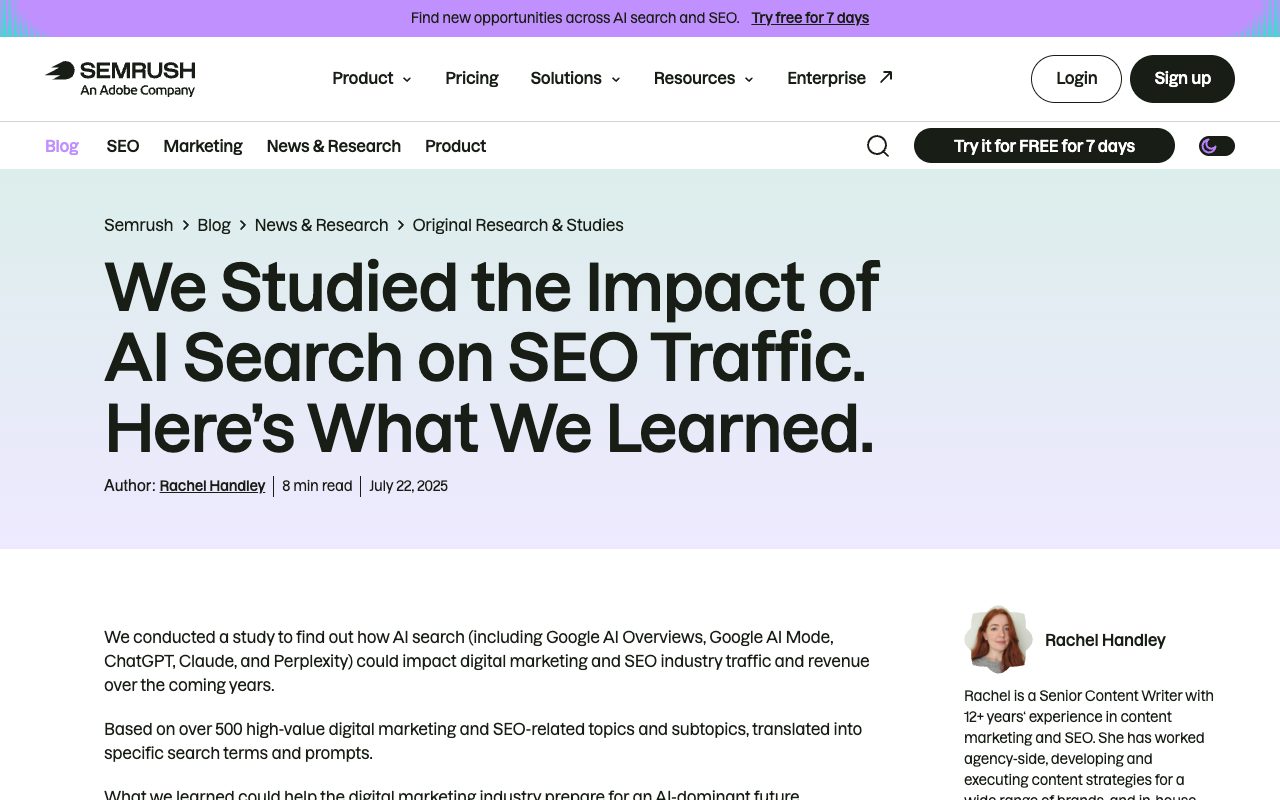
The retrieved set also does not mirror Google's top ten. In Semrush's AI search study published July 21, 2025, which analyzed more than 500 marketing and SEO topics turned into search terms and prompts, almost 90% of the pages cited sat at position 21 or lower in traditional search. Page-one dominance is not a ticket in, and page-three obscurity is not a disqualification.
Meanwhile the click math on classic search keeps tightening. Ahrefs' study of 300,000 keywords, published April 17, 2025, found that the presence of an AI Overview correlated with a 34.5% lower clickthrough rate for the top-ranking page. Different surface, same strategic read: the value is drifting from the click toward the mention.
What Are the Real ChatGPT Ranking Factors in 2026?
Nobody outside OpenAI has the weights, so anyone selling you a ranked list of ChatGPT ranking factors is guessing. What you can do is map each observable state to the signals you control and the check that proves it.
| Layer | What it means | What you control | How you verify it |
|---|---|---|---|
| Retrieved | Your page is fetchable and in the candidate pool | robots.txt rules for OAI-SearchBot, server responses, no login walls, HTML that carries the content | Crawler-access check plus server log hits from documented OpenAI IP ranges |
| Cited | Your URL is listed as a source | Page answers one question directly, has a visible date, states facts a model can lift | Ask the buyer question repeatedly and record which domains appear |
| Named | Your brand is written into the recommendation | Third-party roundups, review-site profiles, category pages that name competitors, consistent entity data | Count how often your name appears across a fixed prompt set, and read the sentence around it |
The most under-rated of these is the sentence around your name. Being listed as "a cheaper option with a thin free tier" is a ranking problem no crawler fix solves — it is a source problem, and the sources are usually a review site, a forum thread, or a competitor's comparison page that you never edited.
How to Rank in ChatGPT: Six Changes That Move Each Layer
Work top-down. Access first, because everything below it is wasted otherwise.
- Allow the search agent explicitly. Add a permissive rule for
OAI-SearchBoteven if you disallowGPTBot. That split lets you refuse training use while staying answerable. - Put the claim in the first 40 words. Retrieval grabs passages, not whole documents. A page that opens with a definition, a price, or a number gets quoted. A page that opens with a scene-setting paragraph gets skipped.
- Make your entity unambiguous. Mark up your organization and products, and use the sameAs property on schema.org's Organization type to tie your site to your LinkedIn, Crunchbase, and G2 profiles. Ambiguous entities get merged with similarly named companies.
- Go where the shortlists already are. The answer to "best CRM for a two-person agency" is assembled from other people's lists. Pitch the roundups that already rank, keep your review-site profiles current, and answer real threads in your category without spamming.
- Publish the comparison you are afraid of. A page that names your three rivals and states honestly where each one wins is retrievable, quotable, and disproportionately useful to a model assembling a shortlist.
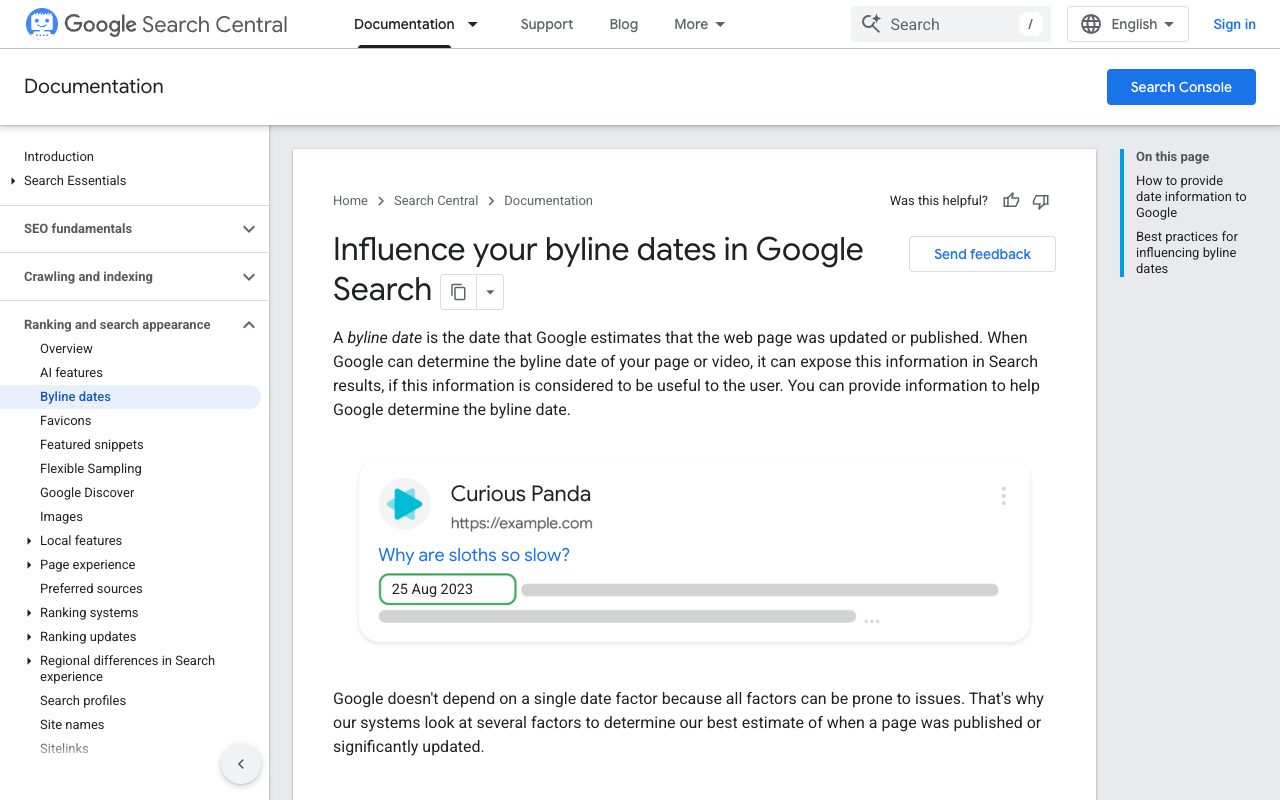
- Date and refresh. Undated pages are hard to trust and easy to skip. Put a visible published or updated date on anything with a number in it, and revise the numbers rather than the timestamp.
None of these are exotic. What is different from classic SEO is the target: you are writing for a machine that will summarize you to a buyer who never visits, so the summary has to be correct even when nobody clicks.
Which Technical Checks Let ChatGPT Reach Your Pages?
Run these four before you spend a dollar on content. Each takes minutes.
- Crawler rules. Confirm what your robots.txt actually permits per agent — our free AI crawl checker reads the file and tells you which AI agents are allowed through.
- Structured data. Validate that your Organization, Product, and FAQ markup parses cleanly with the schema markup checker. Broken JSON-LD is silently ignored.
- Rendering. OpenAI's crawler documentation says nothing about executing JavaScript, so treat client-side-only content as at risk. If the text is missing from raw HTML, assume it is missing from retrieval.
- Blocking side effects. Check WAF and bot-mitigation rules, not just robots.txt. Aggressive edge rules that challenge unknown agents will drop retrieval fetches while your robots.txt looks perfect.
One caveat on the current fashion for llms.txt files: OpenAI's published crawler documentation does not mention them. Publishing one costs nothing, but do not count it as a ranking factor until a provider documents that it reads the file.
How to Rank on ChatGPT for "Best" and Comparison Prompts
Commercial prompts are where money changes hands, and they behave differently from informational ones. "What is churn" pulls definitions; "best survey tool for a 10-person team" pulls a shortlist, and shortlists are assembled from sources that already do the ranking work — roundups, review platforms, and forum consensus.
So the practical answer to how to rank on ChatGPT for those prompts is to change the inputs rather than your own homepage. Get added to the two or three listicles that keep getting cited in your category. Fix the outdated pricing on your G2 and Capterra profiles. Ask happy customers for reviews in the month before your quarter starts, because a stale profile reads as a declining product.
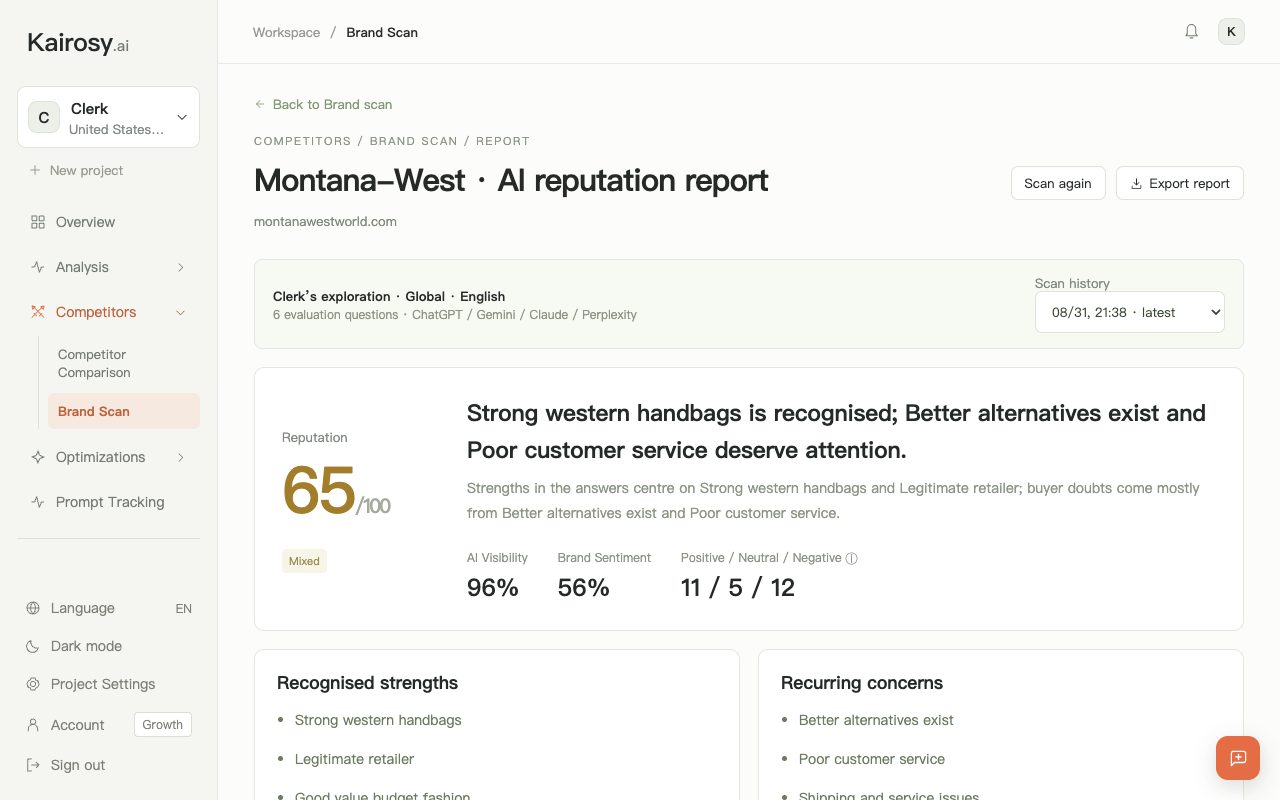
You can see the shape of this on a live example: Kairosy's public scan of Typeform's AI performance lays out the buyer questions asked, which engines named the brand, the sources each answer leaned on, and which competitors appeared alongside it. That last column is the one to copy — the competitor set in an answer tells you exactly which shortlists you need to be on.
What ChatGPT Rank Tracking Online Tools Should You Use?
Every tool in this category runs the same basic loop: it asks a fixed set of prompts on a schedule and records what came back. The differences are engine coverage, prompt volume, and whether it reports mentions or sentiment. Prices below were checked on each vendor's own pricing page on August 5, 2026.
| Tool | Entry price | Prompts at entry tier | What it reports |
|---|---|---|---|
| Kairosy | Free 7-day trial; Basic $29/mo | 15 tracked prompts on Basic | Whether four engines name you, how they describe you, sources, fix plan |
| Otterly.ai | $29/mo (Lite) | 15 prompts | Mentions and links across four engines, daily |
| Profound | Free 7-day trial; Enterprise custom | 50 prompts on the Trial (ChatGPT, Gemini, AI Overviews) | Answer-engine visibility and agent analytics |
| Semrush AI Toolkit | $99/mo (billed annually) | 25 custom prompts | Daily AI rankings, competitor prompts, AI readiness audit |
| SE Ranking | $129/mo Core, +$89/mo AI add-on | 200 prompts on the add-on | AI Overviews, AI Mode, Perplexity and ChatGPT results alongside classic rankings |
Kairosy is a visibility and reputation scanner, not a position tracker — there is no rank column, because there is no rank. It asks the questions your buyers ask across ChatGPT, Gemini, Claude and Perplexity, scores whether you were named and how favorably you were described, lists the sources each answer used, and turns the gaps into a fix plan. The full report is free for the whole 7-day trial. Paid plans run $29, $99 and $399 per month and add weekly brand rescans per market plus country-specific scans across 25 markets; prompt tracking runs daily on every paid tier. If you want the deeper monitoring workflow, the ChatGPT brand monitoring page walks through the loop, and our guide to tracking brand mentions in ChatGPT covers the manual version.
Otterly.ai is the cheapest honest entry point for pure prompt tracking. Its pricing page lists Lite at $29/month for 15 prompts, Standard at $189 for 100, and Premium at $489 for 400, all with daily tracking across ChatGPT, Google AI Overviews, Perplexity and Copilot. Claude and Gemini are paid add-ons rather than included engines.
Profound targets larger teams. Its pricing now shows brands a free Trial (50 prompts run daily for 7 days on ChatGPT, Gemini and Google AI Overviews) and Enterprise on custom pricing for up to nine engines with SSO and SOC 2; there is no self-serve paid tier for brands.
Semrush's AI Visibility Toolkit suits teams already inside Semrush. The AI pricing page lists a Base plan at $99/month billed annually with 25 custom prompts on daily AI rankings, covering ChatGPT, Google AI, Gemini and Perplexity, plus an AI-readiness site audit.
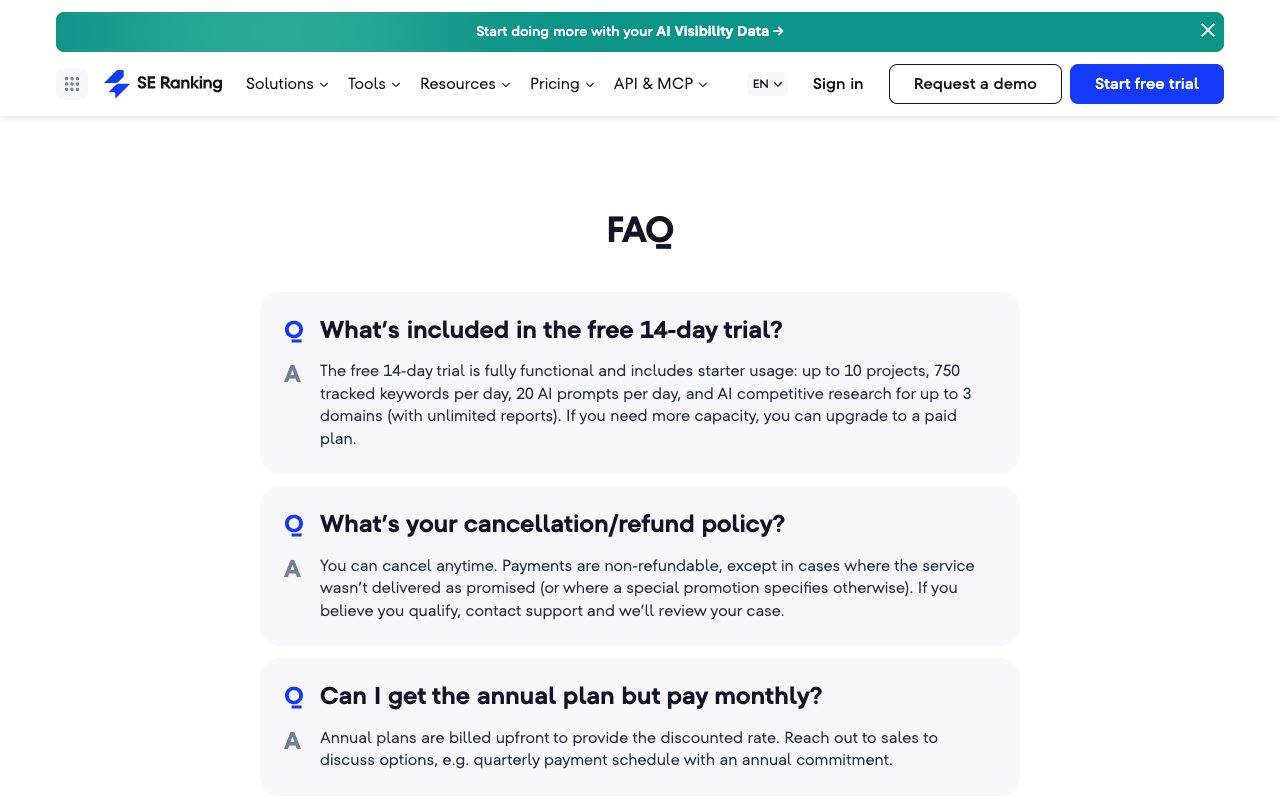
SE Ranking is the option if you still need classic rank tracking in the same login. Its pricing page shows Core at $129/month billed monthly, with an AI Search add-on at +$89/month that includes 200 prompts and tracks AI Overviews, AI Mode, Perplexity and ChatGPT.
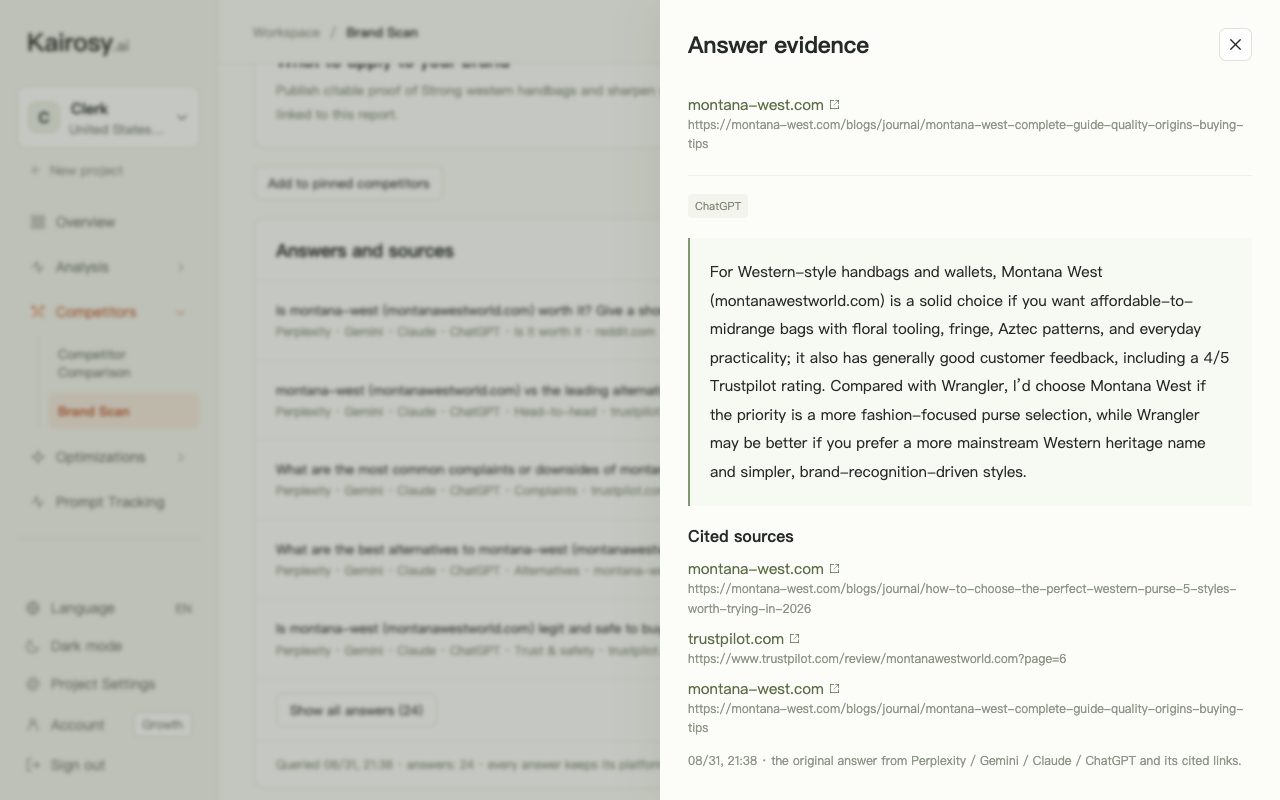
Whichever you pick, hold the tool to one standard: it must show you the answer text, not only a score. A visibility percentage that went from 22 to 27 tells you nothing you can act on. The sentence that called your onboarding "clunky" tells you exactly what to fix and where the claim came from.
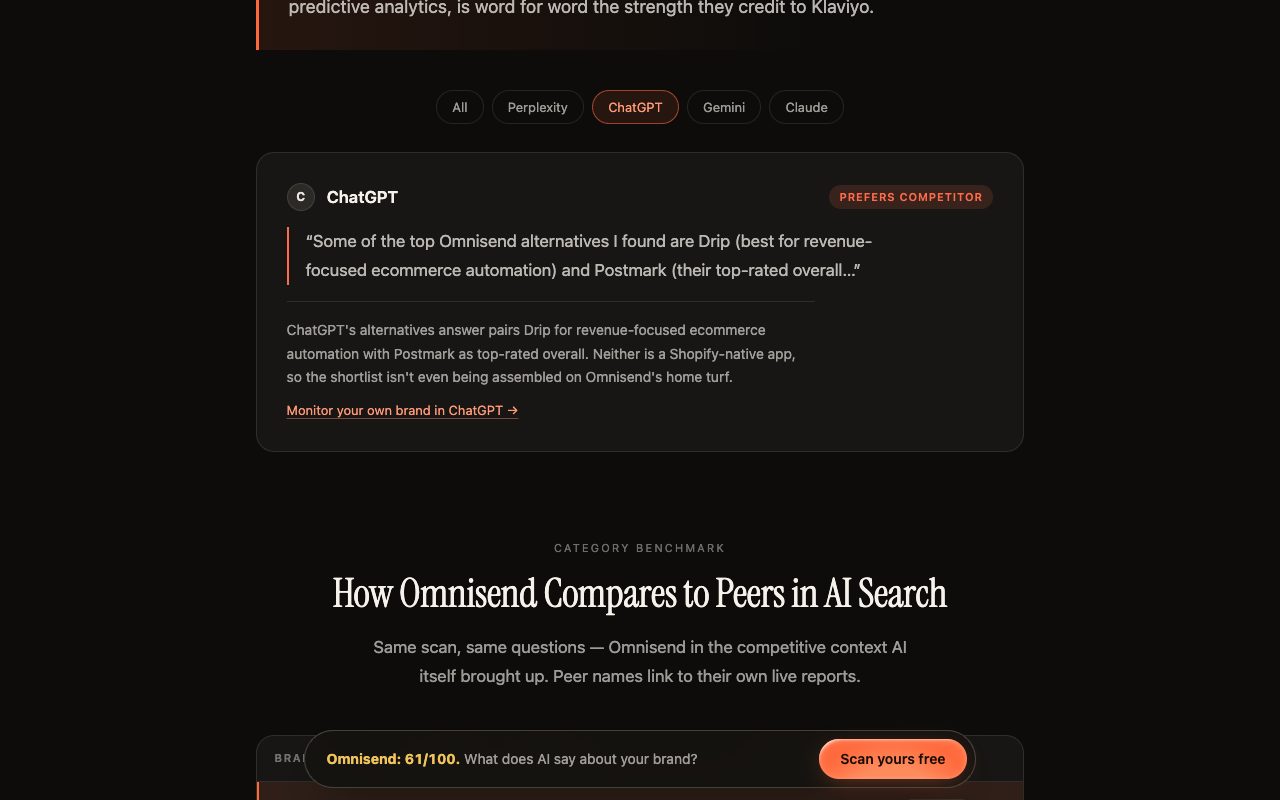
Start narrow. Fifteen buyer questions, run weekly, with the sources logged, will teach you more in a month than a hundred prompts you never read. Once you know which three sources keep feeding the answers, the work stops being guesswork and becomes a short list of pages to earn or correct.
How to Rank in ChatGPT FAQs
Can you pay to appear in ChatGPT answers?
Paid placement exists as a separate surface. OpenAI's crawler documentation describes an OAI-AdsBot that validates "the safety of web pages submitted as ads on ChatGPT," which confirms an advertising product, and the docs state its data is not used to train foundation models. That is distinct from organic mentions, which cannot be bought and are the subject of everything above.
How long does it take to see a change?
Access changes move fastest: OpenAI says a robots.txt update can take about 24 hours to register. Content and reputation changes have no published timeline, so measure in weeks, not days, and always compare the same prompt set on the same schedule rather than eyeballing a fresh chat.
Does ranking first on Google mean you rank on ChatGPT?
Not reliably. Semrush's July 2025 study found almost 90% of cited pages in its sample ranked at position 21 or below in classic search. Strong SEO helps because it produces crawlable, credible pages, but it is not a substitute for being present in the third-party sources that shortlists are built from.
How is chatgpt rank tracking online different from a keyword rank tracker?
A keyword tracker reports one number per keyword because search results are ordered and repeatable. Chatgpt rank tracking online has to sample instead: the same prompt is asked many times, and the output is a mention rate, a sentiment reading, and a source list. If a vendor shows you a single position number for ChatGPT, ask how it was derived.
Should you block GPTBot?
It is a genuine trade-off, and it is separate from search. Disallowing GPTBot signals that your content should not be used in training, which is a reasonable stance for publishers with licensing leverage. Just keep OAI-SearchBot allowed, or you also disappear from answers that would have cited you.
Which prompts should you track first?
Start with the questions that precede a purchase in your category: "best tool for X", "alternatives to [your biggest competitor]", "is [your brand] any good", and one pricing question. Those four families produce the answers a buyer acts on, and they are the fastest place to see whether your work to rank in ChatGPT is landing.
See what AI says about your brand
Run a free scan across ChatGPT, Gemini, Claude & Perplexity in about 30 seconds.
Run my free scan