SEO for SaaS: The Complete 2026 Guide (Strategy to Checklist)

SEO for SaaS is the discipline of turning organic search into a subscription-revenue channel: you rank for the questions software buyers ask at every stage — from "what is [category]" to "[competitor] alternatives" — and convert that traffic into trials and demos. It rewards different moves than generic SEO because one durable ranking can pay you back every month for years.
This guide covers the five things that matter most in SEO for SaaS, three universal strategies, a step-by-step SaaS SEO checklist, the mistakes that burn quarters, and the five experts and five tools worth your attention in 2026 — including the AI-search channel most software teams still measure at zero.
What Makes SEO for SaaS Different From Regular SEO?
Three structural differences change how you plan. The first is economics: a SaaS customer pays every month, so a page that produces ten signups a month compounds like an annuity. First Page Sage's SEO ROI statistics report, updated for 2026, puts three-year ROI for B2B SaaS SEO at 702% — among the highest of any industry the firm tracks.
The second is who you compete against. For nearly any "best [category] software" query, review aggregators like G2 and Capterra occupy the top positions, which means part of your job is earning placement on platforms you don't own — and, increasingly, inside AI answers.
The third is the length of the journey. A buyer might read a glossary post in March, a comparison page in May, and your pricing page in June — each touch needs its own content. Frameworks like Kalungi's 8-step SaaS SEO playbook exist because funnel mapping matters more here than in ecommerce or local search.
Which 5 Things Matter Most in SEO for SaaS Companies?
If you only have bandwidth to manage five priorities, make it these. Everything else in SEO for SaaS companies hangs off them.
1. Bottom-of-funnel coverage before top-of-funnel volume
Pages like "[competitor] alternatives," "[you] vs [competitor]," and "[category] pricing" convert at multiples of blog traffic. Build them first even though the volumes look small — a few hundred searches from active buyers beats twenty thousand from students.
2. Product-led content
The strongest SaaS pages let the product do the arguing: templates, calculators, and free utilities that earn rankings on their own. Eli Schwartz wrote a whole book on this idea (more below) — it's the playbook behind Zapier's integration pages.
3. Topic clusters that mirror your funnel
One pillar guide targets the category head term, while 6–10 interlinked cluster posts answer specific subquestions. Clusters concentrate authority and hand both Google and AI engines a clean map of what your product does.
4. Technical health on the marketing site
SaaS sites leak equity through app subdomains, orphaned feature pages, and staging URLs that sneak into the index. Before debating content strategy, confirm the pages you care about are actually indexed with a free index checker.
5. Third-party proof
Reviews stopped being mere social proof — they are now source material. AI assistants lean heavily on review-site content when describing vendors, so a stale G2 profile costs you twice: once in the SERP, once inside the answer.
How Do You Build a SaaS SEO Strategy? 3 Plays That Work at Any Size
A SaaS SEO strategy doesn't need forty tactics. These three plays work whether you have one marketer or a full team — scale the volume, not the shape.
Play 1: Own your comparison layer
List every competitor that comes up on sales calls, then build an honest "vs" page and an "alternatives" page for each. Honesty is load-bearing: pages that concede real trade-offs earn links and AI quotes, while one-sided pages earn neither.
Play 2: Build pages your product can generate
Integrations, templates, use cases, calculators — anything with a repeatable structure and real search demand. Hand-build the first ten pages, prove they rank and convert, and only then scale the pattern.
Play 3: One pillar, one cluster, one refresh loop
Publish a pillar guide for your category term, surround it with cluster posts, and put every URL on a 90-day review cadence. Aging pages you stopped touching are usually where SaaS traffic quietly leaks away — not the pages you never wrote.
The SaaS SEO Checklist: 12 Steps Before You Scale Content
Run this SaaS SEO checklist top to bottom before commissioning a single new post. Steps 1–4 live in Google Search Console, which is free, and most of the rest takes an afternoon.
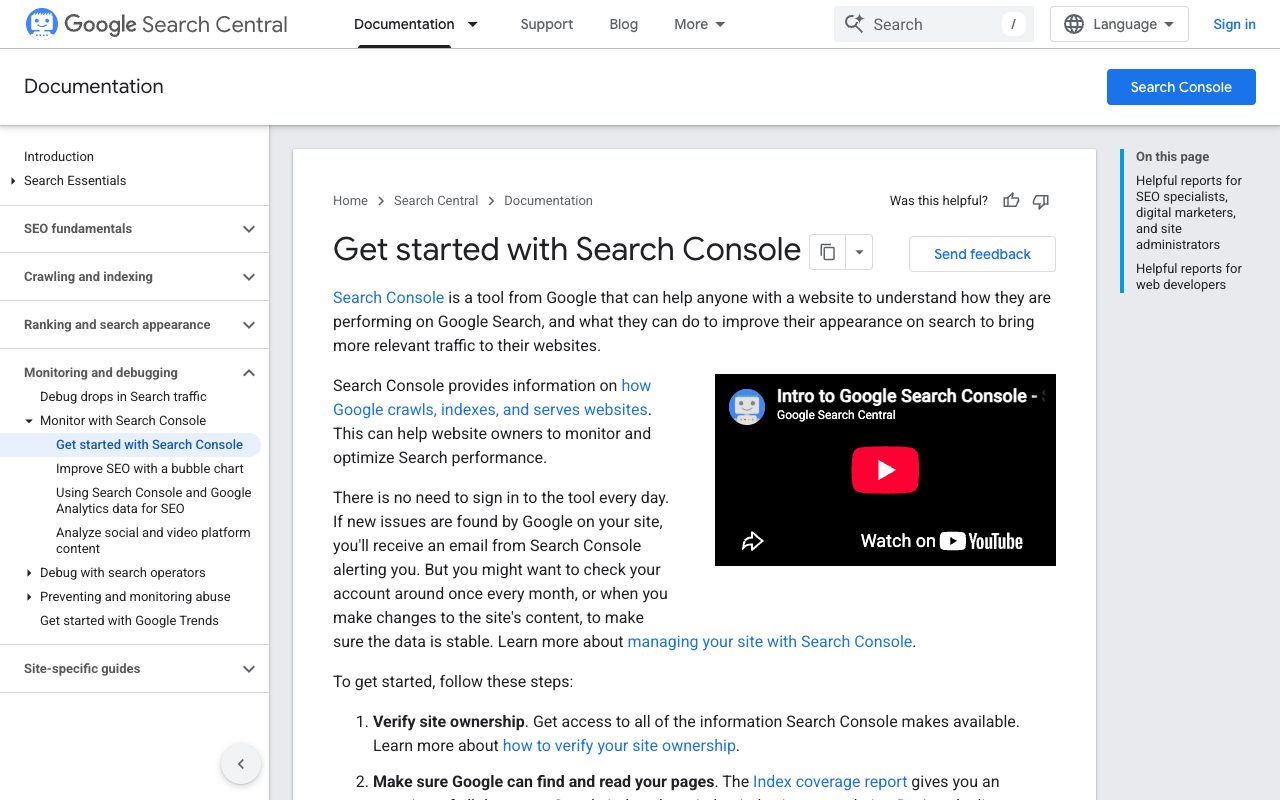
- Verify your domain in Google Search Console and submit an XML sitemap.
- Confirm your money pages are indexed — run them through an index checker rather than assuming.
- Fix crawl waste: redirect chains, orphan pages, and duplicate parameter URLs.
- Benchmark Core Web Vitals on the marketing site, not just the app.
- Map every target keyword to a funnel stage before writing anything.
- Build one comparison page for each competitor you lose deals to.
- Add Product, FAQ, and Article structured data, then validate it with a schema markup checker.
- Keep landing pages at an 8th–9th grade reading level so busy evaluators can skim them.
- Claim and refresh your G2, Capterra, and Trustpilot profiles quarterly.
- Publish one pillar plus 6–10 interlinked cluster posts per quarter.
- Put every published URL on a 90-day refresh calendar.
- Baseline what AI engines currently say about your brand with a free scan.
Which SaaS SEO Mistakes Should You Avoid?
The most expensive SaaS SEO mistakes are strategic, not technical. These six show up in almost every teardown:
- Volume worship. Celebrating a #3 ranking for a 20,000-search informational term while a competitor owns your "alternatives" queries.
- Blogging with no next step. Posts without a relevant CTA, embedded tool, or internal link to a money page convert at roughly zero.
- Nobody owns the review layer. Your G2 and Trustpilot profiles feed both Google and AI answers, yet no one on the team is responsible for them.
- Writing above your buyer's reading level. Dense feature prose loses skimmers — run key pages through a reading level checker and target grade 8–9.
- Set-and-forget content. Without a refresh calendar, your 2024 winners bleed out through 2026.
- Measuring only Google. If you can't say what ChatGPT tells a prospect who asks about your category, you're not measuring the whole channel.
How Does AI Search Change SEO for SaaS?
Software buying has partly moved into chat windows. ChatGPT passed 900 million weekly users in February 2026, per TechCrunch, and Gartner predicted in February 2024 that traditional search volume would fall 25% by 2026 as usage shifts to AI assistants. When a buyer types "best CRM for a small sales team" into ChatGPT, they get a shortlist of three to five names — and no click ever reaches your analytics.
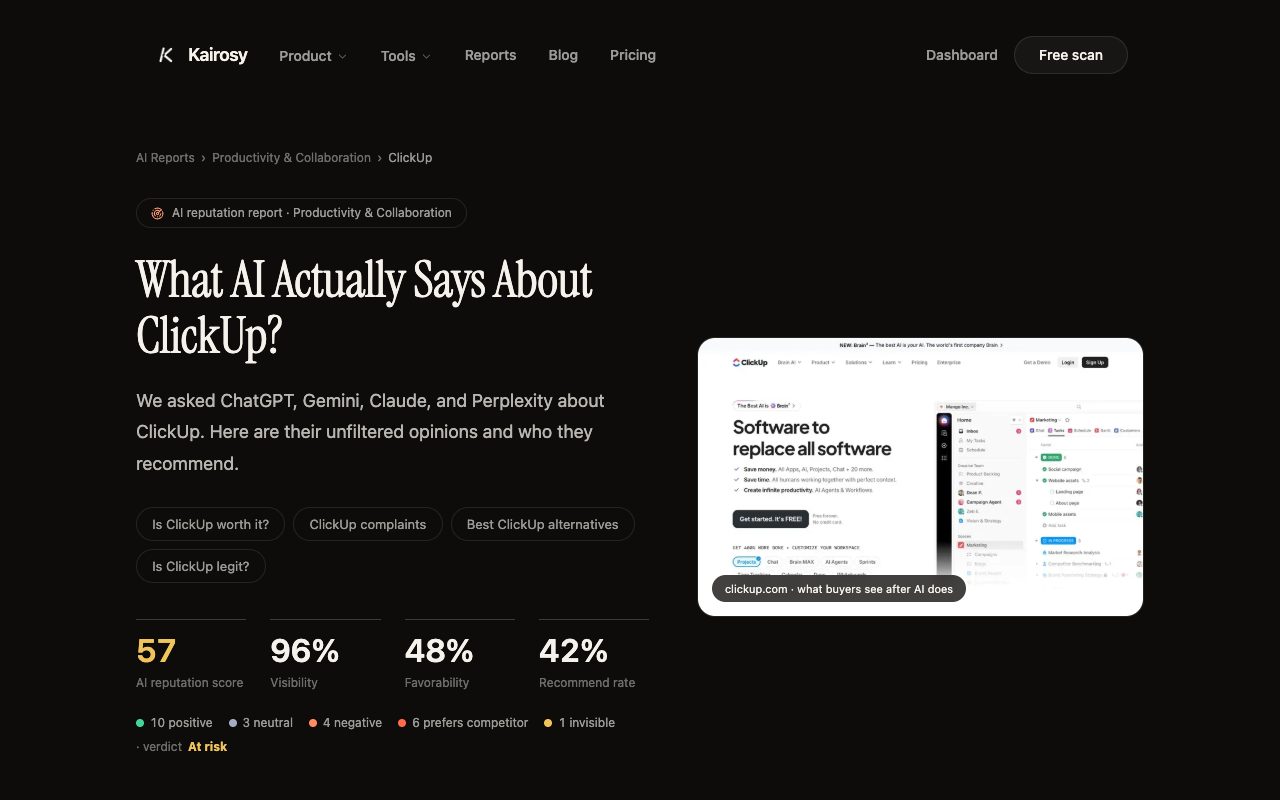
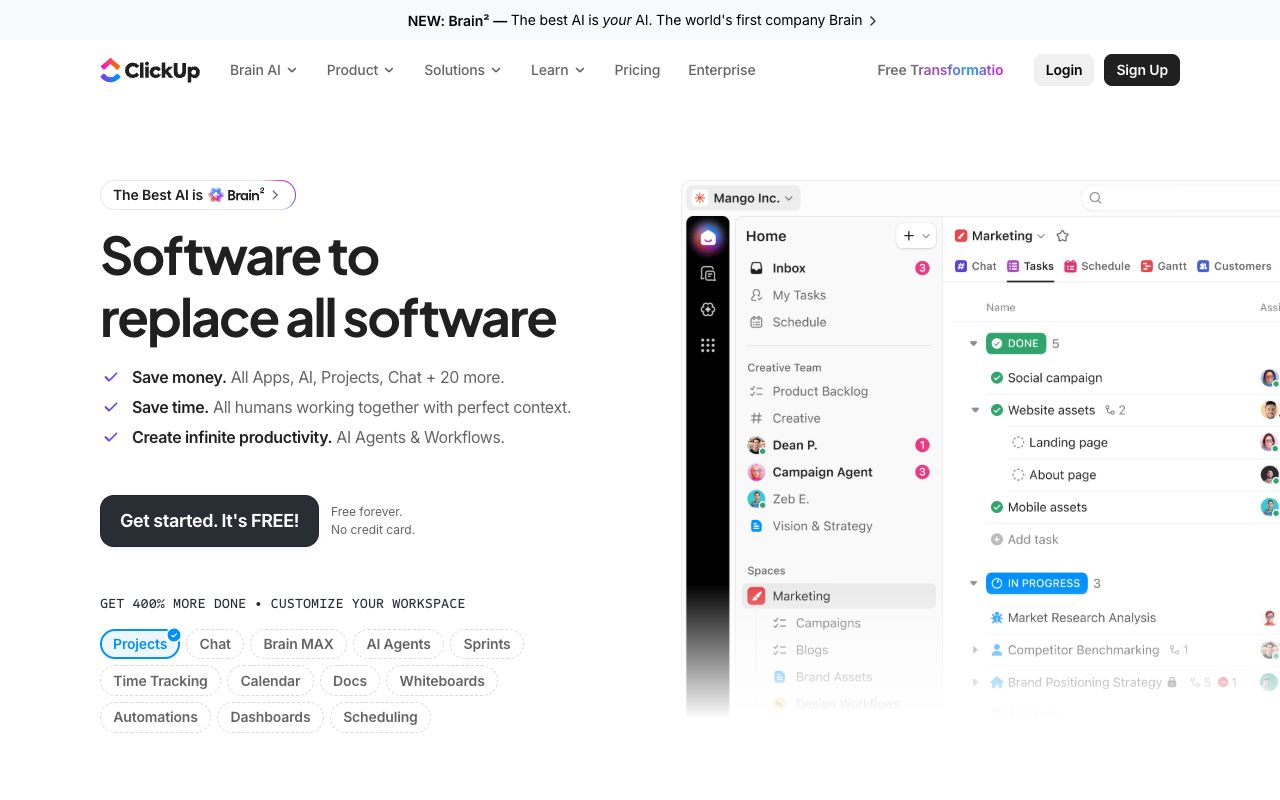
The numbers behind those shortlists can be uncomfortable. Kairosy's scan of ClickUp found the brand present in 96% of relevant AI answers but recommended in only 42% of them, for an overall score of 57/100 — with engines steering buyers toward monday.com, Asana, and Wrike while repeating review-site complaints about sluggish performance almost word for word.
Engine variance makes manual spot checks misleading. Kairosy's Pipedrive scan landed at 71/100 overall, yet Gemini rated the brand 58 while Perplexity gave it 81 — check a single engine by hand and you'll walk away with the wrong picture.
The practical response is to treat generative engine optimization as a sibling channel: largely the same content assets, entirely different measurement. Start with the overlap — structured pages, clean entity signals, third-party proof — then read up on how GEO and SEO diverge in 2026 and what GEO actually involves. To locate your starting point, run an AI-readiness audit or put the brand under continuous AI brand monitoring.
Which SaaS SEO Experts Are Worth Following in 2026?
Every SaaS SEO expert below has run search for a real software company rather than just writing about it — together they cover strategy, product-led thinking, international scale, in-house execution, and technical SEO.
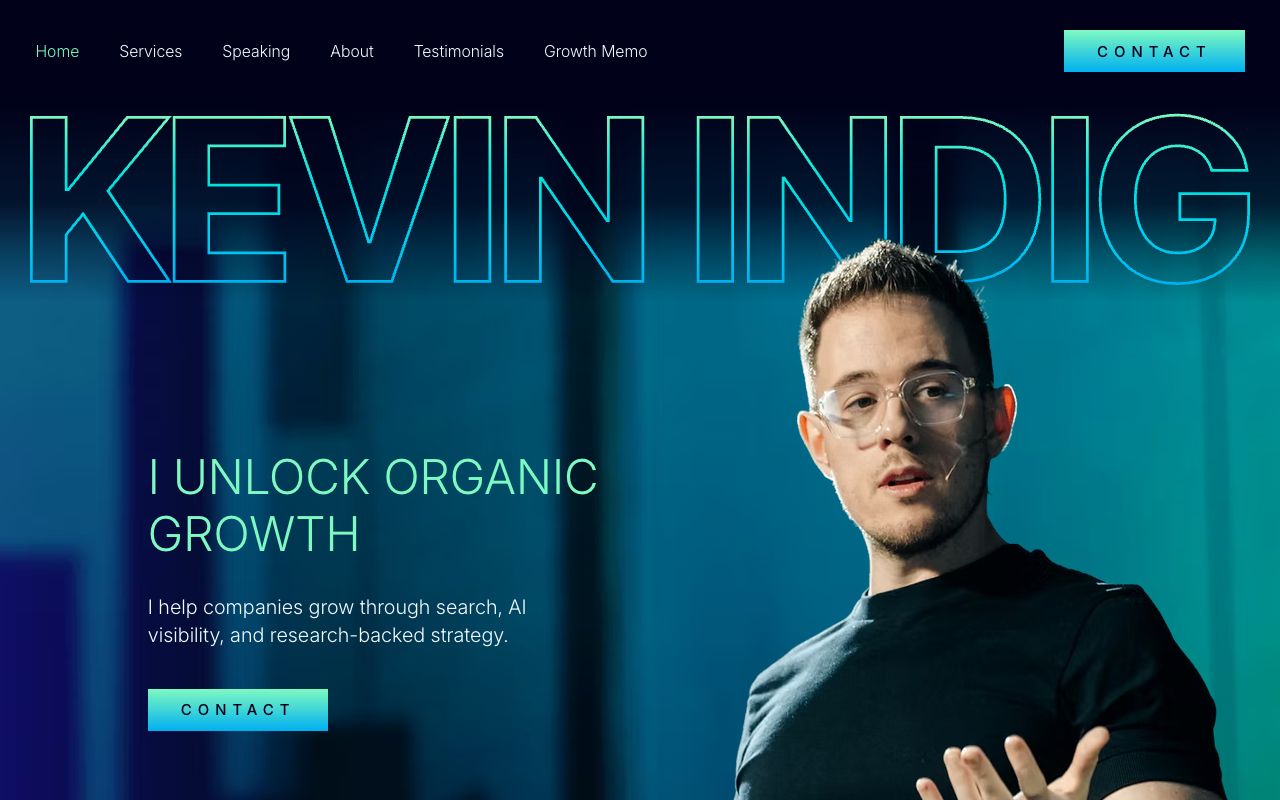
Kevin Indig
Former SEO and growth lead at Shopify, G2, and Atlassian, now advising companies like Reddit, Dropbox, and Hims. His weekly Growth Memo newsletter is the sharpest running analysis of AI search reshaping software marketing — start at kevin-indig.com.
Eli Schwartz
Author of Product-Led SEO and the consultant behind organic growth programs at SurveyMonkey, Coinbase, Zendesk, and Gusto. His newsletter and LinkedIn feed keep hammering one useful question: why should this content exist at all?
Aleyda Solis
Founder of the boutique consultancy Orainti and of the SEOFOMO newsletter, read by 45,000+ subscribers weekly. She specializes in international and SaaS SEO plus AI search optimization — if your product sells across markets, aleydasolis.com is required reading.
Gaetano DiNardi
Ran growth marketing in-house at Pipedrive, Nextiva, and Aura; his site credits the Nextiva years with helping revenue climb from roughly $70M to over $200M. He now advises 50+ SaaS companies, including Semrush, Gong, and Cognism.
Areej AbuAli
Founder of the technical SEO consultancy Crawlina and of Women in Tech SEO, a 5,000-member community that won a Search Engine Land award for advancing diversity in search. Follow areejabuali.com for the crawl-and-indexation side most SaaS teams underinvest in.
What Are the Best SaaS SEO Tools in 2026?
You can run a serious program on five tools. One disclosure up front: Kairosy is our product — it monitors what AI assistants say about your brand, and it is not a rank tracker or backlink index, so it complements the classic suites rather than replacing them.
| Tool | Best for | Starting price (verified Aug 2026) |
|---|---|---|
| Google Search Console | Index coverage, queries, Core Web Vitals | Free |
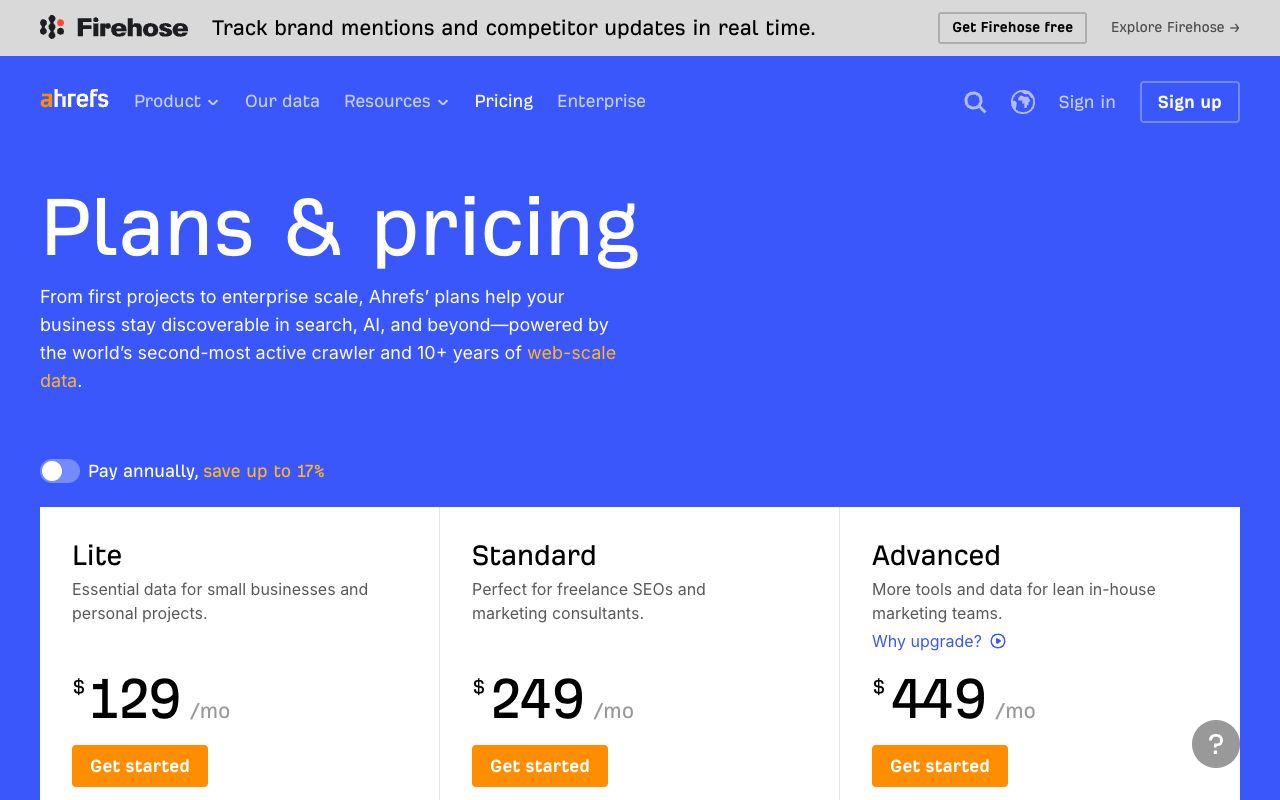
| Ahrefs | Keyword research and backlink analysis | Starter $29/mo; Lite $129/mo |
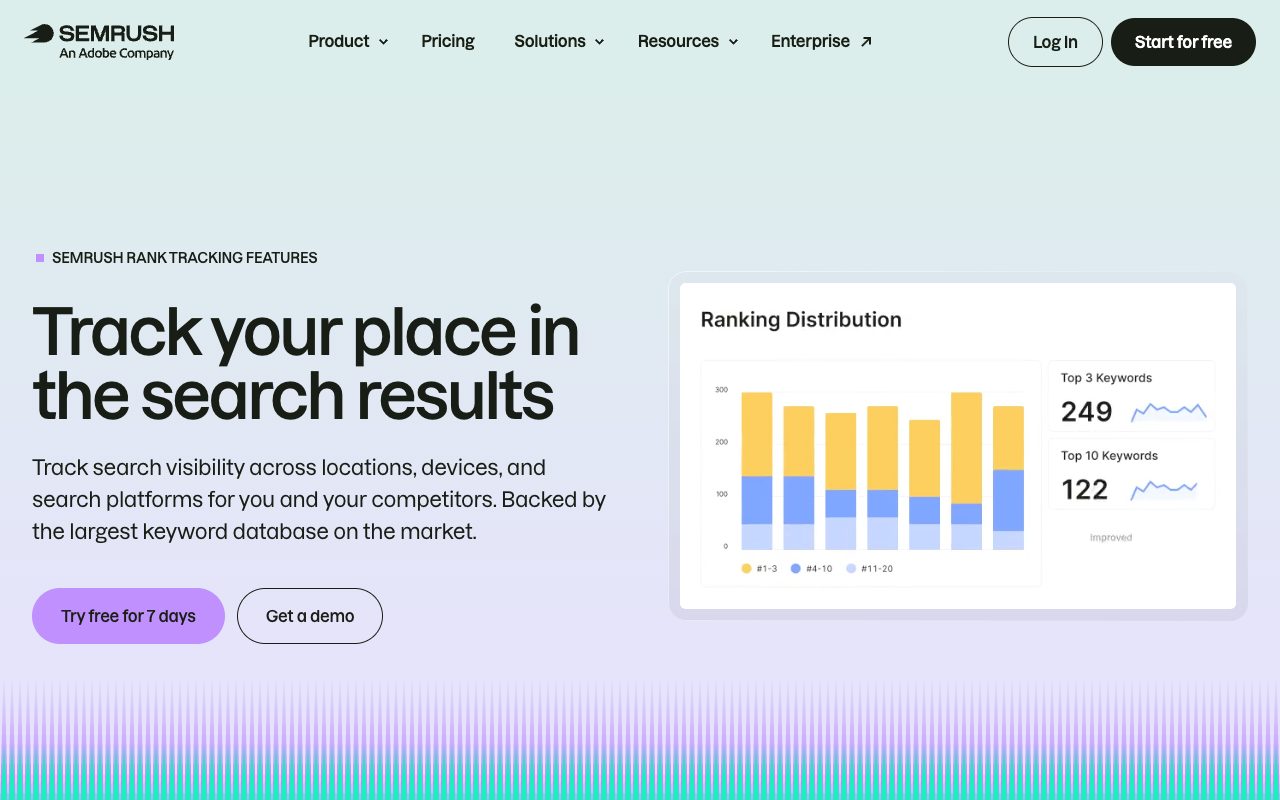
| Semrush | All-in-one SEO and competitor research | SEO plan $139/mo; 7-day free trial |
| Surfer | Content briefs and on-page optimization | Discovery $59/mo billed monthly |
| Kairosy | AI visibility, sentiment, and citation monitoring | Free 7-day trial; Basic $29/mo |
Google Search Console
Free, and still the source of truth for what Google indexed, which queries pay, and where Core Web Vitals fail. Every indexing item in the checklist above starts here.
Ahrefs
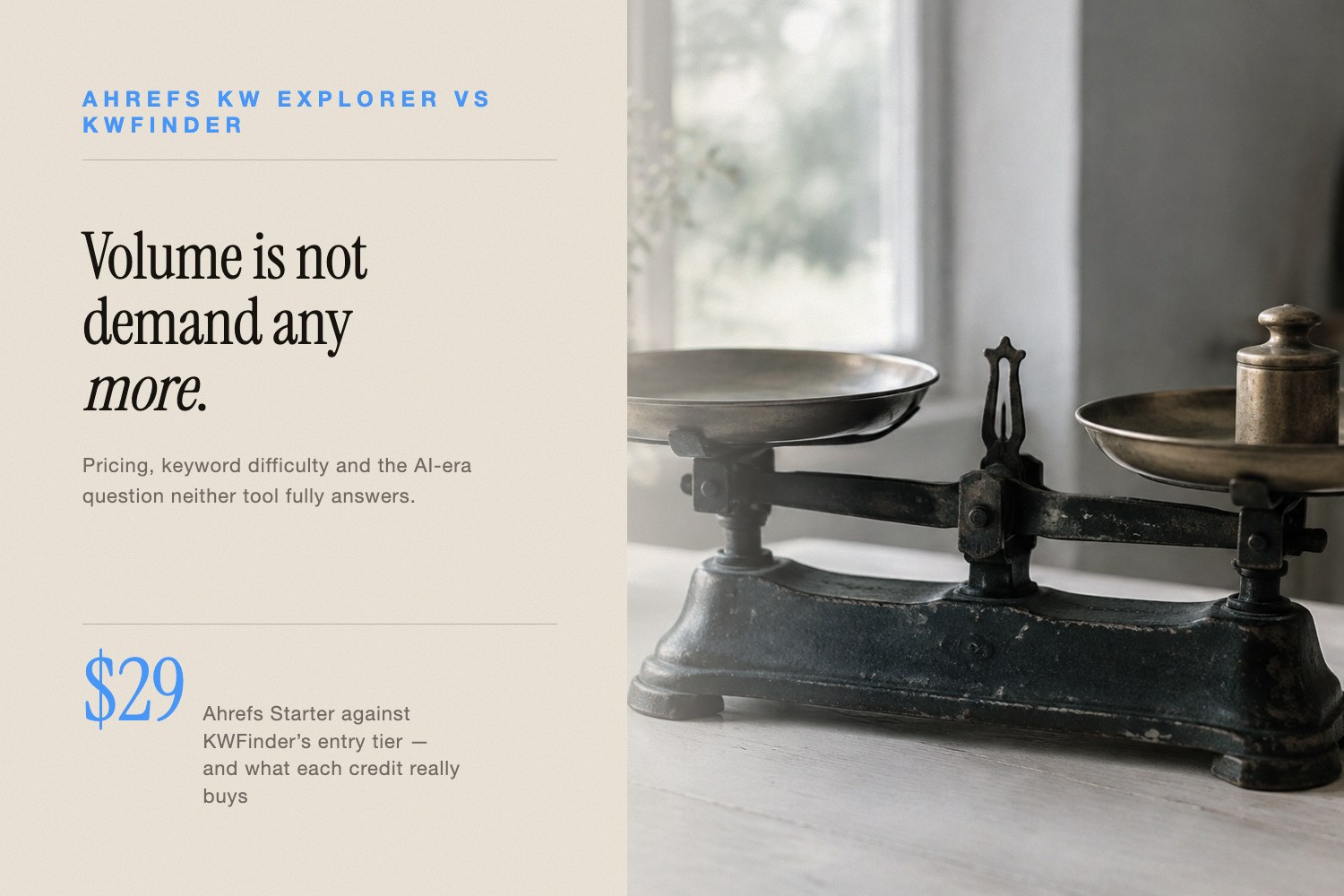
Ahrefs covers keyword difficulty, content gaps, and one of the largest backlink indexes available. The $29/month Starter tier is enough for early keyword research, while the Lite plan at $129/month unlocks the full toolset.
Semrush
Semrush remains the broadest all-in-one suite: rank tracking, site audits, and competitive research, with its newer plans folding in AI-search tracking. The SEO plan runs $139/month with a 7-day free trial.
Surfer
Surfer turns keyword targets into structured content briefs and scores drafts against ranking pages. Plans start at $59/month billed monthly ($49/month on annual billing) — useful once you're publishing clusters at volume.
Kairosy
Kairosy runs your brand through ChatGPT, Gemini, Claude, and Perplexity the way a prospect would, then grades every answer: sentiment, competitors recommended instead, and the sources each engine cited, wrapped up in a prioritized fix plan. Paid plans add weekly monitoring with email alerts, daily prompt tracking, and market-specific scans across 25 countries — and the first 7 days are free, so baselining costs nothing.
SEO for SaaS FAQs
Is SEO still worth it for SaaS companies in 2026?
Yes — recurring revenue makes it one of the highest-ROI channels available. First Page Sage's 2026 data puts B2B SaaS SEO at 702% ROI over three years, and unlike paid ads, the asset keeps producing after you stop spending.
How long does SEO for SaaS take to show results?
Expect meaningful movement in four to six months and compounding returns after a year. Bottom-of-funnel pages usually pay off first because competition is thinner and intent is higher.
How much does SaaS SEO cost?
A lean in-house program runs on tools from roughly $100–300 per month plus content time. Agency retainers vary widely by scope, so get a scoped proposal instead of trusting a package price.
Do you need a SaaS SEO expert, or can you do it in-house?
Start in-house with the checklist above — most early wins are execution, not wizardry. Bring in a SaaS SEO expert when growth plateaus, when you enter new markets, or when technical debt outgrows the team.
Is GEO replacing SEO for SaaS?
No — AI engines are a second reader for the same assets. The structured, well-cited content that ranks in Google is also what gets quoted in AI answers, so measure both: Search Console for Google, an AI visibility scan for the engines.
See what AI says about your brand
Run a free scan across ChatGPT, Gemini, Claude & Perplexity in about 30 seconds.
Run my free scan