What Is AI Reputation Management? (2026 Guide)
Ask a simple question — what is AI reputation management — and most answers you'll find are rebranded review-monitoring pitches. The real definition is narrower and newer: it's the discipline of monitoring and shaping how AI answer engines (ChatGPT, Perplexity, Gemini, Claude, Google's AI features) describe, rank and recommend your brand, then correcting the sources those models draw from. Your brand's first impression is increasingly an AI answer assembled from pages the buyer never opens — this guide explains what the discipline covers, how it differs from classic ORM, and how the work actually gets done.
What Is AI Reputation Management? A Definition
AI reputation management is the practice of tracking what AI systems say about your brand when buyers ask, and changing it by fixing the underlying sources. Three parts make up the discipline:
- Monitoring — asking the engines real buyer questions ("is X any good?", "best [category] tools") on a schedule and recording how you're described and who's recommended.
- Diagnosis — tracing each description to the pages, reviews and threads the model is echoing. An AI's verdict is downstream of its sources.
- Correction — fixing or outweighing those sources so the next generated answer reads differently.
The reason it exists as a separate discipline: a large language model doesn't retrieve a fixed record about you — it assembles a fresh verdict per question, from a mix of training data and retrieved pages. There's no single listing to clean up. You manage a process, not a page.
AI Reputation Management vs Classic ORM: What's the Difference?
Classic online reputation management and the AI kind manage different machines, and the differences decide which playbook works:
| Classic ORM | AI reputation management | |
|---|---|---|
| Surface managed | Google results, reviews, social, news | The answer an LLM generates about you |
| What "reputation" is | Star ratings and rankings you can see | A synthesized verdict + recommendation, sources hidden |
| How you measure | Track reviews and mentions after they're published | Ask buyer questions to each engine, classify the answers |
| How you fix | Reply to reviews, solicit new ones, PR, push down bad results | Trace the answer to its sources, correct those sources |
| When it's "done" | When the bad result drops off page one | Never — the verdict regenerates on every question |
The one-line version: classic ORM manages what people wrote about you; AI reputation management manages what the machine concludes about you. The two can disagree completely — a brand can hold 4.8 stars on review sites while an engine, echoing one old thread, calls it "the pricey option with clunky support". Without asking the engines, you never see the second reputation at all.
Why AI Reputation Management Matters in 2026
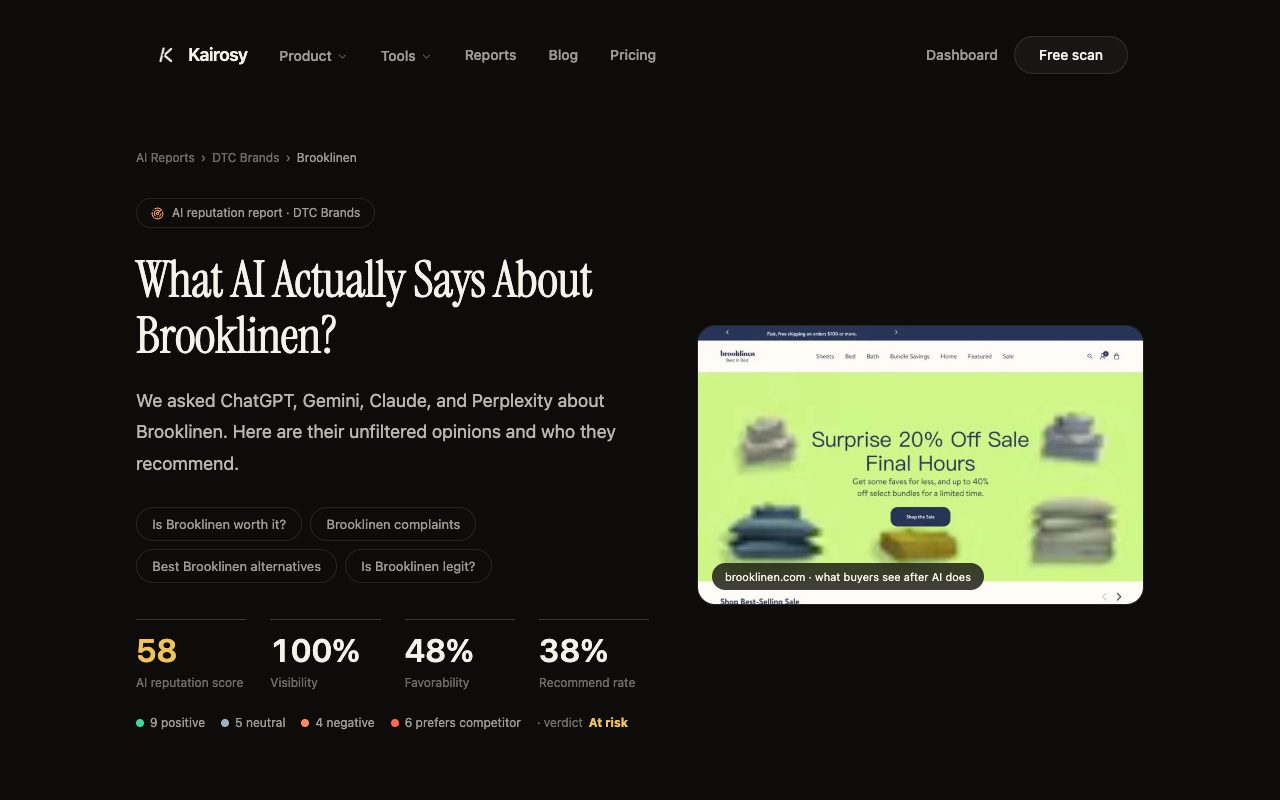
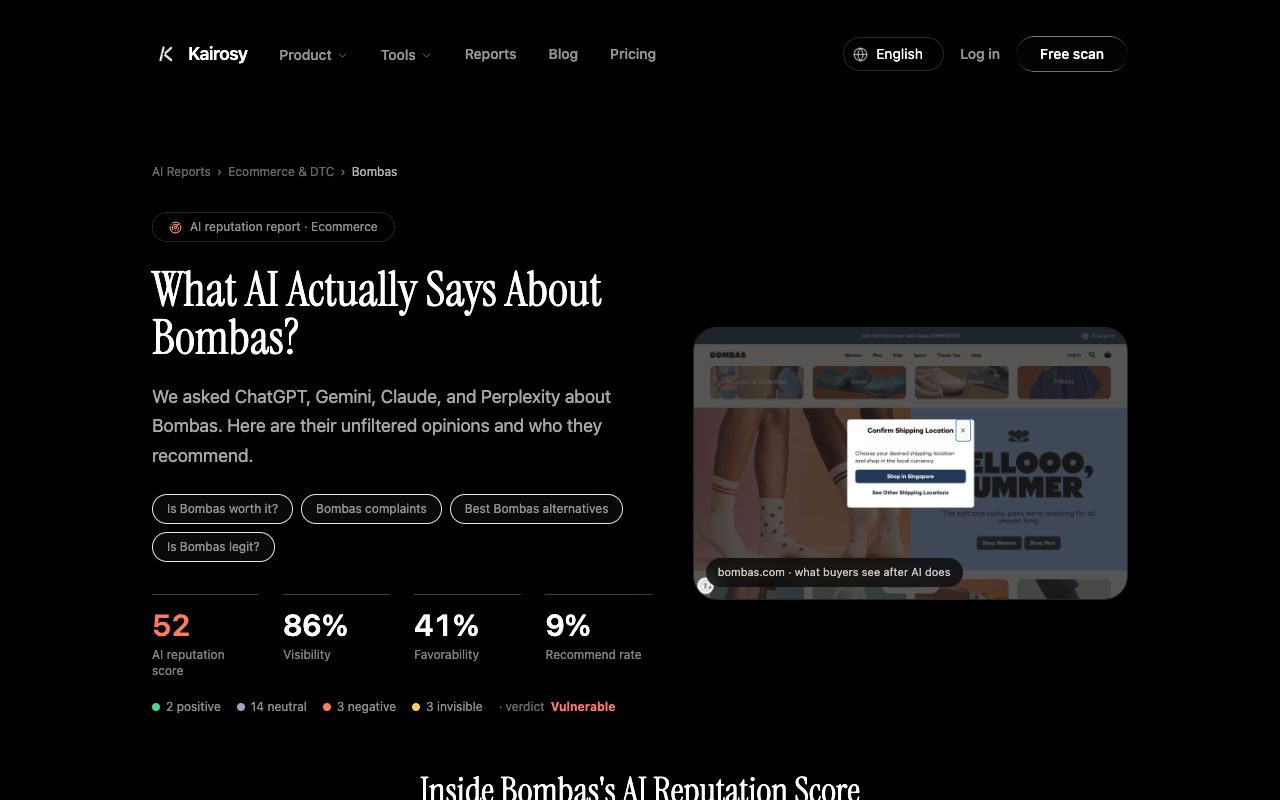
Because the neutral-to-negative default is the norm, not the exception. When Kairosy scanned 11 brands with live public reports (July 2026), not one earned positive AI answers more than 21% of the time, and the "engine can't say anything substantive" rate ran as high as 40% — that's CitizenM's number, a well-reviewed hotel chain. Hedged and hollow answers cost recommendations exactly where buyers now start their research. Using AI for brand reputation work isn't a nice-to-have once your category's buyers ask chatbots — it's where the shortlist gets written.
It matters at every size, but AI reputation management for corporate brands carries extra weight: enterprise buyers research vendors through Copilot and ChatGPT, and a hedged answer in front of a procurement team costs six figures, silently. Smaller brands have the mirror-image opportunity — feed the engines verifiable evidence and out-position bigger rivals whose sources are stale.
How AI Reputation Management Works (the Loop)
The working loop has four stages, and it repeats — models rebuild your narrative continuously, so this is an operating rhythm, not a cleanup project:
- Ask. Put your buyer questions to ChatGPT, Gemini, Claude and Perplexity on a schedule, phrased the way customers phrase them.
- Classify. Label each answer: positive, neutral, wrong, or invisible — and note which competitor gets recommended when you don't.
- Trace. Identify the source behind each bad or hollow answer — a stale Trustpilot review, an outdated spec on your own site, a rival's comparison page.
- Correct. Update your pages, keep structured data accurate (Google's AI features guidance confirms eligibility rides on standard, crawlable content), unblock AI crawlers, and earn fresher third-party coverage that outweighs the bad source. Then re-ask and confirm the shift.
Two free checks support the loop: our Schema Markup Checker confirms the machine-readable facts on your pages parse correctly, and the Reading Level Checker flags dense, jargon-heavy copy that models struggle to quote cleanly.
Which AI Reputation Monitoring Tools Do You Need?
Genuine AI reputation monitoring tools do three things: query the engines with real buyer questions, classify sentiment, and expose the sources behind each answer. That last requirement is the filter — AI reputation management tools that analyze LLM responses and stop at a score can't feed the correction step. Be equally wary of classic suites relabeled for the trend: platforms like Yext have added AI-visibility features worth a look, but most review-monitoring products never read a generated answer at all.
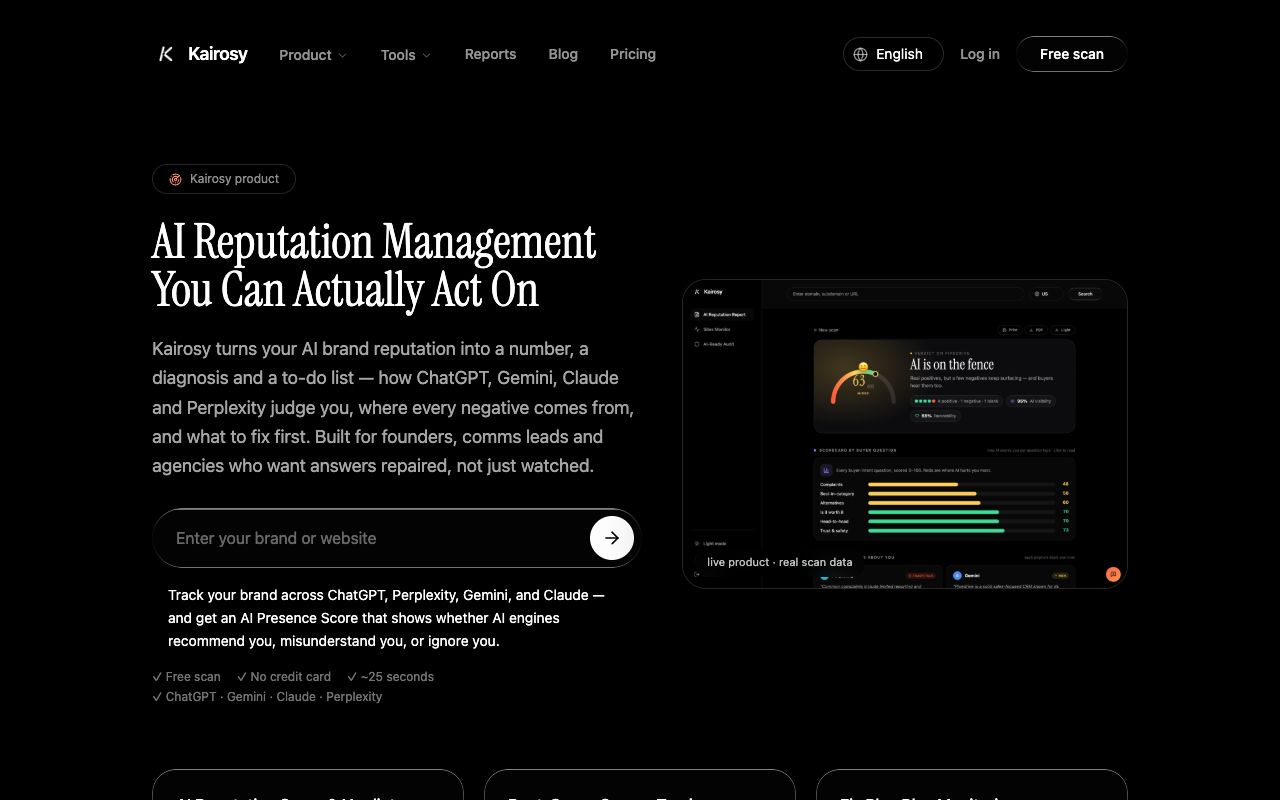
Kairosy was built as this loop in product form — scan, classify, trace to source, suggest the fix — with a free no-card scan to start, and continuous AI reputation management from $29/month. For the full tool-by-tool comparison (Profound at custom Enterprise pricing, AthenaHQ, Otterly and the rest priced and compared), see our companion guide on how to monitor brand representation in AI answer engines — it covers the monitoring workflow step by step; this page is the what-and-why.
What Is AI Reputation Management: FAQs
What is AI reputation management in one sentence?
It's monitoring how AI engines describe and recommend your brand to buyers, then correcting the sources those engines draw from — managing the machine-generated verdict rather than the human-written reviews.
Is AI reputation management just ORM with new tools?
No. ORM manages published content you can point to; AI reputation management manages a verdict that regenerates per question from hidden sources. The measurement (ask the engines), the unit (the answer, not the review) and the fix (correct the source, not reply to it) are all different.
What are AI assistant brand recommendation tracking tools?
Tools that record whether assistants like ChatGPT, Gemini and Perplexity actually recommend your brand for buying-intent questions — not just mention it. The useful ones add sentiment and source tracing, so a bad recommendation comes with the page you need to fix.
Does this matter if my reviews are already great?
Yes — that's the trap. Engines don't average your stars; they echo whichever sources they retrieve, which may be older or thinner than your review profile. Great reviews with a hedging AI is one of the most common patterns in our scans.
How do I start with a budget of zero?
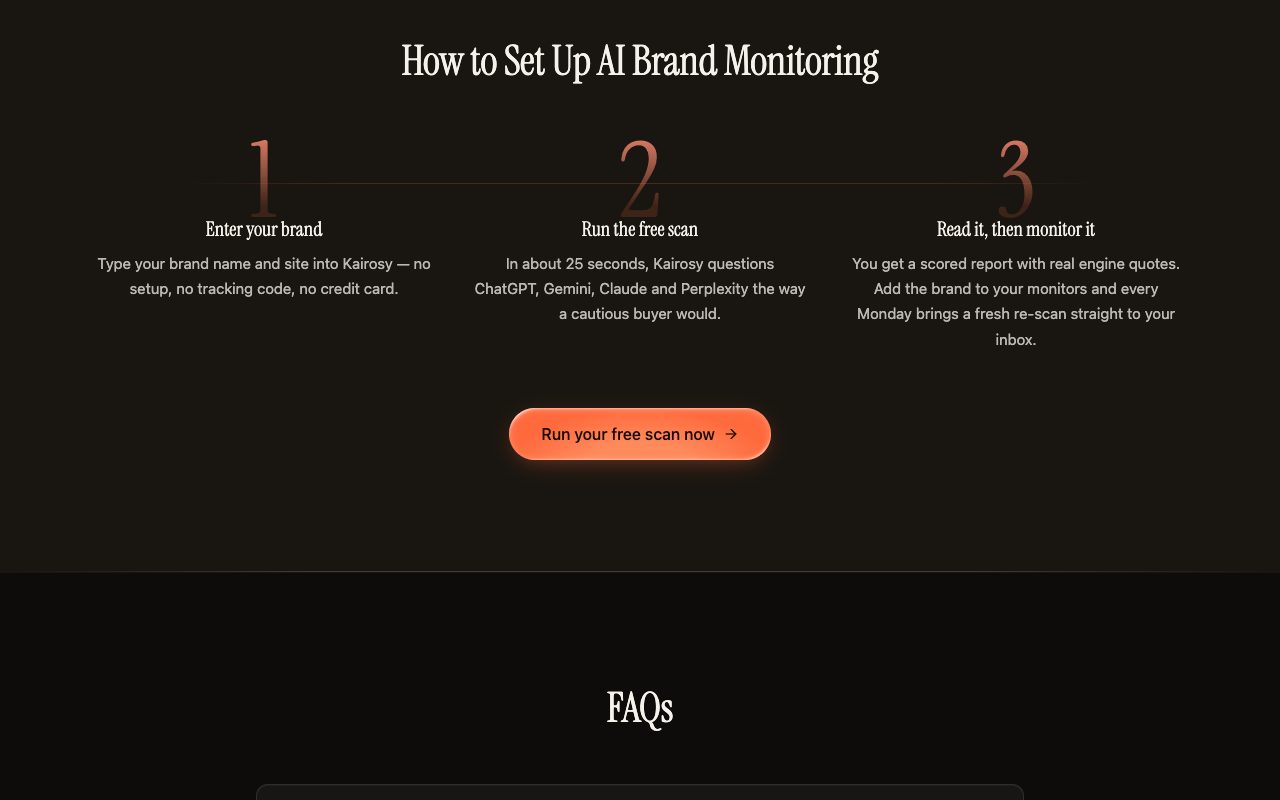
Run a free scan (covers ChatGPT, Gemini, Claude and Perplexity, no card), or do it by hand: ask each engine your five biggest buyer questions monthly, log sentiment and sources, and fix the worst source first. The loop is the same at every budget — tools just run it more often.
The verdict AI gives buyers about your brand is being assembled right now, from sources you haven't checked. Run a free scan to read it — sentiment, competitors and the exact source behind each mention — and start managing the reputation that decides the deal.
See what AI says about your brand
Run a free scan across ChatGPT, Gemini, Claude & Perplexity in about 30 seconds.
Run my free scan