How to Write Content for AI Search in 2026: Brief to Final Draft
To write content for AI search, start from one question a buyer actually types into ChatGPT, Gemini, Claude or Perplexity, answer it in the first sentence, then build the explanation and the dated evidence in paragraphs that still make sense when an engine lifts one of them out on its own. The rest of this guide is that process in order: question, outline, standalone paragraphs, enrichment, editorial checklist, tracking.
This guide covers writing from zero. Auditing an existing page for crawler access, schema or stale third-party listings is covered in how to optimize content for AI search and by the paid AI-Ready Page Audit; those technical checks are not repeated here.
How Do You Pick the Buyer Question Your Content Will Answer?
Pick one question a buyer asks an AI engine at the moment they are deciding, and write the task statement before anything else: "This page answers [question] for [reader] who is deciding [what]."
The useful questions are rarely the keyword. They sound like "is Northwind worth it for a two-person shop," "what do people complain about with Northwind" and "Northwind vs Contoso for contractors." Collect them from sales calls, support tickets and review threads, or by asking the engines and reading the answers back.
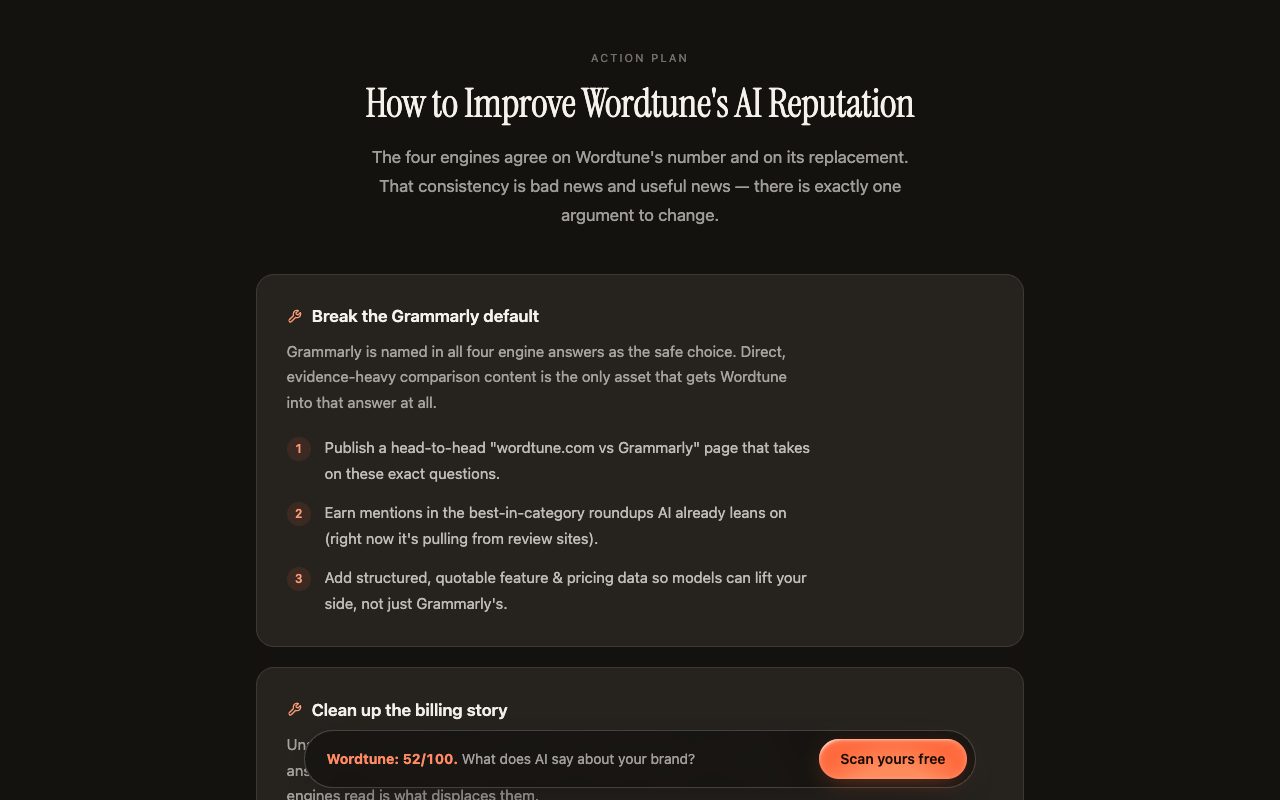
Kairosy's public scan of Jasper (2026-08-05, 24 answers) shows why the question comes first. Asked about the most common complaints, ChatGPT and Gemini both opened with billing and cancellation; Claude and Perplexity each named Writesonic as the closest replacement, citing its SEO and AI-visibility features. The published fix was a head-to-head "Jasper vs Writesonic" page with quotable feature and pricing data: content written for the exact question the engines were already answering.
Two cautions. Kairosy has no prompt-volume data, so choose by how your buyers talk. And write down the reader and the decision: a US freelancer and a UK agency owner get different answers to "is it worth it."
How to Structure Content for AI Search: Conclusion, Explanation, Evidence
Structure the page, and every section inside it, in three layers: the conclusion with its condition, the explanation of why it holds, then the evidence. This is the newsroom inverted pyramid, and Nielsen Norman Group's article on it (Amy Schade, 2018-02-11) puts the rule in one line: "Start content with the most important piece of information so readers can get the main point, regardless of how much they read."
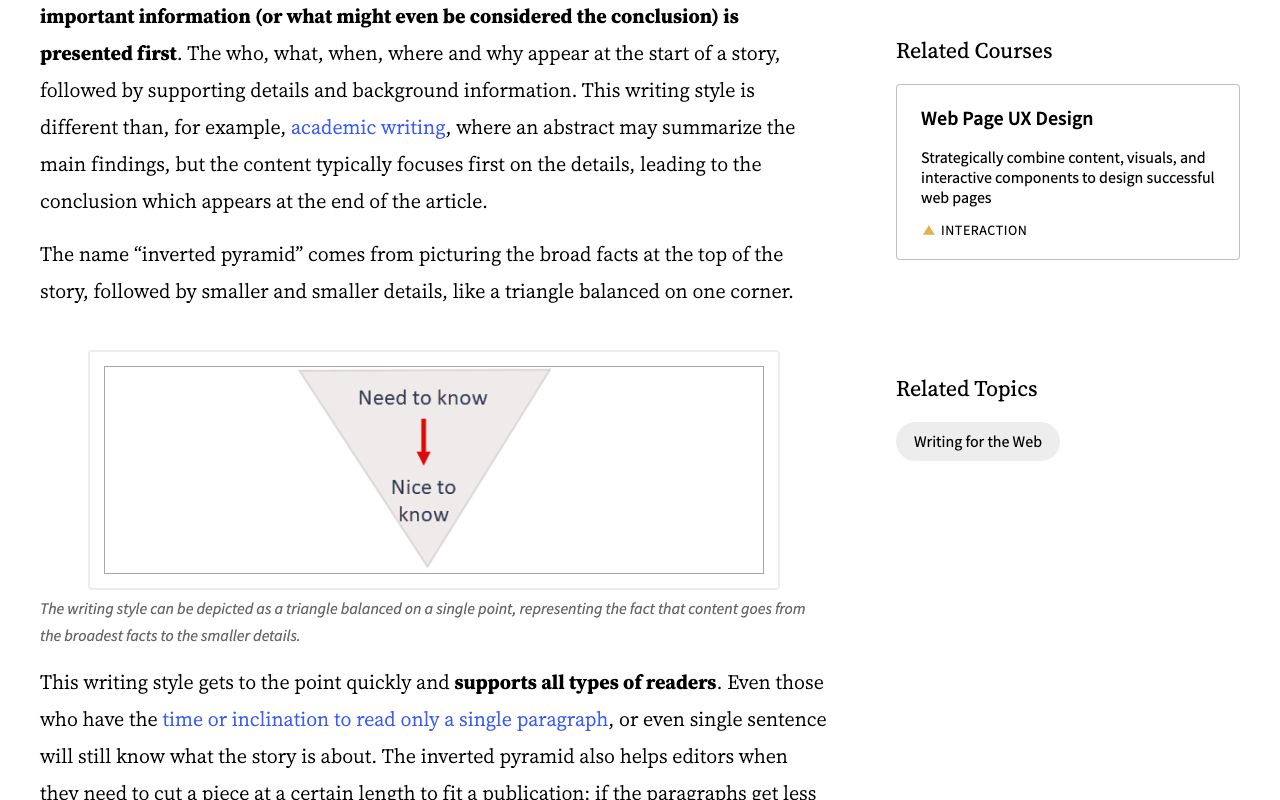
The same shape serves an engine that is summarizing. A retrieval step reads a passage, not your whole argument, and the sentence it quotes is usually the first one that states a claim. GOV.UK's content-structure guidance says the same for human readers: "Put the most important information first."
A working outline for the fictional Northwind example from step 1:
- H2: Does Northwind Payroll pay contractors in Canada? Conclusion, with its condition.
- H2: How contractor payments work on each plan. Explanation: mechanism, limits, who it is for.
- H2: Northwind vs Contoso Pay for Canadian contractors. Evidence: the comparison table.
- H2: What it costs, verified on a stated date. Evidence: fees with their source.
- H2: Northwind contractor payments FAQs. The follow-up questions sales hears.
Each H2 is a question or a frontloaded statement, each answers exactly one thing, and the answer sits in the first sentence under it. That is how to structure content for AI search without a paragraph of filler.
Can Each Paragraph Stand Alone When an Engine Lifts It Out of Context?
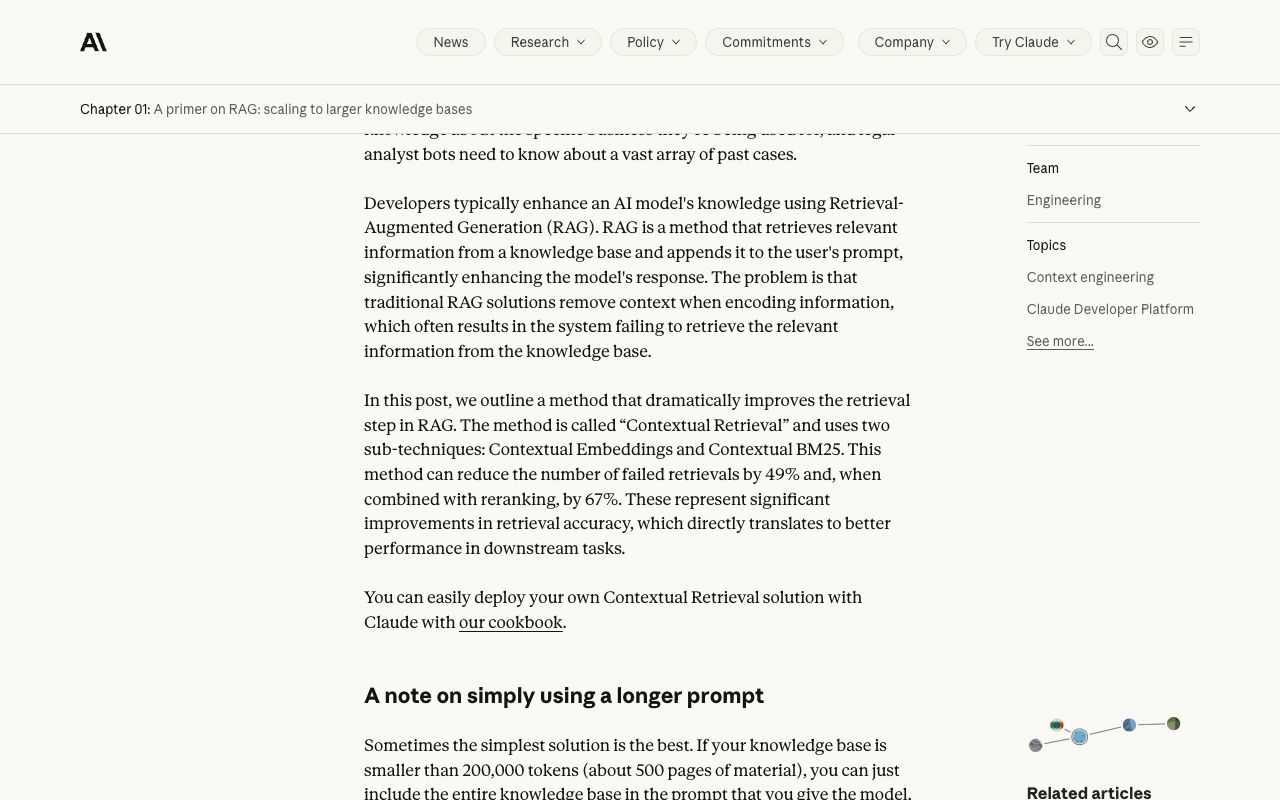
Write every paragraph as if it will be read with nothing around it, because that is how retrieval systems handle it. Anthropic's engineering post on contextual retrieval (2024-09-19) gives the canonical example: a chunk that says "The company's revenue grew by 3% over the previous quarter" is useless alone, because it names neither the company nor the quarter. Their fix was to prepend a short context sentence to every chunk before indexing it, which cut retrieval failures from 5.7% to 3.7%; adding contextual BM25 took the failure rate to 2.9%, and reranking to 1.9%.
You do not control how ChatGPT or Perplexity chunk your page, so write the context in:
- Name the subject in full in the first sentence: "Northwind Payroll's Team plan," not "the plan" or "it."
- Put the qualifier in the same sentence as the claim: who it applies to, which plan, which country, as of which date.
- Never open a paragraph with a pronoun or "this," because the antecedent lives in the paragraph the engine did not retrieve.
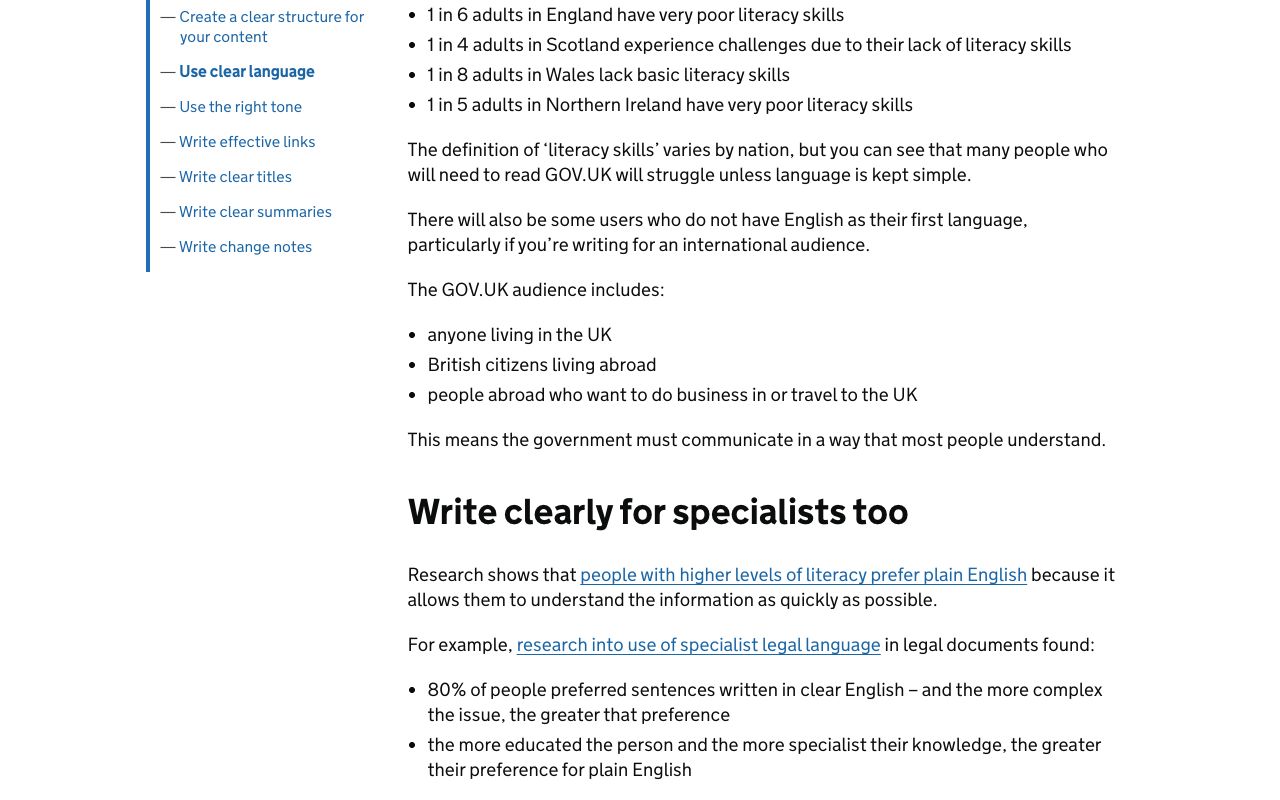
- Keep it short. GOV.UK's clear-language guidance says to split sentences over 25 words and keep paragraphs to no more than 5 sentences.
The test is mechanical: paste one paragraph into an empty document and ask whether a stranger could tell what it is about, who it applies to and when it was true. Run the draft through the free reading level checker too.
Which Details Make Content Worth Citing: Comparisons, Qualified Facts, First-Hand Evidence?
To write content for AI search that gets cited, add the three things the research rewards and buyers ask for: named comparisons, facts with conditions and dates attached, and evidence you generated yourself. The GEO study (Aggarwal et al., KDD 2024, 10,000-query benchmark) found that pages edited to add statistics, quotations and cited sources gained the most visibility in generative answers, while keyword stuffing scored slightly below the untouched baseline. The benchmark was the authors' own rather than live engines, so treat it as directional.
Specific comparisons
Name the competitor and say where it wins. "Contoso Pay supports 40 countries to Northwind's 12, and Northwind's per-payment fee is lower above 50 payments a month" (example values) is a citable sentence; "we compare favorably with leading alternatives" is not. A flattery-only comparison leaves the engines building their own from third-party pages, as they did with Jasper and Writesonic.
Qualified facts
Every number carries three qualifiers: scope (which plan, which market), the date it was verified, and the source. "$2 per payment on the Team plan in the US, verified 2026-10-21 on the pricing page" survives six months of model updates better than "$2 per payment," because the date says how stale it might be.
First-hand evidence
Google's "Creating helpful, reliable, people-first content" guidance (updated 2026-10-05) asks whether content "clearly demonstrate[s] first-hand expertise" and provides "original information, reporting, research, or analysis." For a from-zero page that means your own timed test with its date, your own support data, or a screenshot of the thing itself.
Picking the format
"Compared to what" wants a table. "How do I" wants numbered steps with one action each. "What is" wants a definition paragraph that stands alone.
What Should the Editorial Checklist Catch Before You Publish?
Run a human editing pass against a fixed checklist, because the failures that keep a page out of AI answers are small and repetitive. The editor notes in the next section cite this checklist by item number.
Paragraph checks:
- P1. The claim is in the first sentence, not the last.
- P2. The subject is named in full (brand, product, plan), not "it" or "the tool."
- P3. The condition sits in the same sentence as the claim (plan, market, user type, date).
- P4. The paragraph opens without a pronoun or "this" and runs five sentences or fewer.
- P5. A stranger reading only this paragraph could say what it is about, who it is for and when it was true.
Source checks:
- S1. Every number has a named source and a verification date in the text.
- S2. Every price or limit was read on the vendor's own page today, not copied from a roundup.
- S3. Every quote is attributed to a named platform or person, with a link.
- S4. Every competitor claim names the competitor and includes one point where they win.
- S5. Example figures are labeled as examples, so neither a reader nor a model mistakes them for measurements.
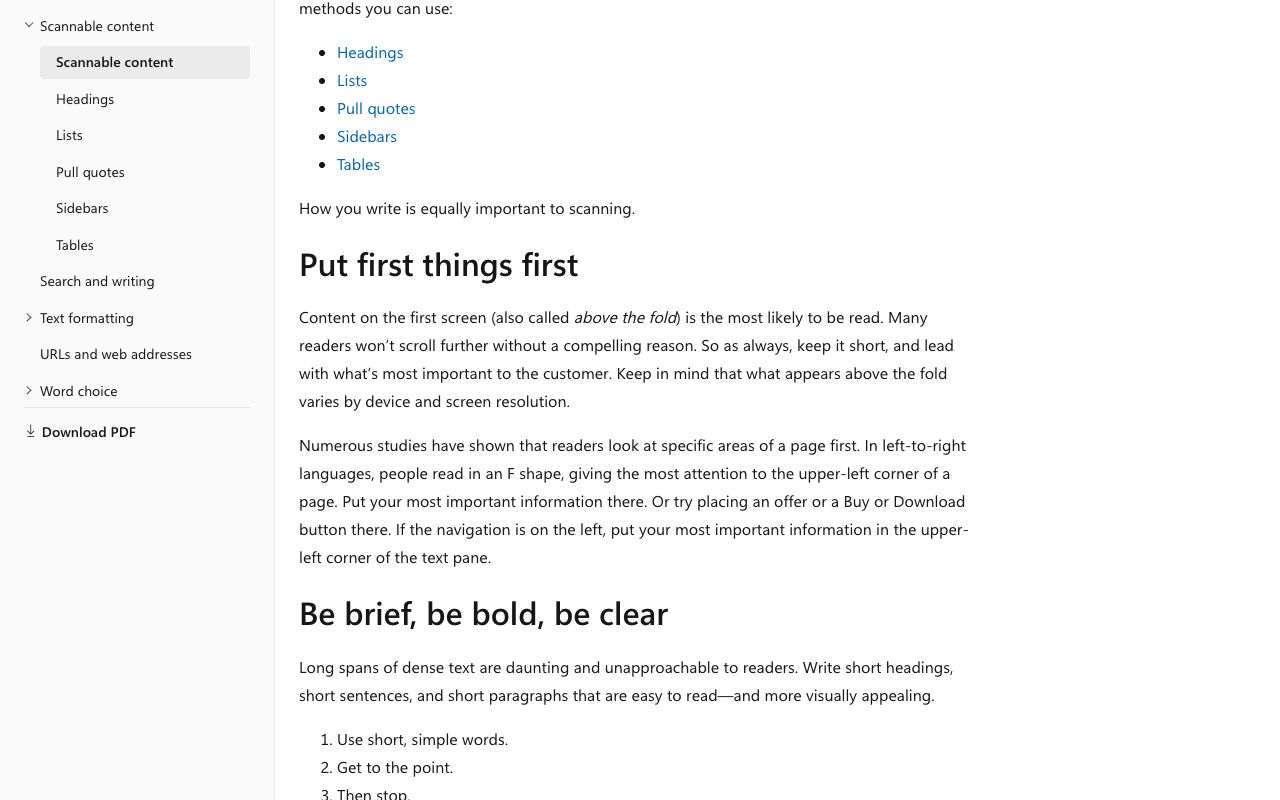
Microsoft's style guide page on scannable content (updated 2026-10-15) adds two editing rules: place the important words "near the beginning of headings, table entries, and paragraphs," and when comparing things, "use parallel sentence structures to describe each thing."
The sourced rules, in one place:
| Rule | Figure | Source (checked 2026-10-21) |
|---|---|---|
| Lead with the conclusion | Most important information first | Nielsen Norman Group, inverted pyramid (2018); GOV.UK clear-structure guidance |
| Sentence length | Split sentences over 25 words | GOV.UK, "Use clear language" |
| Paragraph length | No more than 5 sentences; "three to seven lines" | GOV.UK, "Use clear language"; Microsoft Style Guide, scannable content |
| Context inside each passage | Retrieval failures 5.7% to 3.7% (context added), 2.9% (+ BM25), 1.9% (+ reranking) | Anthropic, "Introducing Contextual Retrieval" (2024-09-19) |
| Statistics, quotes, cited sources | Largest gains among the edits tested; keyword stuffing below baseline | Aggarwal et al., "GEO: Generative Engine Optimization," KDD 2024 |
What Does AI Friendly Content Creation Look Like From Brief to Final Draft?
Here is one topic carried through the four stages you go through when you write content for AI search. Everything below is fictional: Northwind Payroll and Contoso Pay do not exist, and every figure is an example value, not a measurement.
Stage 1: the brief
- Question: "Does Northwind Payroll pay contractors in Canada?"
- Reader: a US agency owner with 8 contractors choosing between Northwind and Contoso Pay.
- Conclusion to defend: yes on the Team and Scale plans, not on Starter.
- Facts to verify today: plan availability, per-payment fee, payout time, CAD support.
- Comparison: Contoso Pay, including the point where Contoso wins.
- First-hand evidence: one timed test payment, dated.
Stage 2: the first draft
Yes! It supports contractors in lots of countries, including Canada, and payments are fast and affordable. This makes it a great choice compared to other leading solutions. Pricing starts low and scales with your team.
A draft like this can come from a writer or from a tool; Kairosy's Content Creation page, for instance, produces drafts from the questions a scan surfaced. Either way the editor pass is the same.
Stage 3: the editor's notes
- "It" opens the paragraph and the product is never named (P2, P4).
- "Lots of countries," "fast," "affordable," "starts low": no figures, no dates, no source (S1, S2).
- "Other leading solutions" names no competitor and concedes nothing (S4).
- The condition is missing: which plans actually include Canada (P3).
- No first-hand evidence; the timed test from the brief is absent.
Stage 4: the final paragraph
Northwind Payroll pays contractors in Canada on its Team and Scale plans, but not on the Starter plan, as of 2026-10-21 (example values from a fictional pricing page). Payments settle in CAD within two business days at a flat $2 per payment on the Team plan; in our own test payment on 2026-10-20 the funds arrived in 31 hours. Contoso Pay covers 40 countries to Northwind's 12 and is the better choice if your contractors are outside North America; for a US agency paying Canadian contractors only, Northwind's flat fee is lower above roughly 50 payments a month.
Lifted out of the page, the final paragraph still says what, for whom, under which condition, as of when, and against which rival.
How Do You Track AI Performance After the Content Goes Live?
After publishing, re-ask the exact question from your brief in each engine and record four things per answer: brand mentioned, your new URL cited, you recommended, or a competitor recommended instead. One run tells you almost nothing. SparkToro's study of 2,961 prompt runs (Rand Fishkin, 2026-01-28) found under a 1-in-100 chance that two consecutive answers list the same brands, so judge the page on rates across repeated runs, not on a single screenshot.
Kairosy's workspace does the repetition for you. Prompt Tracking re-runs your tracked questions every day and shows a per-engine answer card with a 7-run history (mentioned, not mentioned, competitor recommended); Source Analysis lists which domains and URLs the answers cite; each project gets a deep rescan every Monday and a weekly email that flags score drops, a competitor being preferred, an engine flipping and new negative keywords. There are no real-time alerts, no prompt-volume numbers and no Google rank tracking. The AI brand monitoring page covers the setup.
Success for a from-zero page, in the order it arrives: your URL appears in the cited sources for the question; an engine repeats a specific figure from your paragraph; the competitor-recommended rate on that prompt falls. Give it weeks, and update the date whenever a figure changes.
Write Content for AI Search FAQs
How long should content for AI search be?
As long as the question needs. The research rewards specificity and passages that stand alone, not length. A 600-word page that answers one buyer question with dated facts beats a 3,000-word page that circles it.
Should every heading be a question?
Use the buyer's question when the section answers one, and a frontloaded statement otherwise. Either way the heading and the first sentence under it should form a quotable answer.
Can I use AI to write content for AI search?
To draft, yes, as the four-stage example shows. The editor pass is where the page is made: naming the entity, attaching dates and sources, adding the competitor and the first-hand test. A raw draft fails P2, S1 and S4 almost every time.
How soon will an AI engine cite a new page?
No engine publishes a timeline. Perplexity and ChatGPT search read the live web, so a crawlable page can be cited within days; models answering from training data change on their own release cycles.
What is the difference between writing from zero and optimizing an existing page?
To write content for AI search from zero, you choose the question, the structure and the evidence before a word exists. Optimizing an existing page is an audit of crawler access, visible text, structured data and third-party listings, covered in the companion guide on optimizing content for AI search.
See what AI says about your brand
Run a free scan across ChatGPT, Gemini, Claude & Perplexity in about 30 seconds.
Run my free scan