How to Optimize Content for AI Search in 2026: A Page-Level Fix Guide
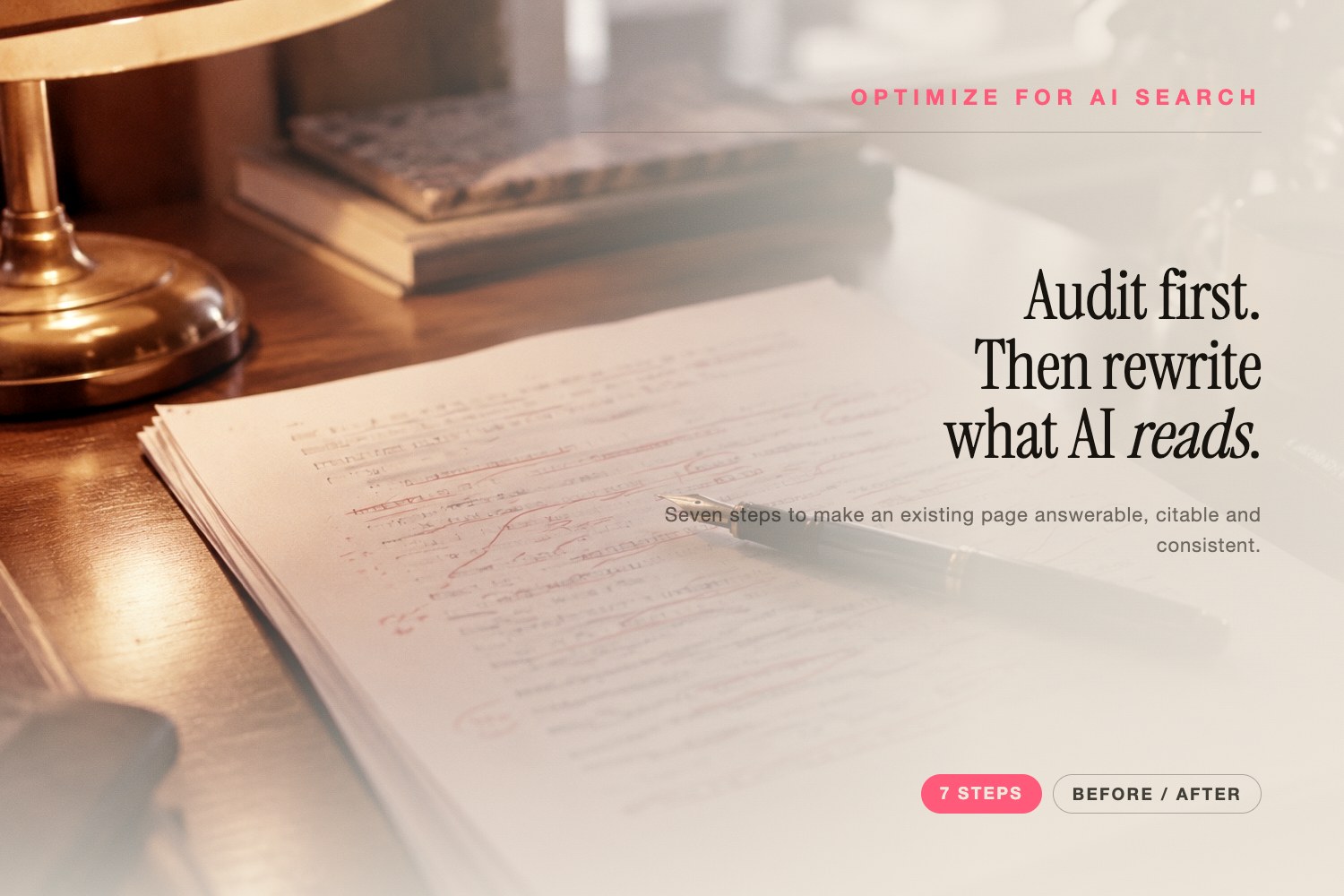
To optimize content for AI search, start with a page you already have: audit it against the buyer questions it should answer, confirm crawlers can fetch and quote it, fill the factual gaps, make each section stand alone, add structured data that matches the visible text, fix the third-party pages the engines cite, then re-run the same questions. Every fix below is tagged official requirement (a vendor says so in writing), reasonable practice (backed by a published study or by how retrieval works) or untested assumption (plausible, no public evidence).
The tags matter because the official list is short. Google's "AI features and your website" page, checked 2026-10-21, says there are no additional requirements to appear in AI Overviews or AI Mode beyond being indexed and snippet-eligible, and no need for new machine-readable files, AI text files or special schema.org markup. This guide is page-level: fixes to an existing URL, not writing from zero.
How Do You Audit an Existing Page Against the Buyer Questions It Should Answer?
Pick one URL and write down the three to eight questions a buyer would ask ChatGPT, Gemini, Claude or Perplexity that this page should answer. Use the buyer's words: "is Northwind's free plan enough for a two-person shop," not "Northwind pricing."
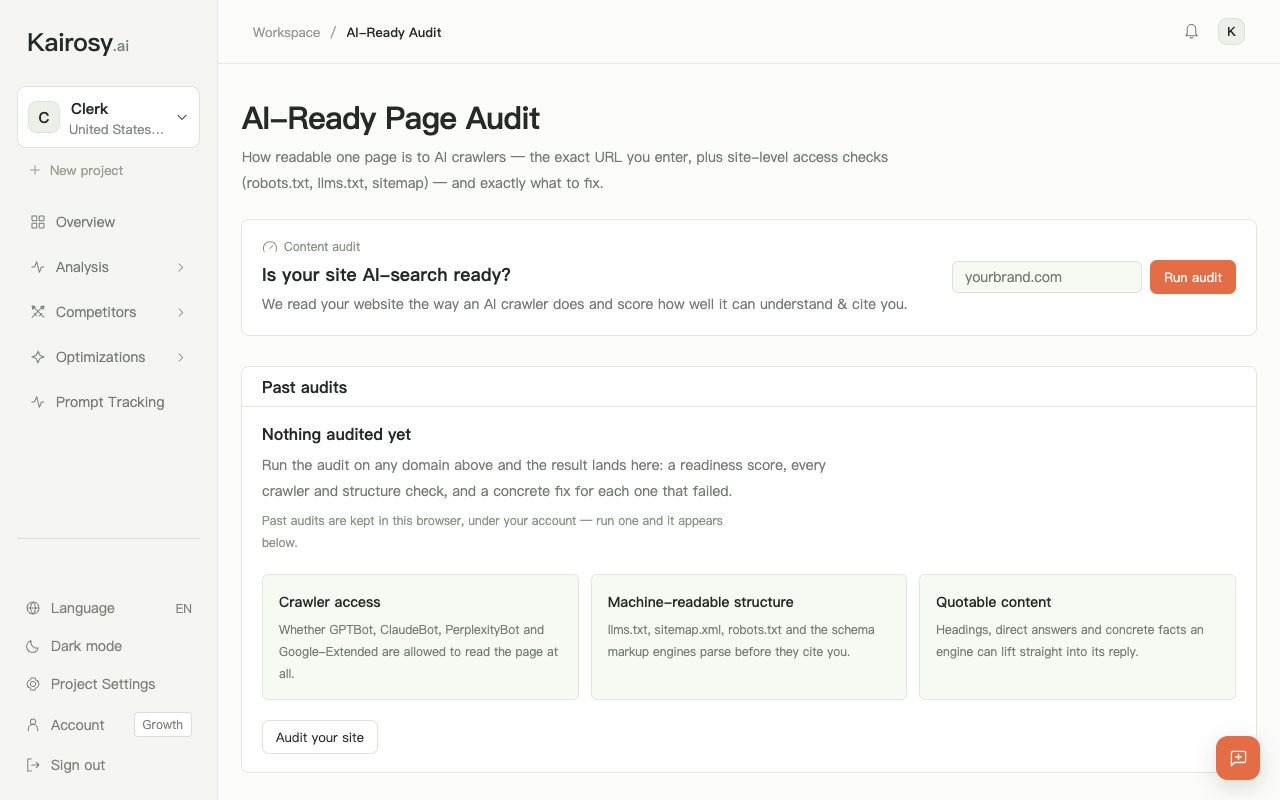
Ask each question in two engines and record three things per answer: brand mentioned, this URL cited, which URLs were cited instead. That table is your baseline, and it says whether the problem is access (nobody cites you), content (cited but misquoted) or competition (a review site or rival owns the answer). For a scored version, Kairosy's paid AI-Ready Page Audit checks crawler access, readability, structured data, citability and trust on one page and returns a ranked fix list.
Two gates before you touch copy. Is the page indexed? If not, it is ineligible for AI Overviews under Google's own rule. Is the content text in the HTML, not only a PDF, an image or a JavaScript bundle? Google asks that important content be "available in textual form." Both are official requirements.
Can AI Crawlers Reach the Page? Crawl, Index, Visible Text and Preview Controls
Each engine fetches the web with several user agents, and the token that controls search appearance is usually not the one people block. From the vendors' own documentation, checked 2026-10-21:
| User agent | Vendor says it is for | Effect of a robots.txt Disallow |
|---|---|---|
| OAI-SearchBot | Surfacing sites in ChatGPT search | Drops you from ChatGPT search answers; OpenAI recommends allowing it |
| GPTBot | Content that may train OpenAI models | Training opt-out; not tied to search appearance in OpenAI's doc |
| Claude-SearchBot | Claude search result quality | Blocks the search crawler |
| PerplexityBot | Surfacing sites in Perplexity, not training | Drops you from Perplexity results |
| Google-Extended | Gemini training and grounding | Google: no effect on Search inclusion or ranking |
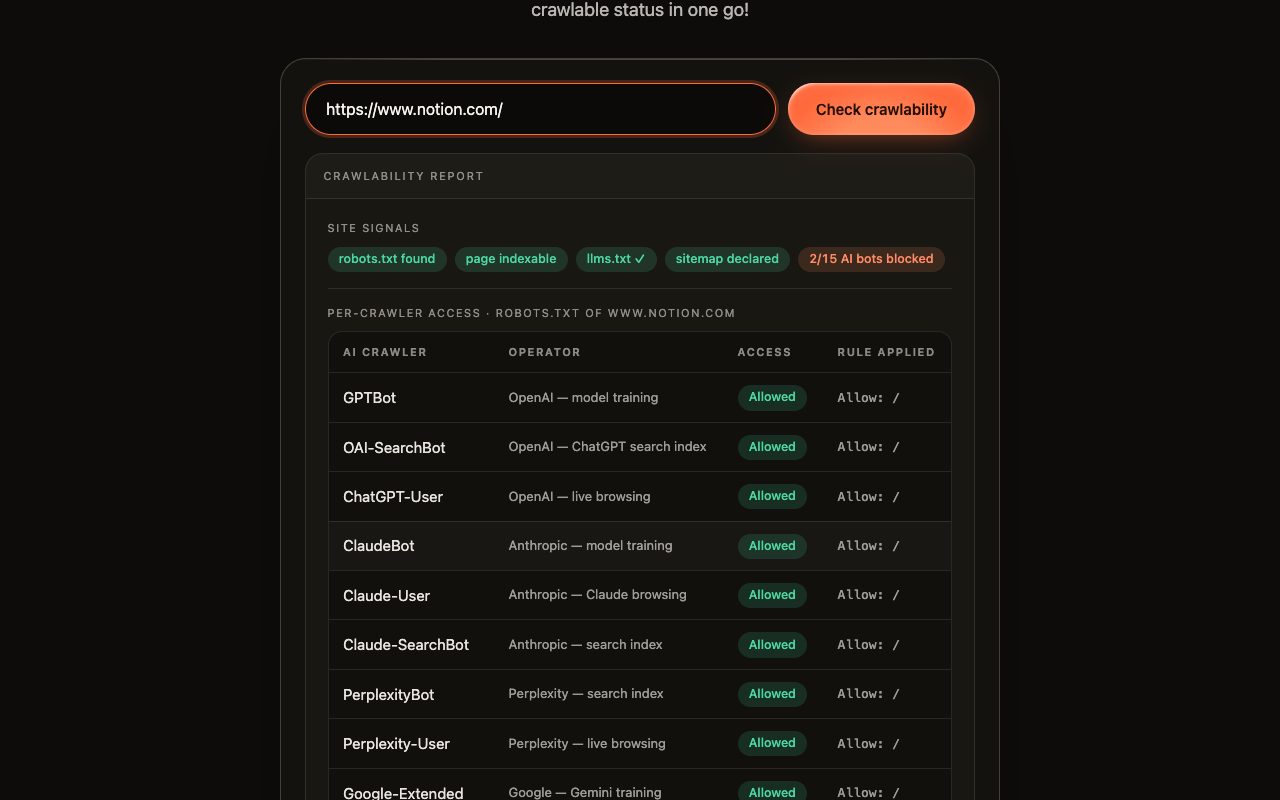
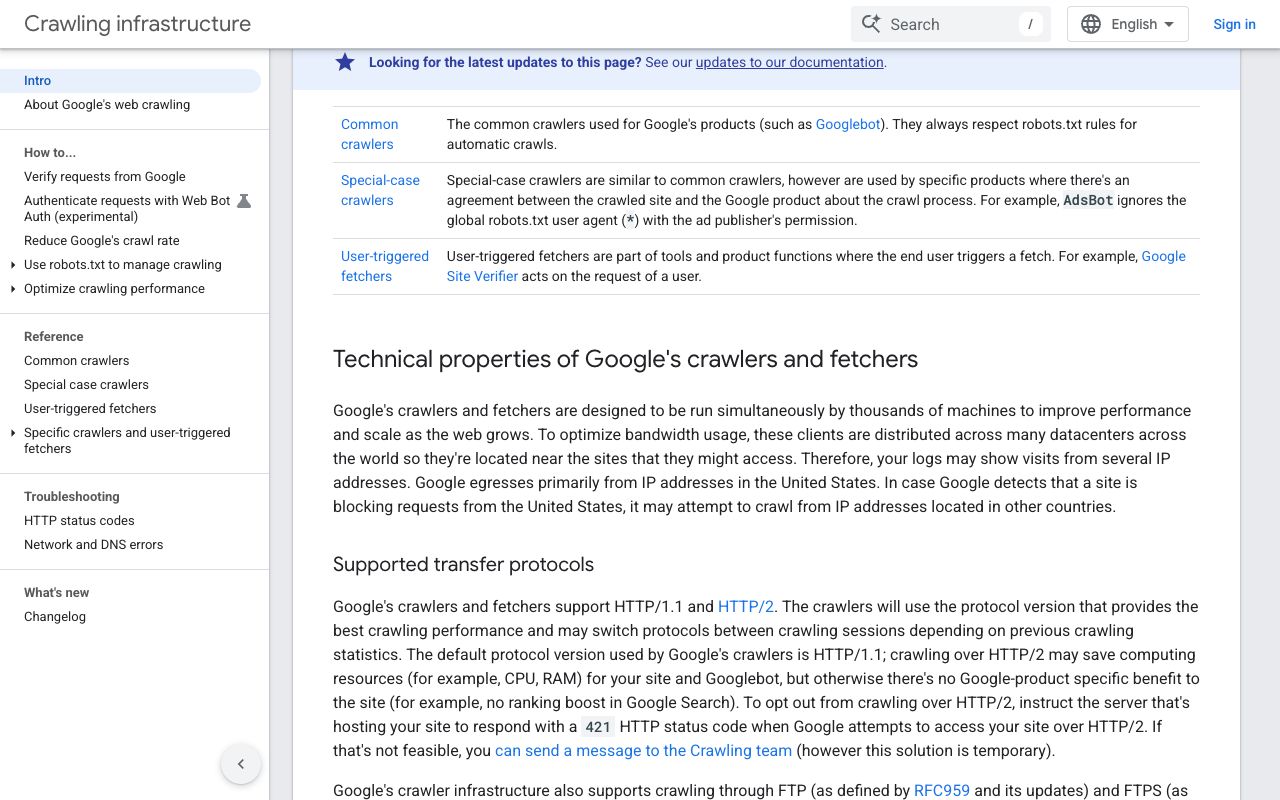
Sources: OpenAI's bots page, Anthropic's crawler article, Perplexity's bots guide and Google's crawler list. ClaudeBot is Anthropic's training token, and each vendor also runs a user-initiated fetcher (ChatGPT-User, Claude-User, Perplexity-User) that may ignore robots.txt. So a WAF rule or copied "block all AI" template that catches OAI-SearchBot, Claude-SearchBot or PerplexityBot is a self-inflicted outage, while a GPTBot or Google-Extended disallow is a licensing decision that neither vendor's doc ties to search. The free AI crawl checker tests robots.txt, meta robots and HTTP headers per token and names the rule that blocked it.
Preview controls are the second official lever. Google states that nosnippet, data-nosnippet, max-snippet and noindex limit what its AI features can show. A stray max-snippet or a data-nosnippet wrapper around your pricing table quietly hands the answer to a competitor. Check the rendered HTML; CDNs and plugins inject these.
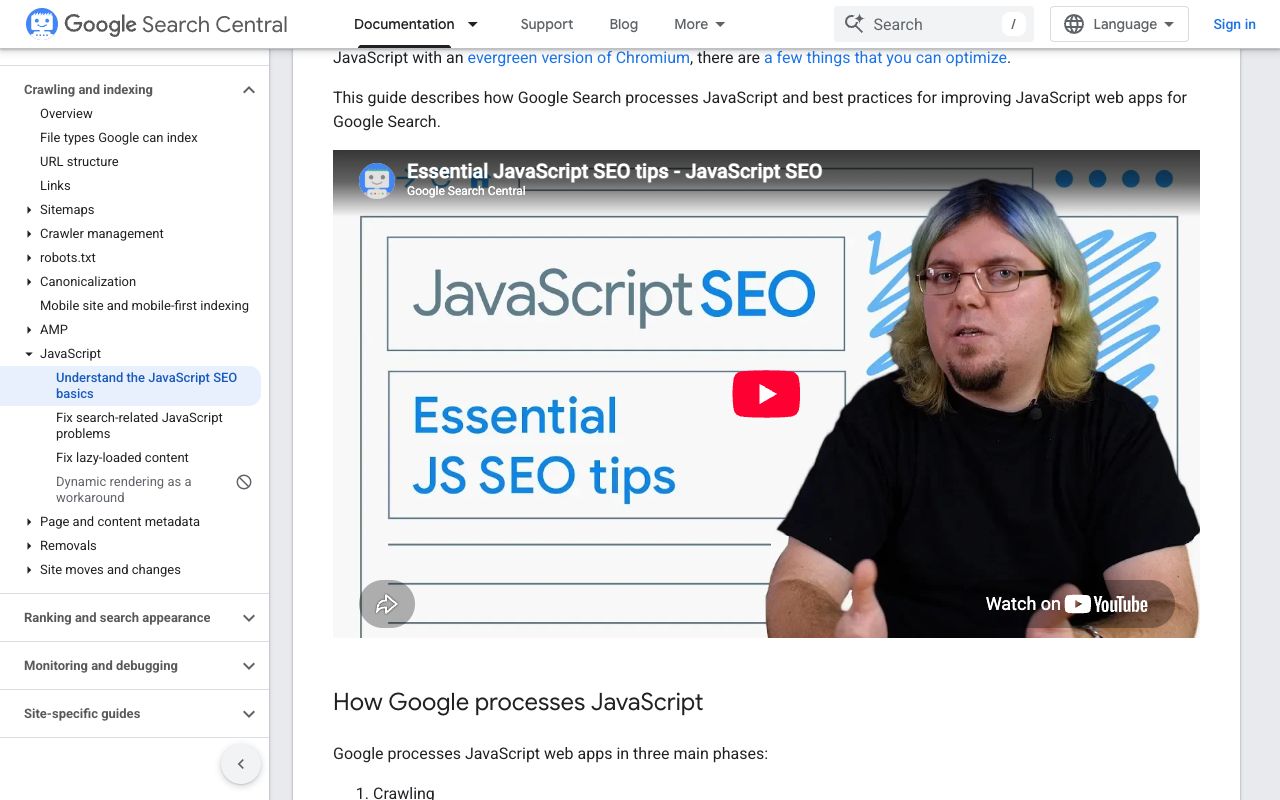
Rendering is the third. Google's JavaScript guidance says server-side or pre-rendering "is still a great idea" because "not all bots can run JavaScript." Tag: official for text presence, reasonable practice for SSR.
Which Answers, Context, Product Facts and Evidence Does the Page Still Lack?
For each baseline question, find the exact sentence on the page that answers it. Existing pages fail in three ways: the answer is implied rather than stated, the entity context is missing (what the product is, who it is for), or the facts are undated and unsourced.
There is published evidence on which additions help. The GEO paper by Aggarwal et al., presented at KDD 2024 (arXiv 2311.09735), tested nine page edits against generative engines: citing sources, adding quotations and adding statistics produced a 30–40% relative improvement on its Position-Adjusted Word Count metric and 15–30% on Subjective Impression, while keyword stuffing offered "little to no improvement." Tag: reasonable practice; the study used its own benchmark, not live engines, and results varied by domain.
For the page you are editing:
- State the facts a buyer needs (price range, plan limits, platforms, regions) with the date verified.
- Attribute every number to a named, linked source, including your own data ("our 2026 survey, n=412").
- Add the comparison a buyer will ask for anyway, including the case where a rival wins.
The last point is the one teams resist. In Kairosy's public scan of Surfer SEO (2026-08-05), Claude and Perplexity each recommended a competitor, and the suggested fix was a factual Surfer-vs-rival comparison page with structured pricing, because the engines were building that comparison from third-party pages (per-engine answers).
How Should You Rework Headings, Standalone Paragraphs, Tables and Internal Links?
Engines retrieve passages, not pages. The goal is that any 60–150 word block, lifted out on its own, still says what it is about, who it applies to and what the claim is. Here is a before-and-after on a real section of Kairosy's own post GEO vs SEO in 2026 (published 2026-05-24; no update date, no table, no FAQ). The section "Your content has a second reader" opens:
"Your best content now serves two audiences: humans, and the models that retrieve and summarize it."
Standalone, it has a magazine heading no buyer would type, no named example, no number, no source, no date. A rewrite that keeps the idea but makes the block self-contained:
Who is the second reader of your content, and what does it need? The second reader is the retrieval step inside ChatGPT, Gemini, Claude and Perplexity, which summarizes a short passage without the rest of your page. It needs the claim in the first sentence, the entity named in full ("Northwind's Starter plan," not "the plan"), a dated source for each figure, and a table wherever a buyer would ask "compared to what?" In the KDD 2024 GEO study, adding statistics, quotations and cited sources lifted visibility 30–40% on the primary metric; keyword density did not.
The change list, tagged. The last column is what to compare in step 7; any expected result is an example value until you re-test.
| Change | Why | Tag | Measure by |
|---|---|---|---|
| Heading becomes the buyer's question | Matches the prompt's phrasing | Reasonable practice | Citation of this URL for that question |
| Direct answer in sentence one | Snippet text is what AI features draw from | Official (text) + practice (position) | Is the quoted passage the answer sentence |
| Entity named in full each paragraph | Lifted passages lose antecedents | Reasonable practice | Brand mention rate across the set |
| Dated, linked statistic | Top-three method in the KDD 2024 study | Reasonable practice | Share of answers repeating the figure |
| Comparison table | Buyers ask "versus" | Untested assumption for AI | Competitor-recommended rate on versus prompts |
Internal links are structure: link the rewritten block to the full pricing table and to the follow-up answer, with the question as anchor text, so a crawler that landed on one passage finds the context you removed.
What Structured Data Should You Add, and Does It Match the Visible Content?
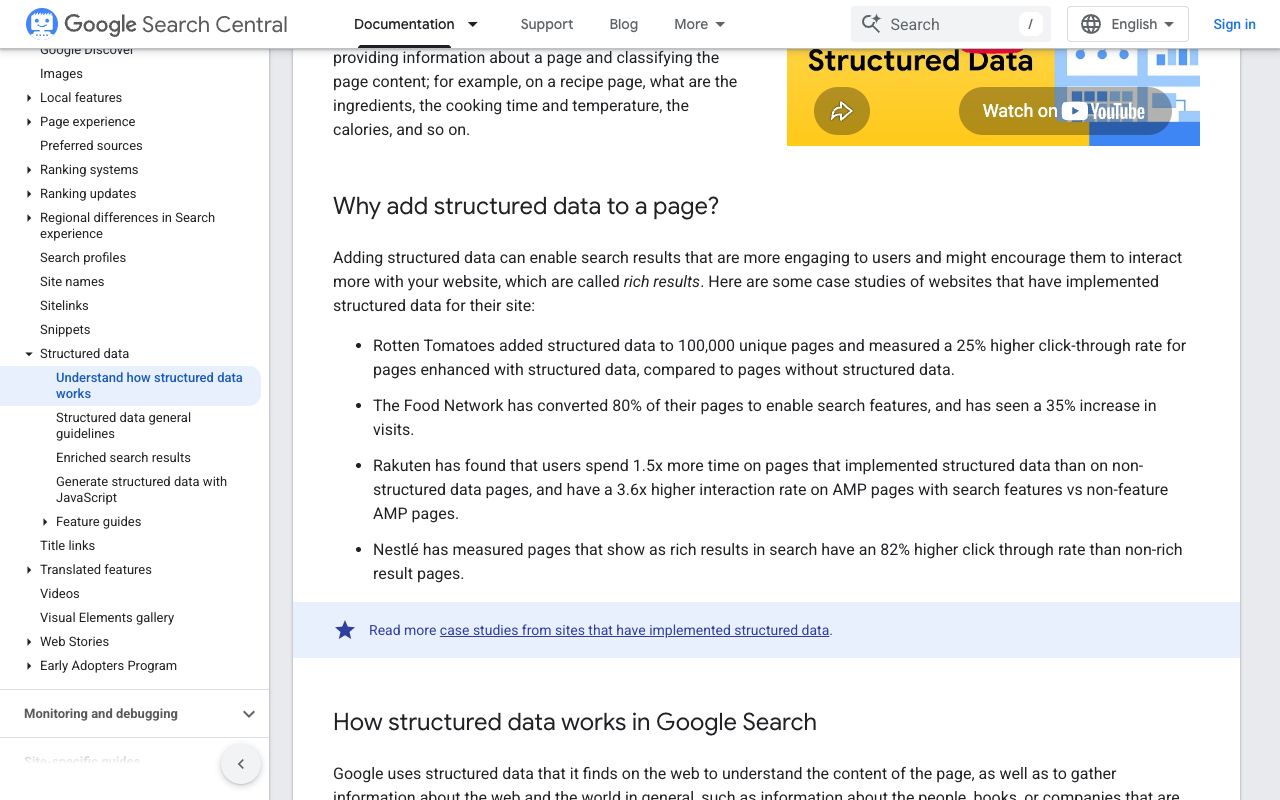
Google says no special schema.org markup is needed for AI features, and its structured data policies require markup to be "a true representation of the page content" and forbid marking up content "that is not visible to readers of the page." So schema is a reasonable practice for the types your page genuinely is (Article, Product, Organization, FAQPage), and a policy violation the moment it says something the visible text does not.
Validate twice. Run the page through the Schema Markup Validator or the free schema markup checker for syntax and required-property errors, then check by hand that every price, ratingValue, dateModified and FAQ answer in the JSON-LD appears, word for word, where a reader can see it. Stale schema (a 2024 dateModified on a page updated today) is the common failure. For what Google still does with FAQPage, see FAQ schema for SEO.
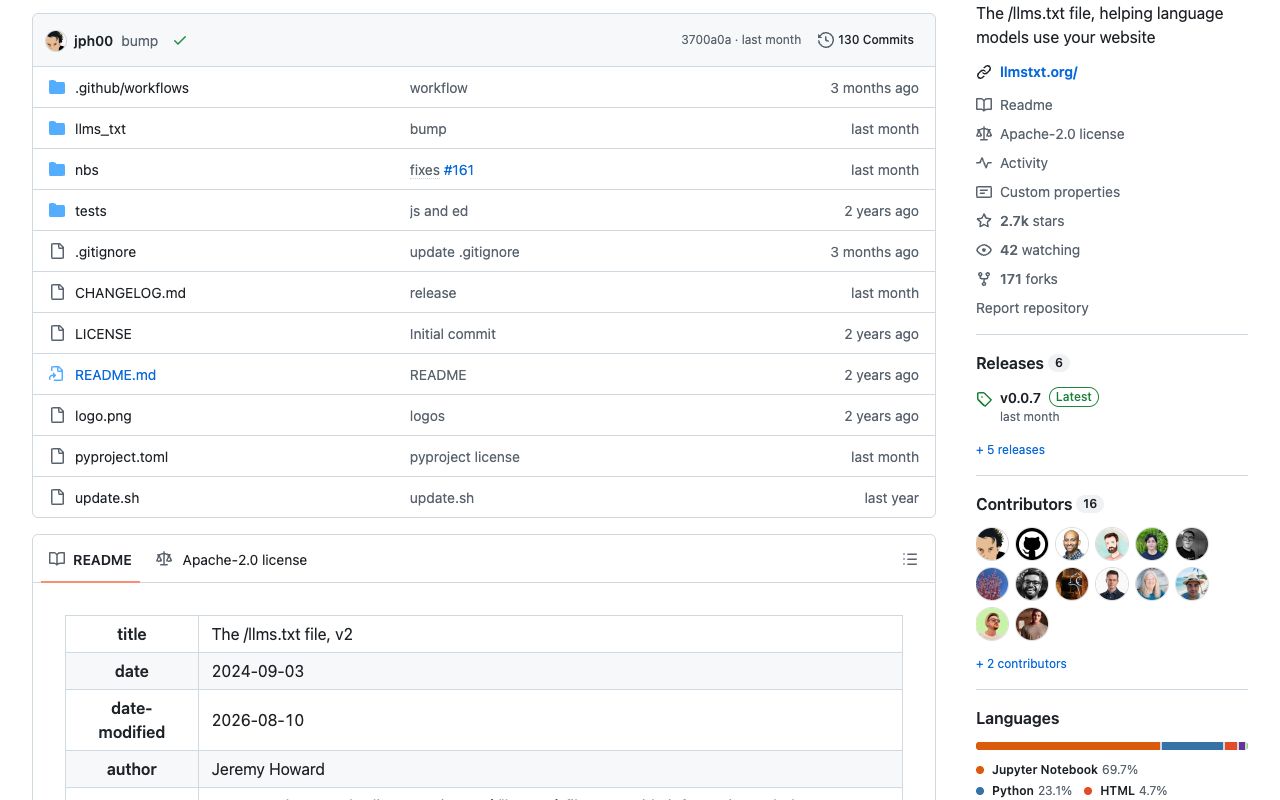
On llms.txt: a 2024 proposal by Jeremy Howard (llmstxt.org), a Markdown index with an H1, a summary blockquote and sections of links. No engine covered here documents reading it, and Google says you do not need "AI text files." Tag it an untested assumption: ten minutes with the free llms.txt generator, never a substitute for fixing the HTML.
How Do You Update Third-Party Descriptions and Key Source Listings?
Your baseline has a column of URLs the engines cited instead of you. For a brand query those are usually review platforms, directories, Wikipedia, Reddit or news, and the model's description of you is assembled from them. Rewriting your own page does not fix a G2 listing with last year's pricing.
Work the list in order of citation frequency:
- Claim and correct the vendor-controlled fields on G2, Capterra, Trustpilot, Product Hunt and your marketplaces: category, description, pricing, screenshots.
- Reply publicly to the complaints the engines repeat. In the Surfer SEO scan above, ChatGPT flagged billing and cancellation friction drawn from review sites; a visible reply is a new passage a crawler can retrieve.
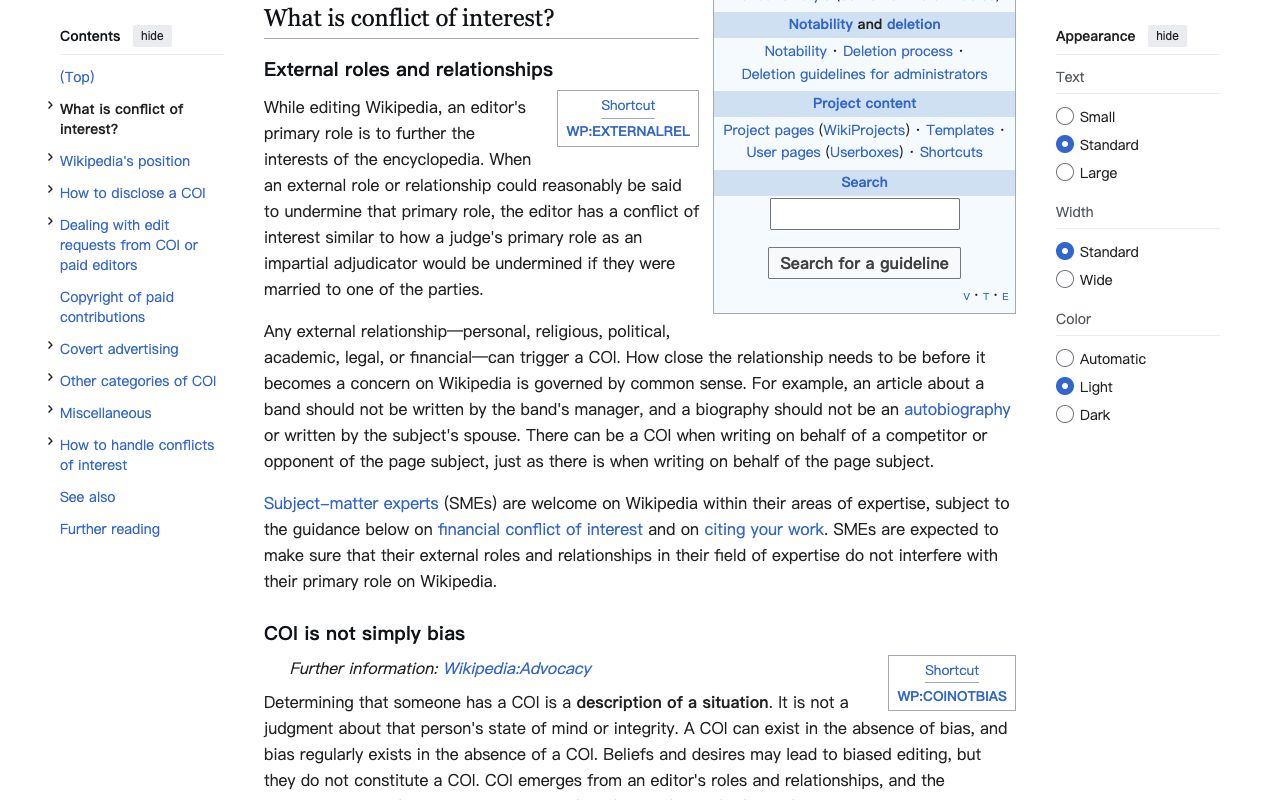
- For Wikipedia, do not edit your own article. Post sourced corrections on the talk page, as Wikipedia's conflict-of-interest guideline asks.
Tag: reasonable practice for review sites and directories, since those are retrievable pages in your citation lists. Whether a corrected listing changes an engine's summary is an untested assumption; measure it in step 7. How to get cited by AI maps the six source types by prompt type.
How Do You Re-Run the Same Question Set Before and After the Changes?
A fair re-test holds everything constant except the page: same questions, wording, engines and market, and enough runs to see past session-to-session variation. One before and one after is a coin flip; three to seven runs per question per engine, spread across days, is a practical floor. Compare mention, citation and competitor-recommended rates, not single answers. That is the only proof that the work to optimize content for AI search moved anything.
Let the page be re-crawled and re-indexed first; Google's AI-features page notes that control changes take time after recrawl, and content edits lag the same way. Confirm the new version is indexed with URL Inspection before counting runs.
An LLM content optimization tool earns its fee here, and the categories differ. The top platforms for making content machine-readable for LLMs, or measuring the result, with entry prices from each vendor's site on 2026-10-21:
| Tool | Role in this workflow | Entry price (verified 2026-10-21) |
|---|---|---|
| Kairosy | Baseline and re-test: prompts re-run daily on 4 of 6 engines (ChatGPT, Gemini, Claude, Perplexity, DeepSeek, Doubao), answers with cited sources, fix strategy; free readiness tools; paid page audit. No draft scoring or prompt volume. | Basic $29/mo (1 brand × 1 market, 15 prompts/day); Pro $99; Growth $399; 7-day trial, no card |
| Otterly.AI | Prompt tracking on ChatGPT, Google AI Overviews, Perplexity, Copilot | Lite $29/mo monthly (15 prompts); Standard $189; Premium $489 |
| Surfer SEO | Content editor scoring plus AI prompt tracking | AI Search Analytics $82/mo billed annually (50 prompts daily); Standard $99/mo billed annually |
| Clearscope | Optimization reports plus tracked queries in ChatGPT and Gemini | Essentials $129/mo billed monthly (50 tracked queries) |
| Profound | Enterprise answer-engine analytics, up to 9 engines | 7-day free trial (50 prompts, 3 engines); enterprise custom pricing |
Related: AI brand monitoring for the competitor-recommended case, how to audit a website for AI readiness for the site-level checklist, and the GEO implementation guide for technical teams for the engineering tickets.
Optimize Content for AI Search FAQs
How do you optimize content for AI search without rewriting the whole page?
Fix access first (crawlers, preview controls, rendering), then add a direct answer sentence, a dated source and the entity's full name to the two or three sections that map to your baseline questions. A few hundred words of edits isolate what moved when you re-test.
How to make blog content AI-friendly?
Turn each H2 into the question a reader would ask, open each section with the answer, name the subject in every paragraph, attribute every figure, and add a table where a comparison is implied. Then confirm the post is indexed and nothing clips its snippet.
How to make website content AI-friendly for LLMs on a JavaScript site?
Server-render or pre-render the text that answers buyer questions so it is in the HTML response, not mounted after load; Google is explicit that not all bots run JavaScript. Check the rendered HTML with URL Inspection and the raw HTML with curl.
Is it different to optimize content for LLMs than for Google?
The official requirements overlap almost entirely: indexed, snippet-eligible, text in HTML, honest structured data. What differs is the unit of retrieval. When you optimize content for LLMs you are optimizing passages lifted out of context, so self-contained sections and named entities matter more.
Do you need llms.txt to optimize content for AI search?
No. Google states no AI text files are needed, and none of the other engines covered here document reading one. Publish it if cheap, but spend the time on HTML, facts and third-party listings.
See what AI says about your brand
Run a free scan across ChatGPT, Gemini, Claude & Perplexity in about 30 seconds.
Run my free scan