How to Monitor Client Brands on Gemini From a Single Account (2026)
You monitor client brands on Gemini from a single account by giving every client its own container (a workspace or project), its own question set, its own competitor list and its own report, and by deciding up front how prompts are billed. The tool you pick decides how much of that isolation software enforces and how much you enforce with naming rules.
This guide answers how agencies monitor various client brands on Gemini from a single account without one client's rival showing up in another client's report. It covers the four controls behind safe AI search monitoring for agencies, a mock three-client workspace, a weekly report template and seven tools checked on their official pages on October 21, 2026.
How Do Agencies Monitor Various Client Brands on Gemini From a Single Account?
Four controls do the work. Everything else is a product feature.
- One container per client and market. A workspace (Otterly, Scrunch), a project (Peec, Kairosy, SE Ranking) or a brand dashboard (Rankscale). A UK clinic and its US sister brand are two containers, because Gemini answers differently per country.
- A question set owned by the container. Prompts use the client's buyer language and carry its brand or domain where the question is branded, so a prompt written for a payroll client never lands in an invoicing client's set.
- Roles that match who may edit. Account managers edit their clients, the owner edits everything, clients get read-only output. If a tool has no roles, one person owns the login.
- A written billing rule. Some tools pool prompts, some charge per client workspace, some count a daily allowance account-wide. Decide once how a prompt maps to an invoice line.
Two Gemini facts shape the setup. Google's Gemini Apps Activity page says Gemini "can personalize your experience" by "referencing your chats," so a client checking on their own phone will not see what your tool sees. And when Gemini grounds an answer in Google Search, the API returns inline url_citation annotations with the URL, title and character range of each cited passage, per the Gemini API grounding docs. That is what a monitoring tool turns into a "sources cited" column.
TL;DR: Which AI Search Monitoring Tools for Agencies Make the Shortlist?
The best AI search monitoring tools for marketing agencies, split by how they isolate clients (monthly billing unless noted):
- Kairosy: 20 project slots and 250 tracked prompts a day on Growth ($399/mo), Gemini included, white-label reports. One login, no seats or roles yet.
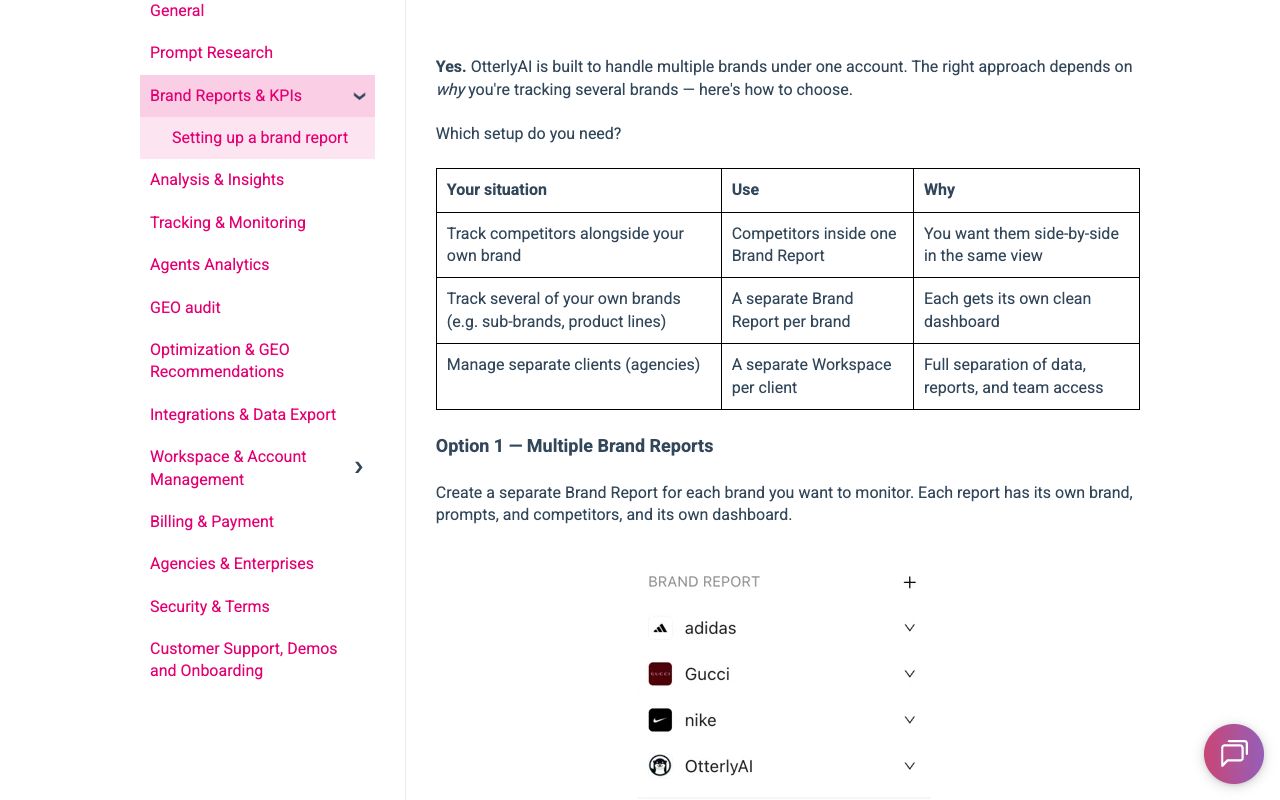
- Otterly.AI: unlimited workspaces with separate team access from Standard ($189/mo). Gemini is a paid add-on.
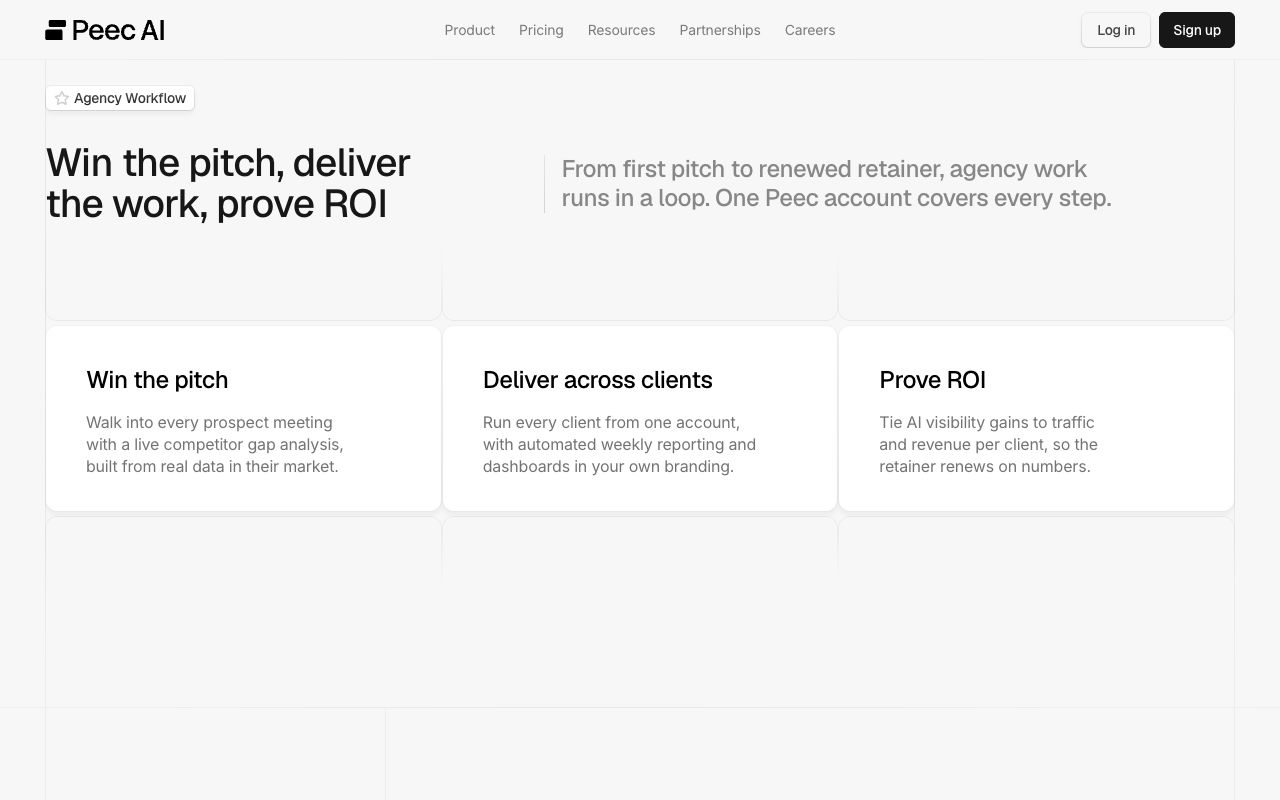
- Peec AI: one isolated project per client, unlimited client seats, Looker Studio templates per client. Prices shown after sign-up.
- Nightwatch: Google rank tracking plus LLM tracking, white-label from Professional (€159/mo).
- SE Ranking: 10 to 30 projects with manager seats, AI Search add-on, white-label via a kit on annual billing.
- Scrunch: one workspace for all clients with role-based access; Starter $300/mo.
- Profound: enterprise platform; the self-serve agency plan is metered per client workspace.
Semrush's AI toolkit is left out because its $199/mo Starter tier lists "1 domain for AI brand performance" on the Semrush pricing page, a single-brand product unless you buy one per client.
What Does a 3-Client Gemini Monitoring Workspace Plan Look Like?
This is the plan to hand a new account manager. Clients are fictional and every value is an example; the columns are the ones that prevent mistakes.
| Client container (example values) | Market | Engines (4 of 6) | Prompt set | Pinned competitors | Editor | Report day |
|---|---|---|---|---|---|---|
| Northwind Outdoor — US | United States | Gemini, ChatGPT, Perplexity, Claude | 15 prompts, owner: AM Priya | 5 (Trailhead Supply, Ridgeline Co, +3) | Priya, owner | Monday |
| Fabrikam Dental — UK | United Kingdom | Gemini, ChatGPT, Perplexity, DeepSeek | 10 prompts, owner: AM Marcus | 4 local clinics | Marcus, owner | Tuesday |
| Contoso Payroll — Global | Global | Gemini, ChatGPT, Claude, Perplexity | 25 prompts, owner: AM Priya | 8 payroll vendors | Priya, owner | Wednesday |
Three rules sit under it. Containers are named "Client — Market" so two rows never look identical. Branded prompts name only their own client. Report days are staggered so the Monday rescan has landed before anyone exports.
Kairosy's Growth plan maps onto this layout: 20 project slots (one brand in one market each), 4 of 6 engines per project, up to 20 pinned competitors per project and 250 tracked prompts a day across the account (50 used here). What it lacks is the "Editor" column: there are no seats or client-isolation layer, so the owner holds the login and account managers receive exports. Otterly and Peec enforce that column in software.
How Do You Prevent Brand Cross-Contamination, Permission Mistakes and Double-Billed Prompts?
Cross-contamination
It happens when competitor lists are shared account-wide, when two clients share a word in their name, or when a generic prompt is tracked for two clients and merged. Pin competitors per container, anchor branded prompts with the brand, and note near-name brands in the container description. Peec's agency page describes the target model: "each client is an isolated project with its own prompts, competitors, and channels."
Permission mistakes
Otterly's workspaces help article says each workspace "keeps its brands, prompts, reports, and team access fully separate, so client data never mixes." In a single-login tool the equivalent is procedural: one named owner, exports shared as files, the password rotated when an account manager leaves. The failure to avoid is a shared login and a prompt renamed for the wrong client.
Double-billed prompts
Three billing models exist. Otterly keeps "a shared pool of search prompts" and says reusing a prompt "doesn't force you to buy it twice." Profound's self-serve Agency Growth plan "comes with 400 credits per month per client workspace," so the same prompt in two workspaces is metered twice. Kairosy counts a daily allowance across the account, so two clients tracking one generic prompt use two of the 250. Keep a prompt ledger (prompt, client, engines, daily cost) and review it whenever a client joins or leaves.
What Should a Client Weekly Report Template Include?
The report must answer three questions in a minute: did the numbers move, who did Gemini recommend instead, and what did we fix. Example values for the fictional Northwind:
| Northwind Outdoor — US · week 45 (example values) | This week | Last week | Note for the client |
|---|---|---|---|
| Reputation score (0–100) | 68 | 71 | Two negative Gemini answers about returns |
| AI visibility | 42% | 38% | Gemini named Northwind in 9 of 15 prompts |
| Brand sentiment (0–100) | 64 | 66 | No new negative theme on ChatGPT or Perplexity |
| Competitor preferred | Trailhead Supply ×3 | Trailhead Supply ×1 | Recommended for "lightweight 2-person tent" |
| New negative narrative | "Returns take 3+ weeks" | — | One forum thread cited by Gemini and Perplexity |
| Fix shipped | Returns page rewritten | — | Re-check after next Monday's rescan |
Name the engine that drove a change, because clients will try to reproduce it. Never show a score without the prompt count behind it; 2 of 5 becoming 3 of 5 is not a trend. Kairosy's Competitor Comparison page gives a branded view with a position (#k of N), the chart clients most often ask to keep. For the wider reporting stack, see SEO agency reporting software compared.
Which Tools Let You Monitor Client Brands on Gemini From a Single Account? 7 Reviewed
Each entry covers the multi-brand unit, Gemini coverage, seats, white-label and reporting. Several double as tools for SEO agencies to monitor AI search ranking next to the Google data they already report.
Kairosy
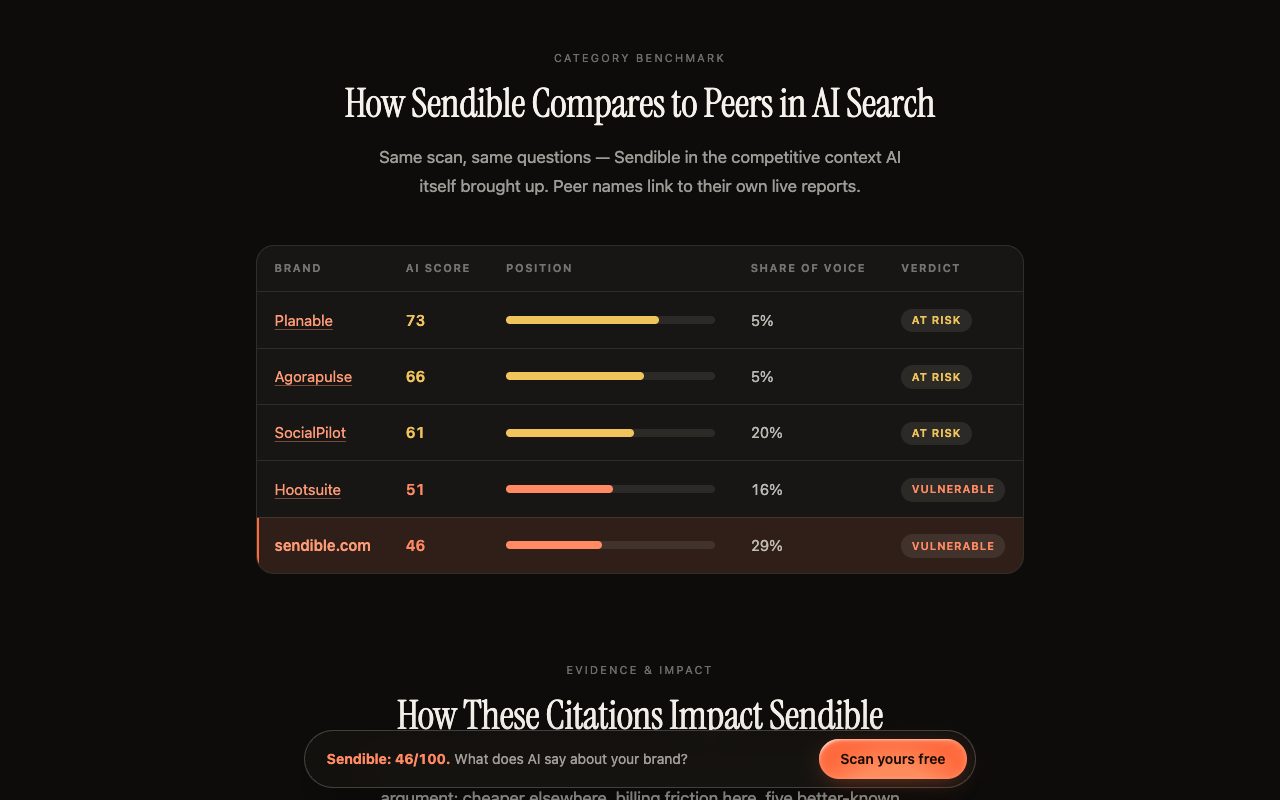
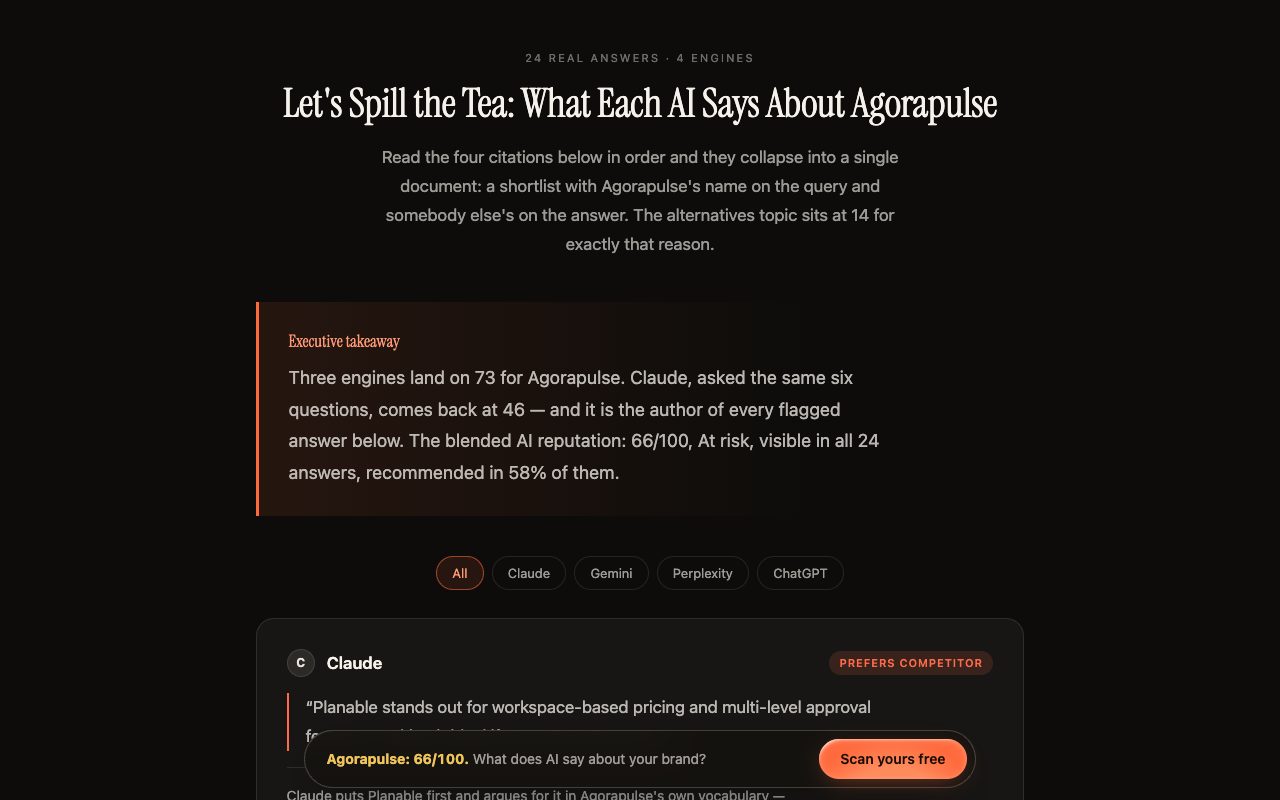
Kairosy covers the reputation side: it asks real buyer questions on the 4 engines you pick from ChatGPT, Gemini, Claude, Perplexity, DeepSeek and Doubao, keeps full answers with cited sources, scores sentiment per answer, extracts negative narratives and turns them into fix checklists. Growth is $399/mo ($299/mo billed annually) for 20 slots, 250 prompts a day, 20 pinned competitors per project and white-label reports; Pro is $99/mo for 5 slots; Basic $29/mo for one. Prompts re-run daily, each slot gets a Monday deep rescan, and a weekly email flags score drops and competitors being preferred. Limits: no seats, roles or client isolation, and no prompt-volume data. To see the output, open Kairosy's public scan of Agorapulse, a tool many agencies resell. The gemini brand monitoring page covers the Gemini leg.
Otterly.AI
On the Otterly pricing page, Lite is $29/mo (15 prompts, 1 workspace), Standard $189/mo (100 prompts, unlimited workspaces, API) and Premium $489/mo (400 prompts); annual billing saves 15%. Gemini is an add-on at $9, $59 or $149 a month by plan. Team members are unlimited, and the Agency Partner Program lifts Standard to 150 prompts and Premium to 500. Client reporting runs through a Google Data Studio connector.
Peec AI
Peec's agency page promises you can "switch clients in one click, no separate logins," that "every plan includes unlimited client seats," and that one Looker Studio template can be cloned per client with read-only links. Agency tiers are sized in credits: Essential 10,000 (111 prompts), Growth 25,000 (277 prompts, 3 to 10 clients), Scale 65,000 (722 prompts, 11 to 25+ clients), with API and MCP. Gemini is tracked. The public pricing page shows no dollar figures, so budget after a demo.
Nightwatch
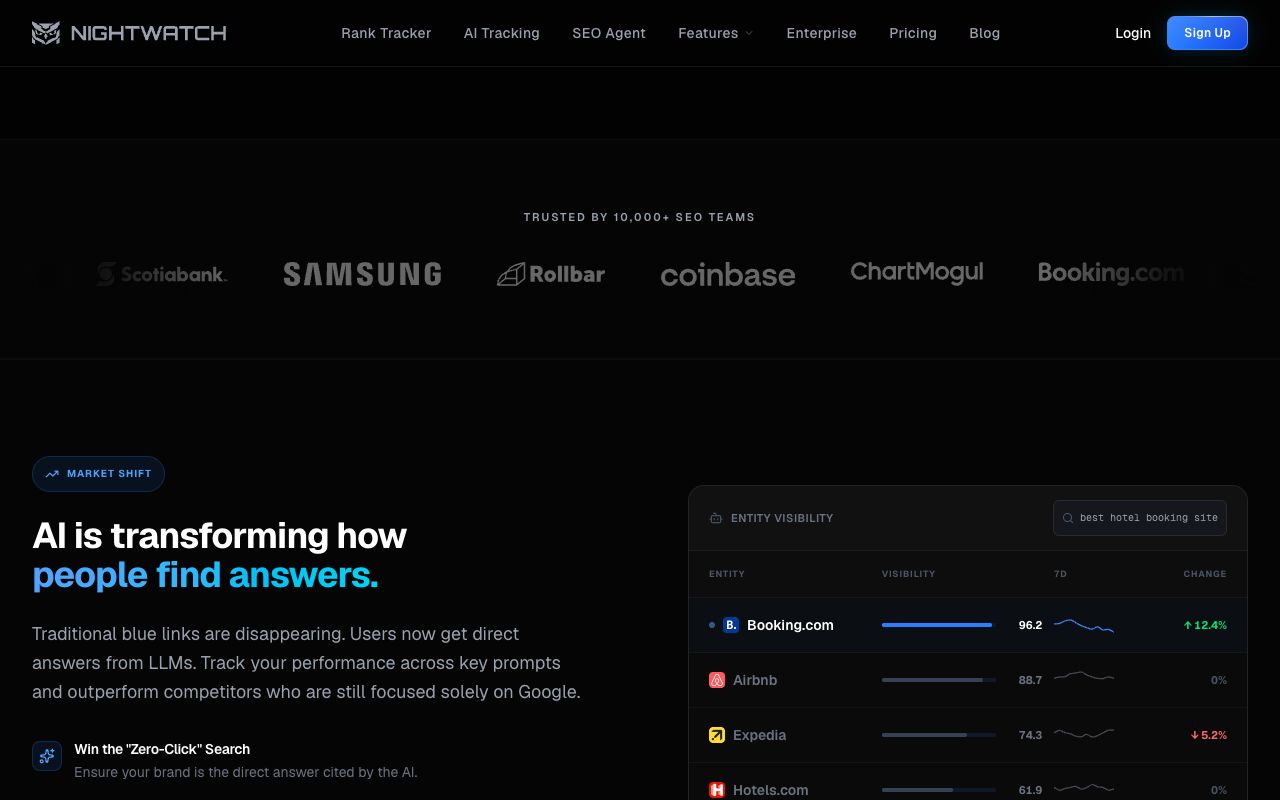
Pick Nightwatch when one report must carry Google rankings and LLM mentions. Its LLM tracking page covers ChatGPT, Claude, Gemini, Perplexity and Copilot with visibility, position, share of voice, sentiment and citations. Starter is €79/mo (5 websites, 50 AI prompts, no white label), Professional €159/mo (25 websites, 150 prompts, white-label) and Agency €399/mo (100 websites, 500 prompts). Seats are unlimited.
SE Ranking
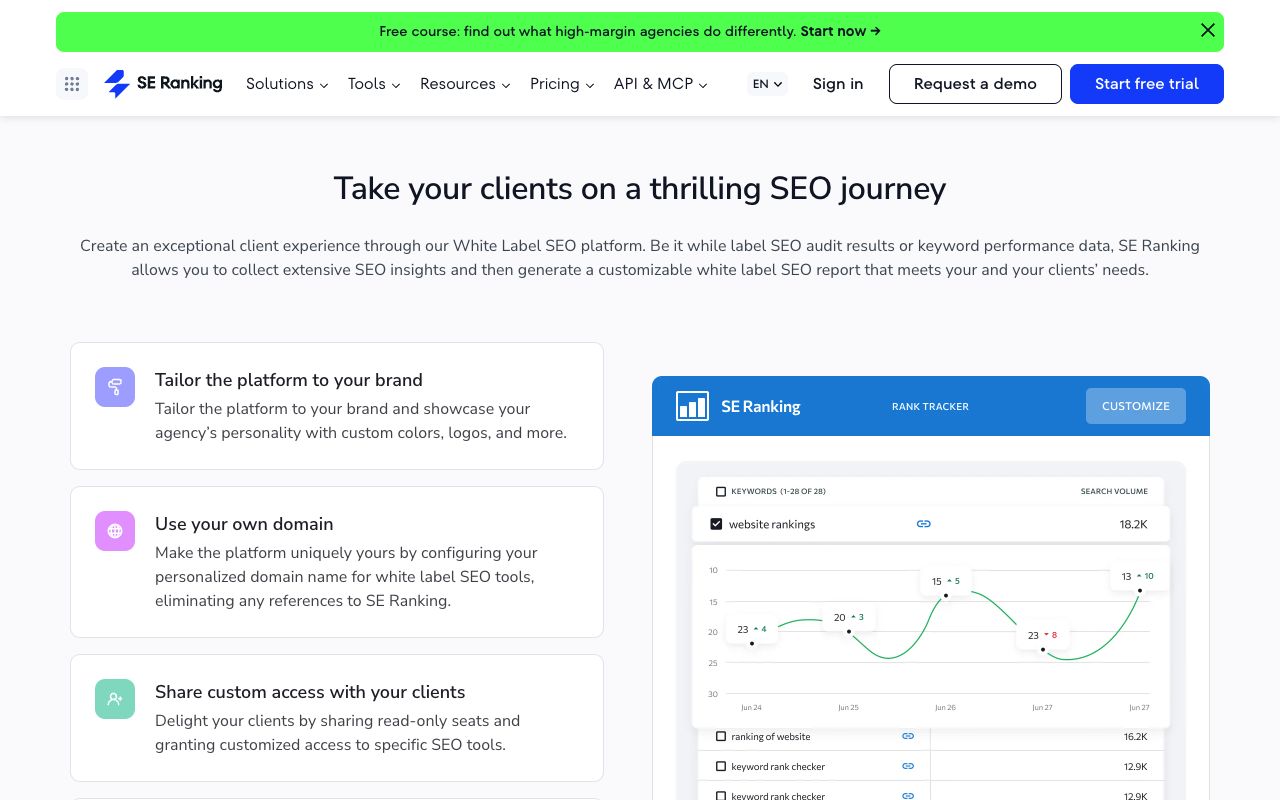
SE Ranking's AI Visibility Tracker covers AI Overviews, AI Mode, ChatGPT and Gemini. Core is $129/mo (10 projects, 1 manager seat), Growth $279/mo (30 projects, 3 seats), plus an AI Search add-on at $89/mo. White-label sits in the Agency Success Kit "starting at $69.00 per month with annual subscription" per the white-label page, which lists rankings, traffic and backlinks but not AI visibility data, so confirm before promising it. For more on this, read white label SEO software explained.
Scrunch
Scrunch's agency page offers "a single workspace for all clients" with role-based access and self-serve client or prospect environments. Starter is $300/mo (350 prompts, 3 seats) and Growth $500/mo (700 prompts, 5 seats). Engines include ChatGPT, Claude, Gemini, Perplexity, AI Mode, AI Overviews and Meta. The agency program adds referral commissions up to 20%; white label is not mentioned.
Profound
Profound's pricing page offers a 7-day trial of 50 prompts daily on ChatGPT, Gemini and AI Overviews, and a custom-priced Enterprise plan covering up to 9 engines with SSO and SOC 2. Its Agency Growth plan gives 400 credits per client workspace a month; the per-workspace price is not published, so treat it as quote-first.
How Do the Agency Features Compare? Gemini, Seats, White-Label and Pricing
| Tool | Client unit | Gemini | Seats / roles | White-label or export | Lowest listed monthly price |
|---|---|---|---|---|---|
| Kairosy | Project slot, 20 on Growth | Included | One login, no roles | White-label reports on Growth | $29 |
| Otterly.AI | Workspace, unlimited on Standard+ | Add-on $9–$149 | Unlimited members | Data Studio connector | $29 |
| Peec AI | Project per client | Included | Unlimited client seats | Looker Studio, API, MCP | Not published |
| Nightwatch | Website, 5–100 | Included | Unlimited | White-label from Professional | €79 |
| SE Ranking | Project, 10–30 | Included in tracker | 1–3 manager seats | Kit from $69 (annual) | $129 + $89 add-on |
| Scrunch | Environment in one workspace | Included | 3–5 seats, roles | Looker Studio, API | $300 |
| Profound | Client workspace | Included | Unlimited (Enterprise) | Exports, SSO | Custom |
| Rankscale | Brand dashboard, 10–100 | Included | Unlimited team workspaces | White-label with API from Growth | $99 |
Sources: the vendor pages linked above plus Rankscale's pricing page, read October 21, 2026. Before onboarding a client, run their site through the free AI crawl checker; a site that blocks GPTBot or Google-Extended limits what those engines can read or ground on.
Agency Gemini Monitoring FAQs
Can I monitor client brands on Gemini from a single account without paying per client?
Yes with Otterly (Standard and up), Peec, Nightwatch, Scrunch, Rankscale and Kairosy, which all bill several clients together. Profound's agency plan meters per client workspace.
Why does my client see a different Gemini answer than my report?
The Gemini app personalizes from the user's own activity, while a tool sends clean prompts on a schedule. Report engine, date and prompt wording. The manual method is in how to track brand mentions in Gemini.
How many prompts does each client need?
Ten to 25 per client per market, as in the mock plan: enough to split branded from unbranded questions while three clients fit inside 50 a day.
Which tools for SEO agencies to monitor AI search ranking also keep Google rank data?
Nightwatch and SE Ranking do both. Kairosy, Otterly, Peec, Scrunch and Profound do not track Google SERP positions.
Does white-label mean the client gets a login?
Not always. SE Ranking offers read-only client seats on a custom domain; Otterly and Peec use Looker Studio dashboards; Kairosy's white-label reports are documents you send.
Is there a free way to pilot AI search monitoring for agencies?
Kairosy's 7-day trial needs no card, Profound's trial runs 7 days and SE Ranking offers 14 days. Pilot with one client and one prospect to test the isolation rules, not just the charts.
See what AI says about your brand
Run a free scan across ChatGPT, Gemini, Claude & Perplexity in about 30 seconds.
Run my free scan