How to Track Brand Mentions in Gemini: Citations & Visibility (2026)
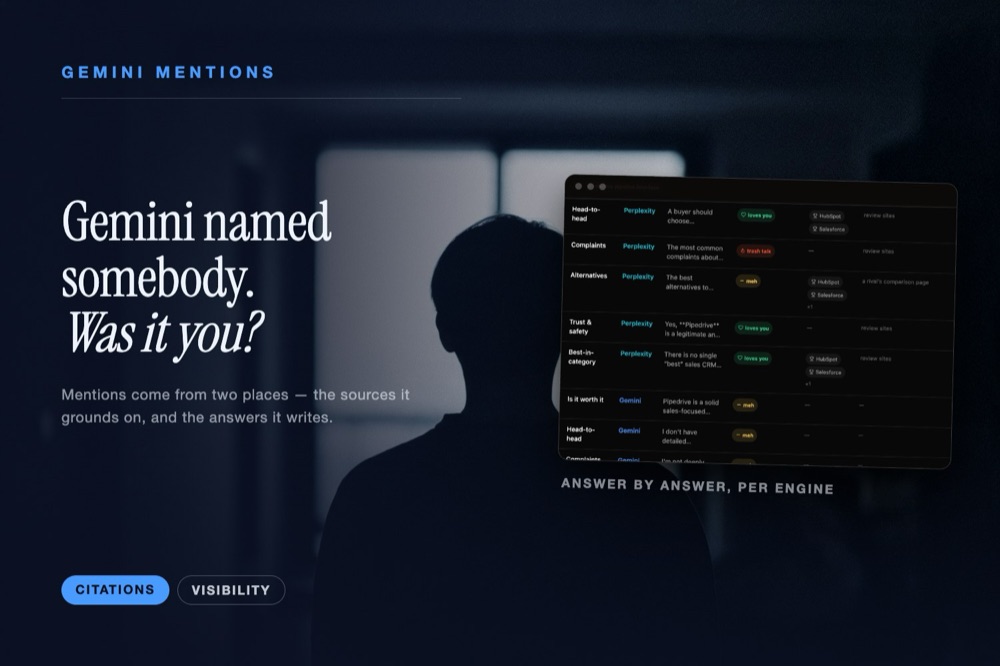
Brand mentions in Gemini are the output of two separate systems: citations — the sources Gemini pulls into an answer — and visibility — how often the answer names your brand at all. Measure the two separately and you can explain every mention you gain or lose. Measure neither and you are reading tea leaves on an assistant with close to a billion users.
This guide covers how to track brand mentions in Gemini in that order: a quick manual baseline, citation tracking, visibility tracking with tools and verified August 2026 pricing, and then how to gain visibility in Gemini once the numbers are in front of you.
Why Do Brand Mentions in Gemini Come Down to Citations and Visibility?
Start with scale. On Alphabet's Q2 2026 earnings call, Google said the Gemini app passed 950 million monthly users, up from 750 million reported in February 2026, and AI Mode in Search crossed 1 billion users in the same quarter (TechCrunch, July 23, 2026). A meaningful slice of those sessions are purchase questions your brand either appears in or doesn't.
Now the mechanism. When a question needs current facts, Gemini runs Google searches in the background and builds its reply from the results. Google documents the pipeline — query generation, retrieval, synthesis, inline source links — in its Grounding with Google Search developer docs, and each grounded answer carries annotations tying specific sentences to specific source URLs.
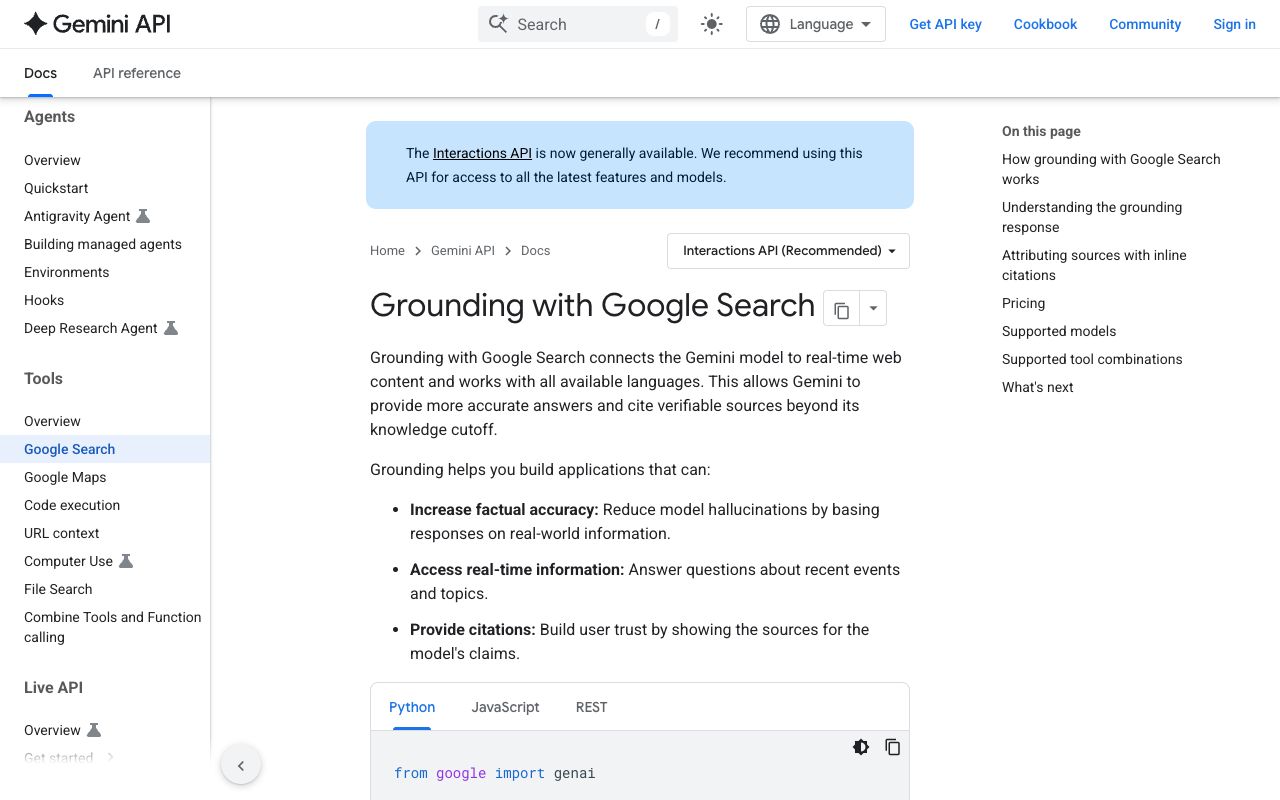
That architecture is why one tracking number is never enough:
- Brand citations in Gemini decide what the model says about you. If the retrieved pages are a three-year-old complaint thread and a rival's comparison table, the answer inherits their framing.
- Gemini AI visibility is the outcome metric: across a fixed set of buyer prompts, how often does your brand get named, in what position, and with what sentiment?
One scoping note before the how-to. Gemini models power three consumer surfaces — the Gemini app, AI Overviews, and AI Mode in Search. They produce different results and most trackers count them separately (some even price them separately, as you'll see below). This guide focuses on the Gemini app, with pointers wherever a tool bundles the rest.
Can You Track Brand Mentions in Gemini Manually?
Yes, and you should — once, as a baseline, before you pay for anything. The protocol takes an afternoon:
- Write 10–15 prompts phrased the way buyers type: "best [category] for [use case]", "[your brand] vs [rival]", "is [your brand] legit".
- Run each prompt in a fresh conversation and log three things: is your brand named, in what position, and how is it framed.
- Open the sources on every answer that mentions you or a competitor, and write down the cited domains.
- Rerun the same prompts a week later and compare.
Step 4 is where manual tracking collapses. Gemini's output varies between runs of the same prompt, and grounding refreshes as Google's index changes, so a single check is a coin-flip sample rather than a measurement. You also cannot hand-compute share of voice across five competitors and multiple markets. We hit the same wall on the ChatGPT side — the manual method in our ChatGPT brand mention tracking guide fails the same way — but the tooling that fixes it is engine-specific, and Gemini's grounding gives you a lever ChatGPT doesn't.
How to Track Brand Citations in Gemini
A brand citation in Gemini is any URL the model grounded on and linked while discussing you or your category. Two kinds matter, and the second is usually the bigger deal:
- Citations of your own pages — proof that Gemini can retrieve and trust your site.
- Citations of third-party pages about you — review platforms, comparison posts, Reddit threads. This is where reputation problems live, because you don't control the copy.
For each prompt in your set, record four things: whether your domain was cited, which third-party domains keep reappearing, which exact URL sits behind any negative claim, and which domains get cited alongside competitors but never alongside you. That last list is your content and PR roadmap, not just a diagnostic.
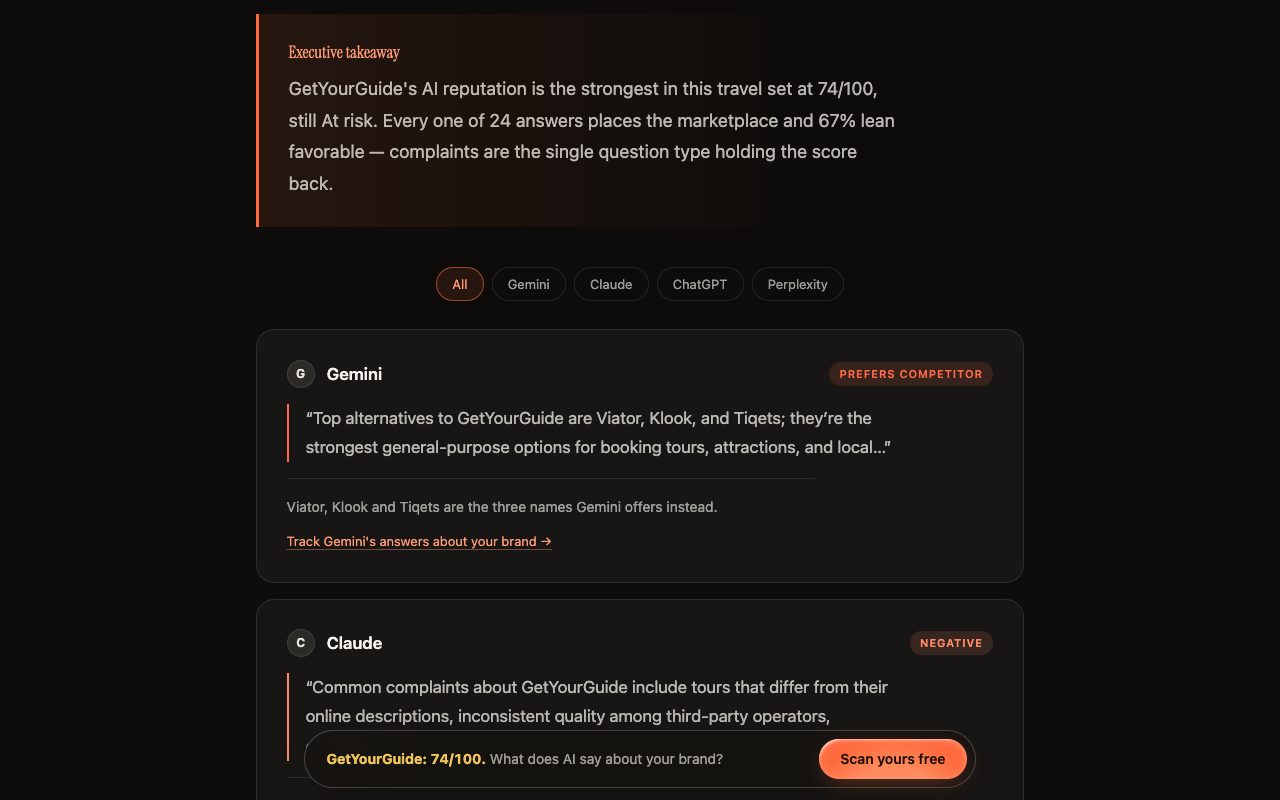
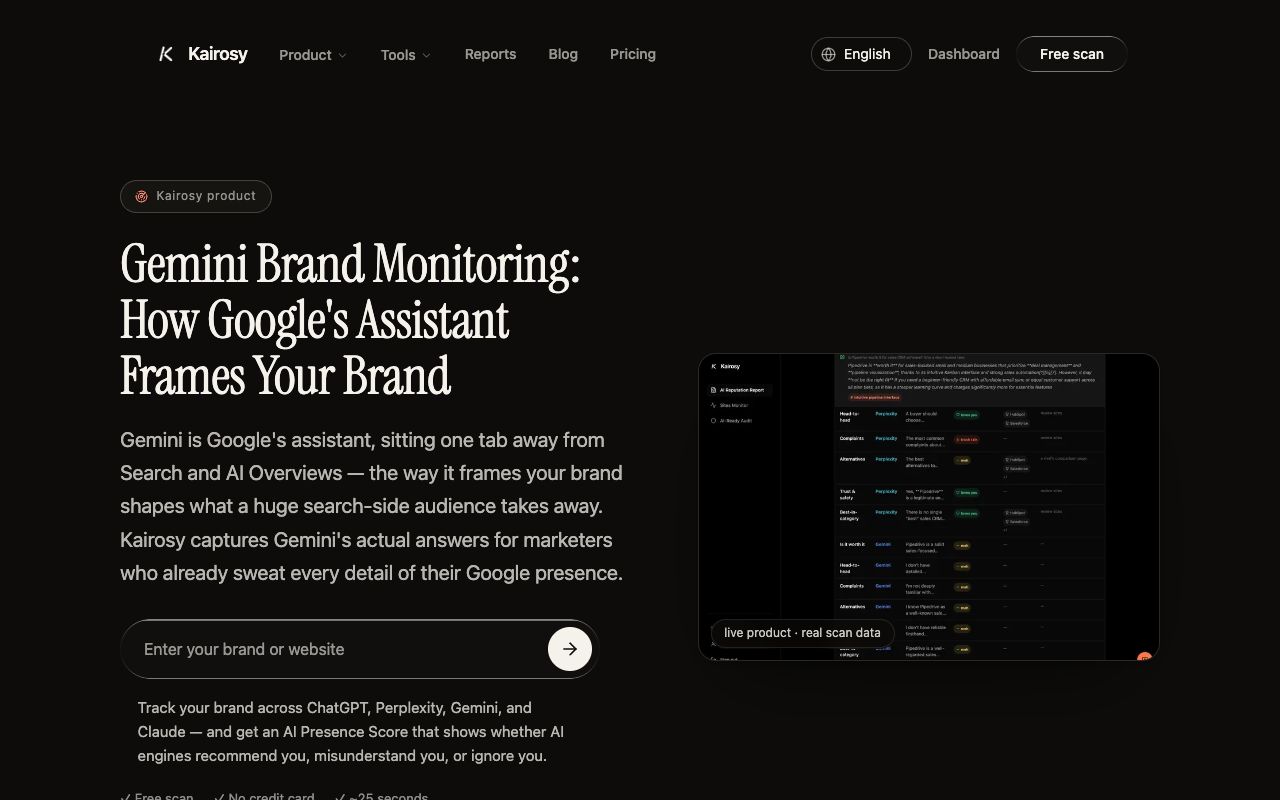
This is tool work. Kairosy attaches a source list to every engine answer in a scan: each Gemini reply arrives with the URLs it drew on, next to a sentiment classification for the answer itself. The pairing is the point — when Gemini repeats an outdated complaint, the report shows the page it came from, which turns "improve our AI reputation" into a page-level task. Kairosy's public scan of GetYourGuide shows the format: per-engine answers with their own citation rows.
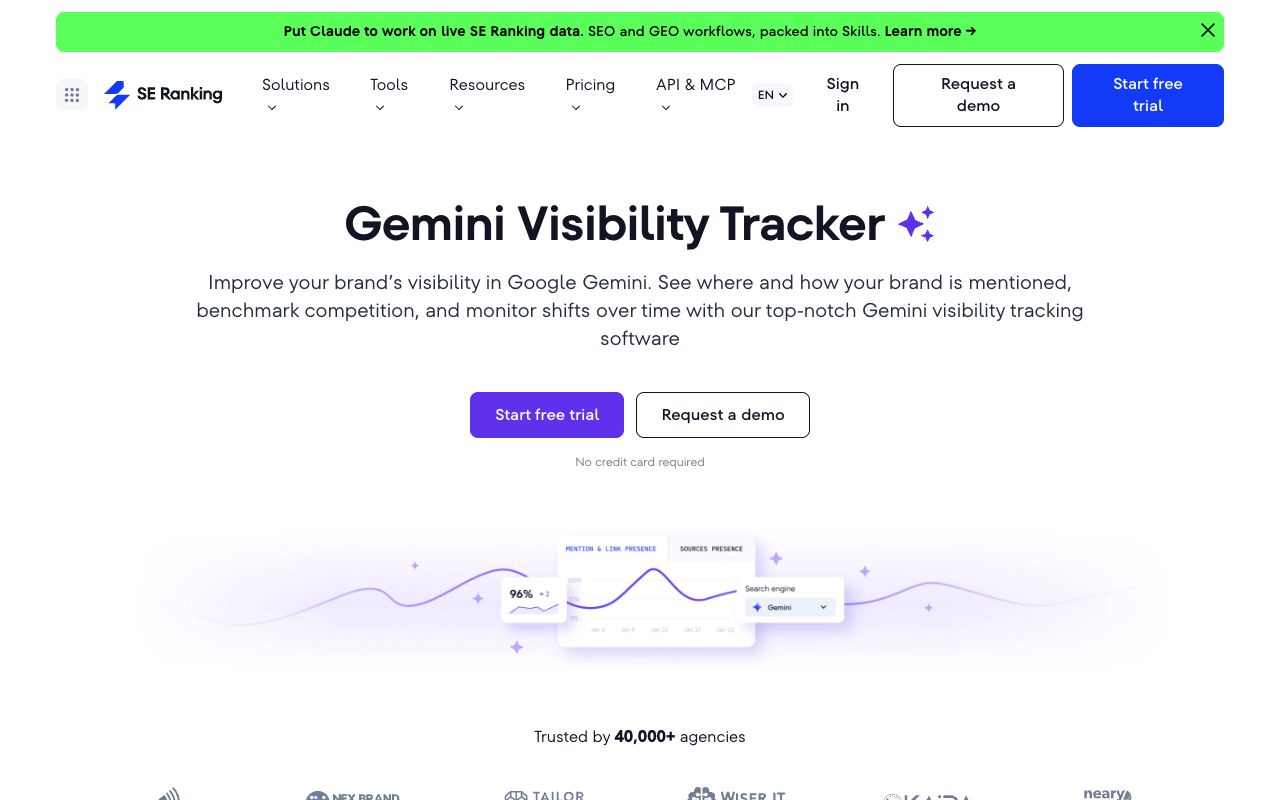
Other trackers expose the same layer in different shapes. SE Ranking's Gemini tracker ranks the domains Gemini cites most across your tracked prompts and counts how often your own site gets linked. Peec AI pairs citation data with an earned-media view that flags the specific Reddit conversations and articles shaping Gemini's answers.
Whatever tool you pick, the deliverable is a target-source list: the fifteen or so domains Gemini actually grounds on for your category. Everything in the optimization section below starts from that list.
Which Tools Measure Gemini AI Visibility Best?
Visibility is a rate, not an event: out of your tracked prompts, in what percentage of answers is your brand named? The core AI visibility metrics Gemini trackers report are mention rate, average position, sentiment mix, and share of voice against named competitors — the math behind that last one is in our AI share of voice explainer. Here are the tools that measure them, with pricing checked on each vendor's site in August 2026.
Kairosy
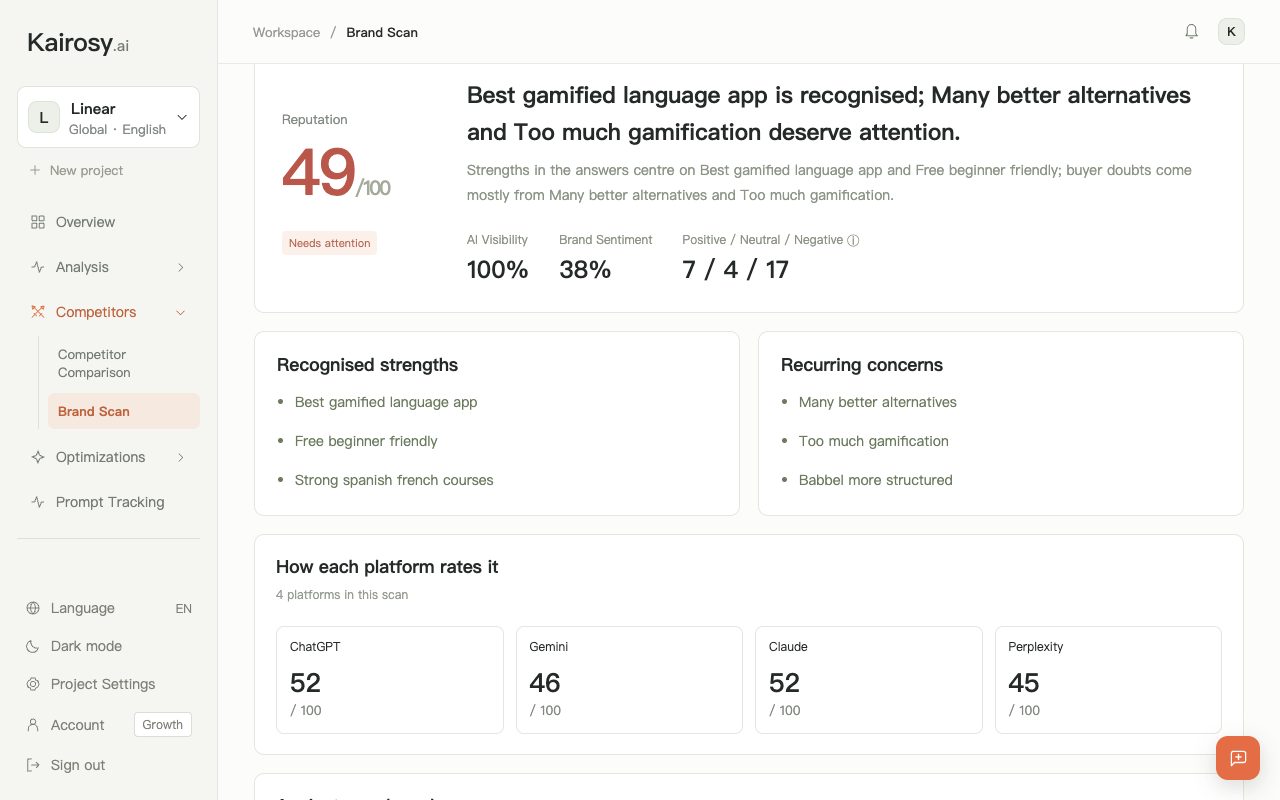
Kairosy is an AI visibility and reputation scanner rather than a rank tracker: it puts your category's purchase-stage questions to Gemini, ChatGPT, Claude and Perplexity, classifies the sentiment of each answer, lists the sources behind it, and rolls the gaps into a Fix Plan. The free tier is a 7-day trial with the full report. Paid plans (Basic $29, Pro $99, Growth $399 per month) add daily prompt tracking, plus weekly brand monitoring with email alerts and market-specific scans across 25 countries. If Gemini is your priority surface, the Gemini brand monitoring page shows exactly what a tracked brand gets.
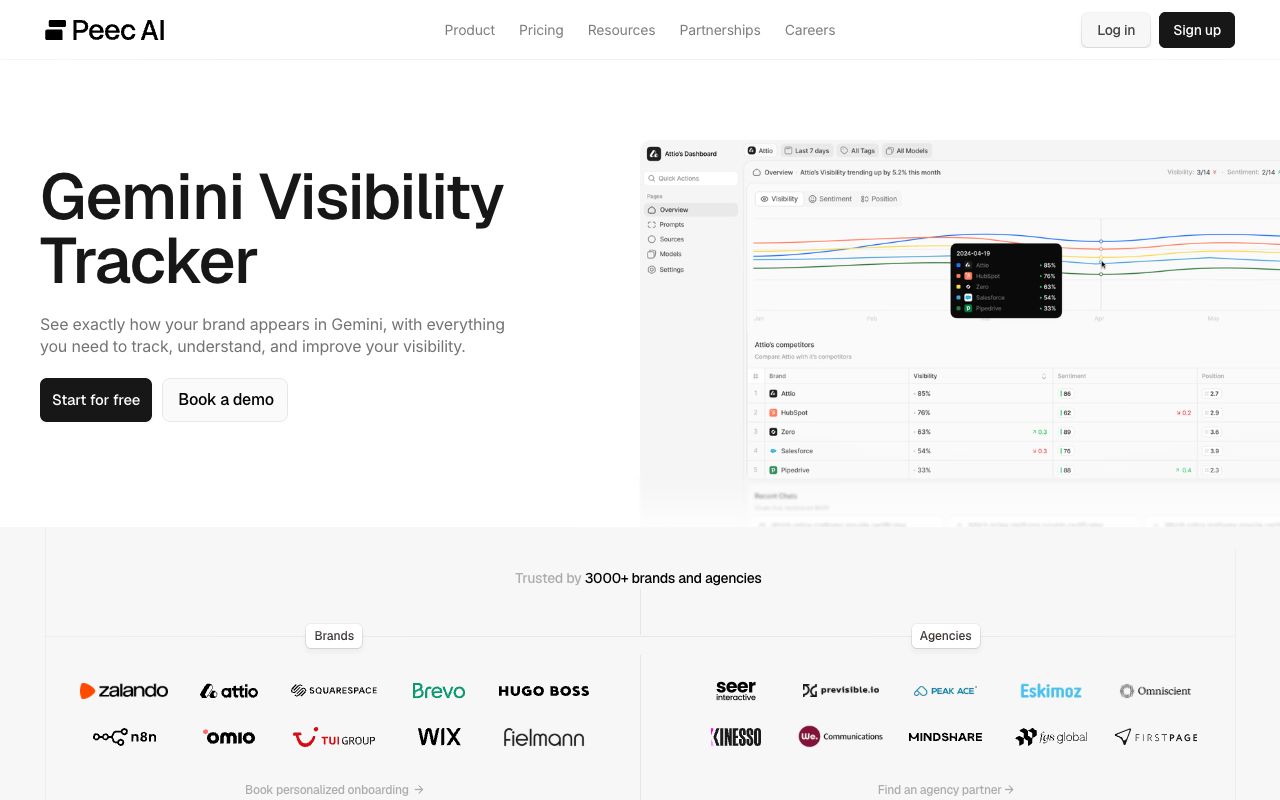
Peec AI
Peec tracks Gemini alongside ChatGPT, AI Overviews, AI Mode, Microsoft Copilot and Perplexity, with daily runs, sentiment, and competitor benchmarking, and it is built with agencies running multiple client projects in mind. Plans come in Starter, Pro, Advanced and Enterprise tiers on annual billing — the pricing page did not display flat rates when we checked in August 2026, so budget for a sales conversation.
Otterly.AI
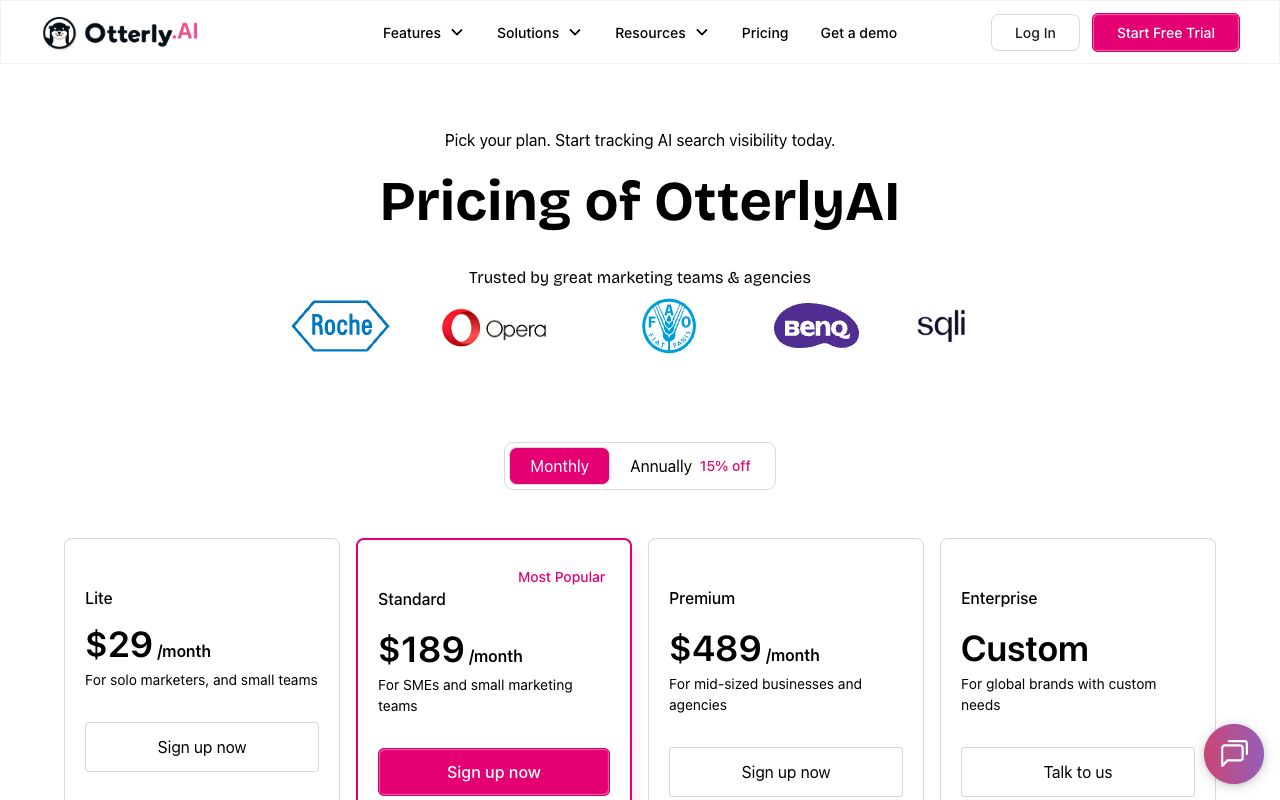
Otterly has the lowest entry price of the paid group: Lite at $29/month tracks 15 prompts across ChatGPT, Google AI Overviews, Perplexity and Microsoft Copilot, with Standard at $189 and Premium at $489 raising the prompt counts. The catch for this guide's topic: Gemini is not in the base engine set — it is a paid add-on at $9–$29/month depending on plan. A free trial lets you sanity-check coverage first.
Semrush AI Visibility Toolkit
Semrush sells AI tracking as a $99/month add-on to a paid Semrush plan: 25 custom prompts tracked daily, with brand mentions pulled from ChatGPT, Google AI, Gemini and Perplexity, plus prompt research and an AI-readiness site audit. Extra prompt capacity runs $60/month per 50 prompts. The economics work mainly if your team already lives in Semrush.
SE Ranking
SE Ranking runs a dedicated Gemini visibility tracker — mentions, link frequency, average positions and most-cited domains — inside its AI toolkit, which is a paid add-on from $89/month (monthly billing) on top of a base plan; the Core plan starts at $129/month billed monthly. A free trial is available without a card.
| Tool | Gemini coverage | Strongest for | Pricing (checked Aug 2026) |
|---|---|---|---|
| Kairosy | Core engine, with ChatGPT, Claude and Perplexity | Sentiment plus per-answer citations plus Fix Plan | Free 7-day trial, then $29 / $99 / $399 per month |
| Peec AI | Core engine, plus AI Overviews, AI Mode and Copilot | Agency dashboards and earned-media signals | Starter–Enterprise tiers, annual billing, rates not published |
| Otterly.AI | Paid add-on ($9–$29/month) | Cheapest entry to prompt tracking | $29 / $189 / $489 per month, plus add-ons |
| Semrush AI Visibility Toolkit | Included in the add-on | Teams already on Semrush | $99/month add-on, plus $60 per extra 50 prompts |
| SE Ranking | Dedicated Gemini tracker | Cited-domain analysis next to classic SEO data | AI add-on from $89/month on top of plans from $129/month |
How to Gain Visibility in Gemini: 5 Optimizations That Work
Because Gemini grounds in Google Search, gaining visibility is mostly precision SEO aimed at the retrieval layer, plus two Gemini-specific checks. Work through these in order.
1. Win the queries Gemini actually runs
Gemini can only cite what Google retrieves. Take your tracked prompts, work out the searches they would trigger, and make sure a page of yours answers each one directly — question-style headings, the answer in the first two sentences, and a comparison table where the query implies one. Pages built to be quoted get quoted.
2. Confirm Google-Extended isn't blocked
Google's crawler documentation is explicit: the Google-Extended robots token controls whether your content can be used for grounding in Gemini Apps (and for Gemini model training), while having no effect on Google Search rankings. Plenty of sites blocked it in 2023–2024 to opt out of AI training without realizing they were also opting out of Gemini citations. Run your domain through the free AI crawl checker to see your robots.txt the way AI crawlers do.
3. Make entity facts machine-readable
Structured data tells Google — and therefore Gemini's grounding — exactly what your company is, sells and costs. Organization, Product and FAQ schema are the priority; validate yours with the schema markup checker. Emerging conventions like llms.txt cost minutes to add with the llms.txt generator, though be aware Google has not committed to reading that file.
4. Earn placements on the domains Gemini already cites
Your citation tracking produced a list of domains Gemini grounds on for your category. Get onto them: pitch the comparison posts to include you, maintain your profiles on the review platforms in that list, and answer the recurring Reddit threads with substance rather than marketing. One placement on a repeatedly-cited page beats ten guest posts nobody retrieves.
5. Refresh the facts Gemini quotes
Grounded answers repeat what pages say today, so a stale pricing page or an abandoned changelog becomes the official story. Keep pricing, feature lists and your company description current and consistent everywhere they appear — Gemini has no way to know your docs are out of date.
Then close the loop: rescan, compare mention rate and sentiment against your baseline, and iterate. That is how to track brand mentions in Gemini and actually move them — measure citations, measure visibility, fix the sources, measure again. A free Kairosy scan gives you the baseline report to start from.
Tracking Brand Mentions in Gemini FAQs
How do I track brand mentions in Gemini for free?
The manual protocol above is how to track brand mentions in Gemini at zero cost, and free tiers extend it: Kairosy includes one full scan per month, and SE Ranking and Otterly both offer trials. Free coverage won't give you daily trend lines, but it will tell you whether you have a visibility problem or a sentiment problem.
Where do brand citations in Gemini come from?
From Google Search. Gemini generates queries, retrieves results, and grounds its answer in them, attaching source links along the way. That is why brand citations in Gemini correlate with Google rankings far more than ChatGPT or Claude mentions do — and why classic SEO pays off twice here.
Is tracking the Gemini app the same as tracking AI Overviews?
No. They share model DNA but are separate surfaces with separate results, and tools treat them that way: Otterly covers AI Overviews in its base plans but sells Gemini app coverage as an add-on, while Peec and Semrush report them as separate line items. Decide which surface your buyers actually use before comparing quotes.
Which metrics should a monthly Gemini report include?
Four: mention rate across your prompt set, share of voice versus your top competitors, sentiment mix, and the cited-domain list with changes highlighted. Average position is worth logging too, but it moves noisily between runs, so read it as a trend rather than a weekly scorecard.
Can you influence which sources Gemini cites?
Indirectly, yes. There is no paid inclusion — you shift citations by ranking for the underlying queries, earning coverage on domains Gemini already trusts, and keeping Google-Extended unblocked. Expect movement over weeks rather than days, and verify it with the same tracking you started with.
See what AI says about your brand
Run a free scan across ChatGPT, Gemini, Claude & Perplexity in about 30 seconds.
Run my free scan