AI Overview Tracker Guide 2026: 9 Steps Beyond Rank Tracking
An AI overview tracker records whether Google showed an AI Overview for a query, which URLs it cited, whether a competitor took the citation instead of you, and how that changes week to week. A rank tracker answers one question (what position?), while an Overview can appear or vanish, link nine domains at once, quote your pricing wrongly, or name a rival as the safer pick without linking anyone.
Below: the risks a citation count hides, a nine-step setup for AI Overview rank tracking, the series to chart over time, and five trackers verified to read Google AI Overviews as of September 2026. For the Google-side mechanics, see the companion post on Google AIO monitoring.
Why Isn't a Rank Tracking Tool (AI Overviews Add-On) Enough?
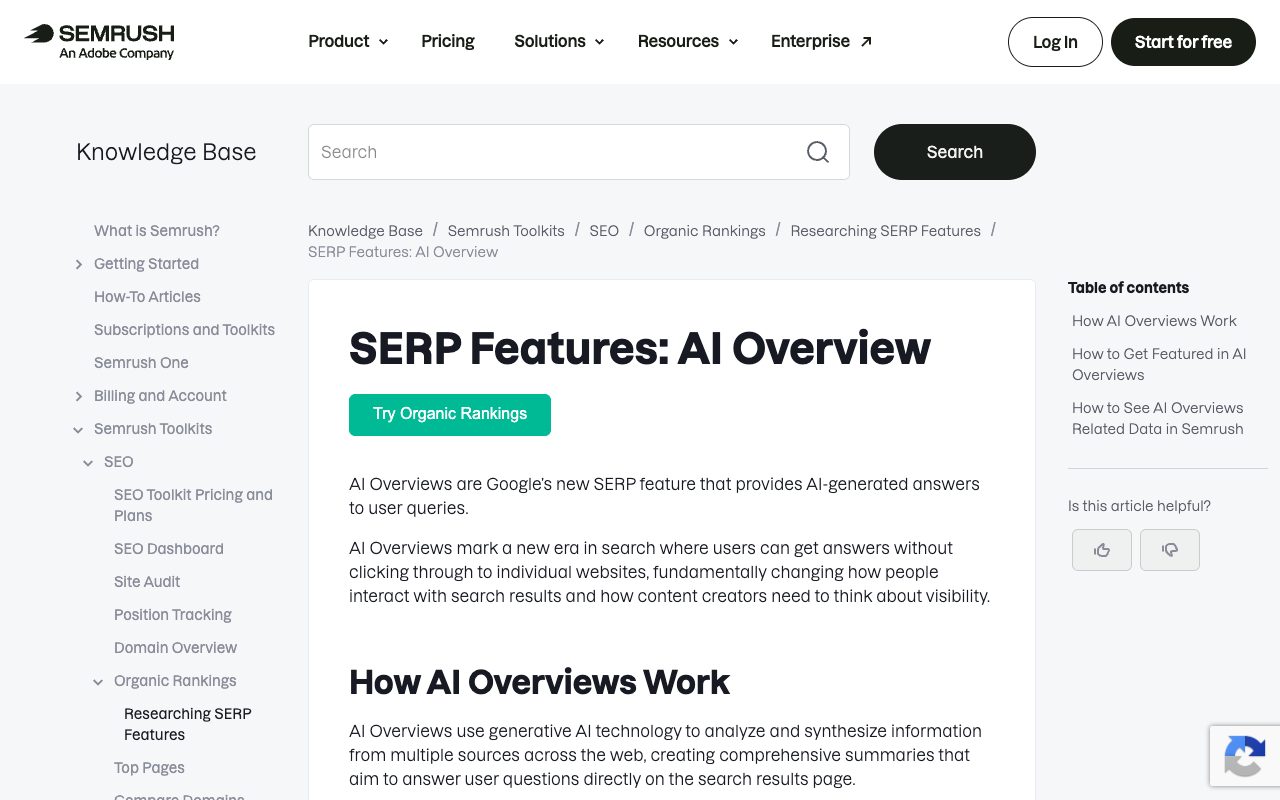
Because a position is one integer and an AI Overview is a bundle of decisions. Most rank tracking tools attached Overview detection to the SERP-feature column they already had: a flag for "present" and, if your domain is linked, a second flag. Semrush's Position Tracking, for instance, records a domain cited in an AI Overview as a #1 ranking regardless of its organic position. Tidy for a rank report, misleading for a brand: a "#1" earned by a two-year-old changelog is not the win a "#1" from your current pricing page is.
What an AI overview tracker has to capture per keyword, per run:
- Did the Overview trigger? Rates swing by month and category. Semrush's study of 200,000 US keywords (collected September 2024, published July 22, 2025) found 80% of desktop Overviews landed on informational queries and under 3% on transactional ones.
- Does it cite your site, and which URL? The same study counted 11 links per Overview on average with only 20 to 26% overlap against the top-10 organic results.
- Does it cite a competitor? Domain-level share of citations is invisible in a position column.
- Does the citation set change between runs? Overviews swap sources while the organic ten stay put.
- Device, country and intent. AI Overviews reached more than 200 countries and 40 languages by May 2025; a US-desktop sample is not "your AI Overview visibility".
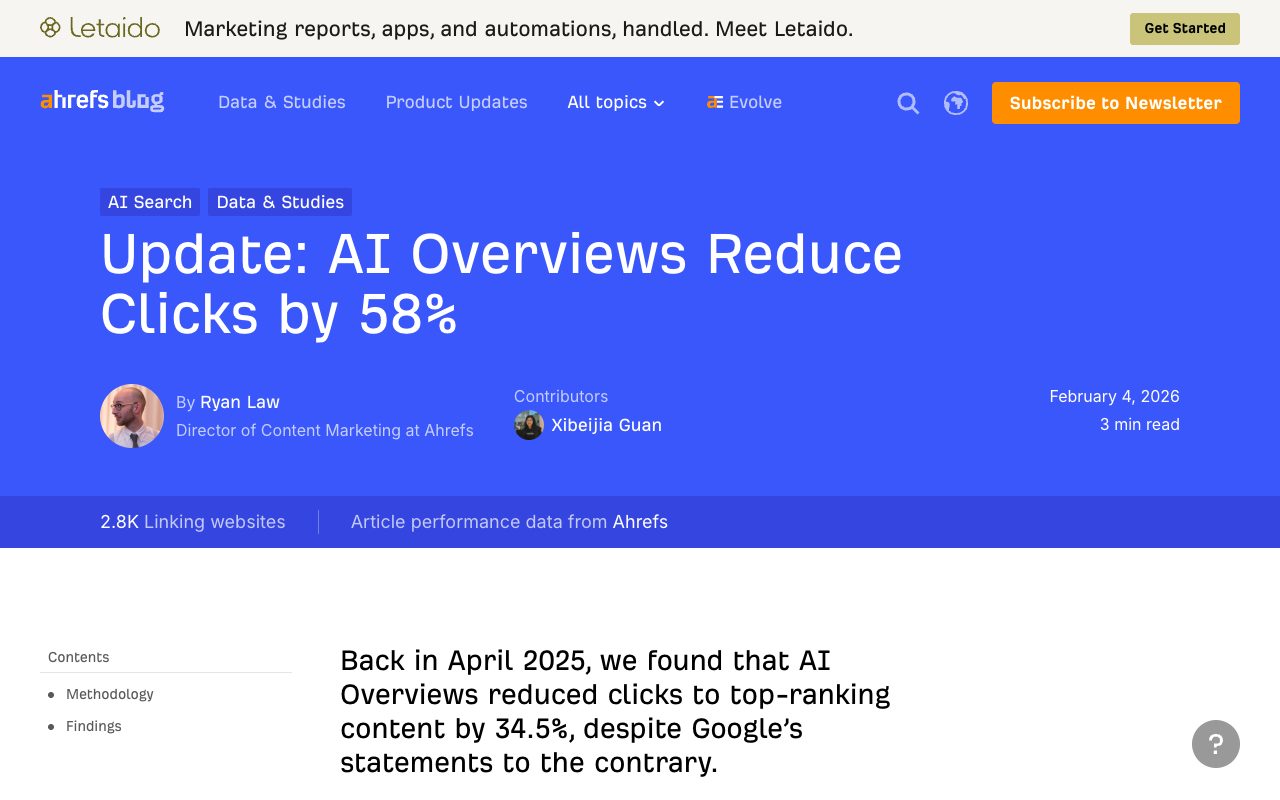
The click side is why this matters. Pew Research Center's analysis of 68,879 real Google searches (July 22, 2025) found users clicked a traditional result on 8% of visits with an AI summary, versus 15% without. Ahrefs re-ran its 300,000-keyword study on February 4, 2026 and measured a 58% lower click-through rate for the top-ranking page when an Overview is present. The citation is the click you still get.
What Are the Risks an AI Overview Tracker Must Catch Beyond "Not Cited"?
"Not cited" is the least interesting failure: it is visible and has an obvious fix. The expensive ones leave the citation column looking fine:
- The Overview cites an outdated page. A retired feature page or a pricing tier you no longer sell. Green check, wrong numbers.
- It cites a negative third-party source. A complaint thread becomes the source behind "is this brand worth it".
- It cites a competitor for your category query. Every buyer who never scrolls has now met someone else.
- Your brand is mentioned, nothing is cited. Recalled from training data: no link, no click, no page to improve.
- The citation exists, but the claim beside it is wrong. "Starts at $49" when it starts at $29, "no API" when there is one.
- Price, features or positioning are summarized wrongly even when every link points at your own domain.
The rule to run the program by: citation presence is not a positive brand outcome. A tracker that stops at cited or not cited scores every failure above as a success.
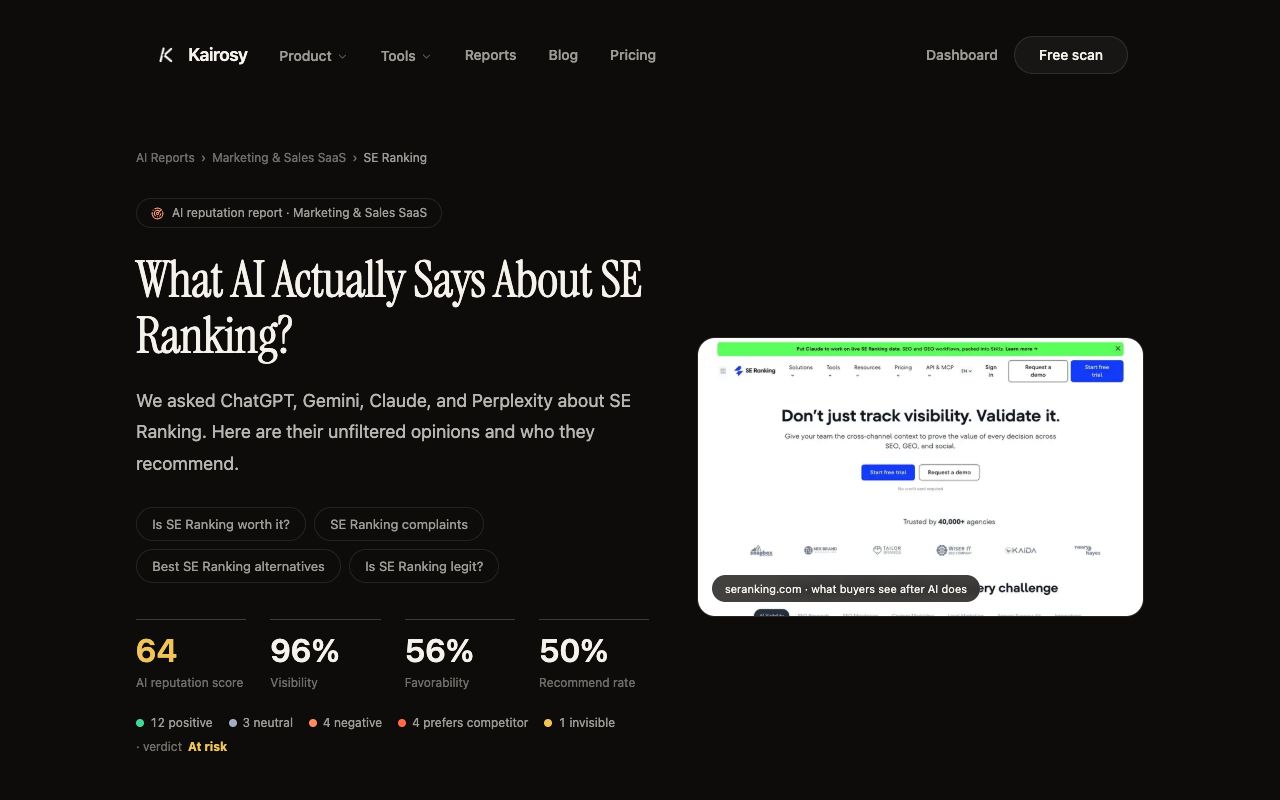
Kairosy's scan of SE Ranking (August 5, 2026) shows how far an answer travels without the citation column moving. The score is 64/100, verdict "At risk", and ChatGPT's negative answer names "pricing hikes, data accuracy/rank-tracking reliability issues, and rigid support or refund handling." The report's own line on intent:
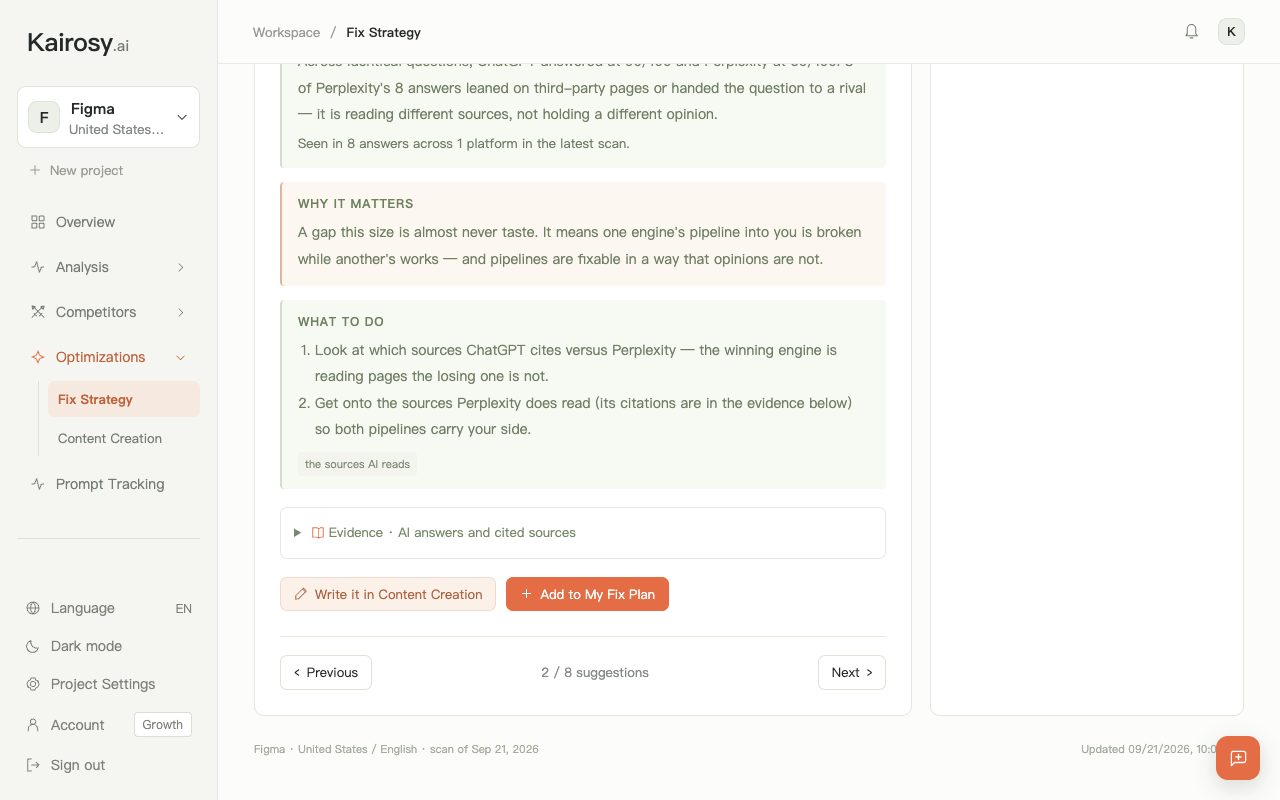
Set it against a named rival and that topic tops out at 98; ask for alternatives with nobody named and it collapses to 26. The difference is not what buyers think of the product. It is which page the model has to hand.
Same brand, same month; the query phrasing decides whether the answer recommends or cautions. Kairosy's scan of Semrush the same day repeats it: 59/100, "At risk", negatives built on billing and cancellation complaints, not the product.
How to Set Up AI Overview Rank Tracking in 9 Steps
Tool-agnostic; each step is a column you should be able to export.
1. Build the query set
Three sources: keywords where you already rank top 10, category queries buyers type before they know your name ("best X for Y", "X vs Z"), and brand-plus-modifier queries ("brand pricing", "brand alternatives"). 100 to 300 queries is enough.
2. Record the trigger rate
Per run, log the share of queries that produced an Overview, split by device and country. A rate climbing from 20% to 45% on commercial queries outweighs any single lost citation.
3. Track owned citations
Which of your URLs were linked, in which Overviews, at what position in the list. Store the exact URL: /pricing and /pricing-2024 are a win and a liability.
4. Track competitor citations
Same table for the three to five rivals that take deals from you, reported as share of citations per query cluster, not one total.
5. Classify the cited URL and source type
Tag each citation: owned, competitor-owned, review platform, forum, news, docs. Source type predicts tone: vendor docs describe, forum threads judge. Semrush found the top organic result absent from more than half of desktop Overviews, so sources will not match the rankings you already watch.
6. Read the claim and sentiment behind each citation
Record what the answer says beside each citation: recommends, describes, caveats, or warns against. This is where rank trackers stop and AI reputation tools begin. Kairosy does not read Google AI Overviews; it asks ChatGPT, Gemini, Claude and Perplexity the questions a buyer would ask, classifies each answer positive, neutral or negative with the reasons, and keeps the real citation URLs. Gemini is the nearest public window into what Google's own models believe about you, so a Gemini brand monitoring view is the partner to an AI overview tracker, not a replacement.
7. Find the citation gaps
Queries where the Overview triggers, a competitor is cited, and you have a page that could be. Cited in four of four runs is a target, once in four is noise; the citation gap guide covers the scoring.
8. Pick the pages or third-party sources to fix
Owned pages: correct the facts, answer in the first hundred words, and confirm the page is indexed and eligible for a snippet, which is Google's only stated requirement for AI Overviews and AI Mode; the free index checker settles that in a minute. Third-party sources: the review page the Overview keeps citing, fixed by a response, a correction request, or fresher reviews.
9. Re-check on a schedule
Weekly for the full set, daily for the 20 to 30 queries closest to revenue. A monthly check finds a lost citation three weeks after the traffic left.
How to Track AI Overviews Rankings Over Time (New, Lost and Changed Citations)
A one-off audit tells you where you stand. The value sits in six deltas:
- New and lost citations per week, by URL. Lost on a query that still triggers means someone else took the slot; lost on a query that stopped triggering is a different problem.
- Citation frequency: how many of the last N runs cited you per query. Stable ones are assets; flickering ones need a better page.
- Competitor citation changes: who gained the slots you lost, and whether one rival is consolidating a cluster.
- Source changes: "best X" moved from citing vendor pages to a Reddit thread, which shifts every sentence, not just the links.
- Before and after optimization: date-stamp each page change and read the series across it, or you will credit the wrong fix.
- Citation to sentiment changes: did earning the link change what the answer says, or add a link under the same caveat?
Google helps with one of those. Search Console's generative-AI insights, announced June 3, 2026 and live for all sites by August 31, 2026, show impressions from AI Overviews and AI Mode by page and country. Search Engine Journal's August 31 coverage notes the report carries no click data, and it has no query text. It confirms you appeared; it cannot say what the Overview said or who else it cited.
What Is the Best AI Overview Tracker in 2026? (5 Verified Tools Compared)
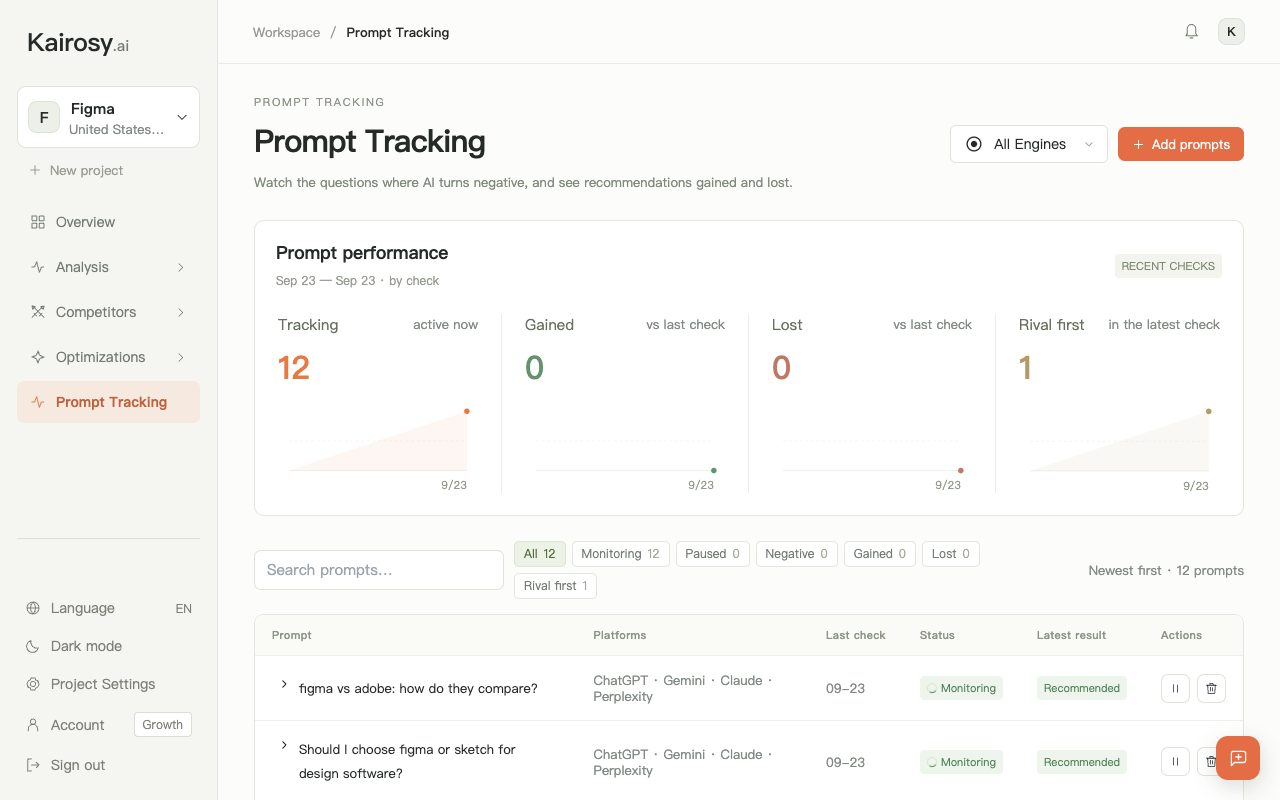
It depends on which of the nine steps you need software for. Each tool below states on its own site that it reads Google AI Overviews; prices were checked September 17, 2026 on the vendors' pricing pages, monthly billing unless noted, and "Records" is the vendor's claim, not our benchmark. Kairosy is listed last for what it does: step 6, not steps 1 to 5.
| Tool | Reads Google AI Overviews? | Records | Starting price (Sept 2026) |
|---|---|---|---|
| Semrush Position Tracking | Yes, as a SERP feature; a cited domain is logged as position #1 | Keywords triggering Overviews, whether you appear, mobile and desktop splits, ZIP-level locations | $139/mo (SEO plan) |
| Ahrefs Brand Radar | Yes, AI Overviews and AI Mode, plus ChatGPT, Perplexity, Gemini, Copilot, Claude | Cited URLs and domains, brand mentions, AI share of voice against competitors | Ahrefs Lite $129/mo; Brand Radar AI from $199/mo |
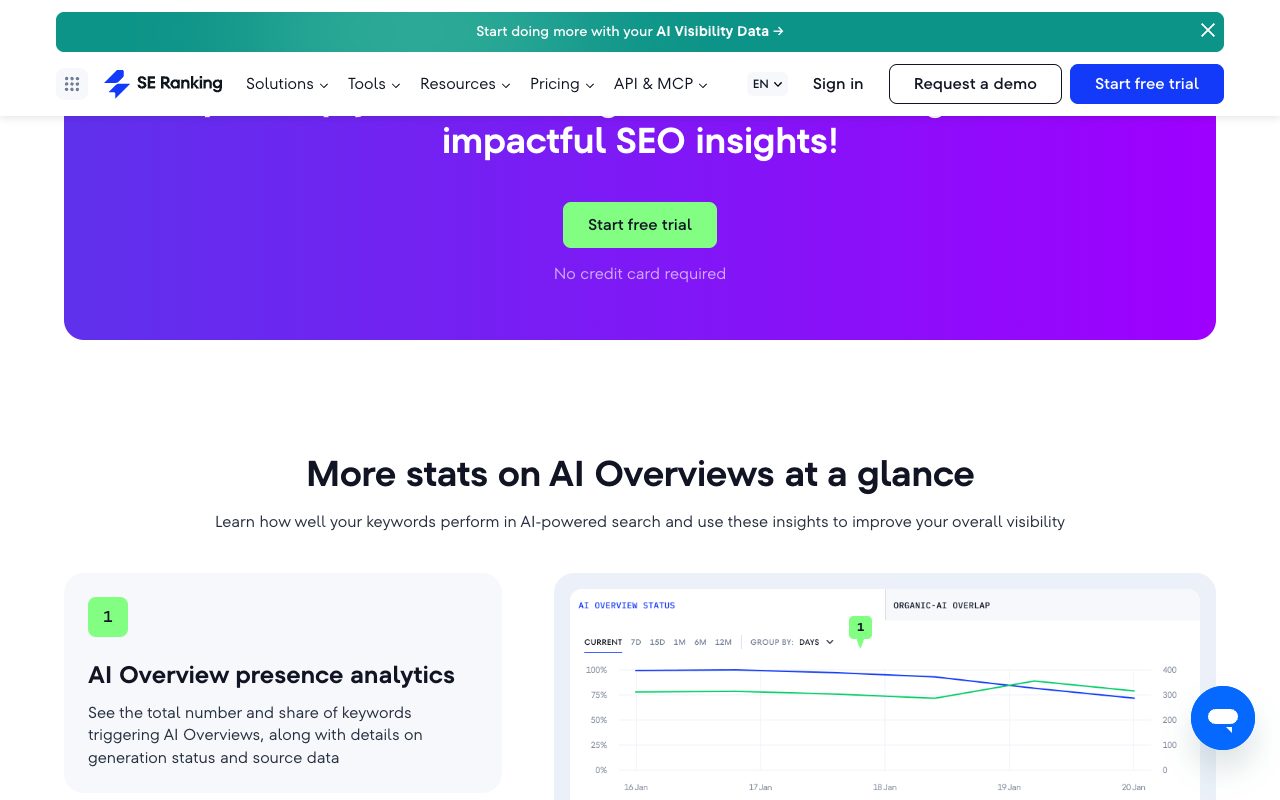
| SE Ranking AI Overviews Tracker | Yes, per keyword, desktop and mobile, every country where Overviews run | Share of keywords triggering Overviews, domains and URLs used as sources, competitor positions, historical AIO data | Core $129/mo ($103.20 annual); AI Search add-on +$89/mo |
| AccuRanker AccuLLM | Yes, AI Overviews and AI Mode, plus ChatGPT and Perplexity | Mentions, cited domains and landing pages, sentiment scored 1 to 100, share of citations, competitor benchmarks | Professional $224/mo for 2,000 keywords; AccuLLM not priced separately |
| ZipTie | Yes, AI Overviews and AI Mode, plus ChatGPT, Perplexity, Gemini, Copilot, Bing AI Overview | Citations, competitor rankings, sentiment; prompt slots refreshed daily, weekly or monthly | Starter from $42.75/mo (usage-based); 7-day free trial, no card |
| Kairosy | No. Scores what ChatGPT, Gemini, Claude and Perplexity say about a brand | Per-answer sentiment with reasons, real citation URLs, competitor share of voice, prioritized Fix Plan, weekly re-scan alerts | Basic $29/mo; 7-day free trial, no card |
Nozzle appears in many roundups, but as of this check its homepage, features and pricing pages do not mention AI Overviews, so it is left out rather than listed on hearsay. In your own export, keep Semrush's "#1 for a citation" rows apart from organic positions, or your average-position chart improves for reasons unrelated to rankings.
If you buy one: SE Ranking for steps 1 to 5 at the lowest all-in price, Brand Radar when you already pay for Ahrefs, AccuLLM or ZipTie when cross-engine sentiment matters as much as the Google citation. For step 6, add an AI brand monitoring view that reads the answer text.
How Does the Overview, Source, Claim, Brand Impact, Fix, Re-track Loop Work?
The nine steps produce a spreadsheet; the loop turns it into a weekly rhythm with a yes-or-no question at each link:
- Overview: did the query trigger one, on which device and country?
- Source: which URL was cited, and what type of page is it?
- Claim: what does the answer assert about the brand beside that source?
- Brand impact: is the assertion positive, neutral or negative for a buyer, and is a competitor preferred?
- Fix: which page, fact or third-party source changes the claim, and who owns it?
- Re-track: after the fix ships, did the Overview and the assistants change their answer, and by when?
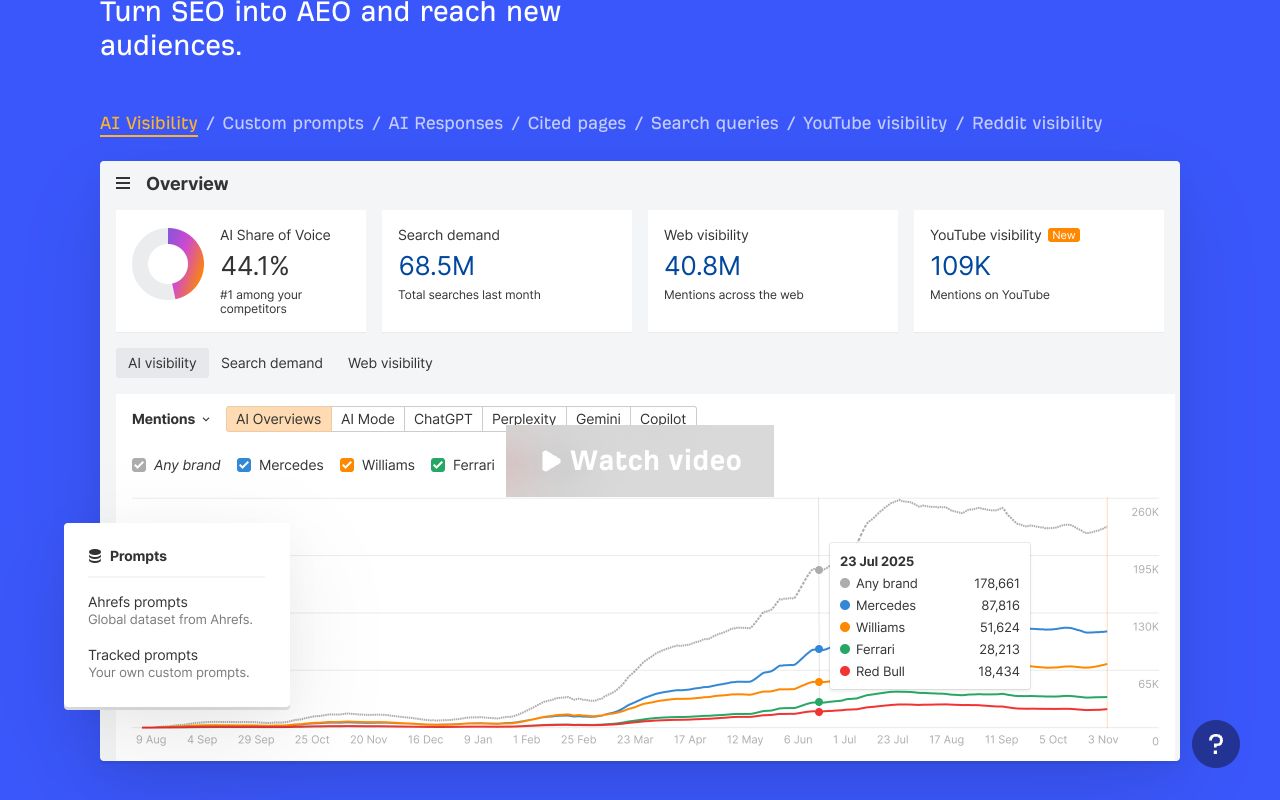
Kairosy's workspace follows this shape for the assistant half: each report scores every answer and keeps its citations, the Competitors module shows share of voice and where a rival is preferred, the Fix Plan ranks the actions, and the AI-Ready Page Audit runs 33 checks in five dimensions with a "since your last audit" diff. Tracked prompts are checked daily on paid plans, every brand-and-market slot is re-scanned on Monday, and alerts fire only on change: a new negative keyword, a competitor becoming the preferred pick, a score drop, an engine flipping sentiment. Plans are $29, $99 and $399 per month; signup is a 7-day trial, full reports, no card.
For the Google half, the trackers above own steps 1 to 5. If you cannot name the last time an Overview described your pricing wrongly, you are counting links, not tracking AI Overviews; the AI-ready audit is a sensible first fix for any owned page the loop flags.
AI Overview Tracker FAQs
How do you track AI Overviews for free?
Search Console's generative-AI report gives impressions by page and country (worldwide since August 31, 2026). SE Ranking's tracker page advertises five free keyword checks a day, ZipTie a 7-day trial without a card. A spreadsheet with the nine columns above, filled by hand for 30 queries each Monday, is a real tracker until you pass a few hundred queries.
How to track mentions of AI Overviews continuously?
Continuous means scheduled, not real-time: revenue queries daily, the rest weekly, every snapshot stored with its date, alerts only on state changes such as a citation vanishing, a competitor entering, or a trigger rate crossing a threshold.
How to track competitor mentions in AI Overviews and summaries?
Add competitors to the same query set, record their citations in the same table, and compute share of citations per cluster. For assistant summaries outside Google, a scanner that classifies answers tells you when a rival is recommended instead of you, not merely mentioned.
How to track traffic from AI Overviews?
Not precisely, as of September 2026: Google folds Overview clicks into the Web search type and the AI report shows impressions without clicks. The proxy is the Ahrefs and Pew method on your own data: compare click-through on queries that trigger an Overview against matched queries that do not.
Does an AI overview tracker cover Google AI Mode too?
The five in the table say yes, but check the counting: AI Mode answers are longer, cite more sources, and are not tied to one keyword, so "cited in AI Mode" without the prompt text is a mention, not a citation you can act on.
See what AI says about your brand
Run a free scan across ChatGPT, Gemini, Claude & Perplexity in about 30 seconds.
Run my free scan