How to Analyze Citation Gaps in AI Search (2026 Guide)
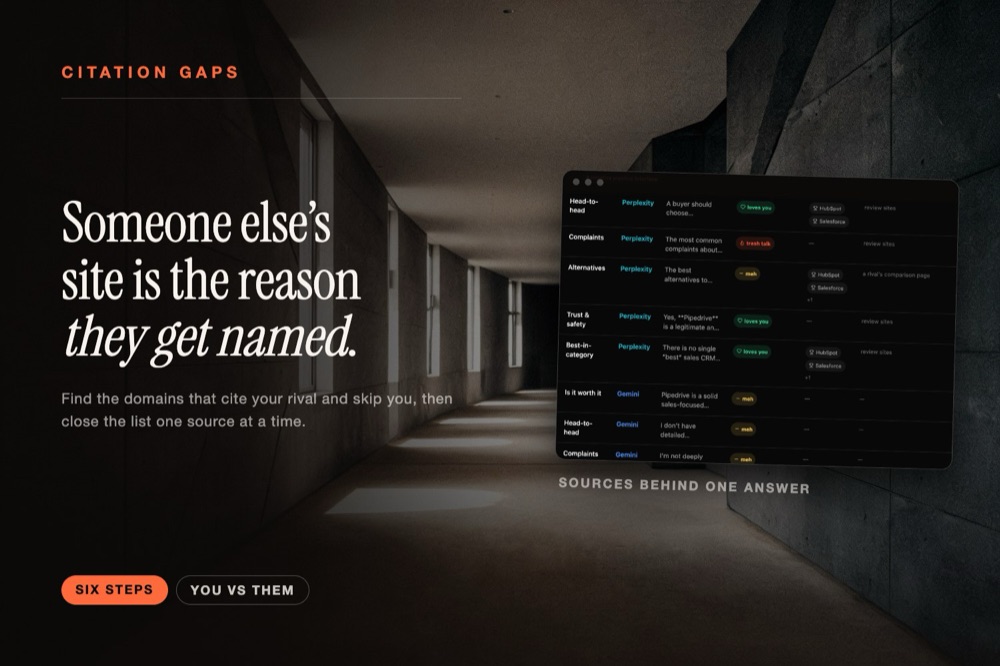
A citation gap is any source an AI engine leans on in your category that points at a rival instead of you. Find those sources and you have a work list. Ignore them and you are guessing.
This guide treats how to analyze citation gaps in AI answers as a competitive exercise, not a content audit: which domains feed your competitors, which prompts they own outright, and which engine is the outlier. It assumes somebody is already winning the questions you care about, because on category prompts, somebody always is.
What Is a Citation Gap, and Why Do Your Competitors Own It?
When ChatGPT or Perplexity answers a buying question, it retrieves a handful of pages and usually links them under or inside the answer. A citation gap exists when a competitor's URL sits in that source list on a prompt that matters to you, and none of your URLs do.
Gaps come in three shapes, and each one needs a different response:
- Domain gap. One publisher — a review platform, a subreddit, a trade title — gets cited over and over, and every citation lands on a competitor.
- Prompt gap. You are cited fine on branded questions but disappear on category questions like "best help desk for a 10-person team".
- Engine gap. Perplexity cites you regularly, Gemini never has. Same pages, different retrieval behavior.
The comfortable assumption is that strong Google rankings close all three. They do not. Ahrefs ran 15,000 long-tail queries through Google plus four assistants and found that only 12% of AI-cited URLs also ranked in Google's top 10 for the same prompt (published August 11, 2025). The per-assistant spread is what makes gaps so uneven:
| AI assistant | Cited URLs that also rank in Google's top 10 |
|---|---|
| Perplexity | 28.6% |
| Microsoft Copilot | 8.6% |
| Gemini | 8.2% |
| ChatGPT (in-text links) | 8.0% |
| ChatGPT (reference list) | 6.1% |
Source: Ahrefs, 15,000 long-tail queries, August 2025.
Even Google's own AI Overviews loosened their grip on page one: a later Ahrefs study of 863,000 keyword SERPs put top-10 citations at 37.9%, down from roughly 76% in its July 2025 run, with about 31% of citations coming from pages ranked beyond position 100 (published March 2, 2026). That is how a competitor who outranks you nowhere can outcite you everywhere.
What Is the Difference Between Mention-Based and Citation-Based Visibility?
Teams use the two words interchangeably, then argue about numbers that were never measuring the same thing. The difference between mention-based and citation-based visibility is the difference between being talked about and being used as evidence.
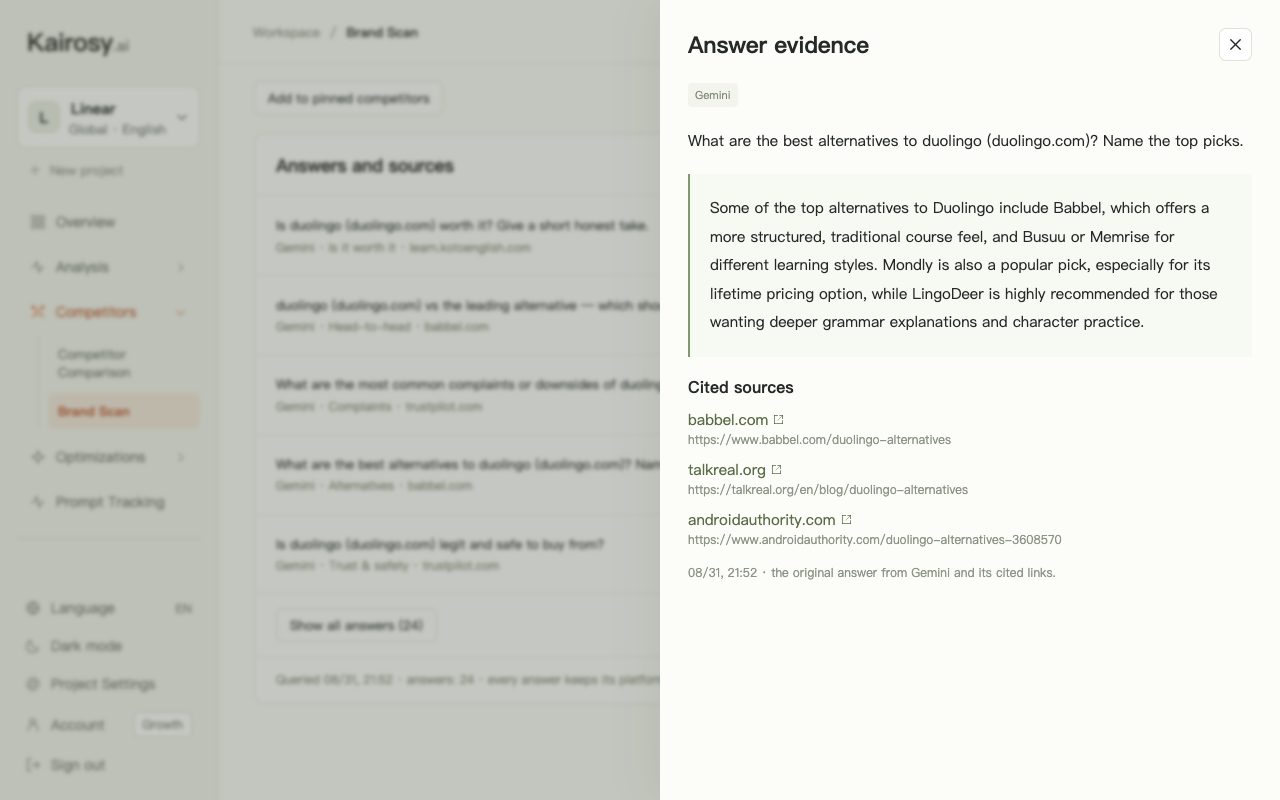
A mention is your brand name in the answer text. A citation is a source link the engine attached to it. You can have either without the other, and each combination means something specific:
- Mentioned and cited. The engine read your page and recommended you by name. This is the outcome you are buying.
- Mentioned, not cited. The model recalls you from training data or picked your name off someone else's page. It works until the model refreshes.
- Cited, not mentioned. Your page supplied the facts and a competitor got the recommendation. Glossary posts and how-to guides do this constantly.
- Neither. A clean gap, and the easiest one to spot.
Row three is the expensive one. You paid for the research, the engine used it, and the answer sent the reader to a rival. A mention-only dashboard will never show it, because your name was never in the text.
Track both numbers side by side. Mention share tells you how models describe your market — our guide to AI share of voice covers that half, and tracking brand mentions covers the tooling. Citation share tells you which pages earned their place in the answer, which is the half you can act on this quarter.
How to Analyze Citation Gaps in AI: A Six-Step Workflow
Six steps, roughly a day of work the first time and two hours a month after that. Nothing here requires a paid platform, though a platform makes step three survivable.
Step 1: Build a prompt set your buyers would actually type
Aim for 30 to 50 prompts across five buckets: category ("best X for Y"), comparison ("A vs B"), use case ("how do I do Z with"), problem ("why is my Z failing"), and branded ("is [you] any good"). Write them as full sentences, not keywords — retrieval behaves differently for a question than for a noun phrase.
Step 2: Let the engines name your competitors
Do not import the competitor list from your board deck. Run the category prompts first and write down whoever the models actually recommend. Half the time the set includes a company your sales team has never heard of and excludes your designated arch-rival.
Step 3: Capture answers per engine, and per market if you sell abroad
Run every prompt on each engine you care about, at least twice, because answers vary between generations. If you sell in more than one country, repeat the set per country — local sources swap in and out. This is where continuous AI brand monitoring beats a manual sprint, since one snapshot cannot tell noise from a trend.
Step 4: Log every cited URL in one sheet
One row per citation, not per answer. These columns are enough:
| Column | What you record | What it tells you |
|---|---|---|
| Prompt | The exact question text | Which buying question the citation belongs to |
| Engine + market | ChatGPT / Gemini / Claude / Perplexity, plus country | Whether the gap is engine-specific or universal |
| Cited domain | Root domain of the source link | Which publishers act as gatekeepers in your category |
| Cited URL | The specific page | The format and depth the engine rewarded |
| Owner | You, a named competitor, or a neutral third party | Who currently holds the slot |
| Brand named? | Yes / no, and whose | Your mention-versus-citation split |
| Action | Earn, pitch, build, or ignore | Turns the audit into a backlog |
Step 5: Pivot the log three ways
Pivot by domain to expose gatekeepers you are absent from. Pivot by prompt to see which questions a single competitor sweeps. Pivot by engine to catch the outlier — if one engine ignores you while the other three do not, the problem is usually crawlability or freshness, not authority.
Step 6: Score the gaps before you touch anything
Rank each gap by how often the domain appears in your log and how reachable it is. A subreddit thread cited nine times is worth more attention than a paywalled analyst report cited once. Kill anything you cannot influence within a quarter.
Once you know how to analyze citation gaps in AI this way, it stops being a project and becomes a monthly loop with a backlog attached.
Which Metrics Matter in AI Search Citation Analytics?
Most AI search citation analytics dashboards throw a dozen numbers at you. Five of them actually change decisions:
- Citation rate. Prompts where at least one of your URLs appears as a source, divided by prompts run.
- Citation share versus each named competitor. Your cited URLs as a percentage of all cited URLs in the same prompt set.
- Unlinked mention rate. How often you are named with no source link behind it, which flags reliance on model memory.
- Gatekeeper concentration. How many distinct domains supply the first half of all citations in your set. A low number means a short, attackable list.
- Engine variance. The spread between your best and worst engine on the same prompts.
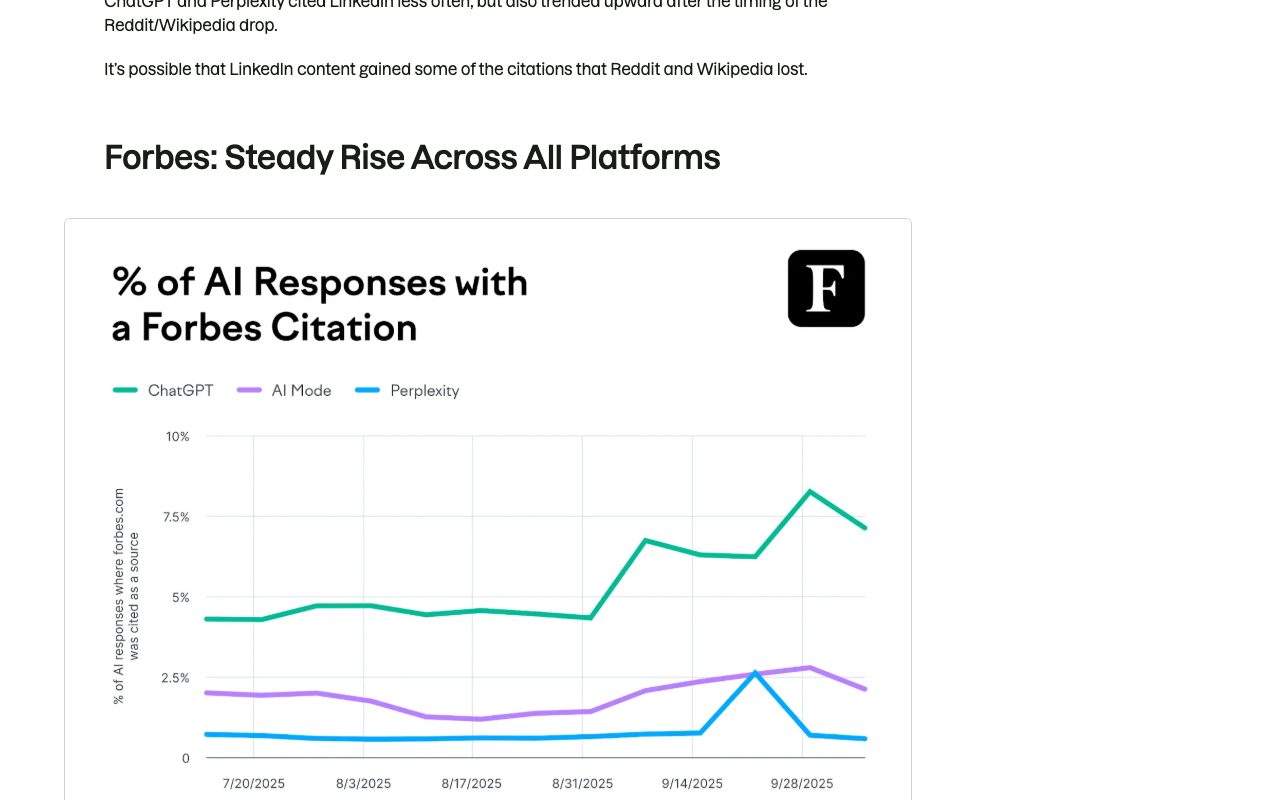
Two honest caveats. There is no published cross-industry benchmark worth chasing, so your own delta month over month is the only number with meaning. And citation mixes move for reasons that have nothing to do with you: Semrush tracked 230,000 prompts and more than 100 million AI citations over 13 weeks and watched ChatGPT's most-cited domain mix reshuffle sharply after Google removed the num=100 search parameter in September 2025 (published November 10, 2025). Judge yourself on trend lines, never on one snapshot.
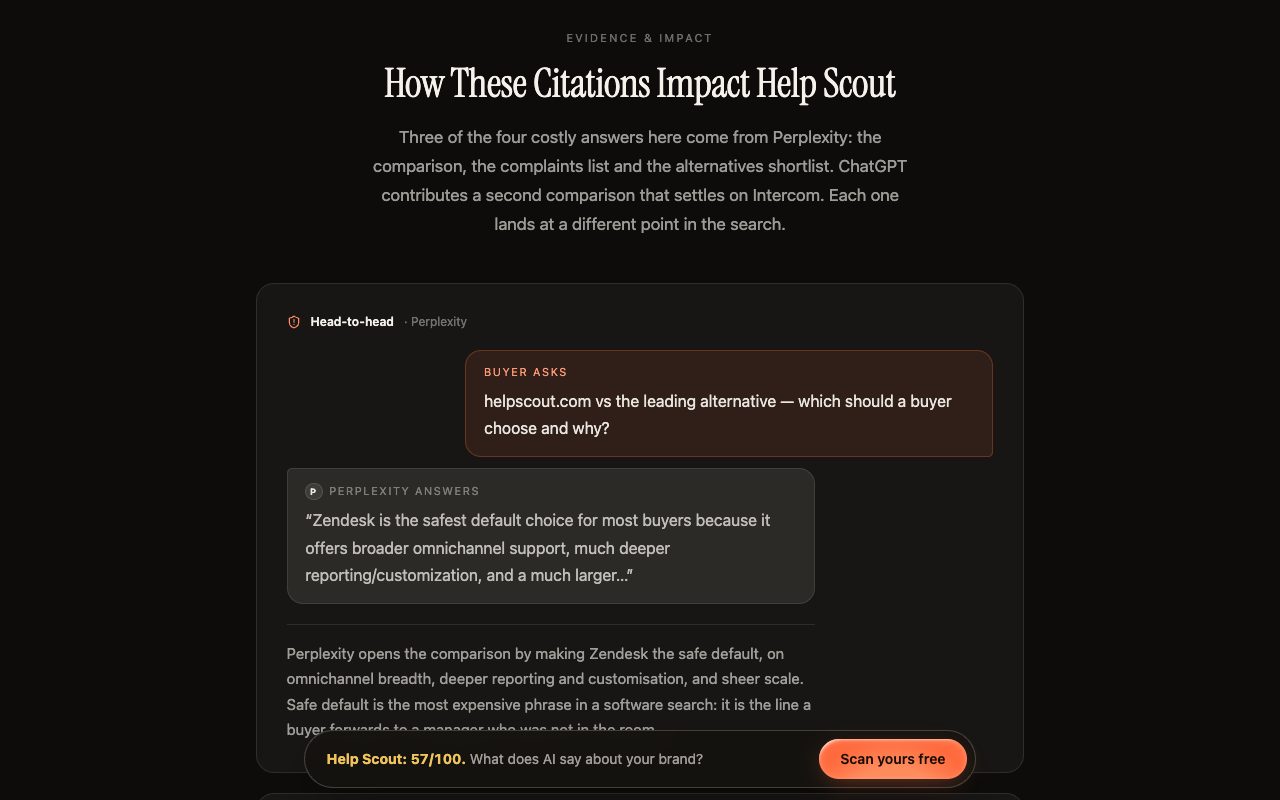
Per-brand examples calibrate what "normal" looks like. Kairosy's scan of Typeform shows wide recognition sitting on a source list dominated by third-party roundups, and the scan of Help Scout shows how much of a mid-market category's citation supply comes from a handful of comparison publishers.
How to Improve AI Citations Once You've Found the Gap
Gap analysis only pays off if it changes what you publish and where you show up. Three lanes, and most teams need all three.
Lane one: get onto the domains that already get cited. Your log will name a short list of publishers doing the heavy lifting. Claim and populate your profile on the review platforms in it, answer questions in the communities on it, and pitch the comparison articles that keep reappearing. Our roundup of the most cited AI sources explains which categories of site tend to dominate.
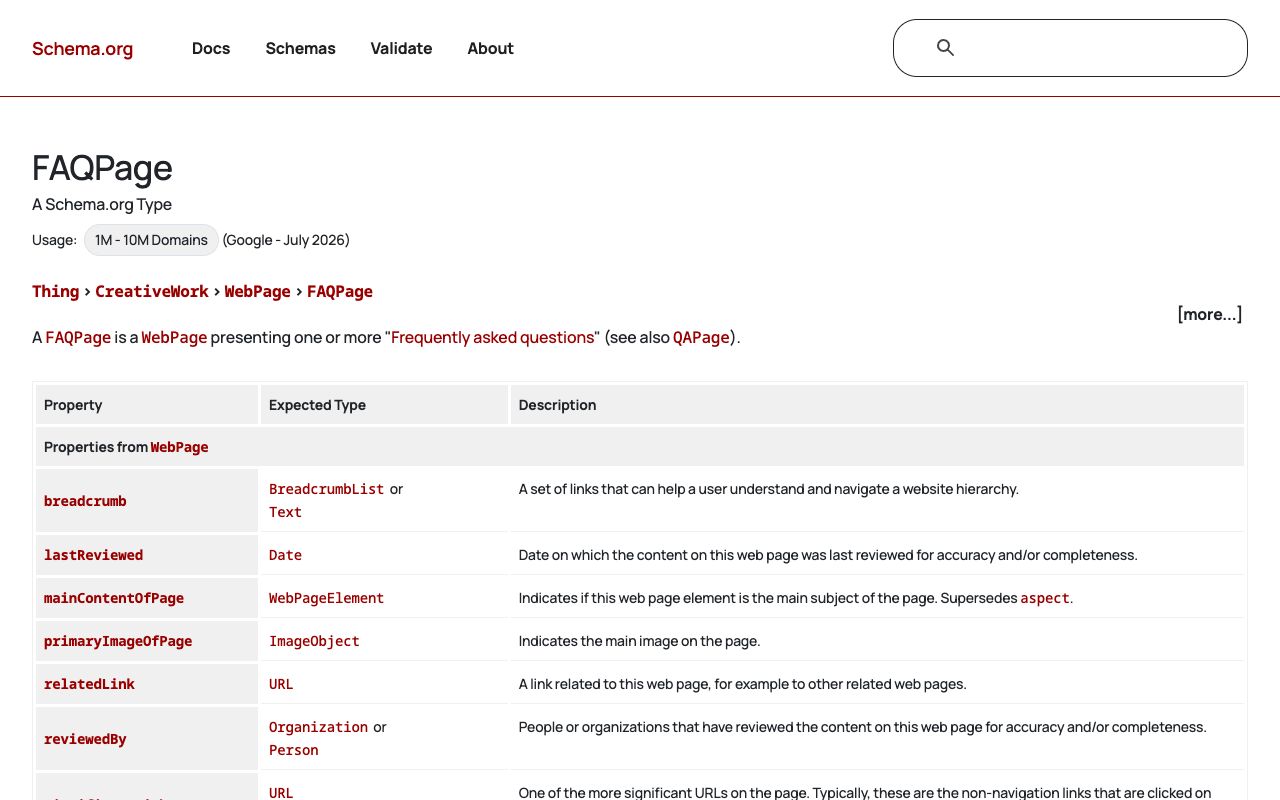
Lane two: make your own pages easy to retrieve and easy to quote. Google is blunt in its own documentation: there are no special requirements or extra optimizations for AI Overviews and AI Mode, but a page must be indexed and snippet-eligible to be used at all. So the work is unglamorous. Put the direct answer in the first two sentences under each heading, date your statistics, and keep structured data accurate — FAQPage and Product are the types engines quote most, and our free schema markup checker validates yours. Our llms.txt generator handles the file that declares which pages matter.
Lane three: take the prompts, not the keywords. When a prompt gap shows the engine sourcing a third-party comparison because no first-party page answers the question, write that page. "Alternatives", "vs" and "pricing for [segment]" pages are the classic vacancies. Then fold the result into ongoing AI reputation management, so an August fix still holds in November. What does not work is buying placements — engines rotate sources, and thin syndicated filler decays fast.
Best AI Citation Analysis Tools for AI Optimization in 2026
Below are five platforms for citation analysis AI search visibility teams use in practice, with what each one is genuinely good at. Prices were checked on each vendor's own site on August 5, 2026.
Kairosy — built for the competitive read. A scan puts your category questions to ChatGPT, Gemini, Claude and Perplexity, then the report lists the sources each engine cited per answer and names which rivals got recommended alongside you, which is exactly the raw material for a gap log. The competitors board tracks share of voice and topic gaps over time, weekly rescans cover each brand-and-market pair, and prompt tracking runs daily on every paid tier. The first 7 days are free, then Basic $29/mo, Pro $99/mo, Growth $399/mo. It is a visibility and reputation scanner, not a rank tracker or backlink tool.
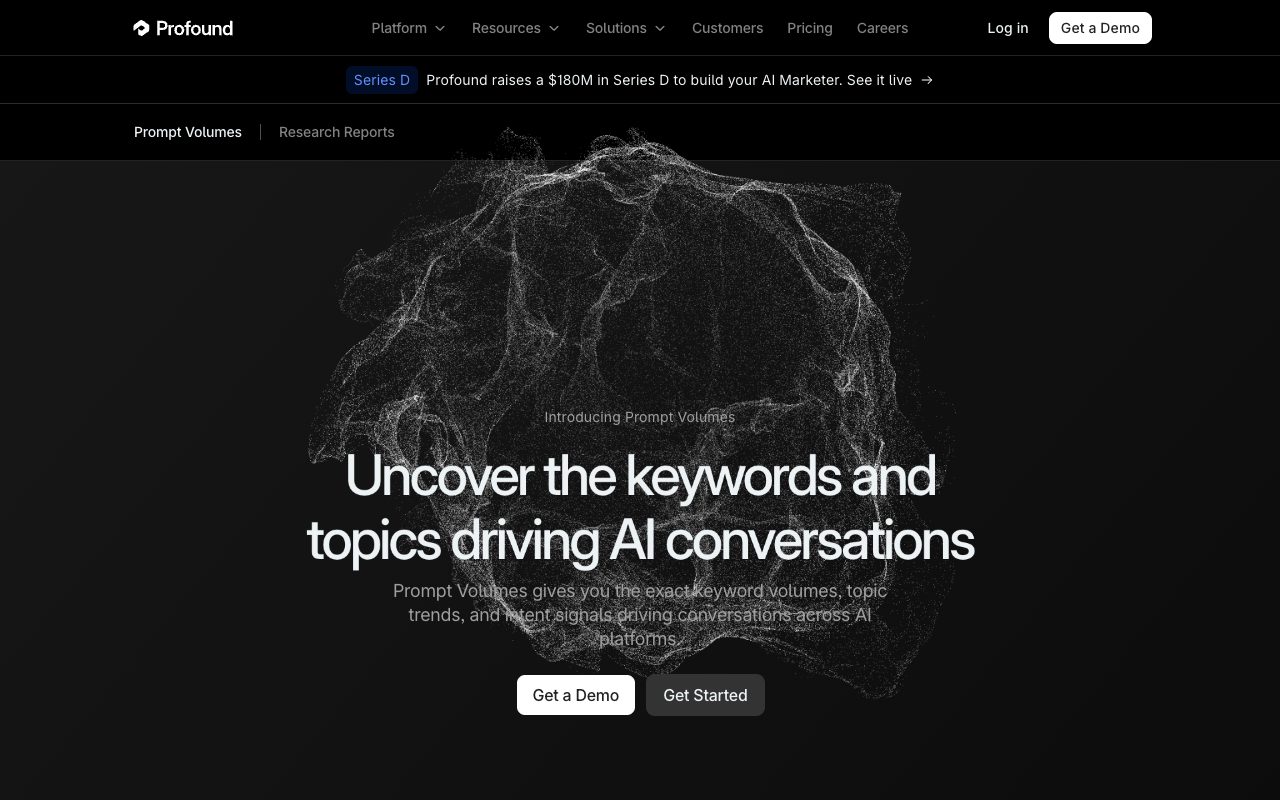
Profound — the enterprise end, with broad answer-engine coverage and exports. Its pricing page now lists just a free Trial for brands (50 prompts daily for 7 days on ChatGPT, Gemini and Google AI Overviews, without exports or API) and a custom Enterprise tier with API access, CSV and JSON exports and up to nine engines. Its prompt volume data is the differentiator if you prioritize by demand.
Otterly.AI — the cheapest credible entry point for link-level citation work. Its pricing page lists Lite at $29/month for 15 prompts, Standard at $189/month for 100 and Premium at $489/month for 400, all with link citation analysis across ChatGPT, Google AI Overviews, Perplexity and Copilot, 15% off annually. Fifteen prompts is thin for a full audit but fine for sanity-checking a category.
Semrush — worth it if you already live there, since AI visibility now sits inside the main plans instead of a separate toolkit. Its SEO and AI search pricing shows SEO at $139/month, Starter at $199/month with 50 prompts tracked daily and one domain for AI brand performance, Pro+ at $299/month with 100 prompts and Advanced at $549/month with 200. The competitor research view is the part that maps to gap work.
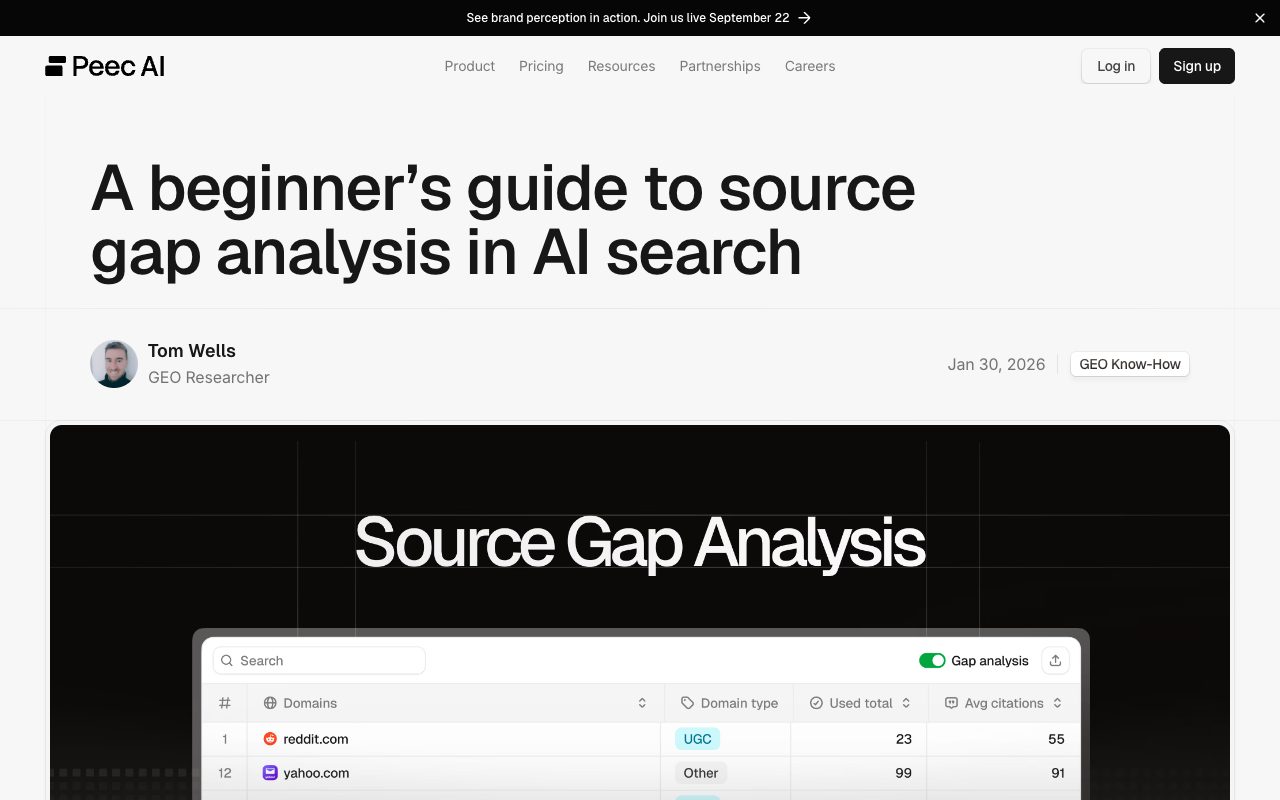
Peec AI — European, clean, and unusually good at surfacing which source types feed an answer, including review sites and community threads. It publishes Starter, Pro, Advanced and Enterprise tiers plus a free trial, though the figures on its pricing page render client-side, so confirm the current number there before you budget.
None of them replace the sheet. Each samples prompts differently, so treat the export as input to your own log, not as the verdict.
What Are the Top FAQs on Citation Gap Analysis?
How do I start AI search citation analytics with no budget?
Run 20 prompts by hand across two engines, log the source links in a spreadsheet with the columns above, and repeat monthly. That produces a usable gap list in an afternoon. Paid tooling buys you frequency, market coverage and history, not a different method.
What is the practical difference between mention-based and citation-based visibility?
A mention is your name in the answer. A citation is a source link the engine used to build it. Mentions can survive on model memory alone. Citations always trace back to a live page, which makes them the half you can influence directly this month.
How to improve AI citations when a competitor owns every source
Attack the gatekeeper domains rather than the competitor. If four review sites and two roundups supply most citations in your category, a strong profile and a placement in each of those beats another blog post on your own domain.
Do citation gaps differ by country?
Yes, often dramatically. The same prompt asked from Germany or Japan pulls local publishers and local review platforms into the source list. If you sell in multiple markets, run the prompt set per market — Kairosy's paid plans cover 25 country-specific markets for exactly this reason.
Is a citation gap the same as a content gap?
No. A content gap says you have not written about a topic. A citation gap says the topic is being answered without you, sometimes using content you already published. The fix for the second is often distribution and formatting, not more words.
See what AI says about your brand
Run a free scan across ChatGPT, Gemini, Claude & Perplexity in about 30 seconds.
Run my free scan