Query Fan-Out Tool Guide 2026: Generators, Data and Best Practices
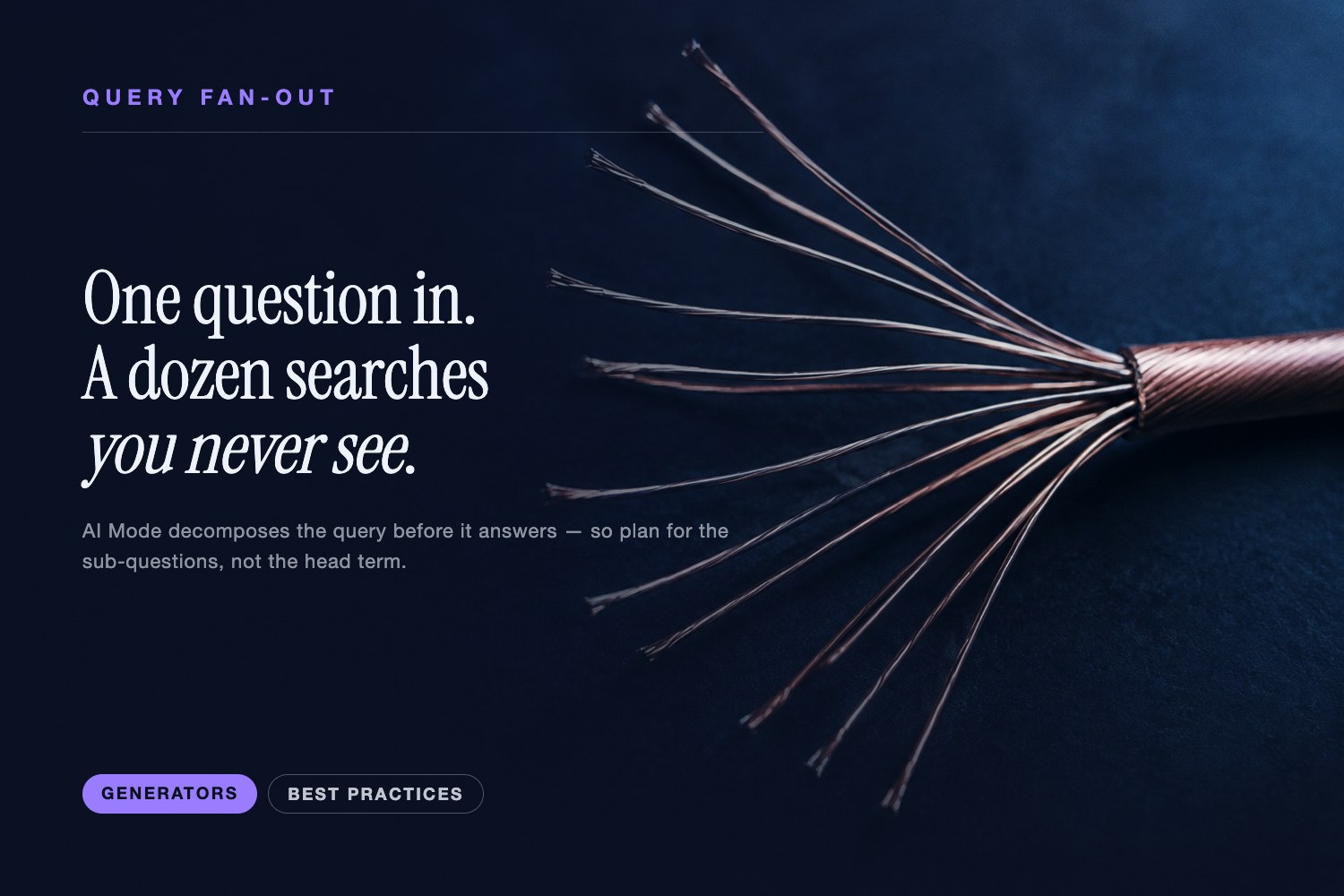
Google AI Mode does not run your search once. It rewrites the question into a batch of related sub-queries, issues them in parallel, and assembles a single answer from whatever comes back. A query fan-out tool is software that predicts that batch for you, so you can check whether your page answers the sub-questions rather than only the head term you targeted.
That prediction is the entire product. Nobody outside Google can read the real internal sub-queries, so every query fan-out tool either simulates them with an LLM or approximates them from People Also Ask data and clustering. Below: how the technique works according to Google's own material, why it wrecks head-term keyword planning, the tools worth using with prices checked in August 2026, and the practices that hold up.
What Is Query Fan Out, and What Does a Query Fan-Out Tool Do?
Fan-out is a retrieval step. Before the model writes a word, the system decomposes your question into several narrower questions, runs a retrieval pass on each one, then reasons over the merged result set. One typed sentence, a dozen or more searches behind the curtain.
Robby Stein, Google's VP of Product for Search, gave a plain example in a July 30, 2025 interview reported by Search Engine Journal: ask about things to do in Nashville with a group and the system spins up questions about great restaurants, great bars, and what to do if kids are along. Your page on Nashville group itineraries is never judged against the phrase the user typed. It is judged against those offshoots.
A query fan-out tool inverts the process. You feed it a keyword — sometimes a keyword plus a URL — and it produces the sub-queries the system is likely to generate, usually annotated with intent type and the content format that would answer each one. The better tools then score your existing page section by section against that list and tell you which sub-queries you never address.
How Does Google Describe the Fan-Out Technique?
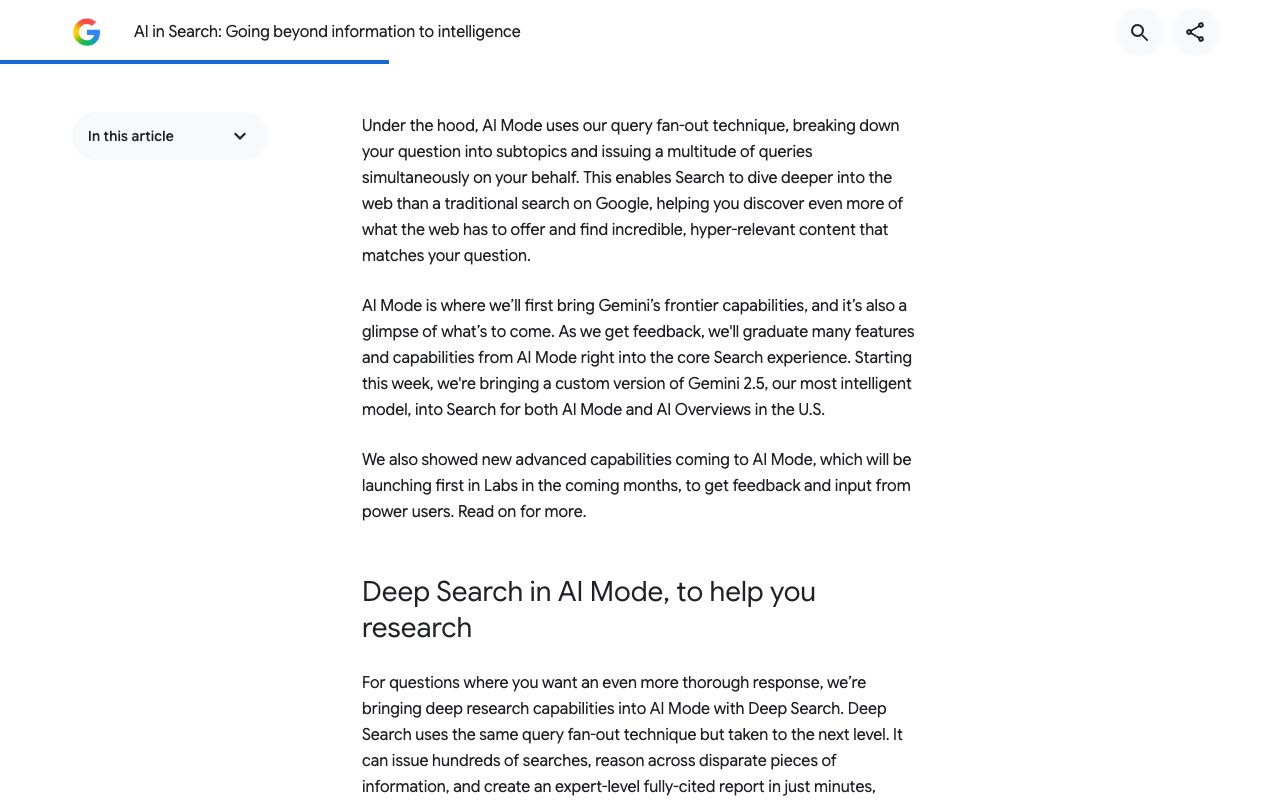
Google uses the phrase itself, but sparingly. The Google I/O AI Mode update published May 20, 2025 states that "under the hood, AI Mode uses our query fan-out technique, breaking down your question into subtopics and issuing a multitude of queries simultaneously on your behalf." The same post says Deep Search applies the identical technique at larger scale, issuing hundreds of searches before writing a cited report.
The developer documentation is more cautious with vocabulary. Google's AI features guidance for Search, last updated December 10, 2025, describes AI Overviews and AI Mode as "issuing multiple related searches across subtopics and data sources" — the same behavior, no label. That page also repeats a claim worth taking seriously: there are no extra requirements or special optimizations for appearing in these surfaces beyond standard indexability and snippet eligibility.
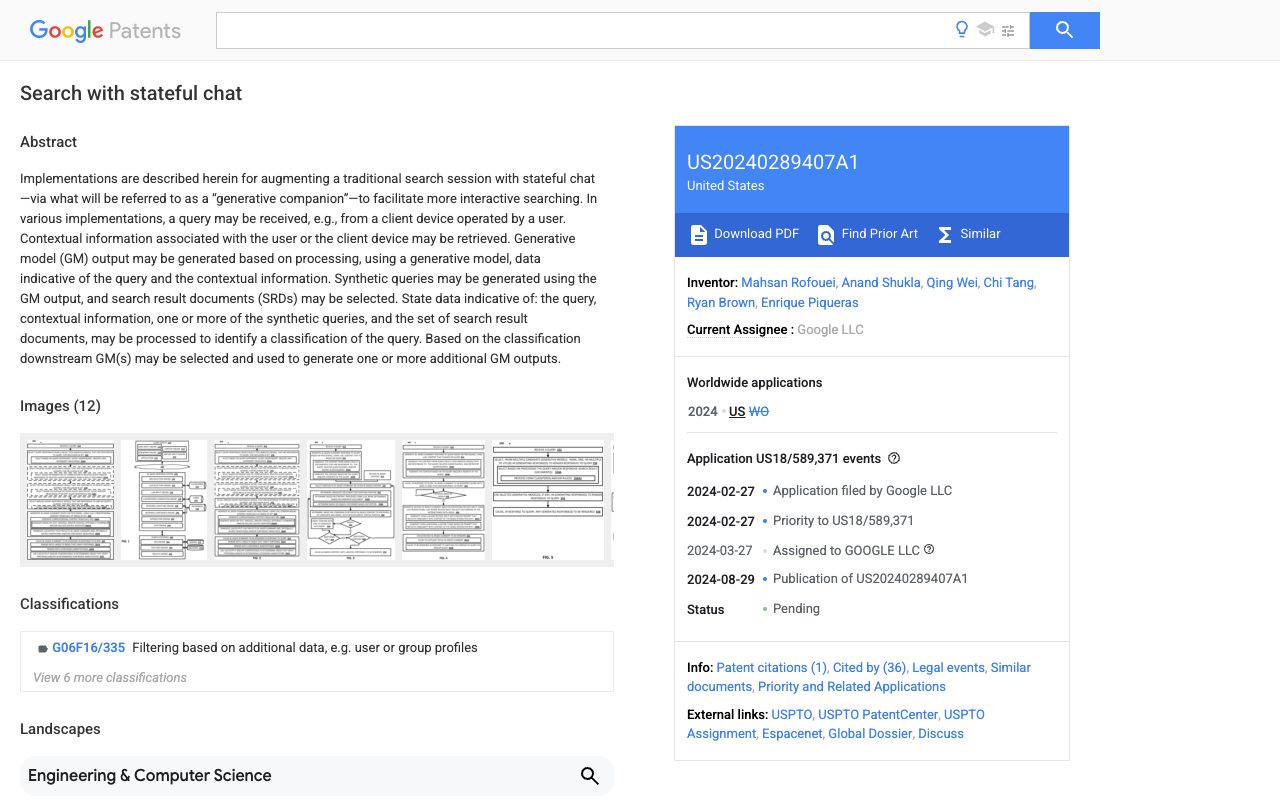
The mechanism is spelled out in Google's patent US20240289407A1, "Search with stateful chat", published August 29, 2024. A first large language model processes the query plus contextual state to generate additional queries — alternative phrasings, supplemental questions, and "drill down" queries — which are submitted to the search engine, with documents responsive to both the original and the additional queries pulled into one candidate set.
One honest caveat: Google has never published the sub-queries behind any given search, nor confirmed a count. Every number you see quoted — a dozen, fifty, a hundred — is somebody's inference from log analysis or citation forensics, not a Google figure.
Why Does LLM Query Fan Out Change How You Plan Content?
Classic keyword targeting assumes one page competes for one query. LLM query fan out replaces that with a coverage problem: your page is retrieved once per sub-query it satisfies, and a page that answers eight of fifteen sub-queries has eight chances to be pulled into the answer instead of one.
This is why thin, tightly-optimized pages started underperforming sprawling guides in AI surfaces. The head term is no longer the unit of competition — the sub-question is. Finding those sub-questions before you write is exactly what a query fan-out tool is for.
The gains are real but noisy. Semrush ran a controlled test on four of its own articles, published September 26, 2025, rewriting each to cover predicted fan-out queries. Citations across the four rose from two to five, a 150% increase, peaking at nine before falling back when ChatGPT cut citations platform-wide. Over the same window Semrush's own share of voice slipped from 23.4% to 20.0% and brand mentions dropped from 18 to 10 — moves the authors pinned on platform-level changes hitting several brands at once, not on the optimization.
Read that as the realistic ceiling: fan-out coverage is a lever on citation frequency, not a growth guarantee. Watching what happens to your brand inside the AI Mode tab afterwards is a separate job handled by AI Mode trackers, and the wider discipline of writing for extraction sits in our guide to answer engine optimization.
Which Query Fan-Out Generator Works Best for Solo SEOs and Small Teams?
If you are one person planning a content calendar, you want sub-queries fast and cheap. You do not need chunk-level embeddings.
Qforia by iPullRank
Qforia is the tool most SEOs mean when they say query fan-out generator. Mike King released it as a free simulator that expands a keyword into synthetic queries using Gemini, and iPullRank's walkthrough shows the output columns: the query, its type, the user intent behind it, and a format reason describing what kind of content would answer it. The tool is free, but it will not run on a free Gemini API key — you need a paid one, which in practice costs cents per run.
AlsoAsked
AlsoAsked approaches the same problem from observed behavior instead of simulation. It scrapes People Also Ask trees and shows how questions branch two and three levels deep, per country and per language. It is not a fan-out simulator and does not pretend to be, but PAA branches and Google's sub-queries are drawn from overlapping intent data, so the trees are a useful sanity check on whatever an LLM invents. Pricing runs $12/month for 100 credits, $23/month for 300, and $47/month for 1,000, with a handful of free monthly searches for unregistered visitors.
AnswerThePublic
The original question-wheel tool still earns a slot for ideation, especially for consumer and ecommerce topics where the vocabulary buyers use is not the vocabulary you use. Plans start at $20/month for 60 credits, with Growth at $99/month and Business at $199/month; the site notes pricing is localized by region. Treat it as a seed generator, then validate against a real fan-out simulator.
Which Query Fan-Out Tools Fit Agencies, SaaS and Ecommerce Teams?
At agency or in-house scale the question shifts from "what are the sub-queries" to "which of our 400 pages fail to cover them, and which brief do I hand the writer."
Locomotive's AI Coverage tool
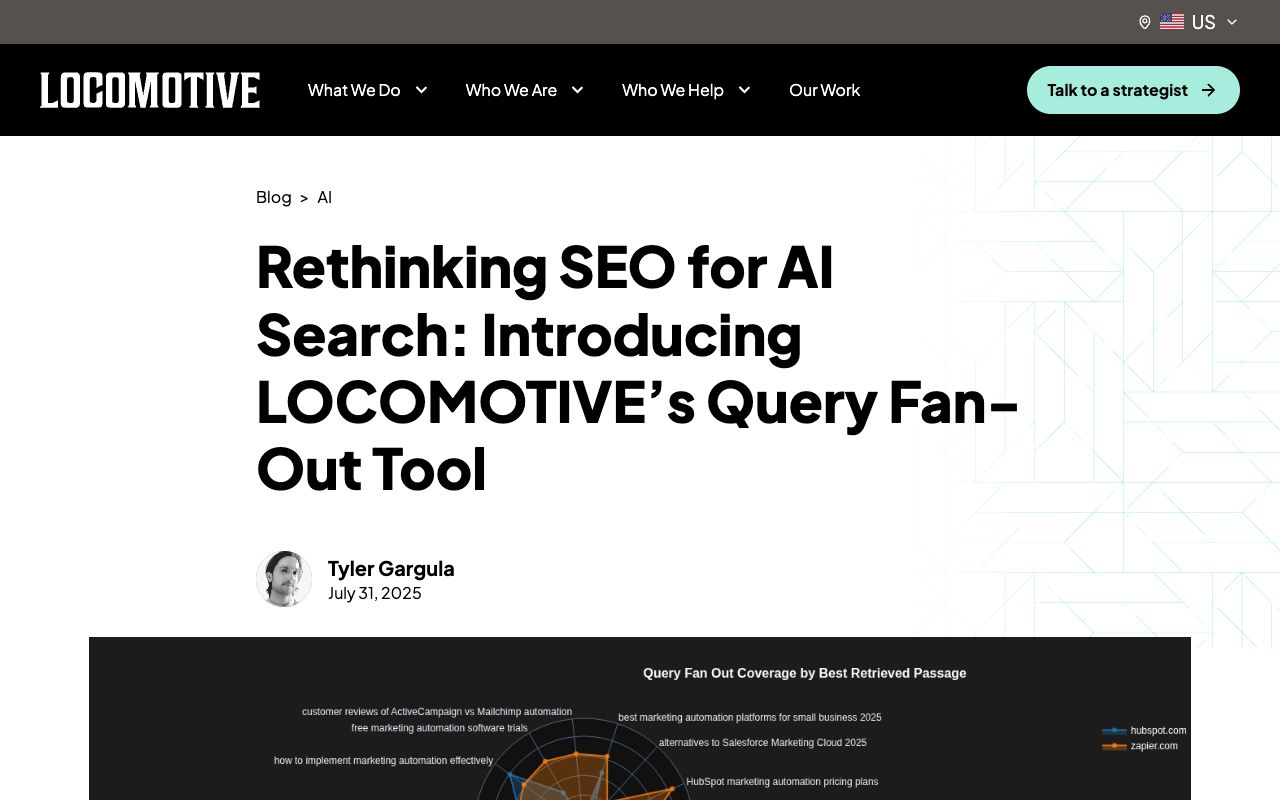
Locomotive built the best-known coverage auditor. Per its launch post of July 31, 2025, it generates fan-out queries from a target keyword, splits your page into chunks, and uses embeddings to score which chunk best satisfies which query — output as a radar chart plus chunk-level recommendations. It needs a keyword with real search volume and a page with substantial text, and the agency warns it judges thin landing pages poorly. It runs as a public web app at aicoverage.locomotive.agency, with no price listed in the launch post.
Semrush Keyword Strategy Builder and Keyword Insights
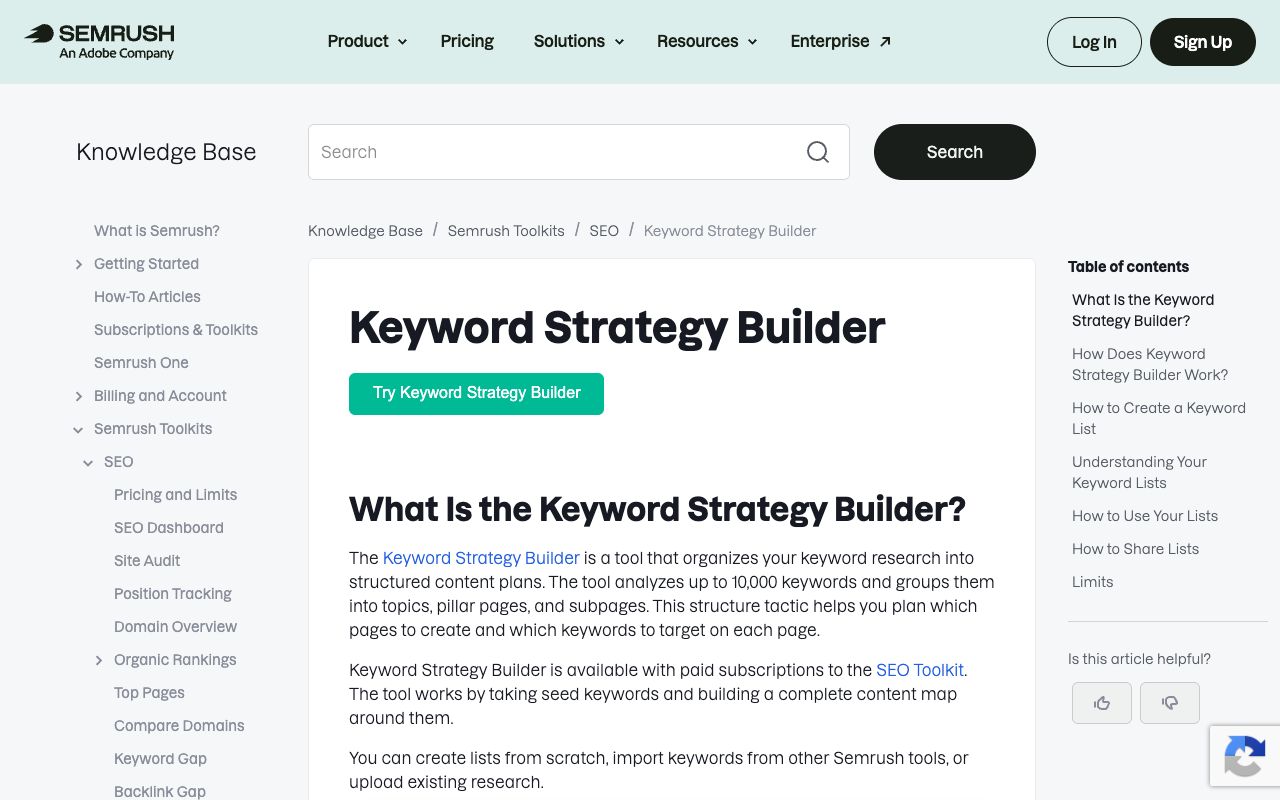
Neither is a fan-out simulator; both solve the adjacent half of the job, turning a large query set into a topic map. Semrush's Keyword Strategy Builder clusters a keyword list into pillar and subpage groups automatically, inside plans that start at $139/month monthly or $117.33/month annually. Keyword Insights is the specialist: clustering costs 1 credit per keyword, briefs 100, with Basic at $58/month for 10,000 credits and Professional at $99/month for 20,000, plus a $1 seven-day trial. At tens of thousands of sub-queries, the specialist wins on unit cost.
QueryBurst
QueryBurst bundles a fan-out simulator into a wider retrieval-optimization app, outputting thematic sub-query clusters with the model's reasoning attached rather than a bare list. It sells a single plan at $59/month with no free trial, and requires Google Search Console verification before it will index your site.
Kairosy — the demand side of the same coin
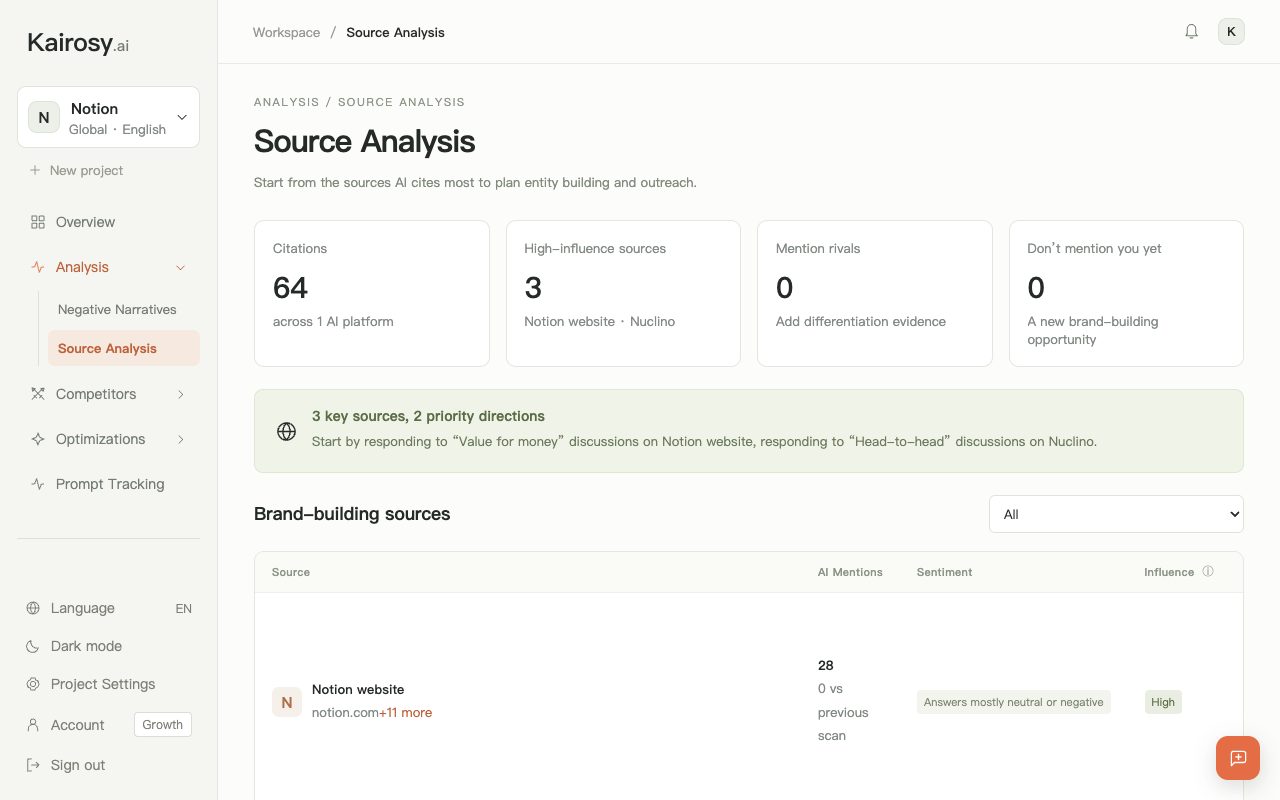
Kairosy does not generate fan-out queries for a URL, and you should ignore anyone who tells you otherwise. It runs the mirror-image experiment: a fixed slate of purchase-stage questions about a named brand, put to ChatGPT, Gemini, Claude and Perplexity, with every answer classified for sentiment, competitor displacement and the sources each engine cited. Fan-out tools model what the engine asks. Kairosy records what the engine says when a buyer asks.
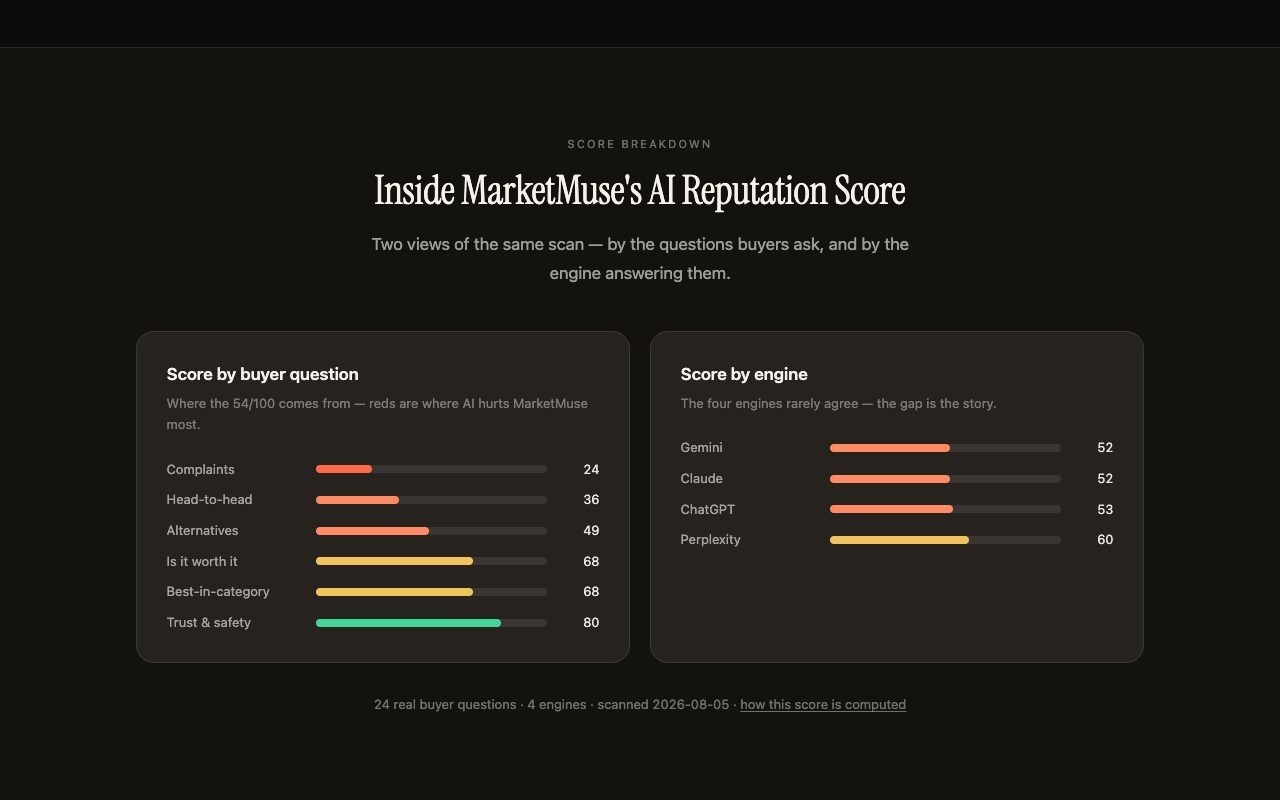
The two pair well. Kairosy's scan of ClickUp's AI performance shows a 96% visibility rate against a 42% recommend rate — mentioned in almost every answer, recommended in fewer than half, with monday.com taking 16% share of voice in the same set. Fan-out coverage would not have caught that gap, because the missing content was not a subtopic. It was a rebuttal to the "sluggish performance, cluttered interface, steep learning curve" verdict the report shows engines handing back. The free trial gives 7 days of full scans; paid tiers run $29, $99 and $399 monthly, and ongoing AI brand monitoring re-runs the same questions weekly.
How Do Query Fan-Out Tools Compare on Price and Output?
All prices verified on vendor sites in August 2026. Monthly billing unless noted.
| Tool | What it gives you | Price |
|---|---|---|
| Qforia (iPullRank) | Synthetic sub-queries with type, intent and suggested format | Tool free; requires a paid Gemini API key |
| Locomotive AI Coverage | Radar chart of coverage plus chunk-level match scores for one URL | Public web app; no price published |
| QueryBurst | Thematic sub-query clusters with model reasoning | $59/mo, single plan, no free trial |
| AlsoAsked | People Also Ask branch trees by country and language | $12 / $23 / $47 (100 / 300 / 1,000 credits) |
| AnswerThePublic | Question and preposition wheels for ideation | $20 / $99 / $199 |
| Semrush Keyword Strategy Builder | Auto-clustered pillar and subpage topic map | Bundled from $139/mo ($117.33/mo annual) |
| Keyword Insights | Clustering at 1 credit per keyword, briefs at 100 | $58 (10k credits) / $99 (20k credits); $1 trial |
| Ahrefs Brand Radar | Tracked AI prompts and LLM visibility, 5 prompts on Lite | Starter $29; Lite $129; Brand Radar AI from $199 |
| Kairosy | Brand answers across 4 engines, sentiment, cited sources, fix plan | Free 7-day trial; $29 / $99 / $399 |
Sources: each vendor's public pricing page, checked August 2026. Ahrefs includes Brand Radar in Lite, Standard and Advanced with 5, 10 and 20 tracked prompts respectively, and sells Brand Radar AI separately from $199/month.
What Are Query Fan-Out Best Practices in 2026?
The failure mode with these tools is treating generated sub-queries as ground truth and stuffing all forty into one page. Here is what survives contact with reality.
- Run two generators and keep the overlap. Sub-queries produced by both an LLM simulator and PAA data are far likelier to be real than either source alone.
- Answer each sub-query in a self-contained chunk. Retrieval happens at passage level, so two direct sentences under a matching subheading beat the same facts buried mid-paragraph.
- Split rather than bloat. If a fan-out list divides cleanly into two intents, that is two pages. Coverage does not mean one 6,000-word monolith.
- Lead every section with the answer. Extraction favors the first sentence under a heading, not the windup.
- Keep the reading level sane. Dense prose chunks badly. Our free reading level checker flags sections that are hard to lift.
- Mark up what you can. FAQPage, HowTo and Product markup make sub-answers machine-parsable — validate with the schema markup checker before shipping.
- Re-check quarterly and measure the outcome. Fan-out output shifts as the models change, and no tool here tells you whether you actually got cited.
That last point is where teams stall. Coverage work is upstream and invisible until something downstream moves, so pair every fan-out sprint with a before-and-after read on whether engines pull you in — and if technical problems block retrieval in the first place, an AI-ready audit is the cheaper place to start.
Query Fan-Out Tools FAQs
What is query fan-out in plain English?
It is the step where an AI search system turns your one question into several narrower questions, searches each one at the same time, and writes a single answer from the combined results. Google described it publicly for AI Mode in May 2025.
Is there a free query fan-out generator?
Yes. Qforia from iPullRank is free to use, though it needs a paid Gemini API key to run, which costs cents per query. Locomotive's AI Coverage app is publicly accessible with no price listed. AlsoAsked also gives unregistered visitors a small number of free searches each month.
Do these tools show Google's real sub-queries?
No, and any vendor claiming otherwise is overselling. Google has never exposed the sub-queries behind a given search. Every tool here produces a simulation or an approximation from adjacent public data.
How many sub-queries does AI Mode generate?
Google has not published a number. Its May 2025 post says AI Mode issues "a multitude of queries simultaneously" and that Deep Search can issue hundreds. Counts quoted elsewhere are third-party estimates.
Does fan-out optimization actually increase citations?
Semrush's September 2025 experiment moved four articles from two citations to five, a 150% lift, while its own share of voice fell 23.4% to 20.0% during the same period from unrelated platform changes. The lever works; the environment is volatile.
Can a query fan-out tool tell me whether AI recommends my brand?
No — that is a different measurement entirely. Fan-out tools model the questions an engine asks itself. To learn whether ChatGPT, Gemini, Claude or Perplexity names you as the answer, you need a scanner that puts buyer questions to those engines and grades the replies, which is what Kairosy's free scan does.
See what AI says about your brand
Run a free scan across ChatGPT, Gemini, Claude & Perplexity in about 30 seconds.
Run my free scan