What Are PLA Keywords? A 2026 Guide to Shopping Feed SEO
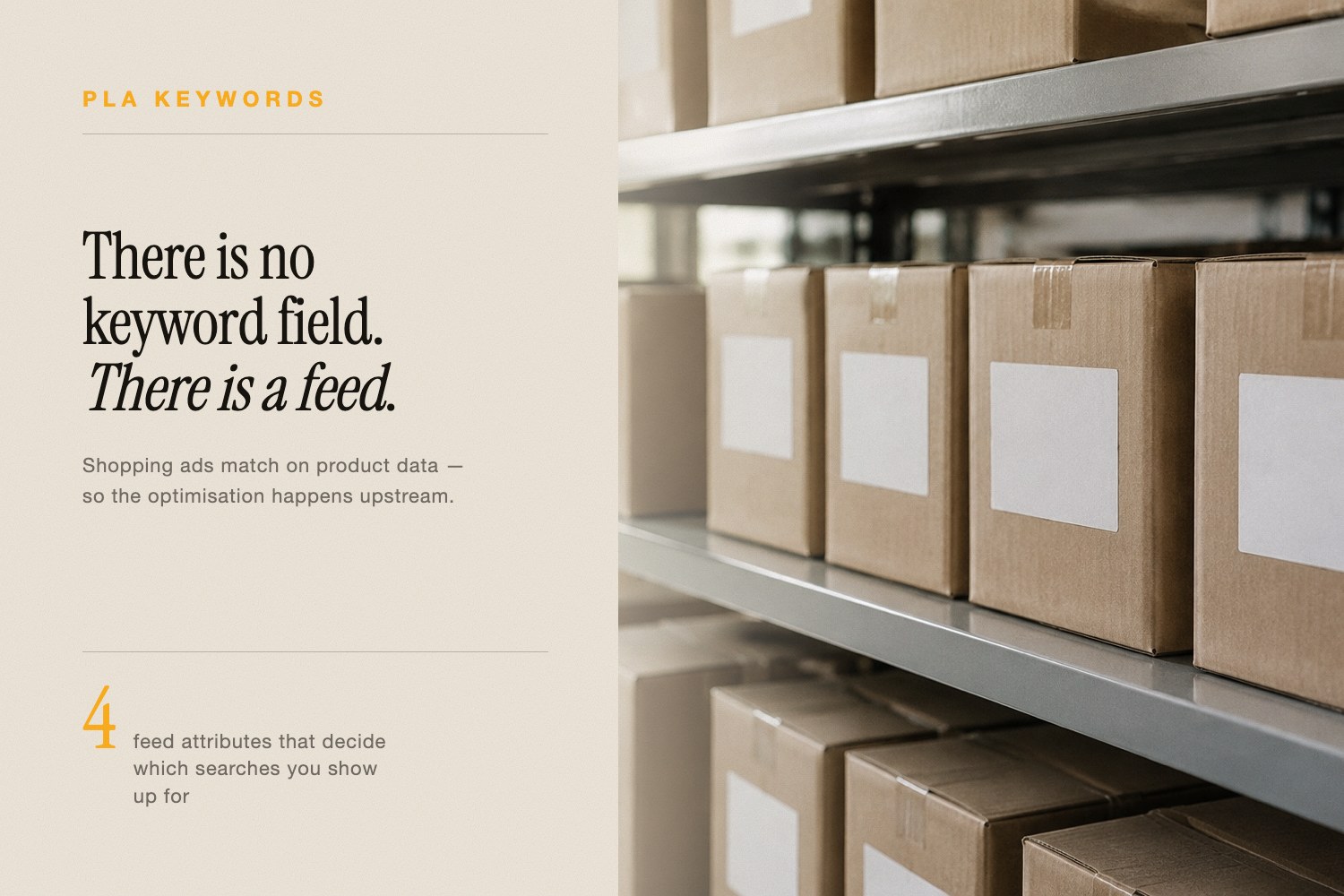
PLA keywords are the shopper queries your Product Listing Ads get matched to — and the uncomfortable part is that you cannot type them anywhere. Google Shopping has no keyword field. Your product feed is the keyword list.
That single fact reframes the whole job. If you have been hunting for a bid-on-this box inside a Shopping campaign, you have been looking for a control that Google removed by design. What you actually control is the text in your product titles, descriptions, categories and identifiers, plus a set of subtractive levers: negatives, search themes and the search terms report.
This guide answers what are PLA keywords in practical terms, shows why they matter to both paid and organic product surfaces, and gives you an optimization sequence you can run this week. Everything about Google's behavior below is quoted from Google's own help documentation, linked inline.
What Are PLA Keywords, Exactly?
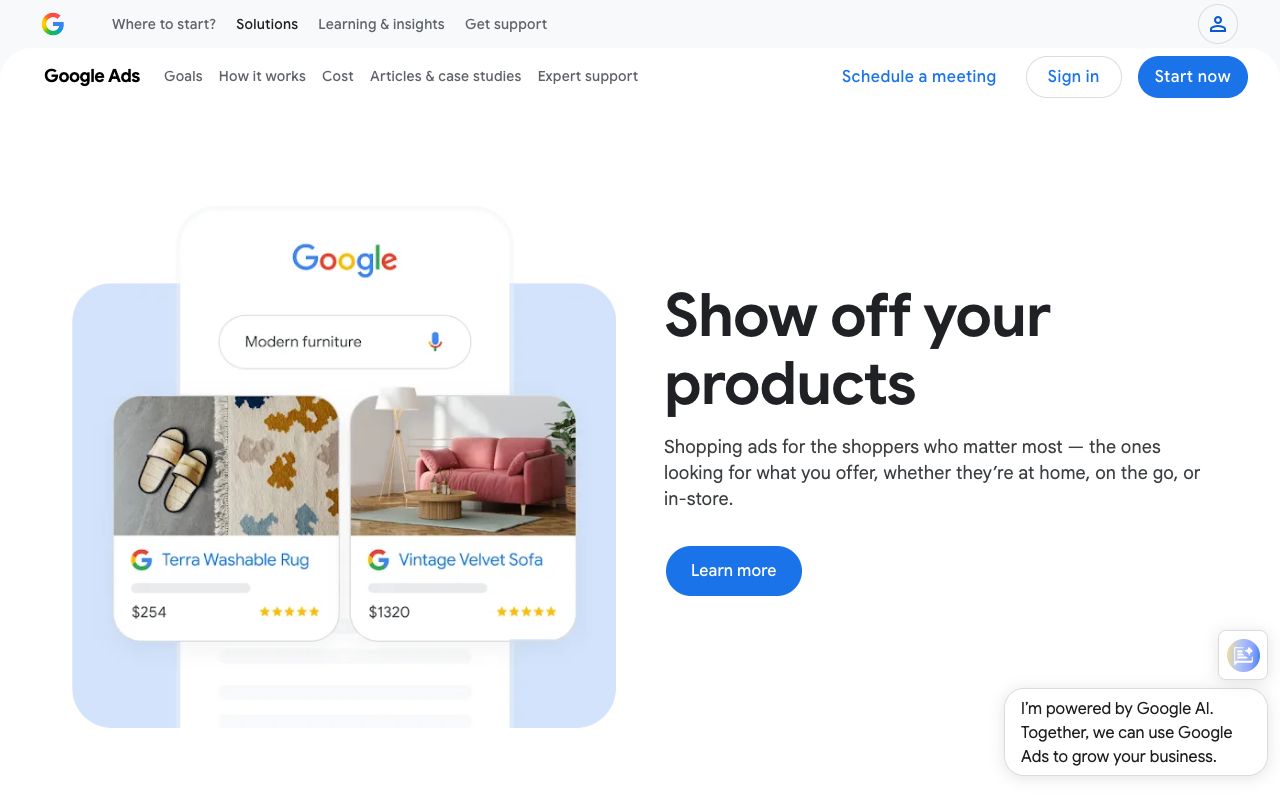
PLA stands for Product Listing Ad — the image-plus-price ad unit that appears on the Google Shopping tab and across Search. Google's own marketing page describes the format plainly: "Google Shopping ads are created from your product data and include photos of your product, price, store name, and other helpful details."
So the honest answer to what are PLA keywords is that they are practitioner shorthand, not a product feature. The phrase means the vocabulary Google can extract from your product data to decide which searches you deserve to appear in. When an agency says it will "optimize your PLA keywords," what it should mean is: rewrite feed attributes, fix categorization, and prune wasted queries with negatives.
Google is explicit about the mechanism on its About Shopping ads page: "Shopping ads use your existing Merchant Center product data (not keywords) to decide how and where to show your ads." The same page repeats it a second way — "Instead of keywords, Shopping ads use the product attributes you defined in your Merchant Center data feed to show your ads in relevant searches."
Read that twice before you buy a "PLA keyword tool." The matching input is a spreadsheet of product attributes, not a keyword list.
Why Do Google Shopping Campaigns Have No Keyword Field?
Retail catalogs are too big and too volatile for manual keyword coverage. A 20,000-SKU store would need millions of keyword-to-product mappings that break every time inventory turns over. Feed-based matching solves that by letting Google read the catalog directly.
The shift went further in 2022, when Google folded Smart Shopping and Local campaigns into Performance Max. Google's upgrade guide states the timeline bluntly — "From July through September, your Smart Shopping campaigns will be automatically upgraded for you" — and closes the door behind it: "You will no longer be able to create new Smart Shopping and Local campaigns once your existing campaigns are automatically upgraded."
Performance Max is, in Google's words, "a goal-based campaign type that lets you to access all of your Google Ads inventory from a single campaign." It is keywordless by default, but it is not control-free. Google lists the levers you still get: "Keywordless targeting, Final URL expansion or asset optimization, Search themes, Negative keywords, Brand exclusions." Search themes are the closest thing to a positive keyword you will find, and Google positions them at the same strength as loose match types: "Search themes have the same prioritization as phrase match and broad match keywords."
Here is how the control surface differs by campaign type.
| Campaign type | Positive keyword input | Subtractive control | What drives matching |
|---|---|---|---|
| Search | Keyword list with match types | Negative keywords | Your keywords plus ad copy |
| Standard Shopping (PLA) | None — no keyword field | Negative keywords | Merchant Center product attributes |
| Performance Max | Search themes (optional) | Negative keywords, brand exclusions | Product feed, assets, budget and goals |
Sources: Google Ads Help pages for Shopping ads and Performance Max.
Which Feed Attributes Act As Your PLA Keywords?
Google's product data specification is the real keyword document. Every character limit below comes from that page, and the limits tell you where Google expects matchable text to live.
| Attribute | Required? | Google's stated limit | Keyword role |
|---|---|---|---|
title | Required | Max 150 characters | Strongest matching text — brand, product type, key variant |
description | Required | Max 5000 characters | Long-tail coverage: materials, use cases, dimensions |
brand | Required for new products except media | Max 70 characters | Wins branded and "brand + product" queries |
gtin | Strongly recommended if available | GS1 identifier | Exact-product matching and comparison surfaces |
mpn | Required if no GTIN | Max 70 alphanumeric characters | Part-number and model-number searches |
id | Required | Max 50 characters | No matching role — but duplicates break the whole feed |
image_link | Required | Minimum 500 x 500 pixels | Not text, but it decides whether a match earns a click |
The gtin field deserves special attention because it is not your number to invent. GTINs are issued under the GS1 standard, and supplying a correct one lets Google join your listing to the same product sold elsewhere. Missing or wrong GTINs are one of the most common reasons a well-written title still fails to show.
Google also tells you what to keep out of titles. Its specification says to avoid promotional text such as "free shipping," all capital letters, gimmicky characters and keyword stuffing, and to include distinguishing features like color or size for apparel variants. Feed data must stay consistent with the landing page — a price or availability mismatch is a disapproval, not a ranking penalty.
Why Do PLA Keywords Matter for PLA SEO?
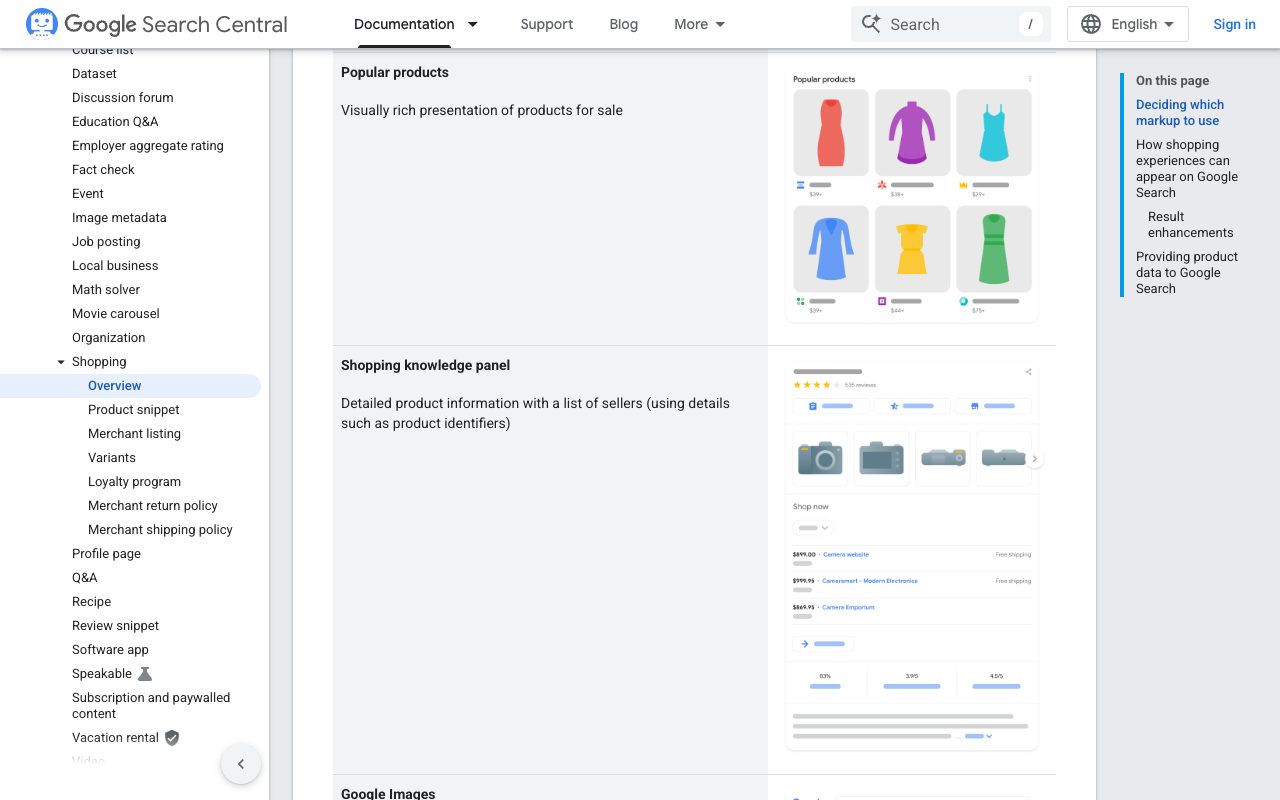
PLA SEO is where the paid and organic sides stop being separate disciplines. Google's shopping surfaces pull from two places at once, and its Product structured data documentation says so directly: "Providing both structured data on web pages and a Merchant Center feed maximizes your eligibility to experiences."
The two sources also cross-fill each other. Google notes that "product snippets may use pricing data from your merchant feed if it's not present in the structured data on the page." In other words, a thin PDP with a strong feed — or a strong PDP with a broken feed — leaves eligibility on the table in both directions.
That is why PLA SEO work looks like ordinary technical SEO. Your Product markup should carry name, brand, offers, price, availability and aggregate rating, and it should agree with the feed row for the same SKU. Run your PDP template through the free schema markup checker to confirm the properties parse, then confirm the page is actually crawlable and indexed with the index checker. A product page that is blocked or noindexed cannot support the listing that points at it.
The organic payoff is real: free listings, product snippets and shopping surfaces all read the same attributes your paid PLA keywords depend on. Fixing the feed once improves both.
Why Does PLA Search Marketing Depend on Feed Quality?
PLA search marketing has an unusual economics: your creative and your targeting are the same asset. In a Search campaign you can rescue a mediocre keyword with better ad copy. In Shopping, the title that gets you matched is the title the shopper reads — one string doing both jobs.
Reach compounds the effect. Google says Shopping ads "can appear in most Google ad channels including the Shopping tab, Google Search, Google Images, Maps, Gmail, YouTube, and the Google Display Network." One badly categorized SKU is therefore not one lost placement, it is a lost presence across the whole network.
Platform plumbing matters too. If you run Shopify, its Google & YouTube channel "automatically syncs your products and relevant information about your Shopify store with the Google Merchant Center" — convenient, but it means the product title you typed into your store admin is the PLA keyword going to Google. Merchants who need per-channel titles usually add a feed management layer such as Feedonomics rather than degrading their on-site copy.
How Do You Do PLA Keyword Optimization?
Run it as a five-step loop, in this order. Steps one and two are additive, steps three and four are subtractive, step five is measurement.
1. Rebuild titles to a formula
Pick a per-category pattern and apply it to every SKU. For apparel: Brand + Product Type + Key Attribute + Color + Size. For hard goods: Brand + Model + Product Type + Capacity or Dimension. Front-load the words a shopper would actually type, because truncation eats the tail long before you reach Google's 150-character ceiling.
2. Write descriptions for the long tail
The 5,000-character description field is the cheapest long-tail inventory you own. Use it for materials, care instructions, room or use case, compatibility and measurements — the qualifiers that turn a generic query into a purchase-intent one. Skip the marketing adjectives; they match nothing.
3. Fix categorization and identifiers
Set google_product_category from Google's taxonomy rather than letting a plugin guess, and use your own product_type values to mirror your site's category tree. Populate gtin wherever a manufacturer number exists, and mpn plus brand where it does not.
4. Build the negative keyword layer
This is the only literal keyword list in a PLA setup, and it is where most wasted spend dies. Block competitor model numbers you do not stock, "free," "DIY," "how to," "used" and "repair" style queries, and any variant term for a product line you discontinued. Performance Max accepts negative keywords at the campaign level, so the same discipline applies there.
5. Mine the search terms report weekly
Google's search terms report is your feedback loop. Its guidance for irrelevant queries is simply to "add it as a negative keyword." Two caveats worth knowing: "Some search terms that don't have enough query activity are omitted from the search terms report," and "any terms matched to Dynamic Search Ads or Shopping targets won't return a keyword in the keywords field" — because, of course, there is no keyword to return. For Performance Max, Google says "the search terms report helps identify search terms that resulted in conversions."
How Do You Research PLA Keywords Without a Keyword Field?
You research the demand side and then encode it into attributes. Four sources, ranked by signal quality.
- Your own converting search terms. These are the phrases already producing revenue — promote them into titles.
- On-site search logs. Shoppers type what they mean into your search bar with none of Google's rewriting in between.
- Marketplace autocomplete. Amazon and eBay suggestions expose the attribute vocabulary buyers use for a category.
- Customer reviews and support tickets. These surface the use-case language your product copy is usually missing.
The Yotpo guide to PLA keywords frames the same split as proactive feed building versus reactive campaign management, which is a fair way to think about the loop. The practical test is simpler: for every phrase you find, ask which feed attribute it belongs in. If it fits nowhere, it is not a PLA keyword — it is a Search campaign keyword, and it needs a different campaign.
Do AI Shopping Assistants Read the Same PLA Keywords?
Increasingly, yes — and this is the part most feed audits miss. Ask what are PLA keywords in an assistant context and you land on the same fields, because a model that recommends products needs structured catalog data for the same reason Google does.
OpenAI's Product Feed Spec describes itself as defining the "field names, data types, constraints, and example values needed for accurate discovery, pricing, availability, and seller context," and notes that "Supplying all required fields ensures your products can be displayed correctly, while optional fields enrich relevance and user trust." Different company, same premise: clean attributes in, accurate recommendations out.
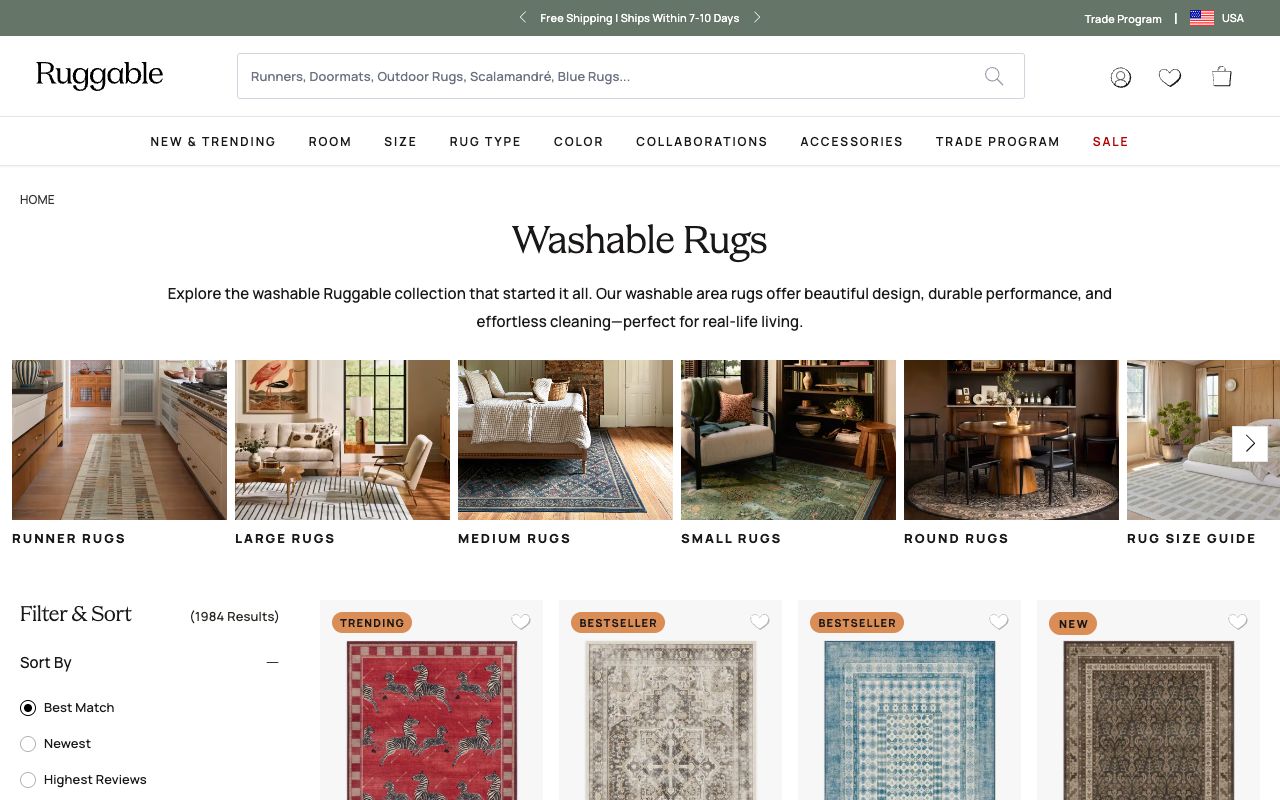
The difference is what you can see. A Shopping campaign reports impressions and search terms; an AI assistant reports nothing at all. If ChatGPT summarizes your product line inaccurately or names a competitor when a shopper asks for "best washable rugs," no dashboard in Google Ads will tell you. Our broader playbook for this is in the guide to ecommerce ChatGPT optimizations, and the structured-data half overlaps heavily with FAQ schema for AI search.
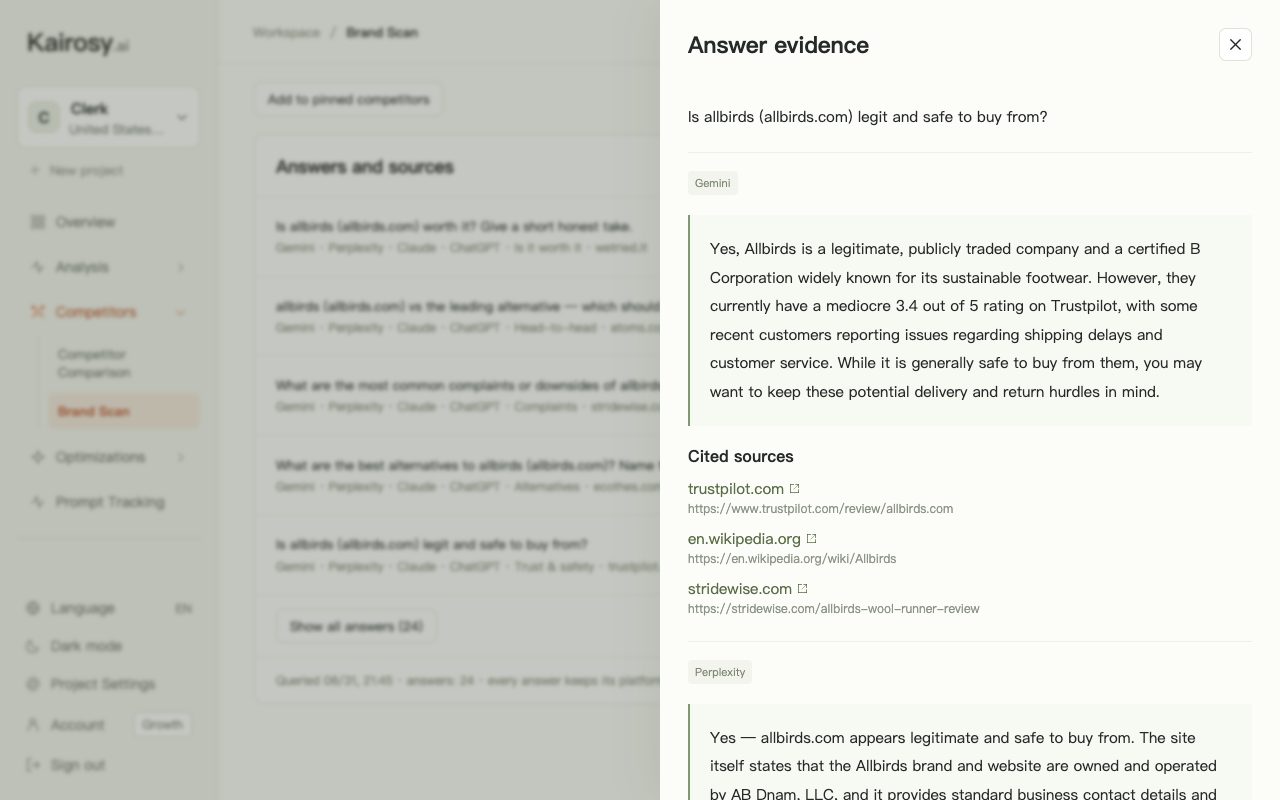
That visibility gap is the problem Kairosy works on: it asks ChatGPT, Gemini, Claude and Perplexity the questions your buyers ask, scores whether you are mentioned and how you are described, and lists the sources each answer cited. The free scan runs the full report for 7 days, and paid plans start at $29 for recurring monitoring. If you want the mechanics for a single engine, the ChatGPT brand monitoring page walks through what gets tracked.
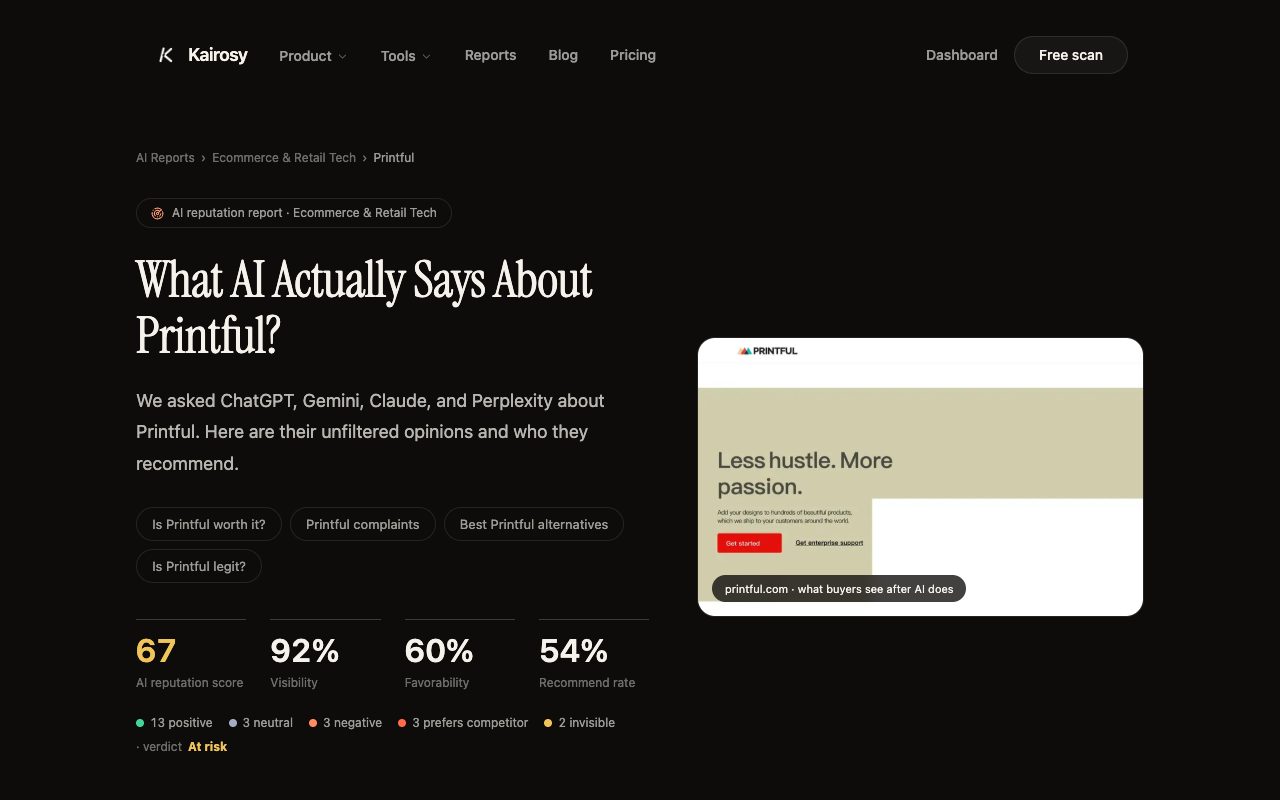
The gap is easy to underestimate. Kairosy's scan of Ruggable on 2026-08-01 found 100% visibility — every engine knew the washable-rug brand — yet the score landed at 71/100 because four of the 24 answers pushed the shopper toward a rival instead, with ChatGPT naming Tumble and Rugs USA on the alternatives question. Perfect feed coverage and a lost recommendation can happen at the same time.
What Are PLA Keywords: FAQs
What does PLA stand for (SEO and paid search use the term slightly differently)?
PLA stands for Product Listing Ad, the feed-driven Google Shopping ad format. In paid search it names the ad unit; in SEO conversation it is often used loosely to cover both paid Shopping listings and free product listings, since both are powered by the same Merchant Center data.
Can you bid on PLA keywords directly?
No. There is no keyword bidding in Shopping campaigns — Google matches from product data, per its statement that Shopping ads use Merchant Center data "not keywords." You control spend through bids and budgets at the product-group level, not per query.
Do negative keywords work in Performance Max?
Yes. Google lists negative keywords among the Performance Max control tools alongside search themes and brand exclusions. Search themes are the positive counterpart, and Google rates them at the same prioritization as phrase and broad match keywords.
How long should a PLA product title be?
Google allows up to 150 characters for the title attribute, but display truncation is far shorter across surfaces. Put brand, product type and the single most important differentiator in the first 60–70 characters, then use the remainder for variant detail.
Does PLA keyword optimization help organic rankings too?
Indirectly, and meaningfully. The title, description, brand and identifier work you do for PLA keywords is the same data Google reads from your Product structured data, and Google recommends supplying both a feed and on-page markup to maximize eligibility. Cleaning one usually exposes what is broken in the other.
What are PLA keywords worth measuring in 2026?
Three things: impression share by product group, the ratio of converting to non-converting search terms, and the share of your catalog that has a complete title, description, GTIN and category. The first two are in Google Ads; the third is a feed audit you should run every quarter.
The short version of what are PLA keywords: they are not something you write into a campaign, they are something you earn out of a product feed. Fix the attributes, subtract the waste, and check whether the machines reading that data — Google's and everyone else's — describe your products the way you would.
See what AI says about your brand
Run a free scan across ChatGPT, Gemini, Claude & Perplexity in about 30 seconds.
Run my free scan