AEO vs GEO in 2026: What the Terms Mean, Where They Overlap
AEO (answer engine optimization) and GEO (generative engine optimization) both describe getting your brand into AI-generated answers, and they overlap far more than they differ. Where a line is drawn at all, AEO usually means the short direct-answer surfaces (featured snippets, voice results, Google AI Overviews) and GEO the longer, source-citing answers that ChatGPT, Perplexity, Gemini and Claude write.
That line is not a standard. The vendors who shaped this market define AEO vs GEO differently, and two of the largest say the acronyms mean the same thing. Below: the definitions side by side, a GEO vs SEO vs AEO comparison, one annotated buying-question result, and the metrics that show whether either kind of work is paying off.
AEO vs GEO: What Is the Difference, and Why Do Vendors Disagree?
Ask four companies what is the difference between AEO and GEO and you get four answers. Here they are, in their own words wherever the page could be quoted directly.
| Vendor (read Oct 21, 2026) | AEO wording | GEO wording | Same thing? |
|---|---|---|---|
| Semrush (Zach Paruch, Apr 16, 2026) | "A set of marketing practices used to increase your brand's visibility in AI-generated answers — like Google's AI Mode and ChatGPT responses." | Not separated: ChatGPT answers sit inside the AEO definition. | Effectively yes |
| HubSpot (Cassie Wilson Clark, updated Sep 11, 2026) | "The practice of improving how often and how accurately a brand or product appears in AI-generated answers." | "A strategy to increase broader visibility across multiple AI-generated sources, usually through citations or mentions, content structure, entity relationships, and retrieval signals." | No: AEO is the direct answer, GEO the broader footprint |
| Profound (company blog) | Section heading: "AEO vs GEO: Two names, one strategy". | Same section; a later heading is "Why we prefer AEO". | Yes, standardizes on AEO |
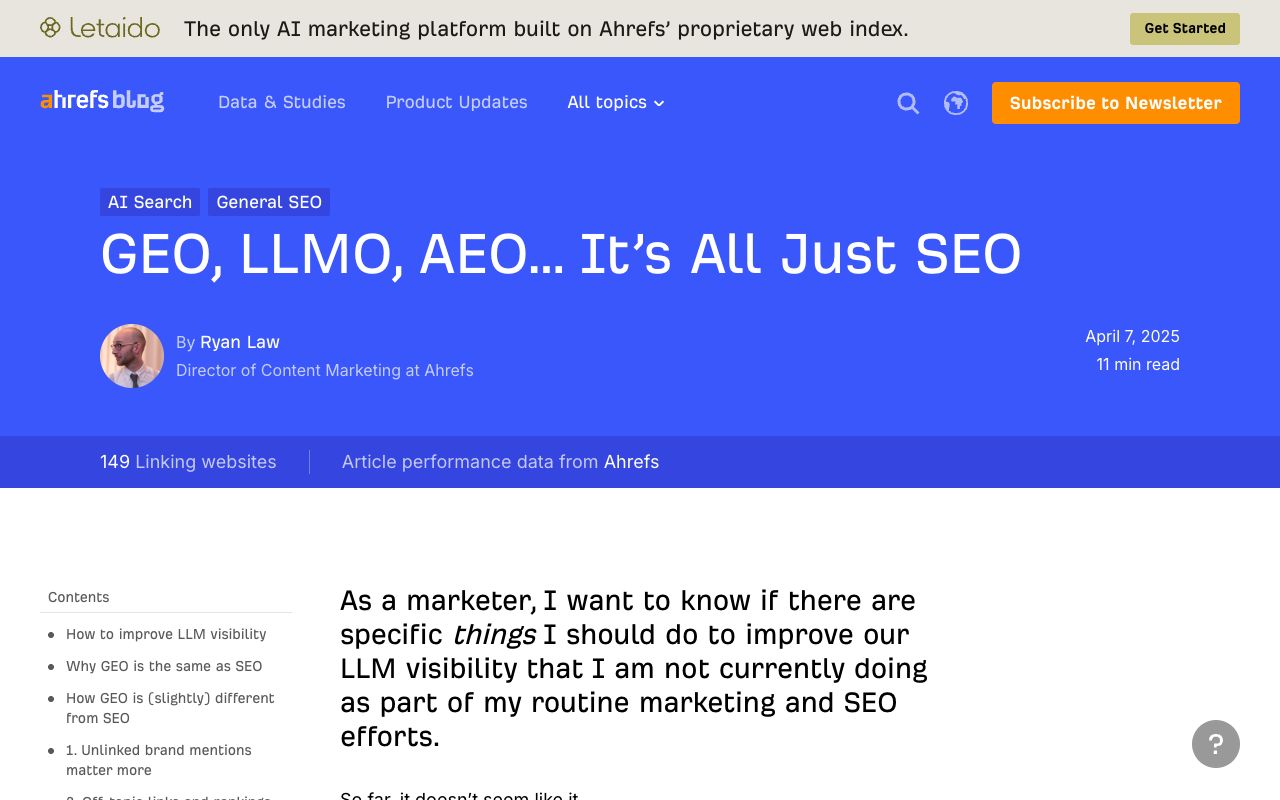
| Ahrefs (Ryan Law, Apr 7, 2025) | GEO, LLMO and AEO are "three names for the same idea". | The core mechanism "is: creating relevant content on topics your brand wants to be associated with, both on and off your website. That's SEO." | Yes, and all of it is "just SEO" |
One vendor folds GEO into AEO, one splits them by scope, one merges them under AEO, and one merges everything into SEO. When a proposal uses either term, ask which surfaces and which metrics it means before you argue about the label.
Our position for the rest of this post: AEO vs GEO is a difference of emphasis on one dial, not two disciplines. AEO leans toward being the extracted direct answer. GEO leans toward being mentioned and cited inside a synthesized one. The same page can do both, and one scan can measure both.
What Does AEO Stand for in Marketing, and Where Did GEO Come From?
If someone asks what does AEO stand for in marketing, the expansion is answer engine optimization. An answer engine is any system that returns an answer instead of a list of links: a featured snippet, a voice assistant, an AI Overview, a chat assistant. AEO is making your content the thing those systems pick up and repeat accurately.
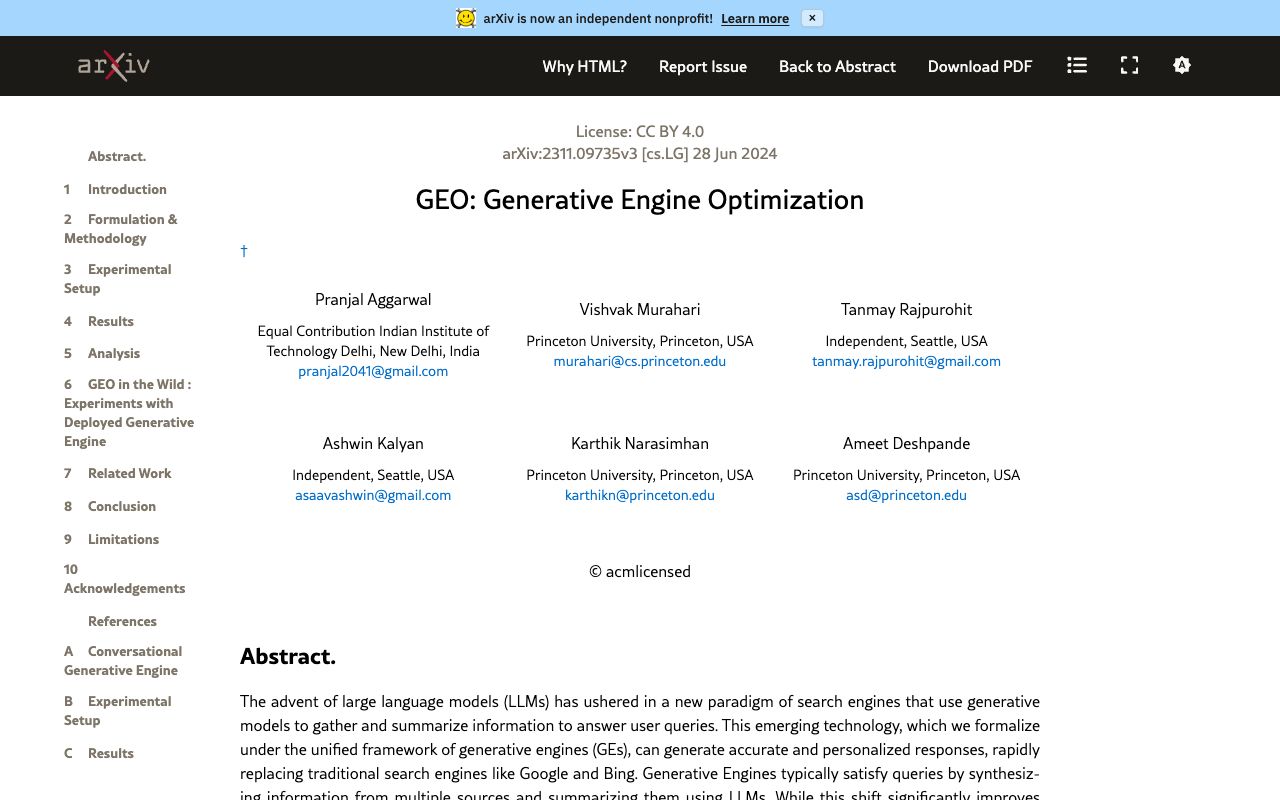
GEO has a traceable origin. The term comes from the paper "GEO: Generative Engine Optimization" (Aggarwal et al., first submitted Nov 16, 2023), which introduced it as "the first novel paradigm to aid content creators in improving their content visibility in generative engine responses" and reported that certain content edits could "boost visibility by up to 40%" on the authors' benchmark. "Generative" is the tell: the engine writes a fresh answer and chooses which sources to lean on, rather than lifting one passage.
We will not re-teach either discipline here. For the full picture, read our guides to what GEO is, answer engine optimization, and what GEO changes compared with SEO. This piece is about the seam between the two.
GEO vs SEO vs AEO: How Do Goal, Surface, Content and Measurement Compare?
This is how practitioners commonly use the three terms in 2026. It is not a standard, and the AEO and GEO columns overlap, so read them as emphasis rather than territory.
| Dimension | SEO | AEO | GEO |
|---|---|---|---|
| Goal | Rank a URL so a person clicks it | Be the direct answer that gets read or spoken | Be mentioned, recommended and cited inside a generated answer |
| Surface | Blue links on a SERP | Featured snippets, voice assistants, AI Overviews and AI Mode | ChatGPT, Perplexity, Gemini, Claude, DeepSeek and similar assistants |
| Unit the engine uses | A whole page and its links | One passage of roughly 40 to 60 words | Many passages from many sources, weighed for authority and agreement |
| Content that wins | Comprehensive pages with backlinks | Question-shaped headings, answer in the first sentence, structured data | Specific claims with evidence, comparisons, third-party coverage, consistent facts |
| Measurement | Rank, clicks, organic sessions | Snippet or AI Overview ownership, zero-click share | Mention rate, recommendation rate, citation rate, sentiment, share of voice |
| Typical tooling | Search Console, rank trackers | SERP-feature tracking in SEO suites | Prompt-based scans that store the full answer and its sources |
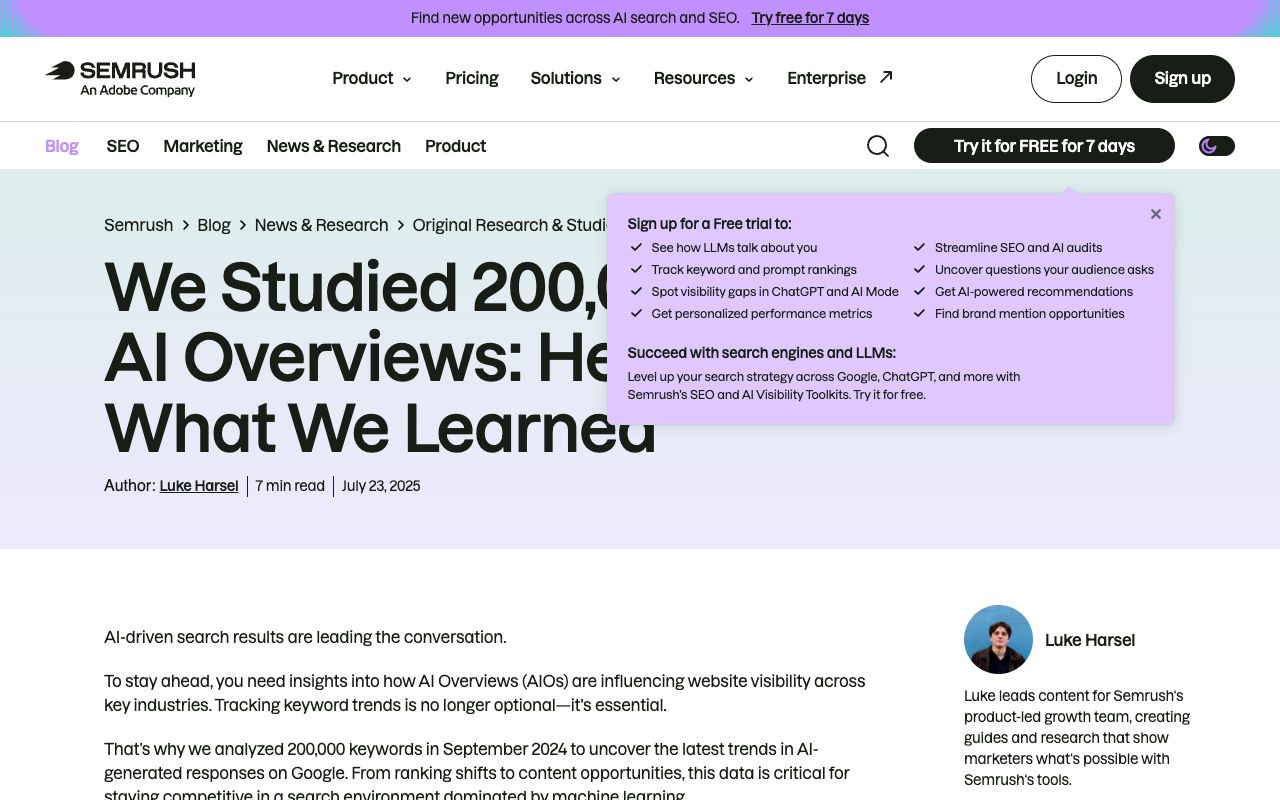
The measurement row is where the split is real. Pew Research Center's study of 900 US adults' March 2025 browsing (published Jul 22, 2025) found users clicked a traditional result on 8% of visits when an AI summary appeared versus 15% without one, and clicked a link inside the summary on just 1% of visits. On the citation side, Semrush's Jul 21, 2025 traffic study found visitors arriving from AI search converted at 4.4 times the rate of traditional organic visitors. Small volume, high intent, different scoreboard.
What Do AEO and GEO Share? Accessible, Clear, Credible and Consistent Pages
Whatever you call the work, four foundations come first. This is the part of Ahrefs' "it's all just SEO" argument that holds up.
Accessible to the retrieval crawlers
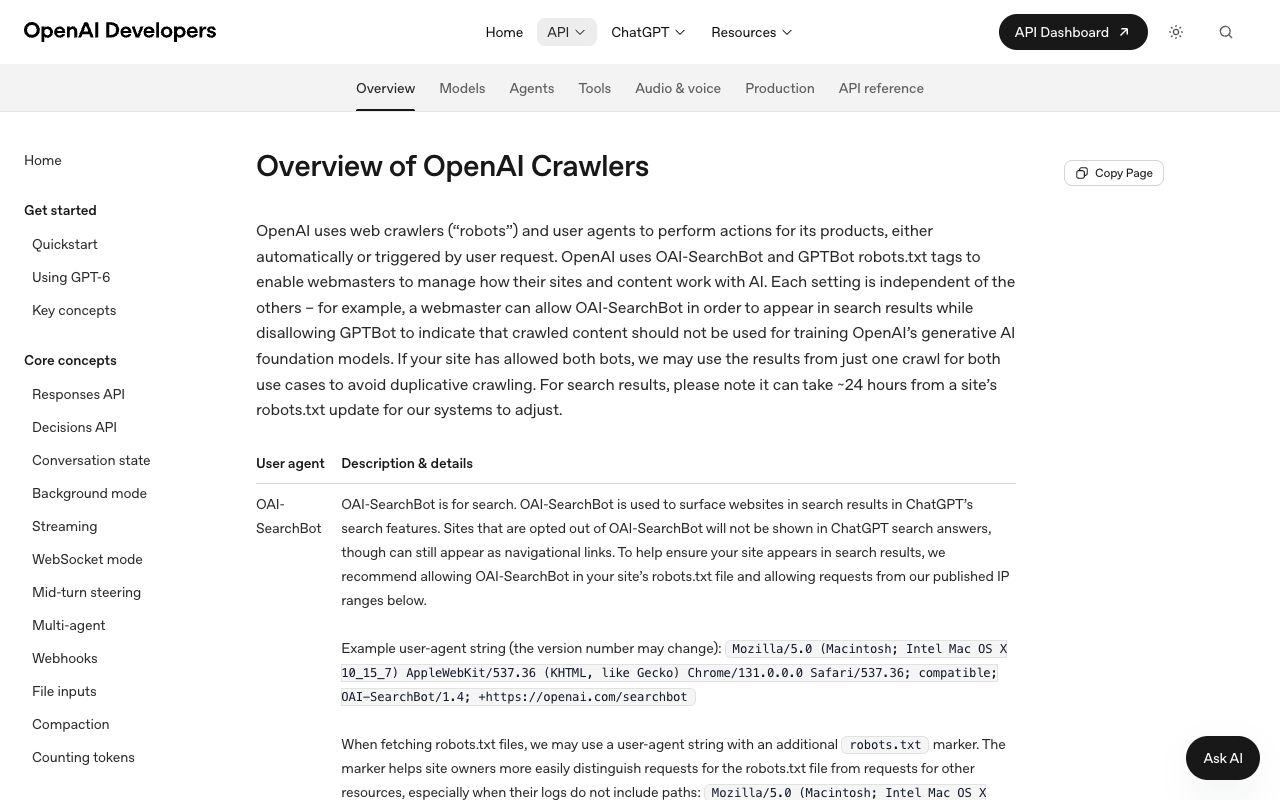
Every major assistant now runs a search fetcher separate from its training crawler. OpenAI's bot documentation says OAI-SearchBot is "used to surface websites in search results in ChatGPT's search features", while for ChatGPT-User "robots.txt rules may not apply". Perplexity's crawler guide says PerplexityBot "is designed to surface and link websites in search results on Perplexity", and Anthropic's support article separates ClaudeBot (training) from Claude-User and Claude-SearchBot. Google's AI features documentation adds: "There are no additional requirements to appear in AI Overviews or AI Mode, nor other special optimizations necessary."
A blanket robots.txt rule aimed at training bots that also catches the search bots opts you out of AEO and GEO at once. Run the free AI crawl checker on your key URLs before touching anything else.
Clear enough to extract
A direct answer needs a passage that stands alone, and a generated answer needs the same passage so the model can quote it without misreading context. Answer in the first sentence under a question-shaped heading, one idea per section, and schema on the page type; the schema markup checker shows what a crawler sees.
Credible beyond your own domain
Generated answers lean on third parties. The same Semrush study found Quora the most-cited site in Google AI Overviews, with Reddit second. Reviews, comparisons and community threads are the evidence an engine uses to decide whether to recommend you, and owning the direct answer on your own site does nothing about a Reddit thread the assistant trusts more.
Consistent everywhere
Pricing on your site, in your G2 listing and in a partner's post should agree. Extraction surfaces copy one of them. Generative engines compare all of them and hedge when they conflict, which reads as "pricing is unclear" in the answer.
How Does One Buying Question Play Out as a Direct Answer vs a Generated Citation?
Definitions stop being useful at this point, so here is a real result. The screenshot below is a Kairosy brand scan of Supabase in the US market, opened on one buying-style question. The scan sends the question to the selected engines, keeps each full answer, tags the outcome, and merges the URLs each engine cited.
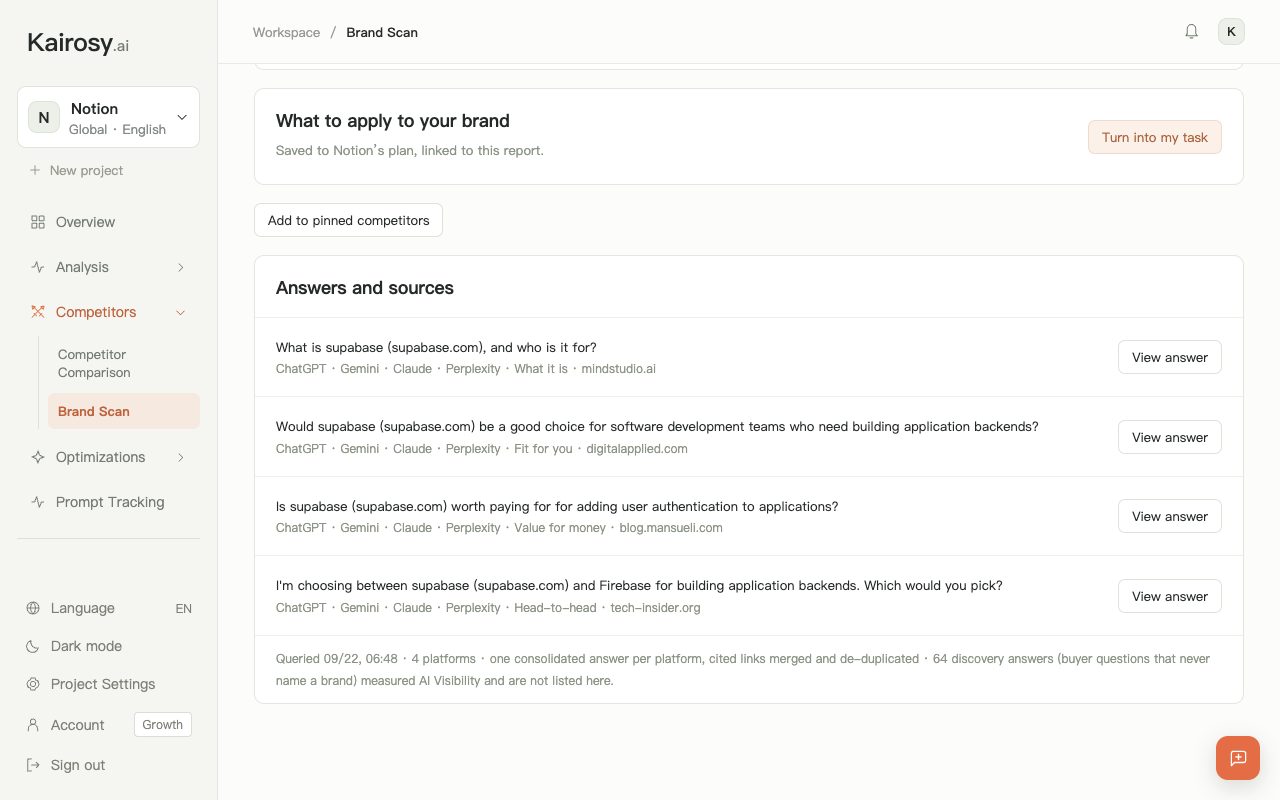
Read the card from the top down and the AEO vs GEO split shows up on a single question:
- Brand mention. The outcome tag on each platform card says whether the brand was mentioned, not mentioned, or whether another brand was recommended instead. This is the GEO read. A direct-answer surface has no such tag, because there is one answer and it either is you or is not.
- Cited source. Under the answer text sits the merged source list, the pages the engine leaned on. If your own page is there, you own a citation. If a review site or a competitor comparison is there instead, that page is shaping how you are described.
- Click entry. The cited URLs are the only click-through a reader of a generated answer gets. In a direct answer the click entry is the snippet's source link, and the Pew numbers above show how rarely it is used. Owning one citation matters more than owning a rank.
The action falls out of the card. "Not mentioned" is a presence problem: do the third-party and consistency work above. Mentioned with only third-party sources is a citation problem: publish a page specific enough that the engine prefers to quote you. Another brand recommended is a comparison problem: write the comparison honestly enough to be cited.
How Do You Build One Content and Monitoring Plan That Covers Both?
You do not need an AEO plan and a GEO plan. You need one question set, two versions of each answer, and one monitoring loop that watches both surfaces.
- Pick 10 to 15 buying questions in the language your sales team hears: "which X is best for Y", "is Brand worth it", "Brand vs Competitor". Keep the list stable for a quarter so trends mean something.
- Write the direct-answer version: one passage of 40 to 60 words per question that a snippet or an AI Overview could lift whole, under a matching heading on the most relevant page.
- Write the citation version: on the same or a linked page, the evidence a generative engine needs to name you, meaning specific numbers, named integrations, a dated comparison table, screenshots.
- Audit the foundations: crawl access, schema, reading level and consistent facts. Our paid AI-Ready Page Audit scores a single URL on these and the free tools cover the individual checks.
- Earn the third-party layer: reviews, community answers and comparison coverage on the sites the engines already cite for your category.
- Monitor on two cadences. SERP features through your SEO suite, generated answers through a prompt-based scan. In Kairosy the tracked questions re-run daily and each brand gets a deep rescan every Monday, with a weekly email that flags a score drop, a competitor being preferred, an engine flipping its stance, or a new negative keyword. Nothing fires between runs, which is right for a signal that moves this slowly.
- Fix, then re-scan. Change one page, wait for the next run, compare. A change that has not shown up after two weekly rescans is not working.
Two scope notes so you do not buy the wrong thing. Kairosy measures ChatGPT, Gemini, Claude, Perplexity, DeepSeek and Doubao (you pick four per project), not Google AI Overviews or AI Mode, so the AEO half of the plan still needs a SERP-feature tracker. It also has no prompt-volume data and no Google rank tracking, so "how many people ask this" still comes from Search Console, Semrush or Ahrefs.
Which Metrics Tell You Whether AEO or GEO Work Is Paying Off?
Split the scoreboard by surface, not by acronym. The AEO-leaning metrics live in your SEO tooling and analytics. The GEO-leaning metrics only exist if something stores full answers over time.
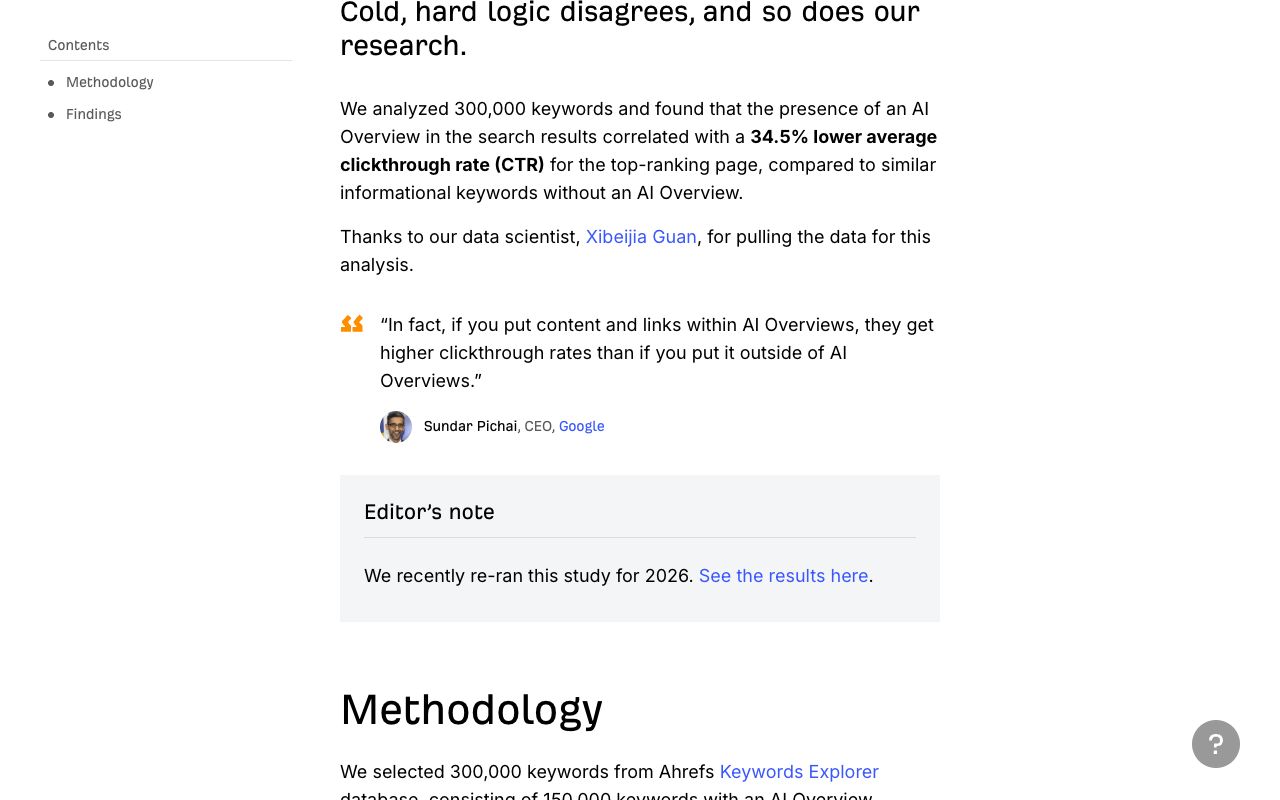
- AI Overview and snippet ownership for your question set, plus what happened to CTR underneath. Ahrefs' Apr 17, 2025 study of 300,000 keywords found a 34.5% lower average clickthrough rate for the top-ranking page when an AI Overview was present (March 2024 vs March 2025).
- Mention rate and recommendation rate: on how many tracked questions each engine named you, and on how many it told the buyer to pick you rather than listing you among options.
- Citation rate: how often one of your own URLs appears in the sources behind the answer.
- Sentiment, negative themes and share of voice against pinned competitors on the same question set.
- Conversions from AI referrers in analytics, remembering that these visits convert well but arrive in small numbers.
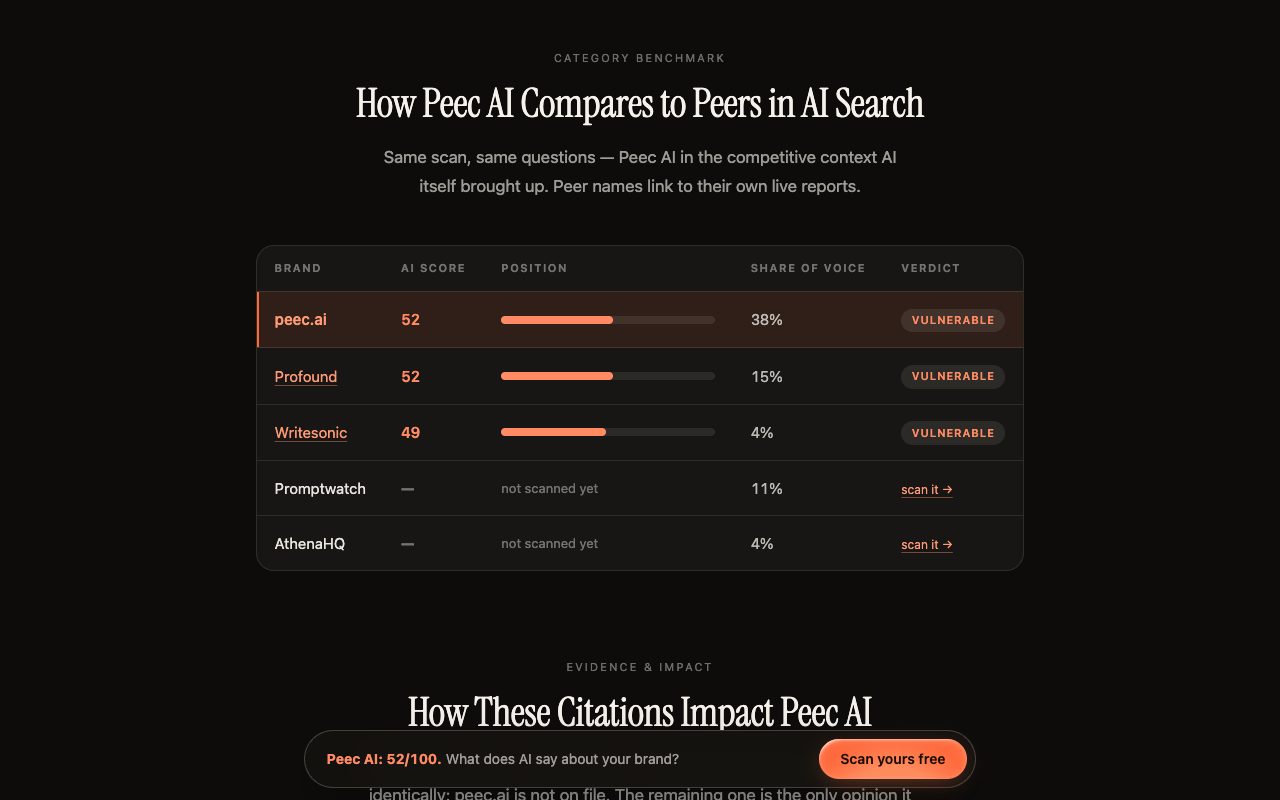
Mention and recommendation are different numbers, and the gap between them is often the whole story. Kairosy's public scan of Peec AI (read Oct 21, 2026) scores the brand 52/100 ("Vulnerable") with 83% AI visibility: ChatGPT, Claude and Perplexity all mention it but each recommends a rival, and Gemini barely knows the brand. High presence, low preference, and a fix list about comparison content rather than awareness.
Here is a one-quarter scorecard template. Every number in it is an example value for a fictional brand, Northwind, so you can see the shape of the report. Replace the figures with your own measurements.
| Metric (example values, fictional brand "Northwind") | Surface | Baseline | Week 6 | Week 12 | Source of truth |
|---|---|---|---|---|---|
| Questions where Northwind owns the AI Overview or snippet | AEO | 2 of 12 | 4 of 12 | 5 of 12 | SEO suite SERP-feature report |
| Average CTR on those pages | AEO | 3.1% | 2.4% | 2.6% | Search Console |
| Mention rate across tracked engines | GEO | 33% | 50% | 67% | Prompt-based scan |
| Recommendation rate | GEO | 8% | 17% | 25% | Prompt-based scan |
| Own-domain citation rate | GEO | 0% | 8% | 17% | Prompt-based scan |
| Conversions from AI referrers | Both | 4 | 7 | 11 | Analytics |
If the AEO rows move and the GEO rows do not, your pages answer questions but nobody else talks about you. If the GEO rows move first, the third-party layer is working and your own pages are the laggard. For the full KPI set, see AI search visibility metrics and KPIs.
AEO vs GEO FAQs: Are They the Same, and Do You Need Two Tools?
Are AEO and GEO the same?
Mostly, and some vendors say entirely. Ahrefs and Profound treat them as names for one strategy, while HubSpot separates them by scope. The content work overlaps almost completely and only the measurement differs, so the safe reading of AEO vs GEO is "same work, two scoreboards".
What is the difference between AEO and GEO?
Where a difference is drawn, AEO targets surfaces that return one short answer (snippets, voice, AI Overviews) and GEO targets assistants that write a longer answer and cite sources. AEO success looks like owning the answer box. GEO success looks like being mentioned, recommended and cited in the generated text.
What does AEO stand for in marketing?
Answer engine optimization: optimizing content so that systems which answer questions directly, rather than listing links, pick your content as the answer and represent your brand accurately.
Is GEO vs SEO vs AEO a choice, or do you do all three?
All three, because they share a foundation. SEO gets the page indexed and trusted, AEO shapes the passage that gets extracted, and GEO builds the evidence that gets you cited in a generated answer. Dropping SEO to "do GEO" removes the layer the other two stand on.
Do you need two tools for AEO and GEO?
Two categories of tool, not two vendors per category. SERP-feature and AI Overview tracking comes from SEO suites such as Semrush or Ahrefs. Measuring what ChatGPT, Perplexity, Gemini and Claude actually say needs a prompt-based scanner that stores the answers and sources, which is what Kairosy does from $29 a month after a 7-day trial with no card.
Where should a small team start? With the generated answers to your top ten buying questions, because that result tells you which problem you have: not mentioned, mentioned but not cited, or outranked by a recommended rival. Run a brand check on the engines your buyers actually use, read what each one says, and then decide which acronym goes on the plan.
See what AI says about your brand
Run a free scan across ChatGPT, Gemini, Claude & Perplexity in about 30 seconds.
Run my free scan