Best Platform for AI Visibility Metrics in 2026: 8 Compared by Need
The best platform for AI visibility metrics is the one whose numbers you can take apart: every score traces back to a stored answer, a stated denominator and a named engine. Judged that way, the shortlist for most teams is Kairosy or Otterly.AI under $30 a month, Peec AI or Rankscale for agencies, and Ahrefs Brand Radar, Profound or Scrunch when you need demand-weighted prompts and an API.
This guide covers the metrics themselves — what each counts, what it divides by, and how to tell a stable reading from noise. Reporting gets its own post. Every price was read on the vendor's pricing page on October 21, 2026.
Which Is the Best Platform for AI Visibility Metrics? Pick by Need
Start from your situation. Prices are monthly billing unless marked.
| Your situation | Pick first | Why | Entry price |
|---|---|---|---|
| Small team, one brand, wants to read the actual answers | Kairosy Basic | Full answers with sources, sentiment per answer, daily prompts | $29/mo |
| Small team focused on Google AI Overviews and Copilot | Otterly.AI Lite | Both covered at entry; Gemini and Claude are add-ons | $29/mo |
| Agency with several client brands | Peec AI Advanced or Rankscale Growth | Peec: 350 prompts, 5 projects. Rankscale: 50 dashboards, white-label | $495/mo · $385/mo |
| Agency that can live without client isolation | Kairosy Growth | 20 brand slots, 250 prompts/day, one account | $399/mo |
| Enterprise needing demand weighting and an API | Ahrefs Brand Radar, Profound, Scrunch | Volume weighting (Ahrefs), 9 engines on contract (Profound), industry prompts (Scrunch) | $129/mo · custom · $300/mo |
| Already paying for Semrush | Semrush AI Visibility Base | 25 custom prompts inside the suite you use | $99/mo per domain, billed annually |
Which AI Visibility Metrics Are Worth Tracking, and What Is Each One's Denominator?
Five AI visibility metrics appear on nearly every platform. They look interchangeable; each divides by something different.
| Metric | Numerator | Denominator to ask about | Where it breaks |
|---|---|---|---|
| Mention rate ("AI visibility %") | Answers naming your brand | All answers (prompts × engines × runs) or just prompts | Name matching counts lookalikes; per-prompt hides which engine spoke |
| Recommendation position (#k of N) | Your rank in the list | Brands named in that answer | Order is the least stable output; N changes every run |
| Citation rate | Answers linking your domain | Answers that exposed any source | Ungrounded calls expose no links, so the denominator can be zero |
| Share of voice | Your mentions | Mentions of every tracked competitor | Branded prompts inflate share; swapping a competitor moves every number |
| Sentiment | Answers labeled positive | Answers mentioning you | The classifier is a model too; no quote, no audit |
Mention rate is the floor metric: insist on knowing whether 83% means 83 of 100 answers or 10 of 12 prompts. Kairosy reports it per answer, with per-engine cards.
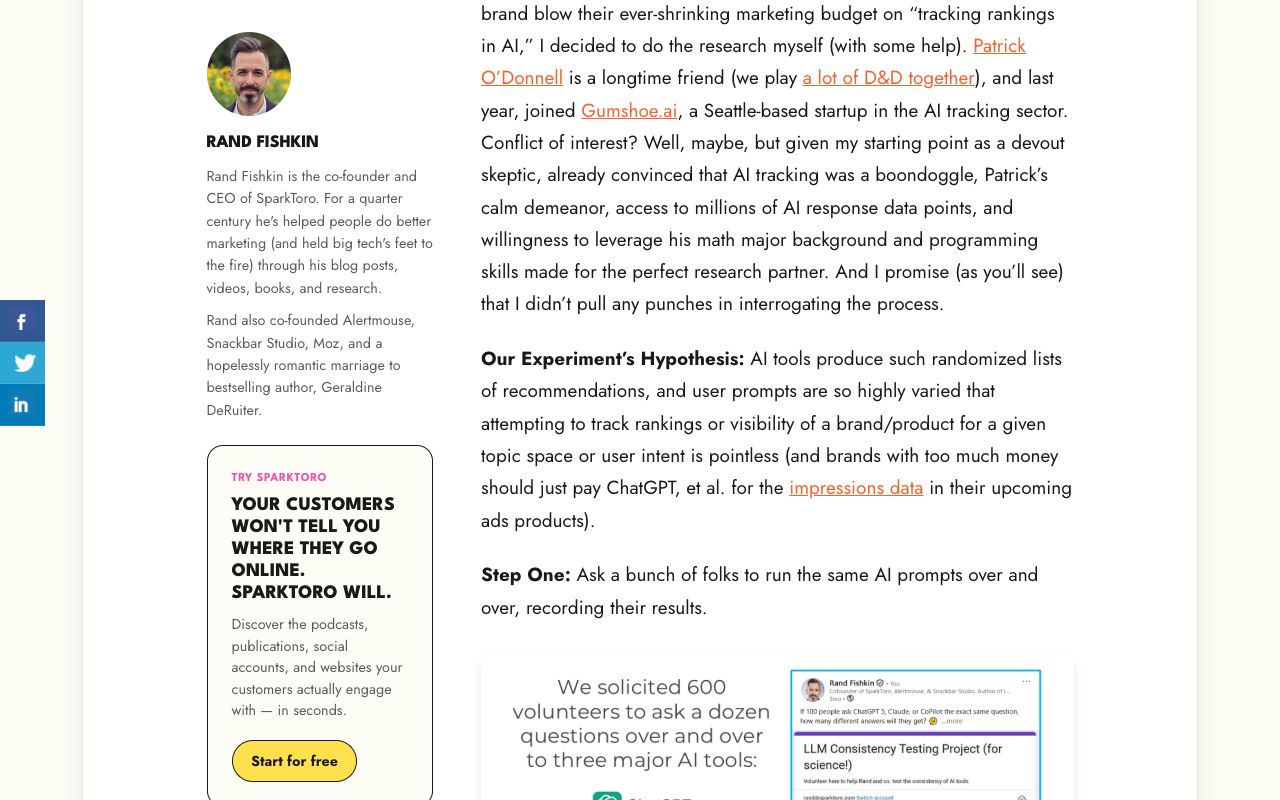
Recommendation position deserves the most skepticism. SparkToro's 2,961-run study across 12 prompts (Rand Fishkin, January 28, 2026) found under a 1-in-100 chance that ChatGPT or Google's AI returns the same brand list twice, and about 1 in 1,000 for the same order. A "#2 of 6" reading is a sample, not a rank — Kairosy's position figure included.
Citation rate and mention rate must stay separate. Google's Gemini API documentation says search grounding is a tool you switch on, after which the model "determines if a Google Search can improve the answer"; without it the API measures memory, not citations. Share of voice needs an unbranded view as well as a blended one (Kairosy shows both). Sentiment is only as good as the quote behind each label.
How Do You Compare AI Visibility Platforms Fairly? Same Brand, Prompts, Engines, Market, Window
Two platforms can both be correct and still disagree. Pin five variables first:
- Same brand, anchored to its domain, not just the name string.
- Same prompt set — paste your 20 questions into both; no auto-generated sets.
- Same engine access path — ChatGPT without browsing and ChatGPT with search are different instruments.
- Same market and language — a variance study on arXiv (Żatuchin, July 14, 2026) found query language the largest systematic factor, 26.5% of single-response variance.
- Same week — cited sources rotate fast.
Only then is a gap a methodology difference; our measurement protocol covers building the prompt set.
Which Platforms Belong on the Shortlist? 8 Candidates Compared on One Checklist
Same checklist for all eight: metrics, raw answers, export, entry price, fit. Engine lists are as vendors state them.
| Platform | Engines at entry tier | Entry price | Prompts at entry | Raw answers | Export / API |
|---|---|---|---|---|---|
| Kairosy | Any 4 of ChatGPT, Gemini, Claude, Perplexity, DeepSeek, Doubao | $29/mo ($25 annual) | 15/day, 1 brand × 1 market | Yes, with sources | Report export; API listed on the Growth plan |
| Otterly.AI | ChatGPT, AI Overviews, Perplexity, Copilot (+ add-ons) | $29/mo ($25 annual) | 15 | Yes | API + MCP from $189/mo |
| Peec AI | Choose 3 models; 13 on Enterprise | $95/mo | 50, 1 project | Yes | Looker Studio at Advanced; API on Enterprise |
| Semrush AI Visibility | ChatGPT, Google AI, Gemini, Perplexity | $99/mo per domain, annual | 25 | Not stated | Suite reporting add-ons |
| Ahrefs Brand Radar | AI Overviews, AI Mode, Gemini, Copilot, Perplexity, ChatGPT (Claude add-on) | In Lite $129/mo; index $199/mo | 150 checks on Lite | Index data + daily custom-prompt checks | Suite export |
| Profound | ChatGPT, Gemini, AI Overviews on trial; 9 on Enterprise | Free trial; Enterprise custom | 50 (trial) | Yes | CSV/JSON + API, Enterprise only |
| Scrunch | ChatGPT, Claude, Gemini, Perplexity, AI Mode, AI Overviews, Meta | $300/mo ($250 annual) | 350 custom + 1,000 industry | Yes | Data API on Enterprise |
| Rankscale | ChatGPT, Claude, Perplexity, Gemini, AI Mode, AI Overviews, Copilot, Mistral, DeepSeek, Meta | $17/mo yearly-only; Pro $99/mo | Credits (Pro: 1,200) | Yes | REST API from $229/mo |
Kairosy: answer-level evidence for small teams, honest about what it skips
Kairosy asks engines real buyer questions, stores each complete answer with its cited URLs, classifies sentiment per answer and extracts the negative narratives behind the score. Prompt Tracking re-runs your questions daily with a 7-run history per engine. Basic $29 (1 slot, 15 prompts/day), Pro $99 (5 slots, 60), Growth $399 (20 slots, 250); 7-day trial, no card. The gaps matter: no prompt-volume data, no real-time alerts (a weekly email flags drops, engine flips and competitor-preferred answers), no seats or client isolation. Details on the AI brand monitoring page.
Otterly.AI: cheapest route to AI Overviews and Copilot
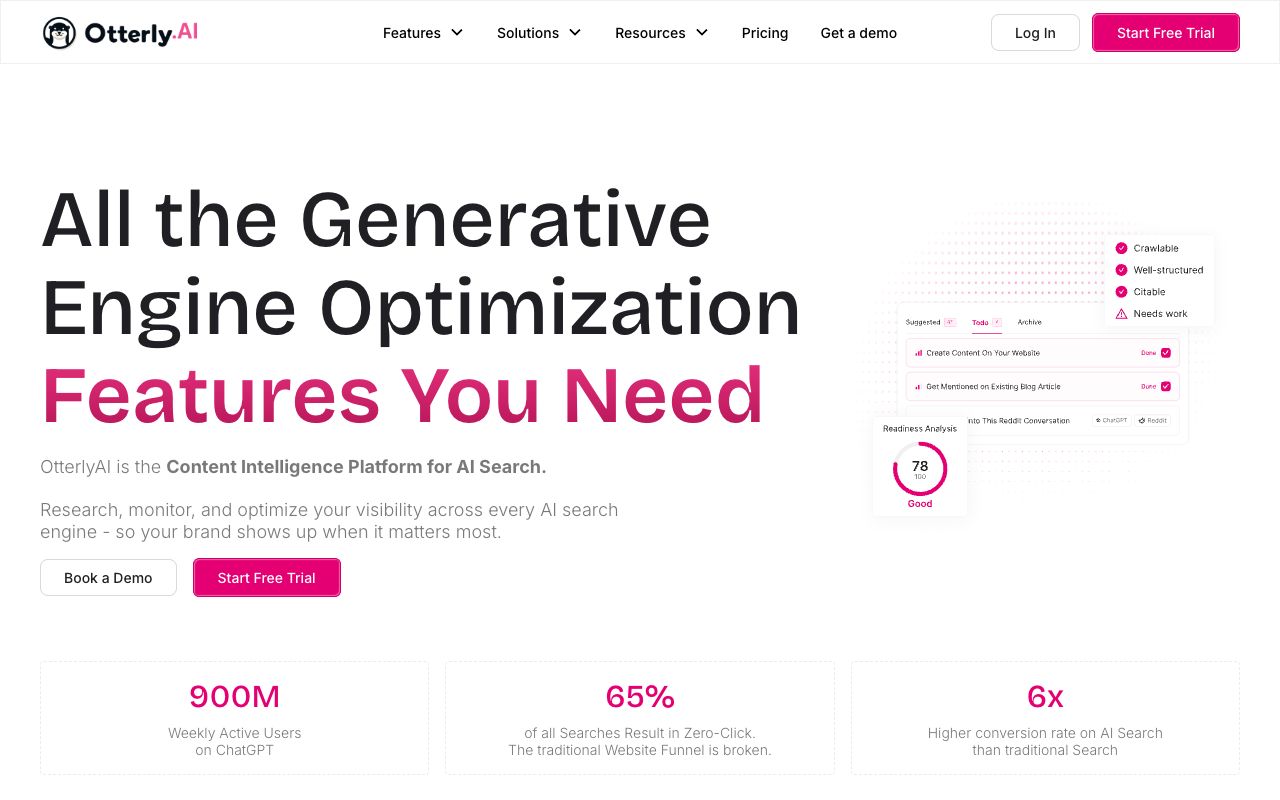
Otterly.AI Lite is $29/mo for 15 prompts tracked daily on ChatGPT, Google AI Overviews, Perplexity and Copilot. Standard ($189/mo, 100 prompts) and Premium ($489/mo, 400) add API and MCP access. The add-ons are the metric-relevant detail: Claude $29/mo on Lite, Gemini and Google AI Mode $9/mo; annual billing is 15% off.
Peec AI: per-prompt demand scores and clean project separation
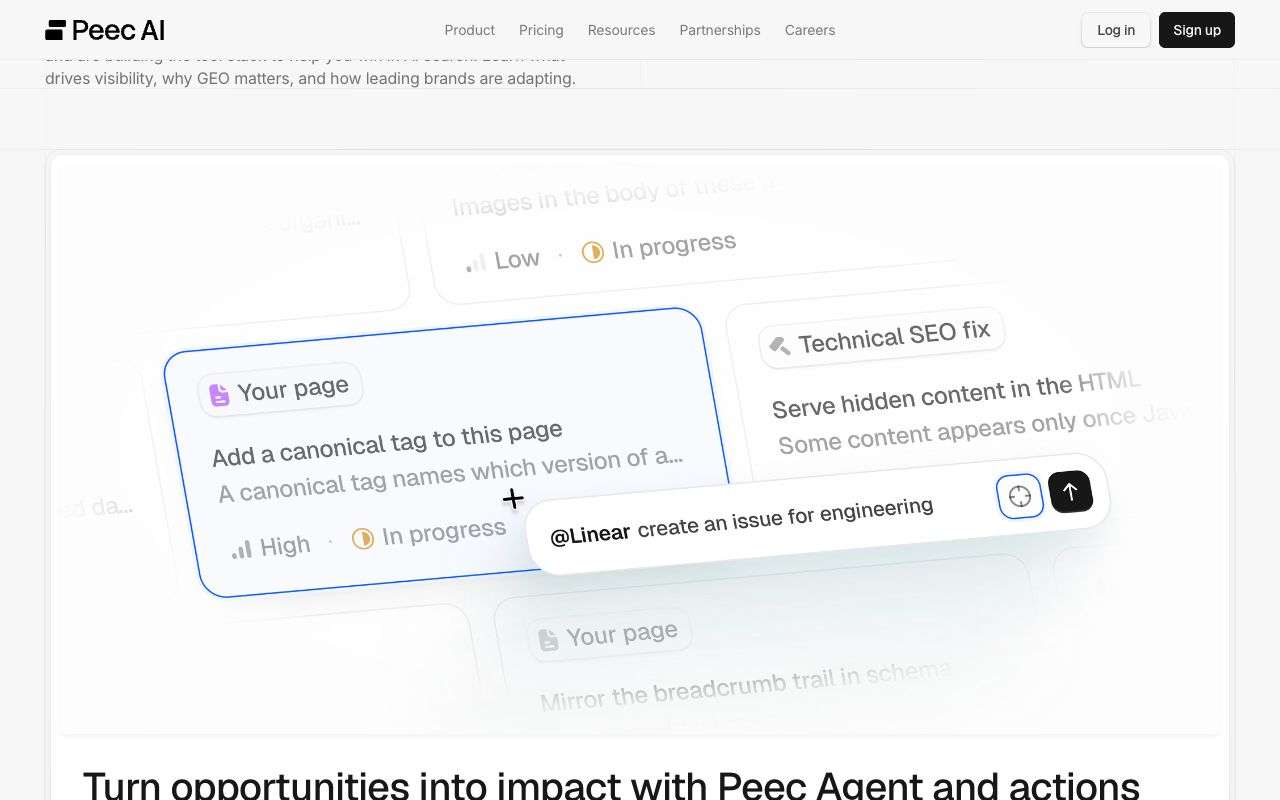
Peec AI prices by prompt count: Starter $95/mo (50 prompts, 1 project), Pro $245/mo (150, 2 projects), Advanced $495/mo (350, 5 projects, multi-country, Looker Studio). Each plan tracks 3 models of your choice daily; Enterprise opens all 13 plus API and SSO. Peec scores each prompt's relative demand from 1 to 5, so you can weight visibility by what buyers ask — a dimension Kairosy lacks.
Semrush AI Visibility: the add-on for teams already in the suite
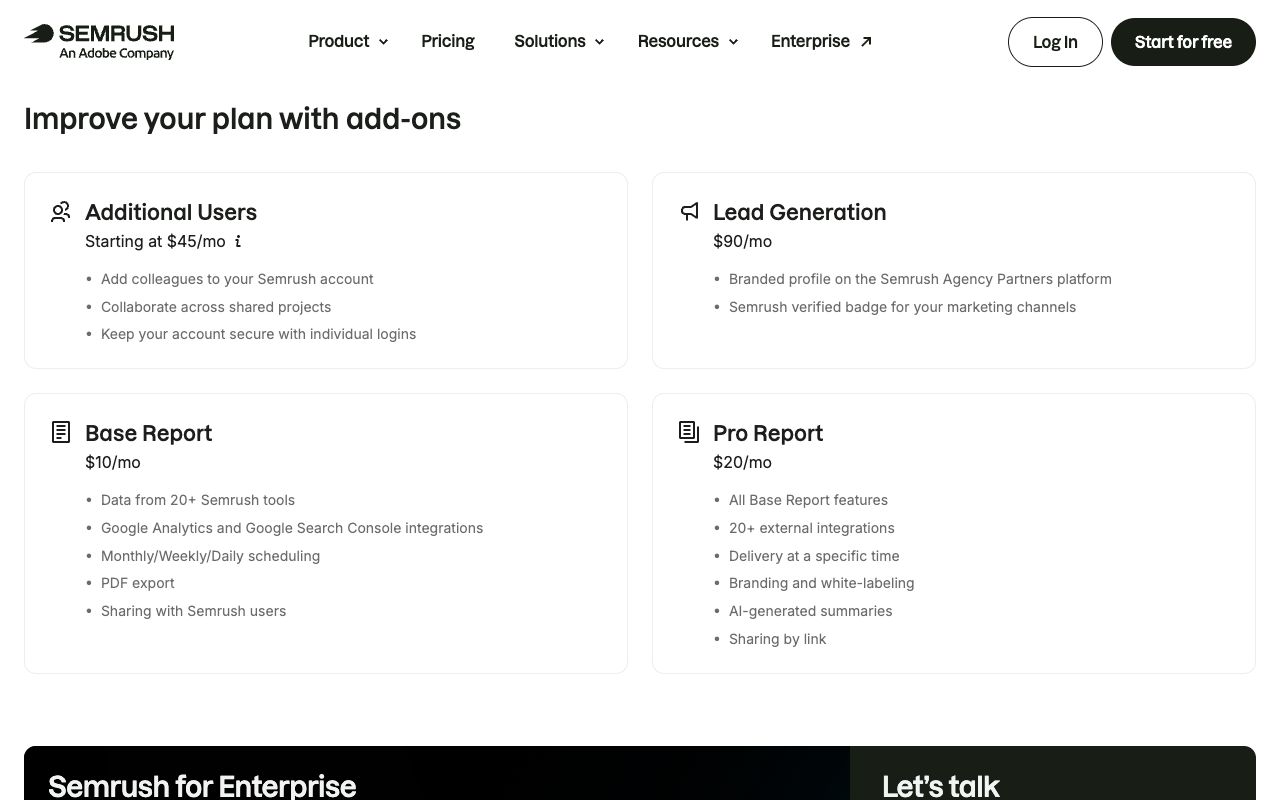
Semrush sells AI Visibility as its own toolkit at $99/mo per domain, billed annually: 25 custom prompts with daily AI rankings, brand-performance analysis for one domain, mentions from ChatGPT, Google AI, Gemini and Perplexity. Convenient if you are already there; ask in the demo whether per-answer text is stored, since the pricing page does not say.
Ahrefs Brand Radar: visibility weighted by prompt volume
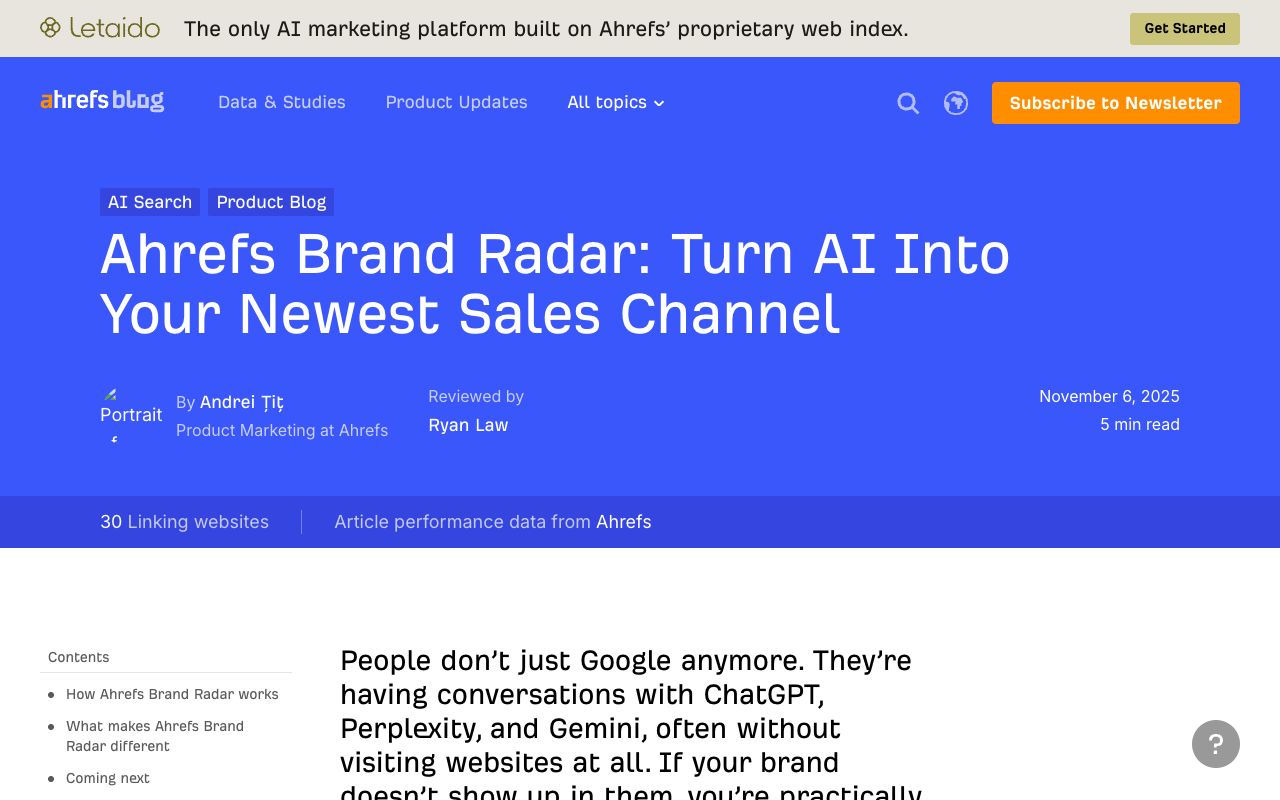
Brand Radar ships inside every Ahrefs plan (Lite $129/mo, Standard $249/mo, Advanced $449/mo, with 150, 300 and 600 tracked AI prompt checks) and as a standalone index at $199/mo; custom prompts start at $50/mo. It maps brands across a 495-million-plus pre-collected prompt index and checks your custom prompts daily on the platforms you select, reporting mentions, citations, share of voice and impressions weighted by search volume. That weighting is unique here — just keep the Index figures (pre-collected) apart from your daily custom-prompt checks when you read a trend.
Profound: nine answer engines, enterprise contracts only
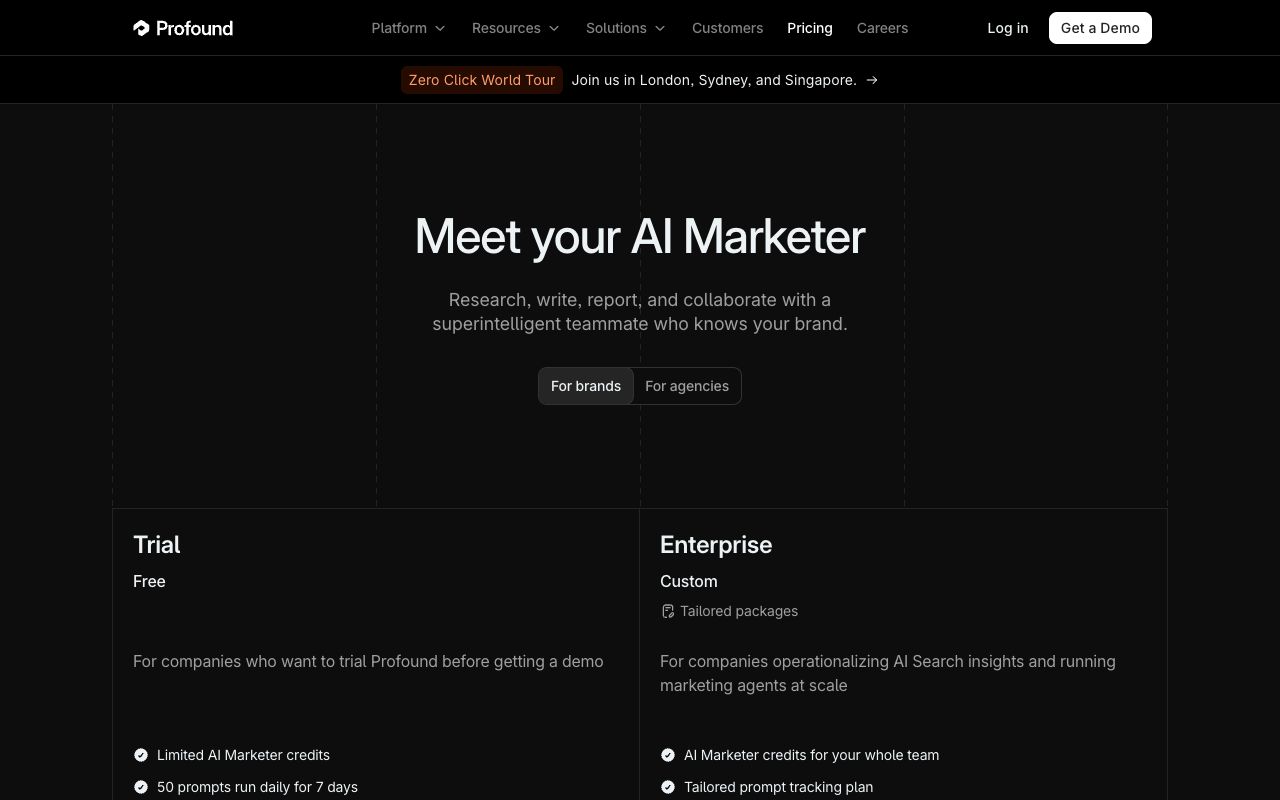
Profound publishes two tiers: a free 7-day trial (50 prompts a day on ChatGPT, Gemini and Google AI Overviews, one region, no exports) and Enterprise at custom pricing with up to 9 answer engines, CSV and JSON exports, full API and SSO. There is no self-serve paid plan — the main buying fact for small teams.
Scrunch ($300/mo month-to-month, $250 billed annually) pairs 350 custom prompts with 1,000 industry prompts and 3 personas across seven engines, with a 7-day trial. Rankscale (Essentials $17/mo, yearly only; Pro $99/mo with 1,200 credits and a 7-day trial; Enterprise $780/mo) bills by credits and adds white-label at Growth ($385/mo).
How Do You Know an AI Visibility Metric Is Reliable? Repeat Runs, Disambiguation, Citations vs Mentions
Three tests separate a trustworthy number from a lucky one. No leading AI visibility metrics platform passes them by default; you have to check.
Does it repeat the run before reporting?
Engines are not deterministic even when asked to be. Thinking Machines Lab (Horace He, September 10, 2025) sent one prompt 1,000 times at temperature 0 and got 80 distinct completions. OpenAI's seed documentation promises only a "best effort" and states "Determinism is not guaranteed." The arXiv decomposition puts single-answer brand reliability near 0.01 and finds each repeat past the fifth adds about 0.0003; adding models and languages helps far more. So look for run history (Kairosy keeps 7 runs per prompt per engine; Peec and Otterly track daily) and average across engines.
Does it anchor the brand to a domain?
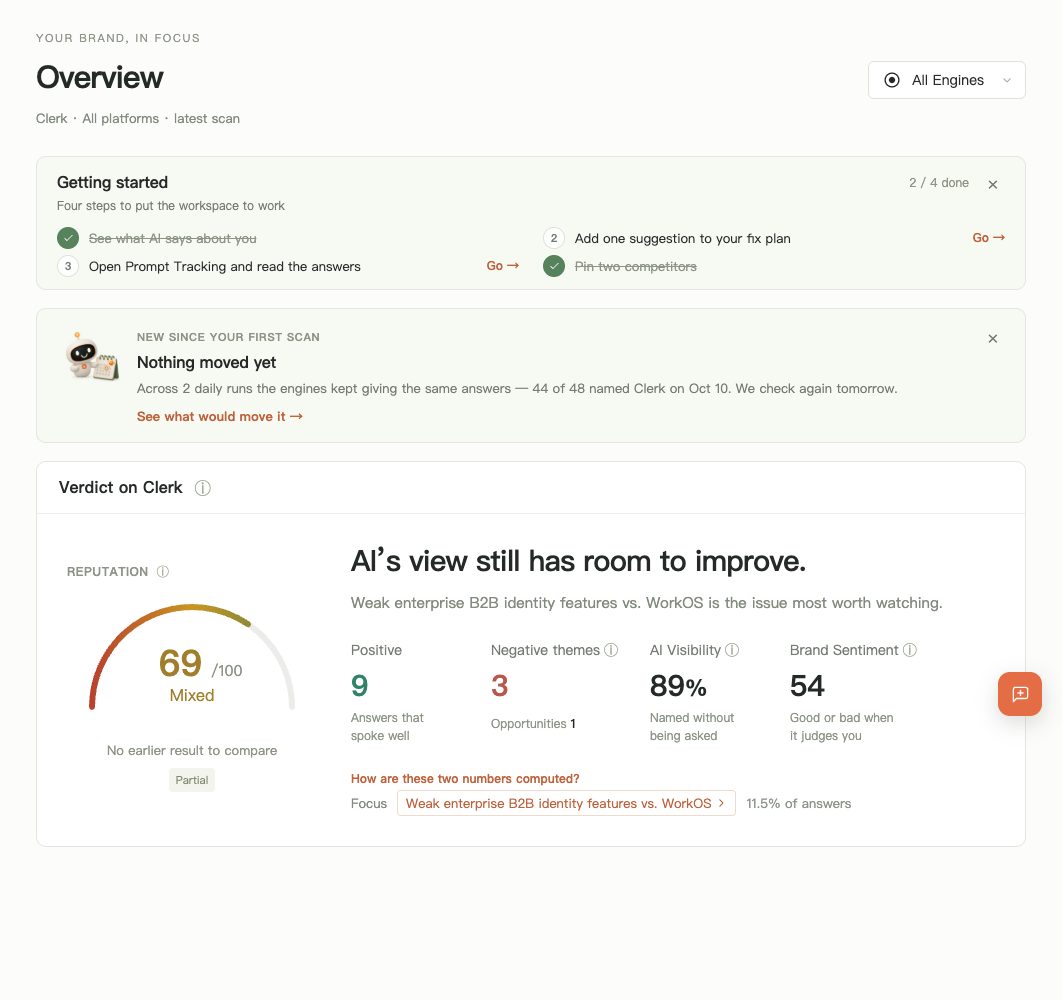
Kairosy's public scans of Otterly.AI and Otter.ai make a useful pair: two near-identical names, scanned separately on August 5, 2026, with different results — 83% AI visibility and 55/100 for the monitoring tool, 100% and 59/100 for the meeting-notes app. A platform keyed on the name string alone cannot keep those apart, and every downstream metric inherits the mix-up.
Does it keep engines and citations separate?
The Otterly.AI scan also shows why per-engine splits matter: Claude scored the brand 73/100, Gemini 44 with incomplete answers and a misspelled competitor; a blended 55 hides that. Likewise, "cited 40%" without the count of answers that exposed sources has no floor.
What Does a 20-Question Controlled Experiment Look Like? Method and Verification Table
Run this before you sign. Every number below is an example value for a fictional brand, Northwind Analytics, showing how the denominator moves the score.
- Write 20 purchase questions for one category: 12 unbranded, 5 comparison, 3 branded.
- Load the identical 20 into each candidate, same engines, same country, same week.
- Run each prompt 5 times per engine.
- Pull the raw answers and recompute each metric by hand under each denominator.
- Compare your hand numbers with each dashboard figure.
| Same 20 questions, same brand (example values) | Denominator | "Visibility" shown |
|---|---|---|
| Mentioned in 48 of 400 answers | Answers (20 × 4 engines × 5 runs) | 12% |
| Mentioned at least once on 11 of 20 prompts | Prompts | 55% |
| Mentioned on 23 of 80 prompt × engine pairs | Prompt × engine | 29% |
| Share of voice, branded prompts included | All tracked-brand mentions, 20 prompts | 31% |
| Share of voice, 12 unbranded prompts only | All tracked-brand mentions, 12 prompts | 9% |
Reuse this verification table for any vendor demo; add two columns for the vendor's figure and your recount.
| Metric | Denominator to confirm | Reliability test | Example pass threshold |
|---|---|---|---|
| Mention rate | Answers vs prompts vs prompt × engine | 5 repeat runs | Dashboard within 5 points of hand count |
| Recommendation position | Brands named in that answer | Median across runs | Shown with N and run count |
| Citation rate | Answers that exposed sources | Grounded vs ungrounded call disclosed | Zero-source answers excluded |
| Share of voice | Competitor set; branded vs unbranded pool | Recompute with one competitor swapped | Unbranded view available |
| Sentiment | Answers mentioning you | Spot-check 10 labels against quotes | 8 of 10 agree |
Pair it with the free AI crawl checker (can engines reach the pages you expect them to cite?) and the KPI guide before turning any metric into a target.
Best Platform for AI Visibility Metrics FAQs: Gemini, Accuracy and Score Differences
Which Gemini do AI visibility metrics measure?
Three surfaces carry the name. Google said on May 20, 2025 that a custom Gemini 2.5 powers both AI Mode and AI Overviews, while the Gemini app and API are separate, and the API only searches when grounding is on. So the AI visibility metrics Gemini produces depend on which surface a vendor queries: Otterly sells Gemini and AI Mode as separate add-ons, Ahrefs lists them as separate columns, and Kairosy's Gemini engine measures the Gemini model, not Google's search surfaces. See Gemini brand monitoring and our Gemini tracking guide.
Which is the most accurate AI visibility metrics software?
None, in the sense of matching a ground truth: engines disagree with their own previous run. Accuracy is a property of method — fixed prompts, repeated runs, a domain-anchored brand, the raw answer behind every number. The most accurate AI visibility metrics software for you is whichever lets you verify those four things.
Why do two tools show different scores for the same brand?
Usually a different denominator, a different engine access path, or a different week — in that order. Check all three before suspecting either tool.
How many runs before a score is trustworthy?
Treat fewer than 5 runs per prompt as a single sample; the arXiv study found gains beyond five repeats negligible, while adding engines and languages helps more.
Is a paid platform worth it over checking by hand?
Twenty prompts on 4 engines, 5 times, is 400 answers to store, classify and recount weekly, with no run history. Our evidence post covers when manual checks are still enough.
See what AI says about your brand
Run a free scan across ChatGPT, Gemini, Claude & Perplexity in about 30 seconds.
Run my free scan