Brand Accuracy in AI Search: A 6-Step Fact Audit (2026)
Brand accuracy in AI search is whether the facts an assistant states about you — plan names, prices, features, regions, policies — match what is true today. It is a different measurement from whether you show up in the answer at all (appearance) and from how the answer sounds (sentiment), and most teams only track those two.
This guide covers the third. You will build a fact sheet an engine can actually read, run three kinds of questions, grade every claim as accurate, wrong, outdated, unsupported or omitted, trace each error to your own page or a third party's, fix in purchase-impact order, then re-test under identical conditions and report a correction-coverage number instead of an impression.
What Is Brand Accuracy in AI Search, and How Is It Different From Appearance and Sentiment?
Three questions, three units. Appearance asks "did the engine name us?" — one yes/no per answer, rolled up into a visibility rate. Sentiment asks "how did it talk about us?" — one tone label per answer, rolled up into a score. Accuracy asks "of the factual claims it made, how many are right today?" — and its unit is the claim, not the answer.
That is why accuracy needs its own audit. One answer can name you first, praise you and misquote your price in the same paragraph. It counts as visible and positive, and the buyer who acts on the price still reaches checkout expecting a number you never charged.
A live example of the texture: Kairosy's public scan of Webflow records Claude positioning Framer "at a lower entry price ($10/mo vs. Webflow's…)". On October 21, 2026, Framer's pricing page lists Basic at $10/month under a yearly-billing toggle. The figure holds; the answer dropped the billing condition. Right number, missing qualifier — that is most of what an accuracy audit finds.
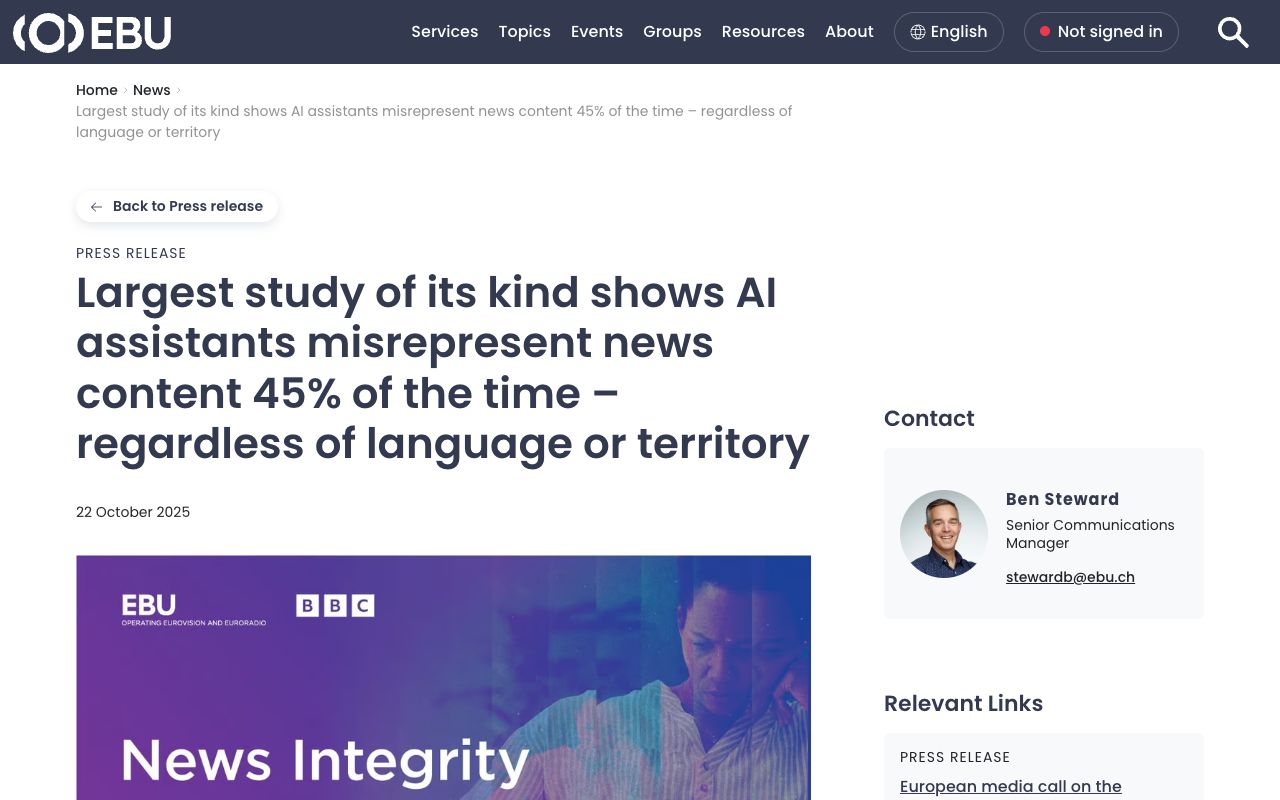
The error rates are documented, just not for brands. Two independent studies graded AI answers against known facts, and the numbers below are the baseline you should assume for your own claims until you measure them.
| Study (date) | Sample | Findings |
|---|---|---|
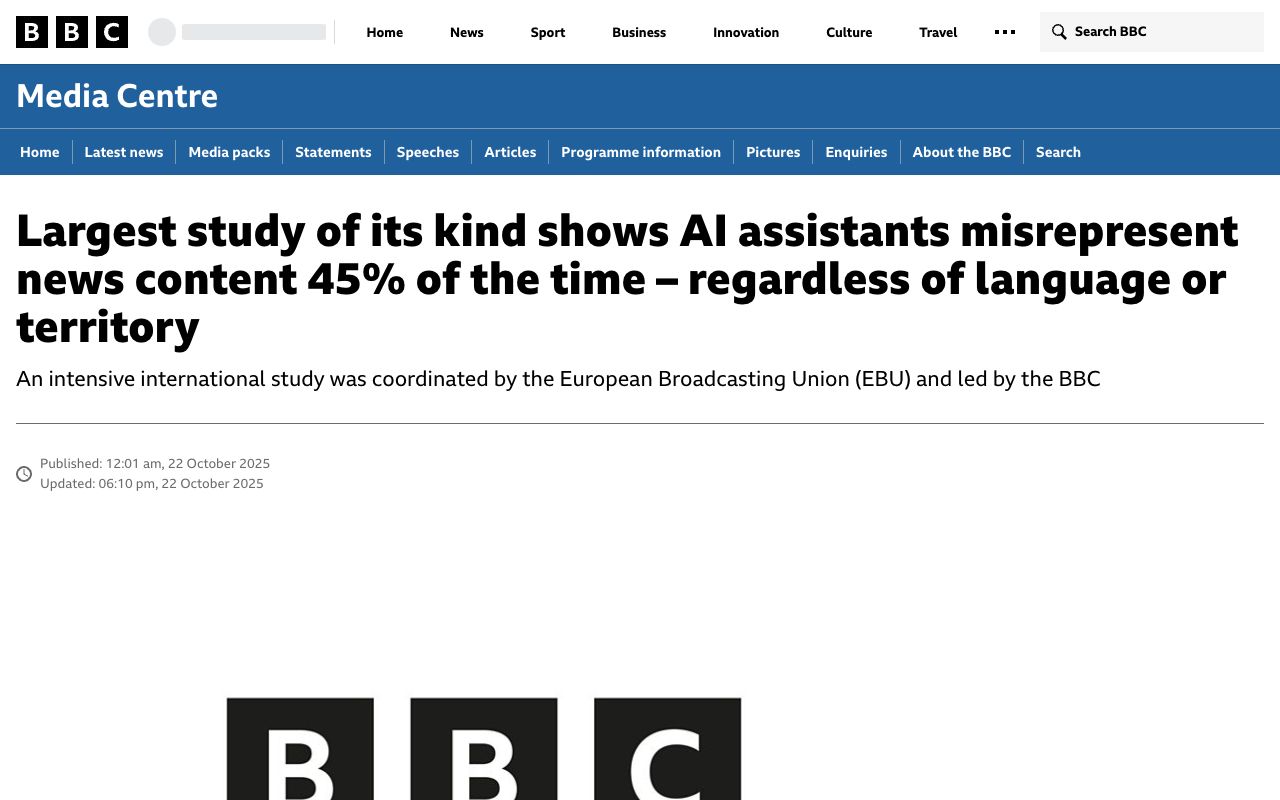
| EBU / BBC, News Integrity in AI Assistants (Oct 22, 2025) | 3,000+ answers · 22 public broadcasters · 18 countries · ChatGPT, Copilot, Gemini, Perplexity | 45% of answers had at least one significant issue · 31% sourcing problems · 20% major accuracy errors · Gemini 76% with significant issues |
| Tow Center / CJR, "AI Search Has a Citation Problem" (Mar 6, 2025) | 1,600 queries · 8 tools incl. ChatGPT Search, Perplexity, DeepSeek Search, Copilot, Gemini, Grok 3 | Over 60% of answers incorrect · Perplexity 37%, Grok 3 94% · Grok 3 faulty citations on 154 of 200 queries · DeepSeek misattributed sources 115 of 200 times |
Both studies tested newsrooms, which are far better covered than a mid-size SaaS or DTC brand. Expect your own rate to be worse.
How Do You Audit Brand Accuracy in AI Search? Six Steps From Fact Sheet to Re-Test
Each step produces the artifact the next one consumes. Skip one and the final number stops meaning anything.
Step 1: Build a verifiable brand fact sheet (name, products, prices, features, regions, policies)
One row per fact, with the public URL that proves it and the date you last checked it. A fact that lives only in an internal wiki is not on the sheet, because no engine can read it. Minimum fields:
- Names: legal name, trade name, former names, common misspellings.
- Products and plans: current plan names, retired plan names with retirement dates.
- Prices: amount, currency, billing cycle, and whether the figure is monthly-billed or annual-equivalent.
- Features and limits: the five claims buyers compare you on, each with its numeric cap.
- Regions: countries served, shipping or payout coverage, supported languages.
- Policies: trial length, card requirement, refund window, support hours.
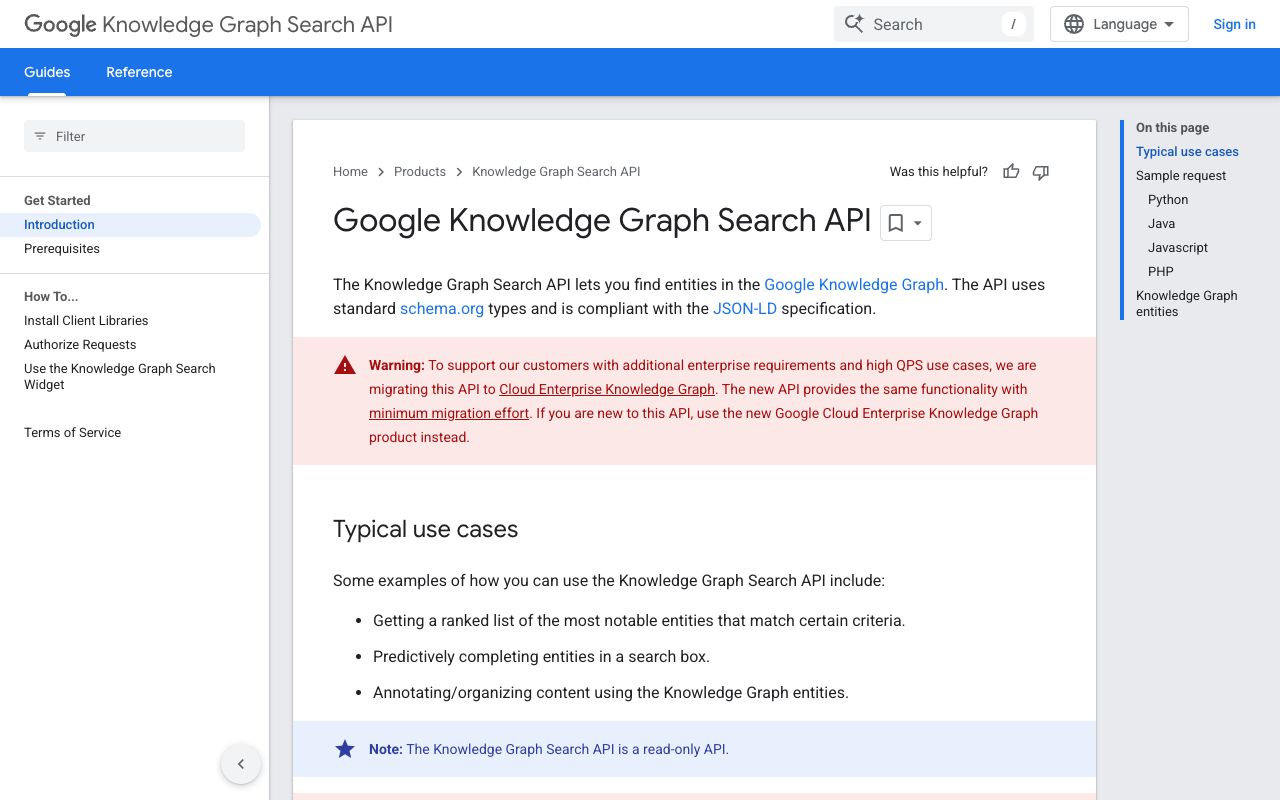
Mirror the sheet in structured data so the facts are machine-readable on the page. Google's Organization documentation (updated September 8, 2026) covers name, alternateName, legalName, sameAs, foundingDate and hasMerchantReturnPolicy; its Product documentation covers price, priceCurrency, priceValidUntil and availability. Google's AI features page (December 10, 2025) says no special markup exists for AI Overviews or AI Mode, and that structured data must match the visible text. Validate with the free schema markup checker before moving on.
Step 2: Cover brand introductions, product comparisons and buying recommendations
Different question types pull different facts out of a model, so a prompt set that is all "what is X?" will never surface a price error. Write at least five prompts per bucket:
- Introduction ("What is Northwind Mailer and who is it for?") surfaces identity facts: founding year, headquarters, category, product list.
- Comparison ("Northwind Mailer vs Mailchimp pricing for 10,000 contacts") surfaces price, limit and feature claims — the richest error zone, because the engine must line up two fact sets at once.
- Recommendation ("Should a UK store use Northwind Mailer?") surfaces policy and fit claims: trial terms, refund window, regions.
Run every prompt in a fresh session on each engine and keep the full answer plus every cited URL. The sentence is your unit, so a tool that only reports "mentioned / not mentioned" cannot feed Step 3. It is also the only honest way to measure brand accuracy in AI recommendations: you cannot grade a recommendation without the sentence that made it.
Step 3: Grade every claim as accurate, wrong, outdated, unsupported or omitted
Split each answer into atomic claims — one subject, one predicate — and give each a verdict against the sheet:
- Accurate: matches the sheet today, including the condition (billing cycle, region, tier).
- Wrong: contradicts the sheet and was never true.
- Outdated: was true once and is not now — an old price, a retired plan, a closed region.
- Unsupported: not on any page you can find, including the one the engine cites.
- Omitted: the question called for a fact the buyer needs — a contact cap, a card requirement — and the answer skipped it.
A claim that is numerically right but drops a condition goes under "omitted", not "accurate". Log engine, prompt, date and cited URL on every row; without those four fields the re-test cannot be matched back to the baseline.
Step 4: Locate where your own pages and third-party pages conflict
For every wrong or outdated claim, open the cited URL beside your canonical page. You will land in one of three situations: your page is stale (the pricing table says one thing, the FAQ under it says another); a third-party page is stale (a review-site profile, a directory, a two-year-old comparison post) and the engine trusted it over you; or both are current but name the same plan differently, and the engine read them as two products.
Third-party fixes have rules. Wikipedia's reliable-sources policy lets a company be cited about itself for plain, non-self-serving facts, so your pricing page can anchor a correction to a wrong founding year but not to "market leader". Review-site profiles are usually editable by the verified owner. Old comparison posts need an email to the author with the current source URL attached. Tally which domains recur across engines while you do this — two or three usually feed most of the wrong claims.
Step 5: Rank by purchase impact, then correct
Score each flagged claim on three questions: does it change what a buyer pays or whether they qualify; how many prompts and engines repeat it; can you fix it on a page you control? Price and eligibility errors repeated by two or more engines and traceable to your own page go first. Unsupported claims with no live source go last — you cannot edit a ghost, so you publish the correct fact prominently and wait.
Match the action to the error type. Outdated: update the page, bump dateModified, set priceValidUntil. Wrong: add one plain sentence stating the fact on the canonical page — text, not an image or a toggle — and fix the third-party source. Omitted: put the missing condition in the section the engines already cite, not on a new page they have never seen.
Step 6: Re-test under the same conditions and record correction coverage
"Same conditions" is a checklist: identical prompt wording, same engine and model tier, same country setting, fresh session with memory off, same web-access setting as the baseline, same weekday slot. Change any one and you are measuring the change, not the correction.
Because answers vary between sessions, run each prompt three times per engine; a claim counts as corrected only when the wrong version appears in zero of three runs. Correction coverage = corrected flagged claims ÷ all flagged claims, per engine and overall, with new wrong claims logged as regressions on a separate line. Retrieval-backed engines such as Perplexity can move within days of a page change; a claim an engine answers from memory may wait for the next model update, which is why coverage is tracked per engine.
What Does a Brand-Fact Audit Sample Look Like? (Example Table)
The table is a worked sample for a fictional email tool, Northwind Mailer. Every value is an example to show the format — nothing here was measured. Copy the columns, not the numbers.
| AI sentence (engine) | Official evidence | Error type | Update action | Re-test (3 fresh runs) |
|---|---|---|---|---|
| "Northwind Mailer's Starter plan costs $19/month." (ChatGPT) | Pricing page: $24 billed monthly, $19 on annual billing | Omitted condition | Added "billed monthly / billed yearly" labels in visible text; set priceValidUntil | 3/3 give both prices — corrected (example) |
| "Ships physical welcome kits to EU customers." (Gemini, cites a 2023 blog post) | No such program; the post described a one-month promotion | Outdated | Added "promotion ended 2023" to the post; removed from navigation | 2/3 — still open (example) |
| "Includes a 30-day money-back guarantee." (Perplexity, cites a review-site profile) | Refund policy page: 14 days | Wrong (third-party profile stale) | Updated the profile; rewrote the policy page with one plain sentence | 3/3 say 14 days — corrected (example) |
| "Integrates natively with Salesforce." (Claude, no citation) | Integrations page: via Zapier only | Unsupported | Added an explicit "no native Salesforce connector" line | 1/3 — still open (example) |
| "Best for teams under 50 people." (DeepSeek), no mention of the 2,000-contact cap | Plan limits table | Omitted | Moved the limits table above the fold on the pricing page | 3/3 mention the cap — corrected (example) |
| "Founded in Austin in 2019." (ChatGPT) | About page: 2019, Denver | Wrong | Organization schema with address; one founding sentence on the About page | 3/3 say Denver — corrected (example) |
Correction coverage here would be 4 of 6 flagged claims, 67% — an example value. Notice what stayed open: the two claims an engine produced without a live source. That pattern repeats in real audits, and it is why purchase impact, not fixability, sets the order.
Why Doesn't a High Sentiment Score or a Citation Link Prove Accuracy?
Sentiment classifies tone. A glowing answer that recommends a plan you retired last year is positive and wrong at once, and a sentiment model scores it positive because that is its job. Kairosy's Brand Sentiment score (0–100) is a tone measurement; keep it in a different column from your accuracy verdicts rather than reading one as a proxy for the other. For the sentiment side, see what AI brand sentiment is.
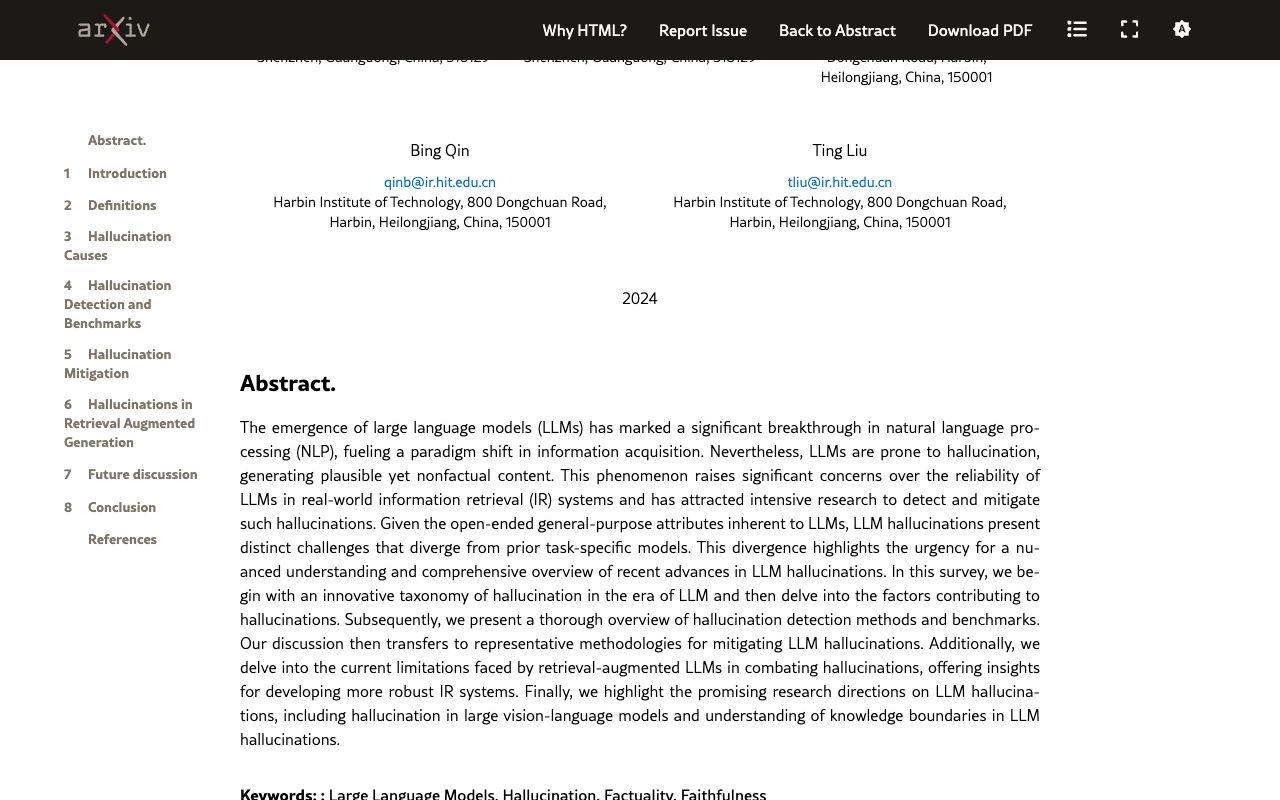
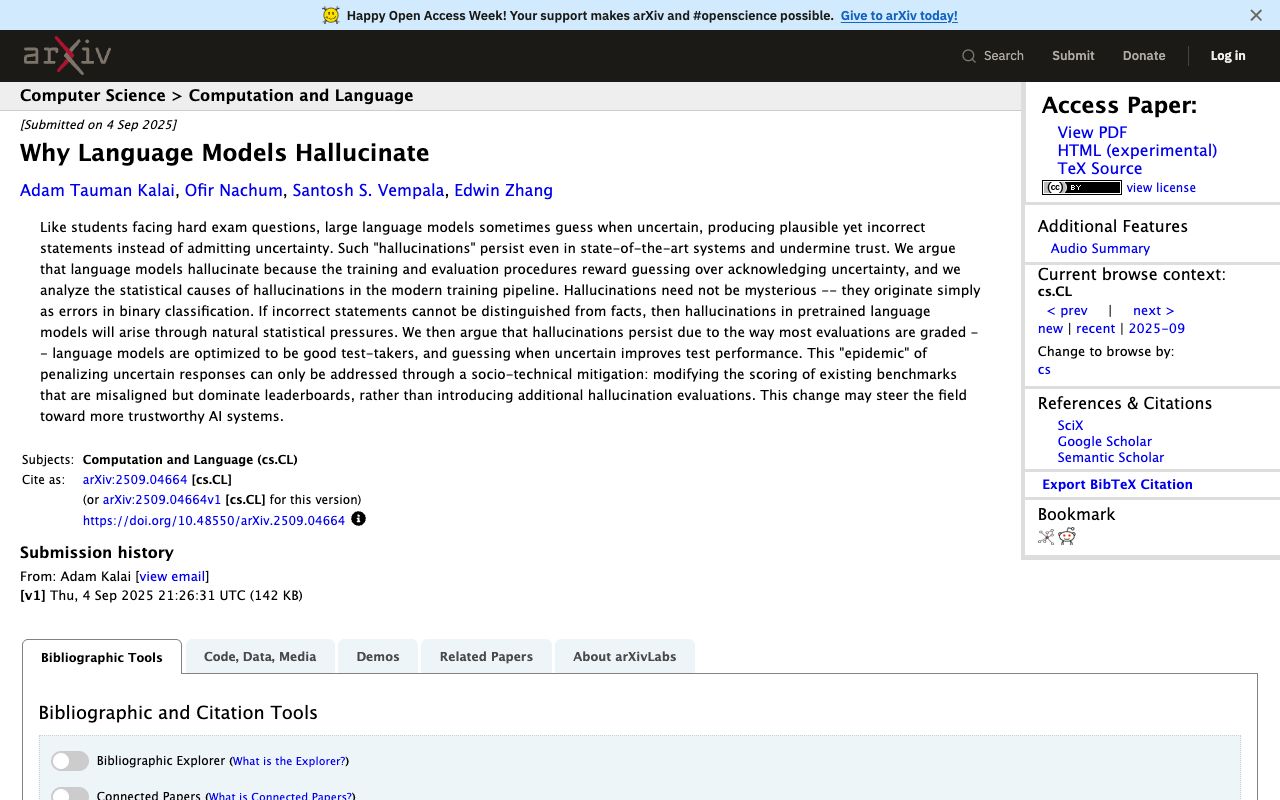
A citation is a lead, not a proof. The Tow Center found that more than half of Gemini and Grok 3 responses pointed to broken URLs, and that DeepSeek attributed excerpts to the wrong source 115 times out of 200; the EBU study put sourcing problems at 31% of all answers. Perplexity's own help center describes its numbered citations as a way for you to "verify the information" — the verification is yours. And per Kalai, Nachum, Vempala and Zhang on arXiv (September 4, 2025), training and benchmarks reward confident guessing over admitting uncertainty, so a confident tone is not evidence either.
For every cited claim, run three checks before marking it accurate: the link resolves, the claim is actually on that page, and the page agrees with your fact sheet today. A link that passes the first check and fails the second is the most common pattern in brand audits.
Which Tools Help You Measure Brand Accuracy in AI Recommendations?
A spreadsheet and fresh browser sessions work at the scale of 15 prompts on two engines, once. They stop working the first time you need the identical set re-run monthly, per engine, with every cited URL kept — the collection cost lands on the same person who has to do the grading.
Kairosy handles the collection half. Brand Scan keeps the full answer and every cited source per engine (you pick four of ChatGPT, Gemini, Claude, Perplexity, DeepSeek and Doubao per project), Prompt Tracking re-runs your tracked questions daily with a seven-run history per engine, Negative Narratives clusters the claims that recur across answers, and Source Analysis lists the domains the answers lean on — the owned-versus-third-party split from Step 4. What it does not do is grade facts: it classifies sentiment, and the Step 3 verdict stays with you. Nothing pings you the moment an answer changes, either; a weekly email flags score drops, a competitor being preferred and new negative keywords. Plans start at $29 per month after a seven-day trial with no card; the AI reputation management page has the plan table.
For the fix side, the free index checker confirms a corrected page is indexed before you blame a model's memory, and the pipeline for changing what ChatGPT says covers outreach when the stale source is not yours. If most flagged claims sit on product pages, the product-page monitoring setup is the narrower version of this audit.
Brand Accuracy in AI Search FAQs: Tools, Checklist and Re-Tests
How often should you re-run the audit?
Run the full set monthly, and re-test affected prompts within two weeks of any price, plan or policy change on your side. Daily prompt tracking tells you when appearance or tone shifts between runs; it is not a substitute for re-grading the claims.
Is ensuring factual accuracy in AI generated brand mentions a one-time project?
No. Three things drift independently: your facts change, third-party pages go stale at their own pace, and each engine's model updates on its own schedule. Treat brand accuracy in AI search as a quarterly baseline with monthly re-tests on the claims that touch price or eligibility.
Can you ask an AI engine to delete a wrong claim?
Not directly. You change the sources the engine reads — your canonical page, the review-site profile, the Wikipedia entry — then re-test. Retrieval-backed engines reflect source changes in days; answers that come from training data may wait for the next model release.
Should an answer with one wrong claim count as inaccurate?
Grade claims, then report at both levels: the share of claims that are accurate, and the share of answers with zero wrong or outdated claims. The claim-level number tells you what to fix; the answer-level number tells you what a buyer experiences.
Does a citation to your own domain prove the claim?
No. Engines often cite an old blog post or a retired landing page on your domain instead of the current pricing page. Check the page's date and whether it still matches the fact sheet before marking the claim accurate.
What is a good correction coverage number?
There is no published benchmark for commercial brand facts, so set an internal target and track the trend. A practical first goal: every price or eligibility claim repeated by two or more engines reaches 3-of-3 corrected within one monthly cycle, with unsupported claims tracked separately because they move slowest.
See what AI says about your brand
Run a free scan across ChatGPT, Gemini, Claude & Perplexity in about 30 seconds.
Run my free scan