How to Change What ChatGPT Says About My Brand: 6-Step Pipeline (2026)

You change what ChatGPT says about your brand by changing the pages it reads, then proving the answer moved. There is no edit button and no appeal form, so the work is a pipeline: write down the exact claim, find the page that supplied it, identify who controls it, apply the one fix that page allows, re-run the prompt, and log the before and after.
This is the execution half of a pair: why ChatGPT says negative things about a brand covers where a claim originates, and why your brand is not showing up in ChatGPT covers being absent rather than criticized. Here the question is narrower: how to change what ChatGPT says about my brand once I know what it says, and what to do when the honest answer is "you can't".
Can You Edit What ChatGPT Says About Your Brand Directly?
No. ChatGPT answers from two places, and neither has a brand-facing correction channel. The first is live retrieval: OpenAI's web search documentation describes the tool as giving models "up-to-date information from the internet" with "sourced citations", each cited page returned as a url_citation annotation carrying "the URL, title and location of the cited source" (OpenAI web search guide, checked September 2026). The second is parametric memory: text absorbed in training and frozen at a cutoff date.
The only controls OpenAI publishes for site owners are crawler directives. The crawler overview states that sites opted out of OAI-SearchBot "will not be shown in ChatGPT search answers" and that a robots.txt change "can take ~24 hours" to take effect. That is a removal switch, not an editing tool. OpenAI's help center articles on ChatGPT search returned HTTP 403 when we tried to verify them, so nothing here relies on them. Every change happens upstream, on the web, on the model's schedule.
How to Change What ChatGPT Says About My Brand: The Six-Column Pipeline
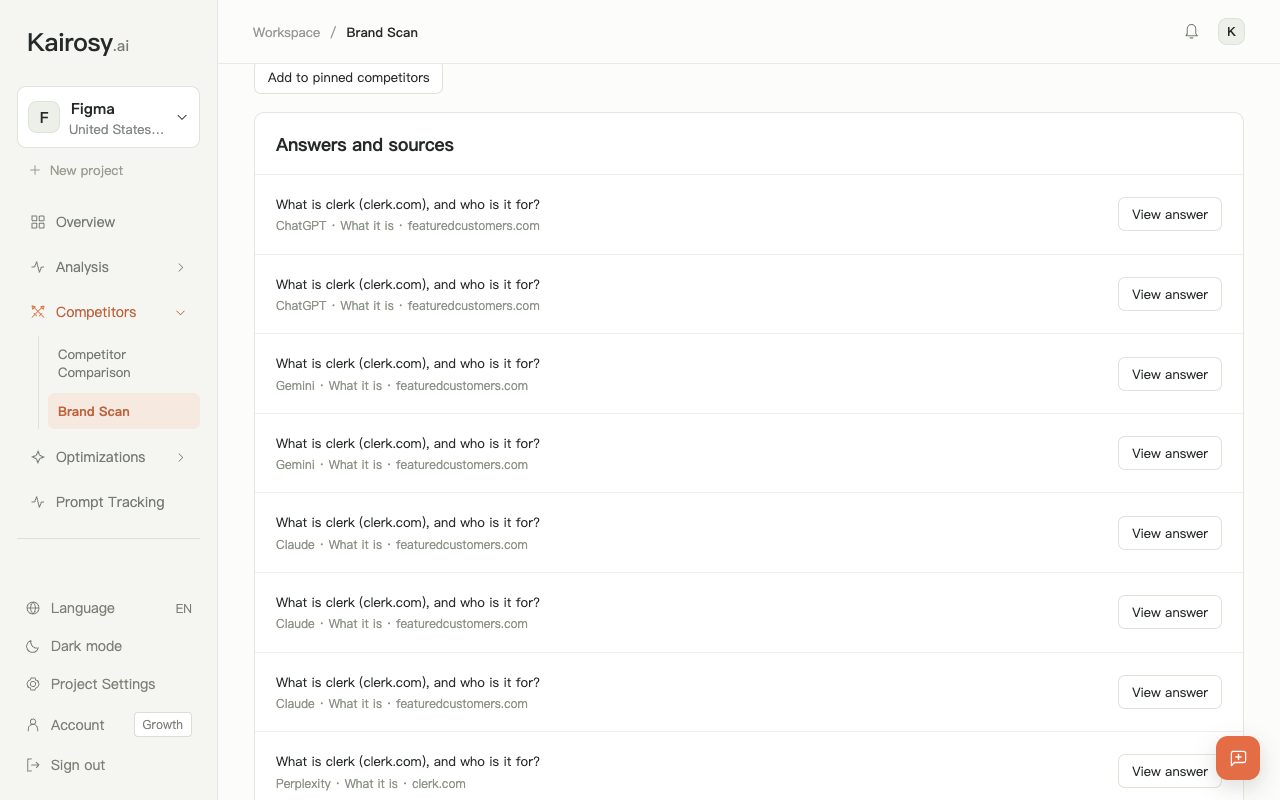
Run every negative or wrong statement through the same six columns. The table fills them with real answers from Kairosy's public brand reports (all scanned 2026-08-05).
| AI claim (engine, verbatim) | Evidence source | Source owner | Fix type | Re-test prompt | Before / After log |
|---|---|---|---|---|---|
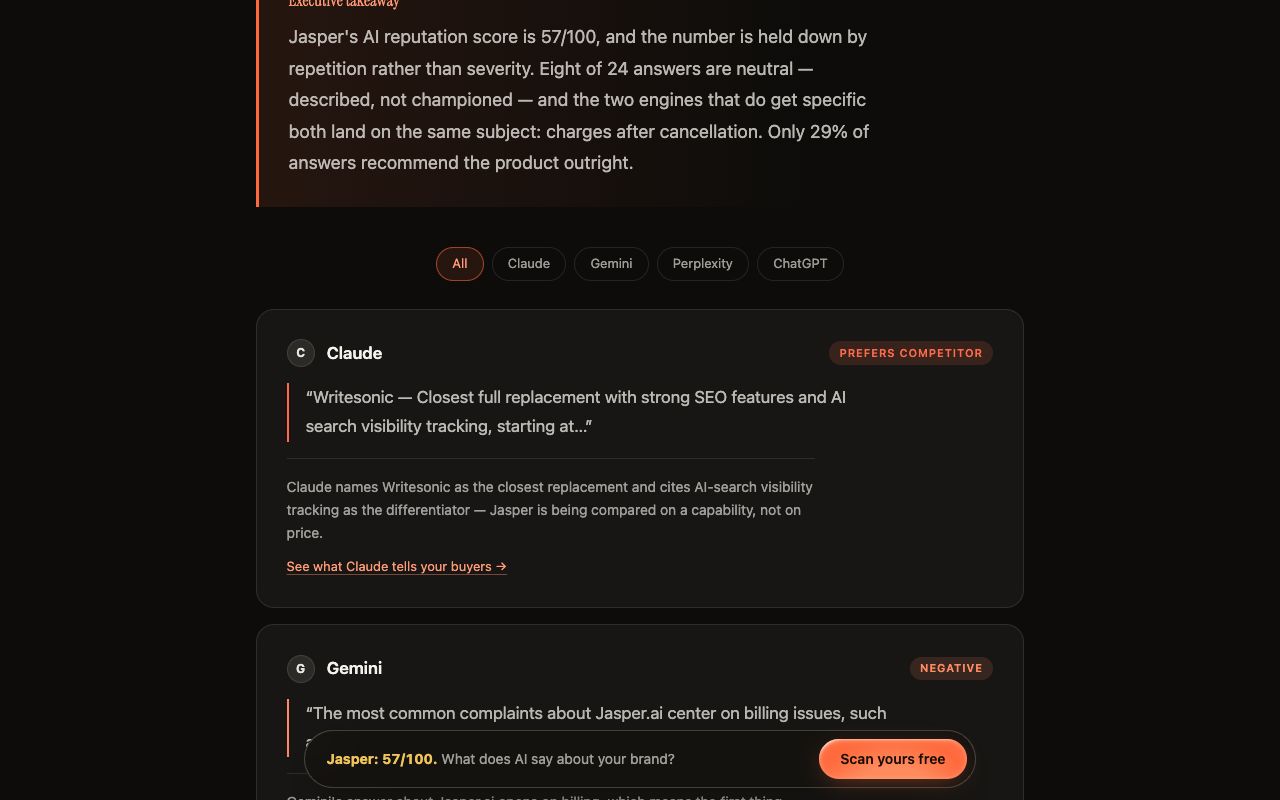
| "The most common complaints about Jasper.ai are billing and cancellation issues, especially people saying they were charged after canceling" (ChatGPT, Jasper report) | Review roundups; the report lists eyesift.com among cited domains | Review platforms + your billing team | Resolve and document: fix the cancellation flow, publish a dated policy page, reply to reviews with that URL | "What are the most common complaints about Jasper.ai?" | Before: ChatGPT and Gemini both name post-cancel charges. After: re-scan date, engines still repeating it, is your policy page cited |
| "reports that AI resolutions can be billed twice" (ChatGPT, Gorgias report) | Forum and review-site reports of ticket-based overages | Forum users + your pricing page | Clarify: a dated billing FAQ stating exactly how AI resolutions are counted | "How does Gorgias bill AI resolutions, and can one be charged twice?" | Before: three engines lead with billing surprises. After: does the answer quote your FAQ or the forum |
| "post-acquisition tier changes that moved some features into higher plans" (ChatGPT, Hotjar report) | Comparison articles and cached copies of an older pricing page | You (pricing page) + comparison publishers | Update: current tier table with a change date; send publishers the new table | "Which Hotjar features are only available on higher plans?" | Before: ChatGPT and Gemini describe tier moves as current. After: cited URL and plan names used |
| "I'm not familiar with a brand or company called 'kit.com' specifically." (Claude, Kit report) | None: the model's memory predates the ConvertKit-to-Kit rename | Model vendor training data (not editable) + your entity footprint | Disambiguate: Organization schema (legalName, alternateName, sameAs), redirects from the old domain | "What is Kit (kit.com), formerly ConvertKit, and who is it for?" | Before: one engine fails recognition outright. After: recognition rate, search on vs off, per engine |
| "If you have a service-based business or a tighter budget, Mailchimp is often better due to its lower cost and simpler setup." (Gemini, Klaviyo report) | Comparison posts and both vendors' pricing pages | Comparison publishers + you | Counter-evidence: a segment-specific pricing page with worked examples; outweigh, cannot remove | "Klaviyo vs Mailchimp for a small service business: which is cheaper?" | Before: the pricing objection appears before any feature. After: whether your page enters the citation list |
"Source owner" decides whether you can act or only ask; "Fix type" forces you to name the single action that page allows. Rows with an empty evidence source, like the Kit example, are the honest cases covered in the last section.
What Is the AI Claim and Which Evidence Source Produced It?
Write the claim as a sentence someone could disagree with, not as a category. "Support is bad" is a mood; "support response times have reportedly slowed down" is a claim you can trace and refute. Copy the engine's wording verbatim and record the prompt, the date, and whether web search was on.
Read the citation list before the prose: with search on, ChatGPT attaches URLs to the passages it lifted, and the cited page is usually the evidence source. A claim with no citation at all came from memory, which changes the owner column entirely. The recurring patterns: a review aggregator's summary line, an older version of your own page, or a comparison article that crowned a competitor.
Who Owns the Source, and Which Fix Type Applies?
Ownership sets the ceiling. Below: each owner class and the one fix it permits, per the platform's own rules; the longer per-source walkthrough is in how to fix negative AI mentions.
You own it: rewrite, date it, keep the URL
Pricing pages, policy pages, changelogs and docs are the fastest lever: no one has to approve the change. Keep the URL engines already cite, replace the content, show an "updated" date. If the cited URL is an old path, redirect rather than delete; the free redirect checker confirms the chain resolves in one hop.
A review platform owns it: reply, link proof, flag only rule breaks
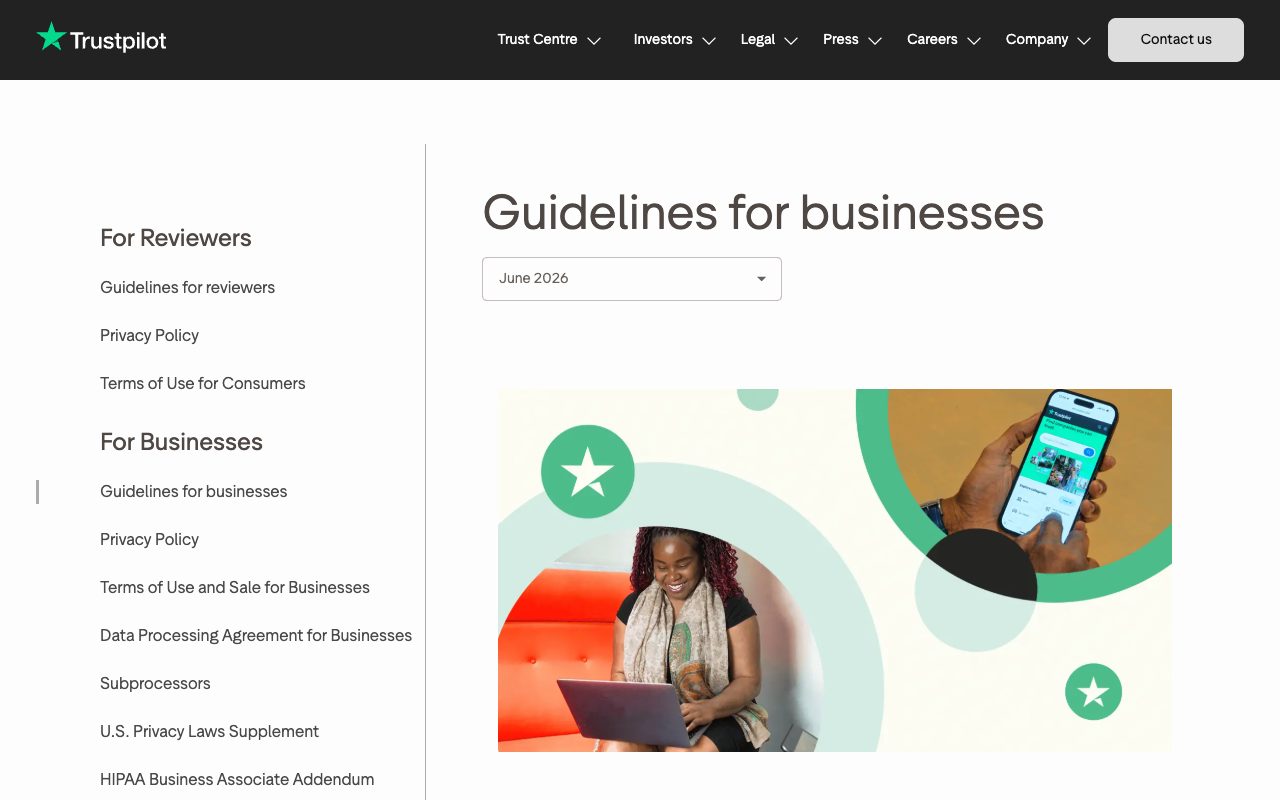
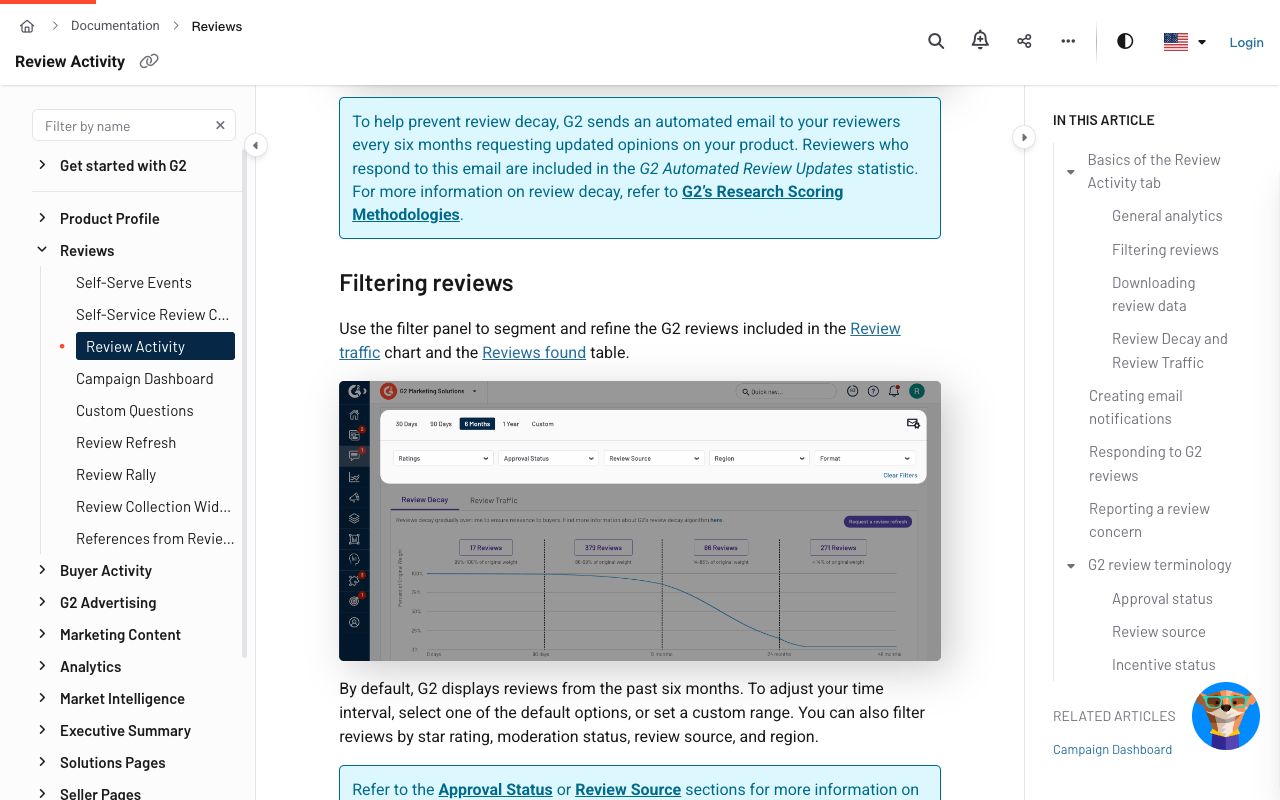
G2's vendor documentation lets you respond to any review and add a "Resource URL" that publishes as "See how {your-product-name} improved", and recommends "responding to both positive and negative reviews" (G2 Review Activity docs). Trustpilot's Guidelines for Businesses (v7.2, June 2026) allow "polite and professional" public replies, list five flagging reasons, and warn "we don't remove reviews just because a business thinks they are unfair or critical" (Trustpilot). The fix type is response plus resolution evidence, never removal.
A forum owns it: reply in-thread with disclosure, no manipulation
Reddit's content policy asks users to "post authentic content into communities where you have a personal interest, and do not cheat or engage in content manipulation" (Reddit Rules). The FTC's Endorsement Guides FAQ adds that an employee posting about the employer's product "should disclose your relationship to the company" (FTC). The fix is one disclosed reply that states what changed and links the dated page; sockpuppet praise breaks policy and leaves the thread cited anyway.
Wikipedia owns it: propose, do not edit
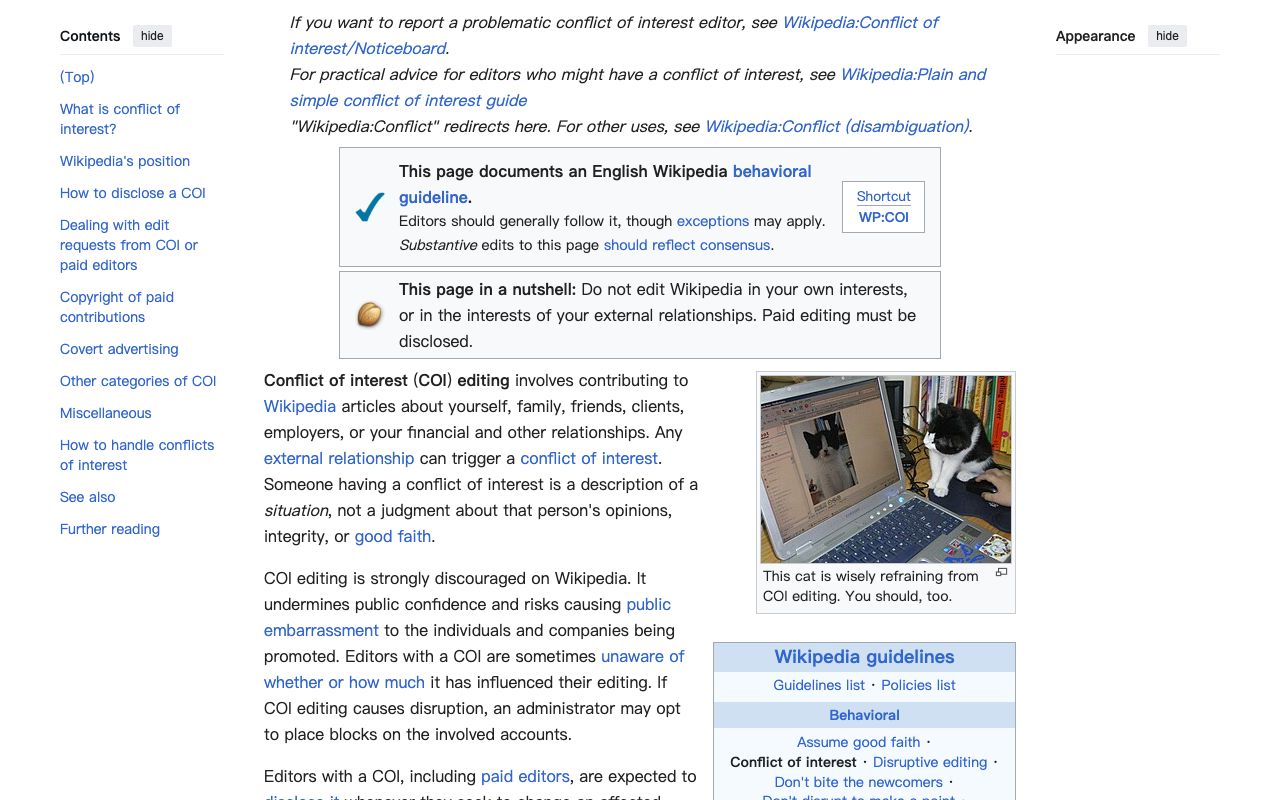
Wikipedia's conflict-of-interest guideline says company representatives are "strongly discouraged from editing affected articles directly" and should "propose changes on talk pages" with the edit-COI template and a disclosure of who is paying (Wikipedia:COI). Bring a reliable third-party source for every proposed change.
A newsroom owns it: request a correction or an update
The SPJ Code of Ethics tells journalists to "acknowledge mistakes and correct them promptly and prominently" and to "provide updated and more complete information as appropriate" (SPJ). A factual error gets a correction request with evidence; a stale-but-once-true story gets an update request, often honored with an editor's note.
How to Update and Fix ChatGPT Negative Citations
A citation is the URL attached to a passage. To update and fix ChatGPT negative citations, sort each cited URL into one of three buckets.
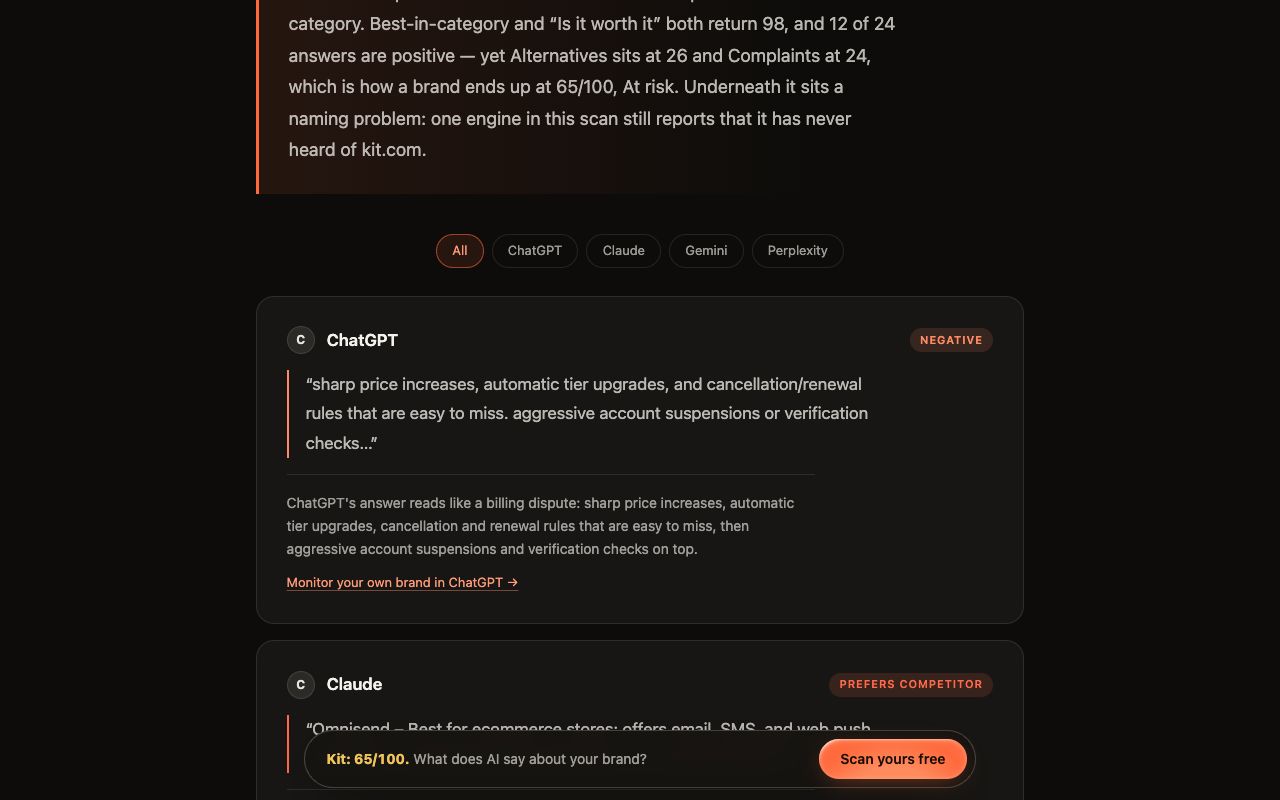
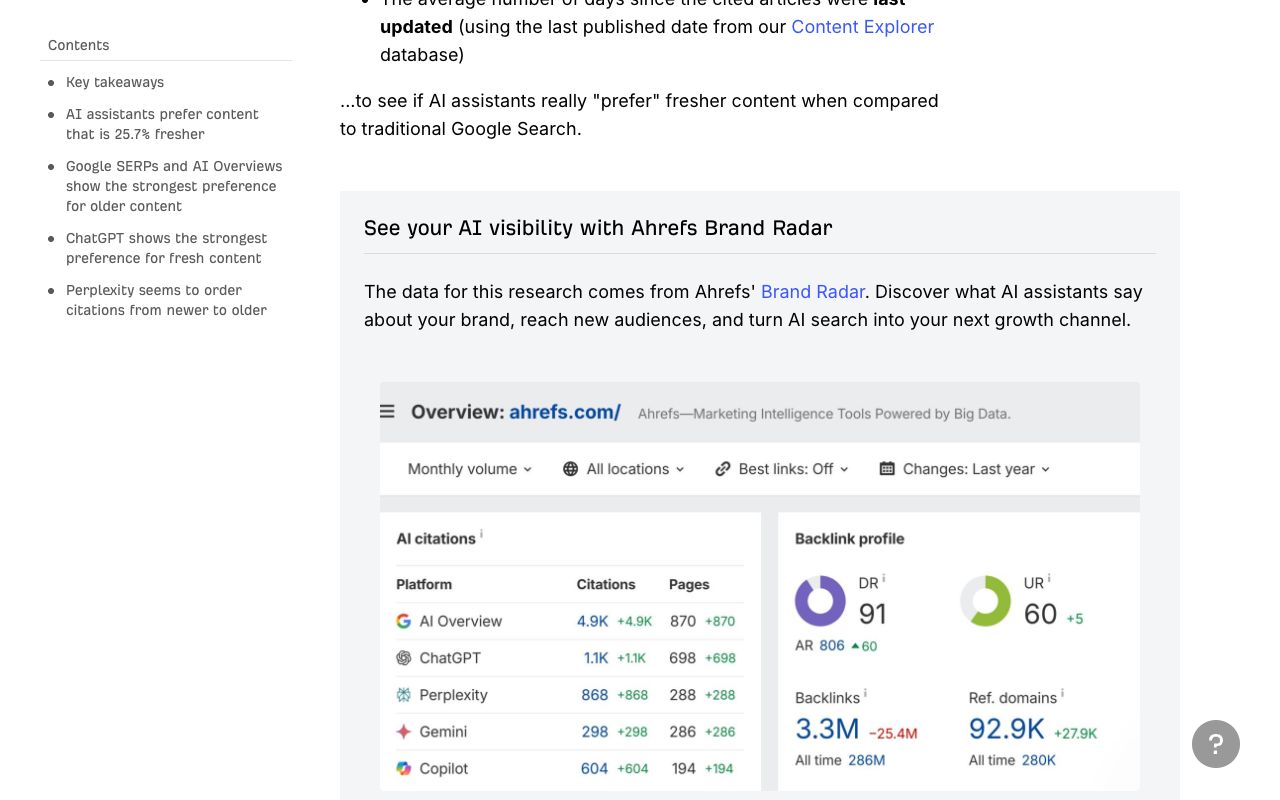
- The cited page is yours. Update it in place. Freshness is rewarded: Ahrefs' study of 16.975 million cited URLs found ChatGPT cites pages 393 days newer than Google's organic results in-text and 458 days newer in end-of-answer citations (Ahrefs, July 28, 2025). A dated update on the same URL is the cheapest way to replace an old passage.
- The cited page belongs to someone else. Use the owner playbook above, and publish a fresher, more specific page on the same question so retrieval has a better candidate.
- The cited page is about a different company. Name collisions are a disambiguation problem:
legalName,alternateNameandsameAsin your Organization markup, validated with the schema markup checker, plus one canonical description on every profile.
Do not fix a citation by blocking the crawler. Disallowing OAI-SearchBot removes your whole site from ChatGPT search answers while the negative claim survives on the third-party page.
How Do You Re-test the Prompt and Record a Before/After?
A single re-run proves nothing; the same prompt can answer differently minutes later. The re-test column needs a fixed protocol (the full measurement routine is in how to check if ChatGPT recommends your brand):
- Use the exact prompt that produced the original claim, in a fresh session, with no custom instructions.
- Run it with web search on and off. A claim that disappears with search on and persists with search off came from memory.
- Repeat five times per state and count how many runs still contain the claim. Report a rate, not a verdict.
- Do the same on Gemini, Claude and Perplexity: one source feeds all of them, and a fix that moved one engine but not the others points to the owner still needing work.
- Log the date, the rate, the cited URLs and the verbatim sentence. That row is your "before". Re-run on a schedule and append the "after".
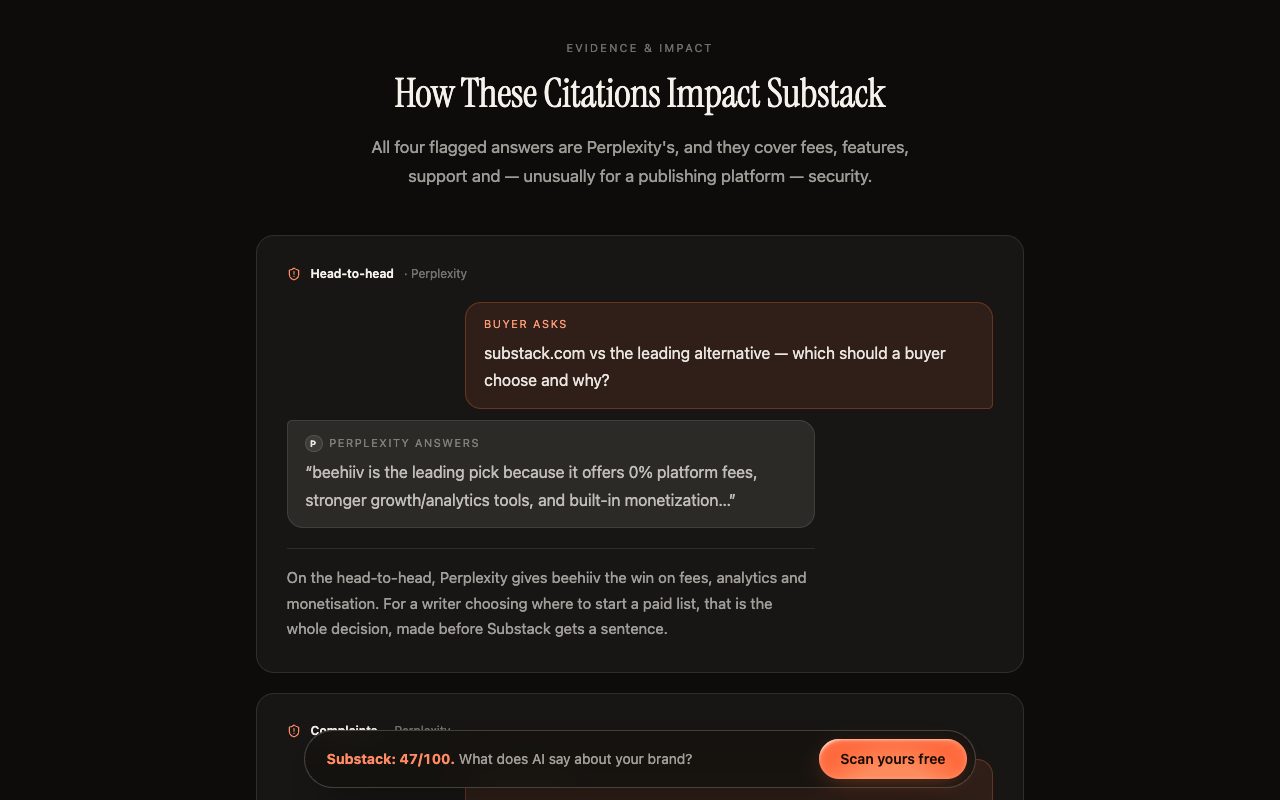
Kairosy automates this loop: tracked prompts are checked daily on every paid plan, each answer is classified positive, neutral or negative with the reason, and citation URLs are stored per answer so you can see whether your updated page displaced the old one (ChatGPT brand monitoring).
Why Does Continuous Monitoring Matter After the Fix?
Because the fix decays. The Ahrefs data cuts both ways: if engines prefer newer pages, next quarter's comparison post outranks your update and next week's review is fresher than your reply. A claim cleared in October can be back in December from a different URL. Model updates are the second reason: a new version brings a new training snapshot and its own retrieval habits, and neither event shows up in your analytics.
The practical setup is a weekly re-scan of the whole prompt set per brand and market, with alerts on four events: a new negative keyword, a competitor becoming the preferred pick, a score drop, and an engine flipping sentiment. Kairosy's tracking slots do this every Monday with an email digest, and the Fix Plan turns each finding into a pipeline row (AI reputation management).
Which ChatGPT Claims Can You Change, and Which Can't Be Guaranteed?
Getting this column wrong wastes more budget than any other pipeline mistake. Sort every claim by origin first.
| Claim origin | Can you change it? | What actually moves it |
|---|---|---|
| Retrieved from a page you own | Yes, usually within a recrawl cycle | Update the page in place, keep the URL, add a visible date |
| Retrieved from a third-party page | Partly | Owner playbook (reply, correction request, COI edit request) plus a fresher page of your own |
| Parametric memory (no citation, persists with search off) | Not on your timeline | Only a new training snapshot; GPT-5.6 models list a knowledge cutoff of Feb 16, 2026 and GPT-6 Astra Apr 30, 2026 (OpenAI models, checked September 2026) |
| True and current complaint | Not with copy | Fix the product or policy, then document it; the documentation is what engines cite |
| Competitor preferred for a segment | Rarely removed | Counter-evidence pages that make the trade-off explicit; measure share, not absence |
Two more limits. Answers are probabilistic, so "changed" means the rate dropped across repeated runs, never that a sentence is gone forever. And an accurate claim stays accurate however many pages you publish; the Jasper and Gorgias rows only move when the billing behavior they describe moves first. Everything else is solvable with a page, a reply and a re-test.
How to Change What ChatGPT Says About My Brand FAQs
Can I contact OpenAI to correct what ChatGPT says about my company?
OpenAI publishes crawler controls and a web search tool spec; neither includes a brand-side correction channel, and the help center pages that might describe one were unreachable when we checked. Change the sources, not the model.
How long does it take for ChatGPT to reflect an updated page?
OpenAI says only that robots.txt changes take about 24 hours; it publishes no recrawl interval for content. You find out by re-testing with search on and watching for your updated URL in the citations.
Can a negative claim come back after I fixed it?
Yes. A fresh comparison article or new review can re-supply it from a different URL, and a model update can reshuffle sources. Weekly re-scans with alerts catch the return before a buyer does.
Does fixing the source for ChatGPT also fix Gemini, Claude and Perplexity?
Often, since they retrieve from the same public web, but not always: each engine weights sources differently, and Ahrefs notes Perplexity appears to order references newest first. Re-test on all four and log each engine's rate separately.
See what AI says about your brand
Run a free scan across ChatGPT, Gemini, Claude & Perplexity in about 30 seconds.
Run my free scan