Negative AI Sentiment Sources: How to Trace and Fix Them (2026)
Negative AI sentiment sources are the specific URLs and passages an AI engine pulled in before it said something unflattering about your brand. Find the passage and you know who can change it; skip that step and you are rewriting random pages on the open web and hoping.
This guide is a six-step method: record, trace, classify, analyze, fix, re-test. It uses what each engine exposes about its citations, two audits of how often those citations hold up, and an example classification matrix you can copy.
What Counts as a Negative AI Sentiment Source, and What Doesn't?
A negative AI sentiment source is where an engine got the material for a negative statement about a brand. The statement is the symptom ("Northwind's billing is error-prone"); the source is the review page, forum thread, comparison article or stale help-center page the engine retrieved or memorized.
Two things the term does not mean. It is not public dislike of AI products; that is a different search and a different problem. And it is not a cause in the abstract ("review sites") but a concrete page and sentence, because only a concrete page has an owner to contact or an edit button to press.
Sources show up in three forms, and each needs its own trace:
- A cited URL next to the sentence, which live-search engines produce.
- An uncited claim from training data, where nothing on screen points anywhere.
- A comparative framing, negative only relative to a named rival ("slower than Contoso").
If your starting question is why does ChatGPT say negative things about my brand, the causes are traced in why ChatGPT says negative things about a brand. This post starts one step later: you have the negative sentence and want the page it came from.
How Do You Find the Sources Behind Negative AI Answers? The Six-Step Method
The order matters: you never classify a claim you have not traced, and never fix a source you have not ranked.
Step 1: Record the sentence, the question, the platform and the date
Copy the negative sentence exactly as the engine wrote it, hedges included. "Some users report" and "customers frequently complain" come from different kinds of sources; paraphrasing erases that clue.
Record these fields for every negative answer:
- The question, word for word, and which buying stage it belongs to.
- The engine, the model if shown, and whether web search was on.
- The market and language the question was asked in.
- Date, time and run number.
- Every citation in the answer, not only the ones near the negative sentence.
- The full answer text, saved where you can diff it later.
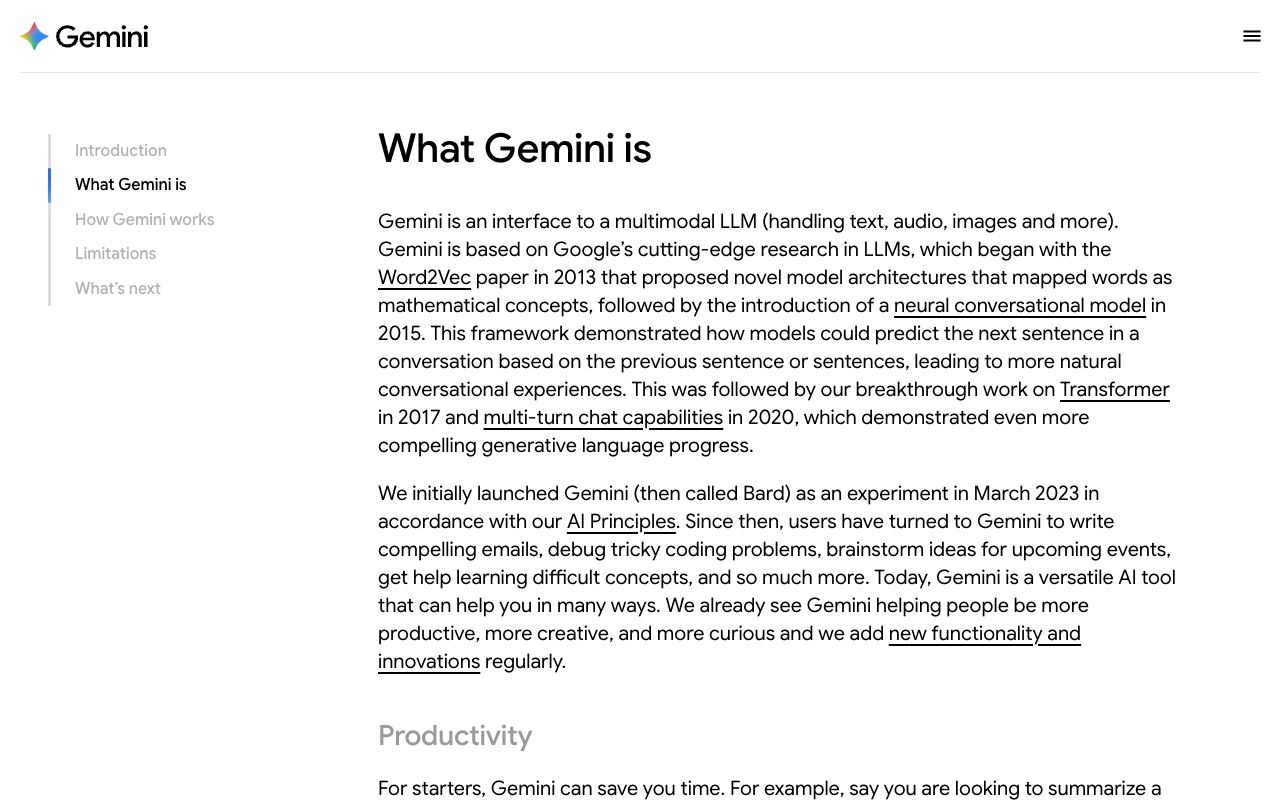
Answers vary between runs, so if a sentence appears in one of three runs, log all three. Google's own help page says "Gemini can hallucinate and present inaccurate information as factual" (Learn about responses from Gemini Apps); keep the exact text.
Step 2: Trace each claim to a cited URL and the passage that supports it
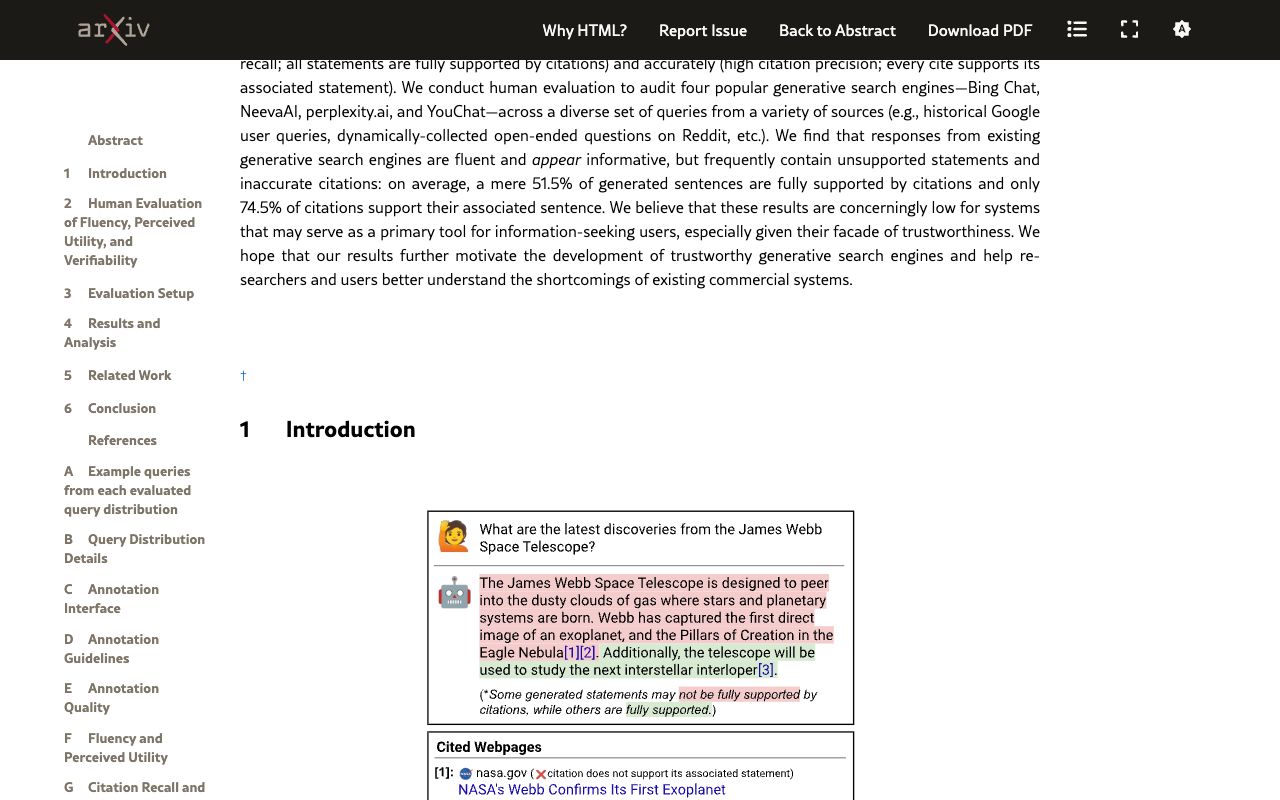
Open every cited URL and find the passage that would justify the sentence. Treat the citation as a pointer, not as proof. In Liu, Zhang and Liang's audit of four generative search engines (Bing Chat, NeevaAI, Perplexity and YouChat; arXiv, April 2023, revised October 2023), only 51.5% of generated sentences were fully supported by their citations, and only 74.5% of citations supported their sentence (Evaluating Verifiability in Generative Search Engines). The engines have changed since; the habit has not.
The Tow Center's March 6, 2025 test asked eight chatbots to identify the source of 1,600 news excerpts; they were wrong on more than 60% of queries, and more than half of Gemini's and Grok 3's responses pointed to fabricated or broken URLs (Columbia Journalism Review). A dead or invented URL is itself a finding: log it as "citation does not resolve".
What you can trace depends on what the engine shows. The table records what each one exposes, verified on October 21, 2026.
| Engine | What the interface or API exposes about sources | Verified on |
|---|---|---|
| Perplexity | "Each answer includes numbered citations linking to the original sources" | Perplexity Help Center, How does Perplexity work? |
| Gemini | "Sources and related content within and below its response"; a Sources button that is not always present | Gemini Apps Help, View related sources |
| Claude (API web search) | Every citation carries a url, a title and cited_text of "up to 150 characters of the cited content"; citations "are always enabled for web search" | Claude Platform docs, Web search tool |
| ChatGPT | In the Tow Center test, ChatGPT misidentified 134 of 200 articles while signaling uncertainty only 15 times | CJR, AI Search Has a Citation Problem |
For each cited URL, write down three answers: does the page exist, does it contain the claim, and does it say it that strongly? "One reviewer mentioned a delayed refund" and "refunds are routinely delayed" are different passages; the gap is the engine's doing, not the source's.
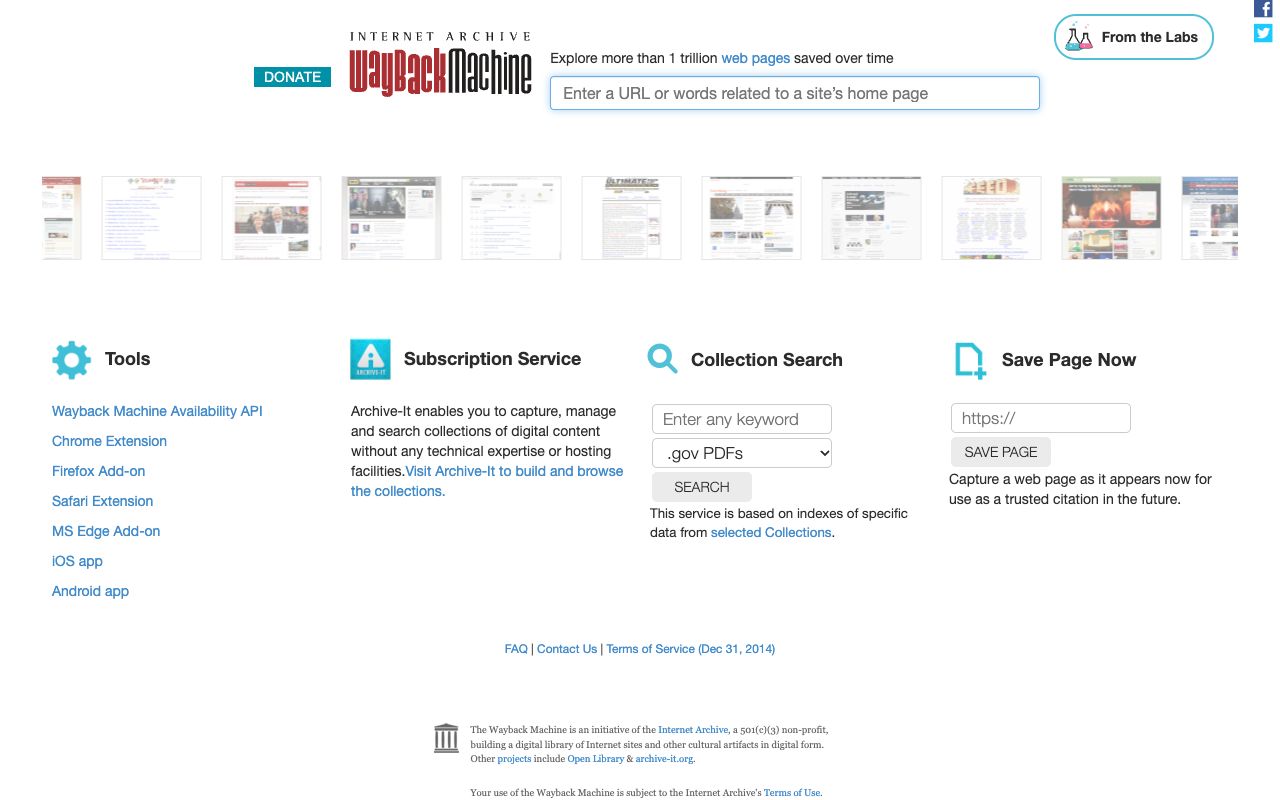
Uncited claims take a different route. Search the exact sentence in quotes; check your own site, then review platforms, Wikipedia and community threads. If nothing live matches, check earlier versions of your pages in the Wayback Machine, which had archived more than 1 trillion web pages as of October 2025 (Wikipedia). A claim matching a 2023 snapshot of your pricing page is a training-data remnant.
This step is what most teams mean by AI citation source tracking: a running list of which URLs appear in negative answers, how often, and which sentence each is supposed to support. To track URLs cited in negative AI answers properly, the list needs a passage column, not just a domain column.

Step 3: Classify the claim: outdated, wrong, real defect or comparison context
Every traced claim lands in one of four classes, and the class decides who fixes it. The matrix shows a sheet filled in for a fictional brand, Northwind; every value is an example value, not a measured result.
| Class | Test that puts a claim here | Typical source type | Who owns the fix | Northwind example (example values) |
|---|---|---|---|---|
| Outdated | A dated page or archive snapshot matches the claim; current facts differ | Retired pricing page, old help article, 2023 review | You: edit, redirect, request refresh | "Northwind charges a $49 setup fee" — fee dropped in February 2026, old page still indexed |
| Wrong | No passage supports the claim, or it concerns another entity | Wrong-entity news page, mis-summarized forum thread | Third party, or you with a disambiguation page | "Northwind was fined over a data breach" — the fine was Northwind Energy, an unrelated company |
| Real defect | Passage accurate; tickets and reviews agree | Review platforms, community threads | Product team first, then a dated change note | "Onboarding takes weeks" — median onboarding is 19 days in your own data |
| Comparison context | Negative only next to a named rival | Comparison articles, "vs" pages, listicles | Content: a current comparison page | "Northwind lacks an API, unlike Contoso" — the API shipped in 2025 but has no public docs |
Why engines produce confident wrong claims: "training and evaluation procedures reward guessing over acknowledging uncertainty", per Kalai, Nachum, Vempala and Zhang (arXiv, submitted September 4, 2025; Why Language Models Hallucinate). A wrong claim with no citation may never have had a source; the fix is a page that gives the engine something better to retrieve.
Step 4: Analyze: merge duplicate narratives and rank by purchase impact
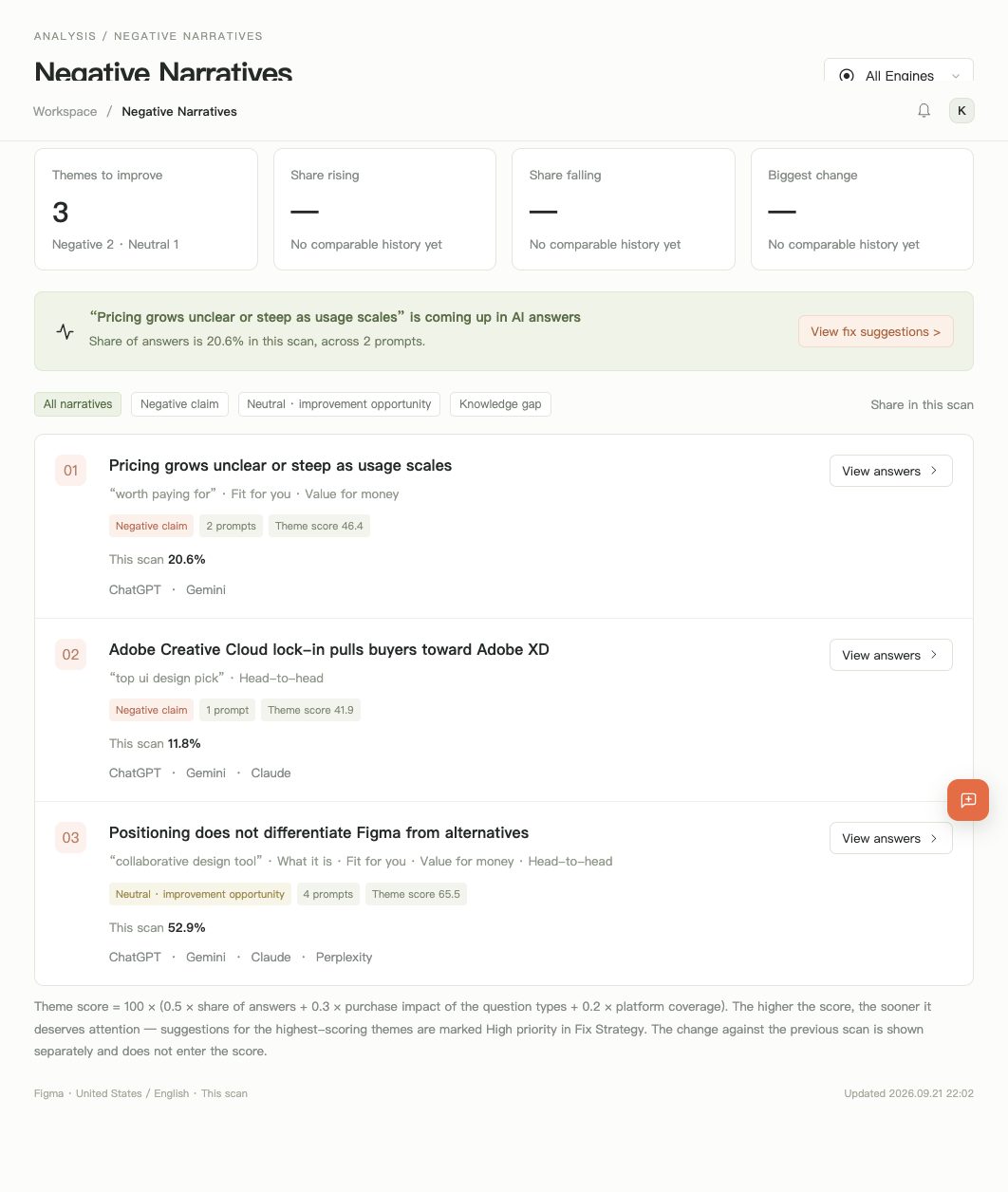
Negative AI sentiment source analysis starts by collapsing the list. Two engines wording the same complaint differently are one narrative. One review page cited by three engines across four questions is one source with a weight of twelve. After merging, each narrative carries three counts: engines, questions and distinct sources.
Kairosy's public scan of Vacasa (read October 21, 2026) shows the merge in practice. The brand scored 53/100 ("Vulnerable"); Perplexity bundled "cleanliness problems, poor customer service / slow communication, and maintenance or amenity issues", while ChatGPT framed the same material as "inconsistent property quality and cleanliness" (Kairosy, Vacasa AI performance). Two wordings, one narrative, one family of review-site sources.
Then rank by purchase impact, not by how annoying the claim is:
- Buying stage: decision questions ("should I buy Northwind?") outrank awareness questions.
- Severity: safety, billing, data handling and refunds are dealbreakers; a slow app is not.
- Spread: three engines and two sources beat one engine citing one blog.
Negative AI sentiment sources that score high on all three get fixed this week. Ones that score low on all three get a note and a re-check next month, because fixing them would not move a purchase.
Step 5: Fix: an owned edit or a third-party correction
The class from step 3 tells you which lever exists. When the source is your own page, the fix is a dated edit, a redirect from any retired URL (confirm the chain with the redirect checker) and, for Google's index, the Refresh Outdated Content tool, which notes that "if you've already updated a live page, you don't have to fill out the form" (Google Search Help). Confirm the page is indexed with the index checker before expecting any engine to see it.
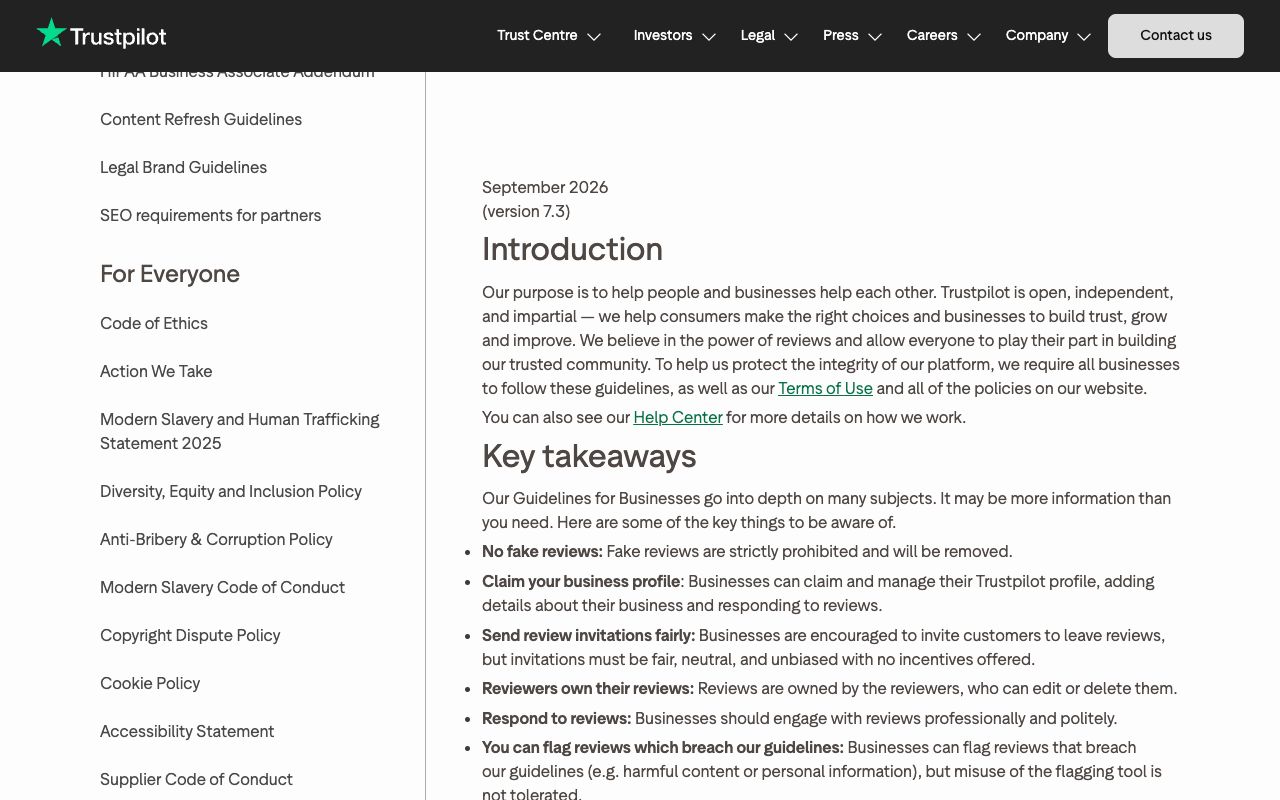
When the source is a review platform, be realistic about removal. Trustpilot's Guidelines for Businesses (version 7.3, September 2026) allow five flag reasons: harmful or illegal, personal information, advertising or promotional, not based on a genuine experience, and about a different business. The same document states: "we don't remove reviews just because a business thinks they are unfair or critical" (Trustpilot). For a real defect, the lever is the product change, a public reply and newer reviews.
When the source is a Wikipedia article, do not edit it yourself; Wikipedia directs editors with a conflict of interest to the talk-page edit-request process instead of editing directly (Wikipedia:Edit requests). When it is a journalist's page, email the author the dated evidence and ask for a correction. The owner-by-owner playbook is in how to change what ChatGPT says about my brand and how to improve AI brand reputation.
Step 6: Re-test with the question set unchanged
Re-run exactly the questions from step 1, on the same engines, in the same market, at least three times each. Compare against the record: is the negative sentence still there, did the citation list change, and did a new source replace the negative AI sentiment sources you fixed?
Count a narrative resolved only when it is absent across all runs and the fixed URL has dropped out of the citations. Live-search claims can move after a recrawl; training-data claims generally move only with a model update, so uncited claims need a longer re-test window.
How Does Kairosy Trace Negative AI Sentiment Sources?
Kairosy automates step 1, the URL half of step 2, the merge in step 4 and the re-runs in step 6, and leaves the passage match, the ranking and the fix to you. It asks real buyer-intent questions about your brand to four of its six engines (ChatGPT, Gemini, Claude, Perplexity, DeepSeek, Doubao), keeps every full answer with its cited sources, and classifies sentiment per answer.
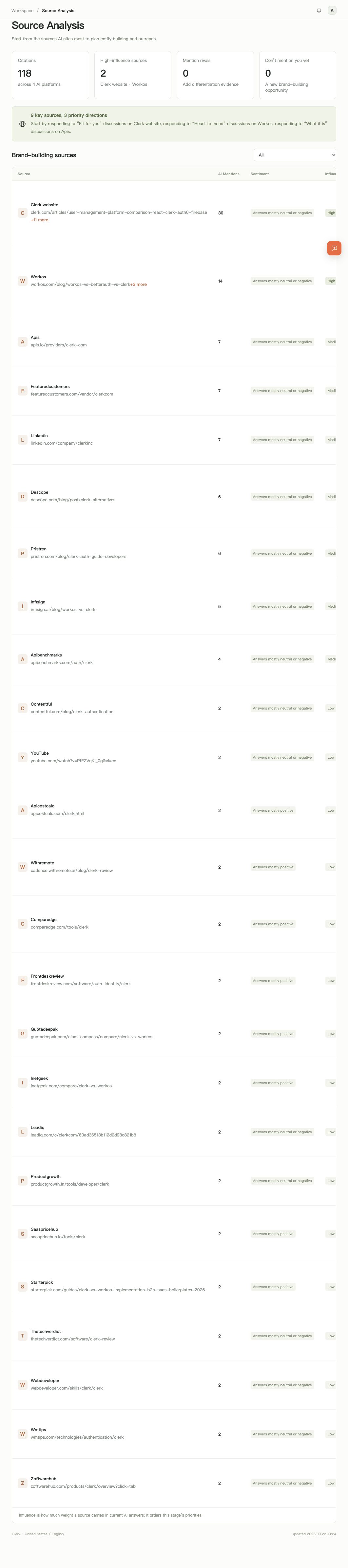
Two workspace pages do the source work. Source Analysis lists the domains and URLs the answers cite, split into brand-building (yours) and third-party sources: the owner column from step 3, filled in for you. Negative Narratives extracts the recurring negative themes with the answers and engines behind each, so the step 4 merge is done when you open it. Together they are this guide's sentiment check and negative AI sentiment sources list, kept per project.
For step 6, Prompt Tracking re-runs your tracked questions daily, with per-engine answer cards, a seven-run history and a mentioned / not mentioned / competitor recommended label. The brand deep rescan runs every Monday per tracking slot, and the weekly email flags score drops, a competitor being preferred, an engine flipping its stance and new negative keywords; alerts arrive in that email, not as they happen.
What Kairosy does not do: match a claim to the exact passage on the cited page (your reading in step 2), supply prompt-volume data, or track Google SERP rankings. The free tools check page readiness; a scan measures actual answers. The trial is 7 days, no card; paid plans are Basic $29, Pro $99 and Growth $399 a month with 1, 5 and 20 tracking slots (AI reputation management).
Negative AI Sentiment Sources FAQs
Is a cited URL always the real source of a negative claim?
No. In the 2023 Stanford audit only 74.5% of citations supported their sentence, and the Tow Center found fabricated or broken URLs in more than half of Gemini's and Grok 3's responses. Confirm the passage exists before treating the URL as the source.
What if the negative answer has no citations at all?
Search the exact sentence in quotes, check your own site and its archived versions, then review platforms and community threads. If nothing matches, classify it as wrong or outdated training data and publish a current page the engine can retrieve.
How do I identify sources of negative AI answers without a tool?
A spreadsheet with one row per negative sentence works: question, engine, date, sentence, every cited URL, the supporting passage, class and owner. The cost is time, since you re-run questions by hand; most teams move to a scanner past a few dozen rows.
Can I get a review platform to remove a negative review an AI keeps citing?
Only if it breaks the platform's rules. None of Trustpilot's five flag reasons covers a review that is critical but genuine, so that review stays up. Treat it as a real-defect source: fix the issue, reply publicly, and let newer reviews change what is retrieved.
How long after fixing a source does the AI answer change?
There is no fixed interval. Live-search engines can reflect an edited page after their next crawl; memorized claims wait for a model update. Re-test on the unchanged question set and count the narrative resolved only when it is absent across repeated runs.
See what AI says about your brand
Run a free scan across ChatGPT, Gemini, Claude & Perplexity in about 30 seconds.
Run my free scan