Blog & Resources
Guides, playbooks and data on winning the AI recommendation.
How to Track Brand Sentiment in AI Answer Engines: 6 Steps (2026)
How to track brand sentiment in AI answer engines: six steps from a frozen question set to per-brand labels, negative share with sample size and fix tasks.
Best Platform for AI Visibility Metrics in 2026: 8 Compared by Need
Which is the best platform for AI visibility metrics? Eight tools compared on one checklist, with every metric's denominator and a 20-question test.
AEO vs GEO in 2026: What the Terms Mean, Where They Overlap
AEO vs GEO: the direct answer, four vendor definitions that disagree, an SEO/AEO/GEO table, one annotated buying question and the metrics to watch.
How to Track AI Search Engine Sources: A Hands-On Guide (2026)
How to track AI search engine sources in ChatGPT, Perplexity, Gemini and Claude: capture each citation, log it in a template, then act on it.
How to Monitor Citation Performance Across AI Models: 4 Tools (2026)
How to monitor citation performance across AI models: a source-adoption matrix for ChatGPT, Gemini, Claude and Perplexity, plus 4 tools priced for 2026.
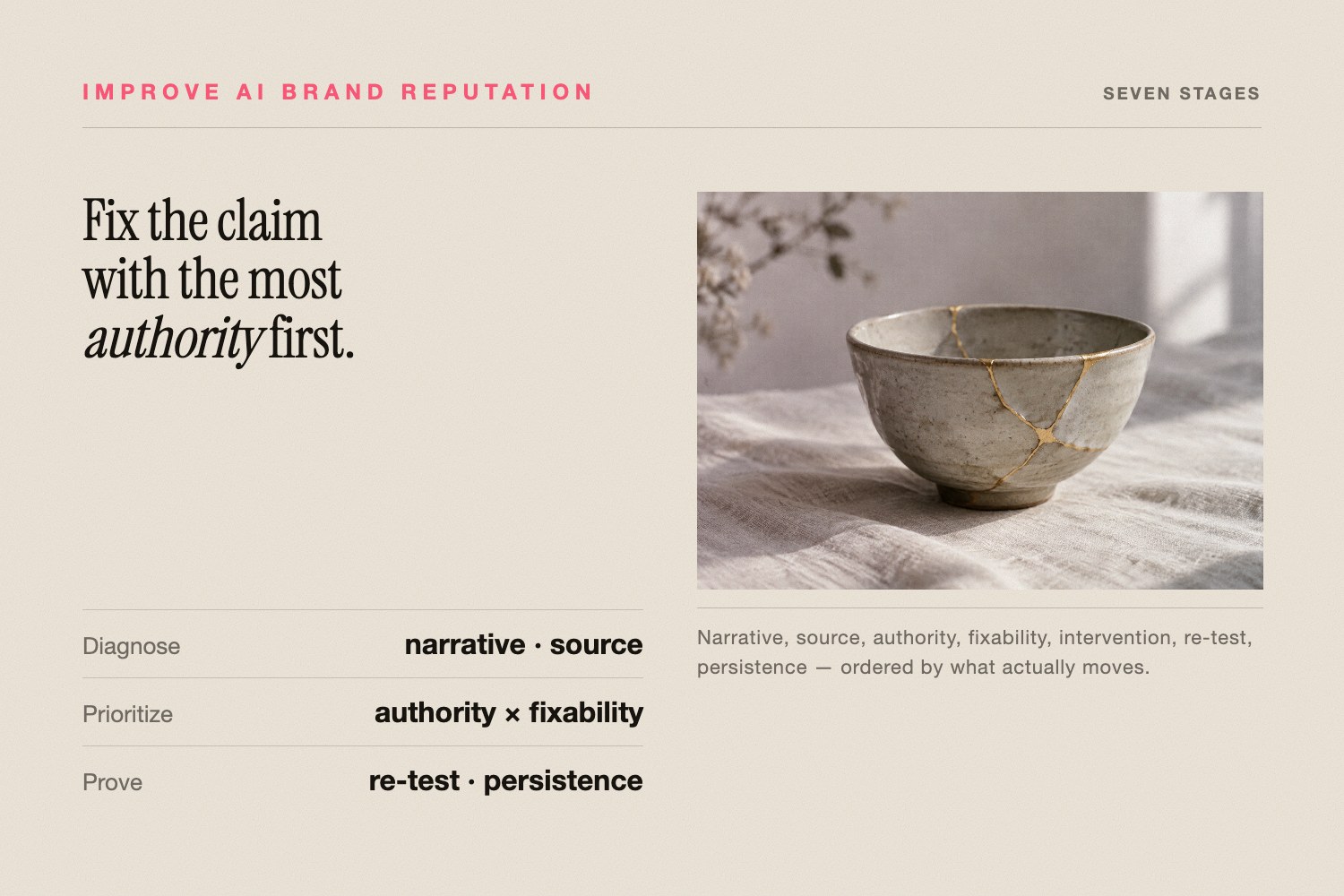
How to Improve AI Brand Reputation: The 7-Stage Framework (2026)
How to improve AI brand reputation with a seven-stage intervention framework, from problem narrative to persistence, worked on ZoomInfo's real scan.
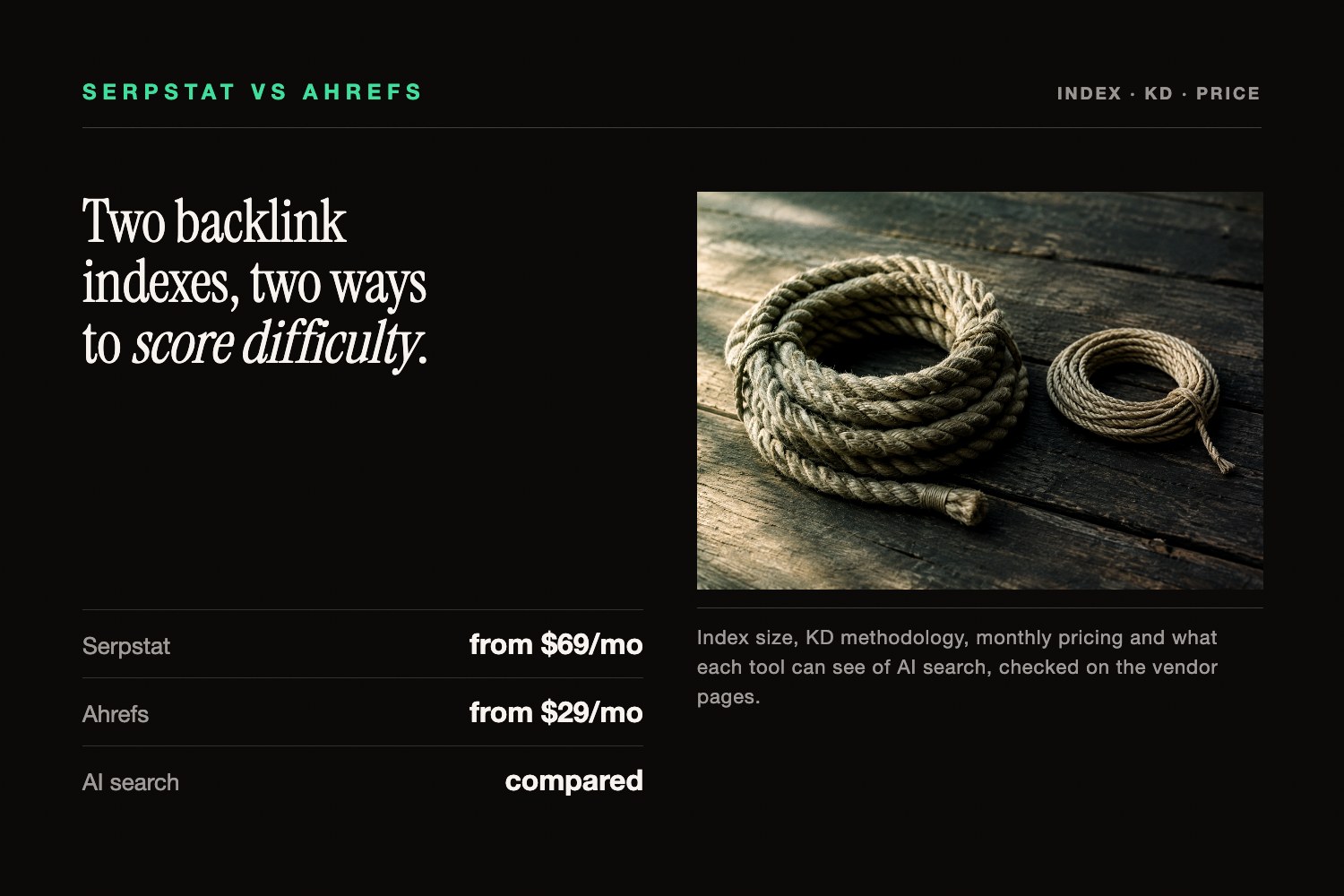
Serpstat vs Ahrefs (2026): Backlink Index, KD Method, Pricing and AI
Serpstat vs Ahrefs in 2026: September prices, backlink index size and freshness, two KD formulas compared, and what AI engines tell buyers about each.
How to Track Brand Performance in ChatGPT Response Over Time (2026)
How to track brand performance in ChatGPT response over time: freeze the prompt set and cadence, sample each prompt 7 times, then attribute every change.
AI Brand Experience Optimization: The Five Layers Explained (2026)
AI brand experience optimization shapes what a buyer sees when ChatGPT, Gemini, Claude or Perplexity introduces your brand. Five layers, each with a fix.
Why Does ChatGPT Cite Competitors Instead of Your Brand? (2026)
Why does ChatGPT cite competitors instead of your brand? Usually it cites a review site or roundup about them. Five real gap rows, sources and fixes.
How to Audit Your Brand Reputation in AI: A 6-Dimension Method (2026)
How to audit your brand reputation in AI: a frozen prompt set, four LLMs, and a six-dimension rubric from representation to competitor gap, shown on Wise.
Enterprise AI Share of Voice: Measure It by Engine and Market (2026)
Enterprise AI share of voice splits mention, citation and recommendation SOV by engine, market, persona and funnel stage. Formulas, matrix, real scan data.